
Isaac Kramnick (1938–2019)
Author of The Portable Enlightenment Reader
About the Author
Image credit: Cornell University
Works by Isaac Kramnick
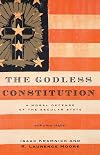
The Godless Constitution: A Moral Defense of the Secular State (1996) — Author — 342 copies, 6 reviews
Associated Works
The Federalist Papers (1787) — Editor, some editions; Introduction, some editions — 11,697 copies, 77 reviews
Enquiry Concerning Political Justice and Its Influence on Modern Morals and Happiness (1793) — Editor, some editions — 263 copies, 4 reviews
Tagged
Common Knowledge
- Birthdate
- 1938-03-06
- Date of death
- 2019-12-21
- Gender
- male
- Education
- Harvard College (BA)
Harvard University (PhD|History) - Occupations
- Professor of Government, Cornell University
- Nationality
- USA
- Associated Place (for map)
- USA
Members
Reviews
Every American concerned about the religious right's never ending attack on the constitution by trying to re-write history (I'm looking at you David Barton) needs to read this book. It completely destroys the claims that the founders of the United States had any intention of creating a christian nation, and proves that the first amendment really means what it says as far as separating church and state. I found it fascinating that the constitution was under attack by the church as an show more "atheist" document before the ink was even dry. Also, it turns out that baptists were initially supporters of the separation of church and state (before they had sufficient numbers to try and push their misguided morals into government).
My only nit to pick is that the book really needed endnotes. The authors state that because the book is intended for a general audience and that the material cited is familiar to historians and political scientists, that they have foregone including footnotes. However, for those of us (in the general audience) who are not historians and political scientists, endnotes would have been very useful in further study. Admittedly, complete endnotes would probably add 100 pages to the book, but they could have easily been provided via a web site. show less
My only nit to pick is that the book really needed endnotes. The authors state that because the book is intended for a general audience and that the material cited is familiar to historians and political scientists, that they have foregone including footnotes. However, for those of us (in the general audience) who are not historians and political scientists, endnotes would have been very useful in further study. Admittedly, complete endnotes would probably add 100 pages to the book, but they could have easily been provided via a web site. show less
It is axiomatic to argue the Founding Fathers had enormous respect for religion, believed firmly that human rights originated from a divine being, and accepted that democracy would benefit from a moral citizenry who believed in God. So why does the Constitution make no mention of a divine being?
Most states (with the notable exception of New York and Virginia) had religious tests for public office that were specifically designed to keep out Quakers and especially the dreaded Papists (Quakers show more were anathema for their pacifist and antislavery views). One anti-Constitution article widely distributed in Connecticut, New Hampshire, and Massachusetts worried that the proscription of religious tests for office in the new Constitution would cause the government to be overrun with "1st. Quakers, who will make the blacks saucy, and at the same time deprive us of the means of defense - 2dly. Mohometans, who ridicule the doctrine of the Trinity - 3dly. Deists [Most of the Founding Fathers were in fact Deists, a non-doctrinaire group that rejected a supernatural, anthropomorphic God who intervened in human events, believing instead that God was a supreme intelligence who set things in motion to operate forever according to natural, rational and scientific laws.:] abominable wretches - 4thly. Negroes, the seed of Cain - 5thly. Beggars, who when sent on horseback will ride to the devil - 6thly. Jews, etc. etc. [sic:]."
There is a tradition the authors refer to as "religious correctness," which takes the position that America is a religious, especially Christian, nation and there is one correct religious persuasion that must exclude all others. The religious right has gone to great extremes to prove the Constitution was created to perpetuate "a Christian
Order," (James Dobson) and they would like to see a country "once again governed by Christians" (Ralph Reed) - I don't know what he considers Carter, Bush and Reagan.
Kramnick and Moore state flatly and demonstrate convincingly that this viewpoint is wrong. The Founding Fathers wanted to disassociate a person's religious convictions from the value of his political opinion. The Founding Fathers thinking originated from several traditions: the religious thought of Roger Williams, the Baptists of that era, and the English liberal tradition "that put at the center of its political philosophy individuals free of government, enjoying property and thinking and praying as they wished."
Roger Williams' secular approach to government was paradoxically religious in nature. Because "he believed that the number of true Christians would always be a small proportion of the population in any society, he rejected the concept of a nation under God. For England or for the Massachusetts Bay colony to make a claim that it was a Christian polity, a civil government party to a divine contract, was arrogant blasphemy. "
The authors suggest that the writers of the Constitution adopted this secular stance to protect religion from government, and to prevent the trivialization that "religious correctness" standards would cause. They wanted religion to do "what it did best, to preserve the civil morality necessary to democracy, without laying upon it the burdens of being tied to the fortunes of this or that political faction." show less
Most states (with the notable exception of New York and Virginia) had religious tests for public office that were specifically designed to keep out Quakers and especially the dreaded Papists (Quakers show more were anathema for their pacifist and antislavery views). One anti-Constitution article widely distributed in Connecticut, New Hampshire, and Massachusetts worried that the proscription of religious tests for office in the new Constitution would cause the government to be overrun with "1st. Quakers, who will make the blacks saucy, and at the same time deprive us of the means of defense - 2dly. Mohometans, who ridicule the doctrine of the Trinity - 3dly. Deists [Most of the Founding Fathers were in fact Deists, a non-doctrinaire group that rejected a supernatural, anthropomorphic God who intervened in human events, believing instead that God was a supreme intelligence who set things in motion to operate forever according to natural, rational and scientific laws.:] abominable wretches - 4thly. Negroes, the seed of Cain - 5thly. Beggars, who when sent on horseback will ride to the devil - 6thly. Jews, etc. etc. [sic:]."
There is a tradition the authors refer to as "religious correctness," which takes the position that America is a religious, especially Christian, nation and there is one correct religious persuasion that must exclude all others. The religious right has gone to great extremes to prove the Constitution was created to perpetuate "a Christian
Order," (James Dobson) and they would like to see a country "once again governed by Christians" (Ralph Reed) - I don't know what he considers Carter, Bush and Reagan.
Kramnick and Moore state flatly and demonstrate convincingly that this viewpoint is wrong. The Founding Fathers wanted to disassociate a person's religious convictions from the value of his political opinion. The Founding Fathers thinking originated from several traditions: the religious thought of Roger Williams, the Baptists of that era, and the English liberal tradition "that put at the center of its political philosophy individuals free of government, enjoying property and thinking and praying as they wished."
Roger Williams' secular approach to government was paradoxically religious in nature. Because "he believed that the number of true Christians would always be a small proportion of the population in any society, he rejected the concept of a nation under God. For England or for the Massachusetts Bay colony to make a claim that it was a Christian polity, a civil government party to a divine contract, was arrogant blasphemy. "
The authors suggest that the writers of the Constitution adopted this secular stance to protect religion from government, and to prevent the trivialization that "religious correctness" standards would cause. They wanted religion to do "what it did best, to preserve the civil morality necessary to democracy, without laying upon it the burdens of being tied to the fortunes of this or that political faction." show less
This is a good, well-researched look at the history of the religion clauses in the First Amendment, and a great corrective to those who feel certain that we are merely given the freedom to choose what god to believe in, or even worse, which Christian sect to join. While it is very refreshing to see such a strong, no-holds-barred defense of church/state separation, the sanctimonious tone of the authors is very offputting. They are also prone, in most cases, perhaps all, to take religious show more claims of morality and charity at face value, and to accept the religious definitions of morality. This is corrected somewhat in the final chapter, added in a re-issue during the second Bush administration, but the holier-than-thou tone remains, making it obvious that, at least in the minds of the authors, they have managed to grab the high ground from the religious right, the religious left, and the non-religious. That is at best irritating and at worst infuriating, and moved this book from an awesome and superb 4.5 star book to a 3.5 star book. That, and the misspelling of Karl Rove's name, something that has the impact of making you look poorly read. show less
Beginning with the history of the United States as a secular nation, the authors cite the works of early leaders, such as Roger Williams, Thomas Jefferson, and others. This book outlines the reasons that the Constitution was designed and written in the way that it was, with clauses such as the no religious test. Although not all states were on board at the same time, the elements of a secular state became common throughout the country, and those that wished to invoke religion into politics show more were always in the minority. Other themes discussed include the English roots of the secular state and debates about the delivery of mail on Sundays.
The last couple of chapters are dedicated to the present-day practices of the religious right and their current political leanings. It seems many of today's politicians have neglected to remain true to the fundamental ideals espoused in the Constitution.
I agree with the authors on many points, as I too view morals outside of the religious context. Laws come not from religion, but from moral and social teachings and experience. Religion's place is not in the political arena. show less
The last couple of chapters are dedicated to the present-day practices of the religious right and their current political leanings. It seems many of today's politicians have neglected to remain true to the fundamental ideals espoused in the Constitution.
I agree with the authors on many points, as I too view morals outside of the religious context. Laws come not from religion, but from moral and social teachings and experience. Religion's place is not in the political arena. show less
Lists
You May Also Like


Associated Authors
Statistics
- Works
- 19
- Also by
- 6
- Members
- 1,445
- Popularity
- #17,791
- Rating
- 4.0
- Reviews
- 9
- ISBNs
- 37