
Akhil Reed Amar
Author of America's Constitution: A Biography
About the Author
Akhil Reed Amar is the Sterling Professor of Law and Political Science at Yale University. The author of several books, including America's Unwritten Constitution, and the winner of awards from both the American Bar Association and the Federalist Society, Amar lives in Woodbridge, Connecticut.
Image credit: Yale Law School faculty page
Works by Akhil Reed Amar
America's Unwritten Constitution: The Precedents and Principles We Live By (2012) 246 copies, 3 reviews
The Words That Made Us: America's Constitutional Conversation, 1760-1840 (2021) 185 copies, 3 reviews
The Bill of Rights Primer: A Citizen's Guidebook to the American Bill of Rights (2013) — Author — 90 copies, 1 review
Associated Works
Myth America: Historians Take On the Biggest Legends and Lies About Our Past (2022) — Contributor — 288 copies, 5 reviews
The Bill of Rights: Government Proscribed (Perspectives on the American Revolution) (1998) — Contributor — 14 copies
Tagged
Common Knowledge
- Birthdate
- 1958-09-06
- Gender
- male
- Education
- Yale University (B.A.|1980)
Yale Law School (J.D.|1984)
Las Lomas High School, Walnut Creek, California, USA (1976) - Occupations
- professor (Law)
- Organizations
- Yale University
- Awards and honors
- Paul Bator Award
Rising Stars in the Law (1995)
ABA Certificate of Merit
Yale University Press Governor's Award - Nationality
- USA
- Birthplace
- Ann Arbor, Michigan, USA
- Places of residence
- New Haven, Connecticut, USA
Walnut Creek, California, USA
Woodbridge, Connecticut, USA - Associated Place (for map)
- USA
Members
Reviews
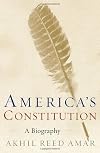
This is a remarkable book. The author's knowledge, insight, analysis and synthesis are amazing. There's too much to praise about it, so I'll just mention one aspect: Amar makes a very compelling case that from the beginning slavery was a disease spreading infection in our society and political system (aided by the 3/5 clause), increasingly corrupting our character and institutions until a terribly bloody breaking point was reached. The evil was partially righted, then amorality returned, show more allowing a viciousness to fester until another crisis led to new progress. But it remains that slavery and its legacy constitute the central national failure, which we still haven’t nearly corrected. Most of the book is quite positive, and slavery’s not the principal focus, but Amar’s treatment of it is both convincing and unforgettable. show less
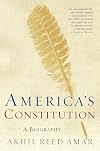
I'm beginning to believe that the book I want to read about the United States Constitution doesn't exist yet. This book comes pretty close, but I'm still left with the same questions that I had before I read it.
For example, does the Constitution prohibit secession? The author's answer is an emphatic YES, but I'm not convinced by his argument, which uses every document BUT the Constitution to prove his point. Are the opinions expressed in The Federalist Papers and the arguments made to the show more various state ratifying commissions part of the constitution? He says yes, I say no.
Again, in discussing the 14th Amendment, the author makes a clear case that it was ratified legally, if a little oddly. Well, I suppose he's convinced me on that point, but why was it made an absolute condition for state rehabilitation - and why does the "due process" clause appear in just about every Supreme Court decision today?
Finally, I'd like a book that focuses more on the Constitution as it exists today - the author spends far too much time making the case that the Founders and the early Constitution were pro-slavery, or at least anti-abolition. Well fine, but since that issue was completely settled with the passage of the 13th Amendment, can't we talk about something else? If I wanted to read a book that focused so much on the Civil War, I would have read one - in fact I've read several on that very subject. I thought I was getting a biography of America's Constitution as the title says, not a biography of what America's Constitution used to be.
How about another book, one that covers in more detail issues like War Powers, Impeachment, the size of the Supreme Court, the due process clause, ratification fights, etc? How about the 10th Amendment, has it ever done anything to slow the growth of the Federal Government? Maybe that book will arrive some day, but for now I am glad I read this book, if a little disappointed.
One final note; do not pick up this book expecting an easy or enjoyable read. This is about the toughest book I've read, written much more in a style for lawyers than for people with an interest in history. show less
For example, does the Constitution prohibit secession? The author's answer is an emphatic YES, but I'm not convinced by his argument, which uses every document BUT the Constitution to prove his point. Are the opinions expressed in The Federalist Papers and the arguments made to the show more various state ratifying commissions part of the constitution? He says yes, I say no.
Again, in discussing the 14th Amendment, the author makes a clear case that it was ratified legally, if a little oddly. Well, I suppose he's convinced me on that point, but why was it made an absolute condition for state rehabilitation - and why does the "due process" clause appear in just about every Supreme Court decision today?
Finally, I'd like a book that focuses more on the Constitution as it exists today - the author spends far too much time making the case that the Founders and the early Constitution were pro-slavery, or at least anti-abolition. Well fine, but since that issue was completely settled with the passage of the 13th Amendment, can't we talk about something else? If I wanted to read a book that focused so much on the Civil War, I would have read one - in fact I've read several on that very subject. I thought I was getting a biography of America's Constitution as the title says, not a biography of what America's Constitution used to be.
How about another book, one that covers in more detail issues like War Powers, Impeachment, the size of the Supreme Court, the due process clause, ratification fights, etc? How about the 10th Amendment, has it ever done anything to slow the growth of the Federal Government? Maybe that book will arrive some day, but for now I am glad I read this book, if a little disappointed.
One final note; do not pick up this book expecting an easy or enjoyable read. This is about the toughest book I've read, written much more in a style for lawyers than for people with an interest in history. show less
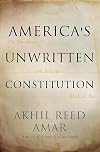
Big impression first: I loved reading it, but would be hesitant to recommend it to a general population rather than a few selected folks. I am likely to check out his other book now that I have some basic tools.
Tons of ideas, lots to think about, so much fun. I already bought his first premise*—that the basic text of the Constitution is not (and even cannot be) unambiguous enough to handle every possible question in the intention of the law without interpretive lenses. I very much enjoyed show more reading his analyses of these different lenses and maybe in writing this out I will have a clearer grasp of them. He also makes various statements about how some of the courts have held in ways that are less than logical—that in itself would be fascinating contrarian reading if I were more familiar with the original opinions.
However, there are some passages, especially in the first half, where he states or strongly implies that people who believe certain things are stupid rather than ill-informed. I try very hard not to collect umbrage about such things, but I don't think I'm in the majority. There are also a few places where he doesn't define certain terms until after he has been using them, so I suspect he could have benefited from stronger editing.
Some of the principles the author seems to use are
1. a fortiori... just as in logic... if the Constitution tells you to do something because of a principle weakly holding, you should also do it where the principle strongly holds, all other things being equal
2. derivation of authority... the way the Constitution is enacted tells us where it derives its authority, and so also tells us something about how we should interpret it, including things like the rights people act like and believe they have (including ones that derived from a court opinion that may not have been the most correct at that time), the assumptions they would have already made when approving the text (e.g. thinking that majorities are the default way to decide a vote, and what they would have seen in the circulated text and things like the Federalist papers), and the other important texts that color what we think the Constitution is about
3. law can be like muscles... Laws that have been made but not used do not have as strong a case as ones that have been used and had problems worked through. In cases where there are multiple plausible ways to understand something, then the way that early government settled into doing it seems like a good idea, since they would've worked out snags (George Washington giving up on hanging out with the Senate and hanging out with his Cabinet instead) and would have been the people folks were picturing doing the work of that early government. So there can be elements of path dependence.
4. going beyond and going against are not necessarily the same thing. There are things you must do, and things you must not do, and then there is everything else, which you have to not arbitrarily lump into yes or no but weigh whether doing it or not doing it will make the musts and must-nots more achievable. So things that make it far more possible to do something you must do, like postpone various trials and proceedings until someone is not in the middle of trying to get government done, or setting up a bank to run the inter-state commerce, are things you better do.
5. symmetry and the balance of power. If one branch can regulate its members in some way, for example, there should be a good reason to not have the other branches similarly regulate its members. show less
Tons of ideas, lots to think about, so much fun. I already bought his first premise*—that the basic text of the Constitution is not (and even cannot be) unambiguous enough to handle every possible question in the intention of the law without interpretive lenses. I very much enjoyed show more reading his analyses of these different lenses and maybe in writing this out I will have a clearer grasp of them. He also makes various statements about how some of the courts have held in ways that are less than logical—that in itself would be fascinating contrarian reading if I were more familiar with the original opinions.
However, there are some passages, especially in the first half, where he states or strongly implies that people who believe certain things are stupid rather than ill-informed. I try very hard not to collect umbrage about such things, but I don't think I'm in the majority. There are also a few places where he doesn't define certain terms until after he has been using them, so I suspect he could have benefited from stronger editing.
Some of the principles the author seems to use are
1. a fortiori... just as in logic... if the Constitution tells you to do something because of a principle weakly holding, you should also do it where the principle strongly holds, all other things being equal
2. derivation of authority... the way the Constitution is enacted tells us where it derives its authority, and so also tells us something about how we should interpret it, including things like the rights people act like and believe they have (including ones that derived from a court opinion that may not have been the most correct at that time), the assumptions they would have already made when approving the text (e.g. thinking that majorities are the default way to decide a vote, and what they would have seen in the circulated text and things like the Federalist papers), and the other important texts that color what we think the Constitution is about
3. law can be like muscles... Laws that have been made but not used do not have as strong a case as ones that have been used and had problems worked through. In cases where there are multiple plausible ways to understand something, then the way that early government settled into doing it seems like a good idea, since they would've worked out snags (George Washington giving up on hanging out with the Senate and hanging out with his Cabinet instead) and would have been the people folks were picturing doing the work of that early government. So there can be elements of path dependence.
4. going beyond and going against are not necessarily the same thing. There are things you must do, and things you must not do, and then there is everything else, which you have to not arbitrarily lump into yes or no but weigh whether doing it or not doing it will make the musts and must-nots more achievable. So things that make it far more possible to do something you must do, like postpone various trials and proceedings until someone is not in the middle of trying to get government done, or setting up a bank to run the inter-state commerce, are things you better do.
5. symmetry and the balance of power. If one branch can regulate its members in some way, for example, there should be a good reason to not have the other branches similarly regulate its members. show less
Far superior to the follow up book "The Unwritten Constitution", A Biography is fairly interesting and contributes a lot to my historical understanding of the Constitution. The book is not by any means an exhaustive exploration of the Constitution, rather it is a commentary on various parts that Amar finds interesting or has clever observations on. A word on the language and tone of the book. It does not read like a typical law book, which seems a bit authoritative. Amar's writing gushes show more (Posner compared it to the demeanor of a cheerleader), can be snide and sometimes trips over itself in trying to be clever or referential (there is at least one joke in the book punning Taft's weight). It's an open question whether that's a good or a bad tone for this kind of book.
The strength of this book is the various historical research that Amar discusses as well as the more grounded non-obvious implications of the text of the constitution. Particularly interesting to me, was the question of the legality of the constitution. He raises the question on how the Articles of Confederation could properly be replaced by the Constitution and answers it by explaining treaty conceptions of the 18th century which allowed rescission in the event of breach (which state breached though, was left unclear politically). Amar shows that the ratification process was remarkably democratic (at least for the time), and that many states suspended property qualifications and none increased qualifications for the conventions which bolstered the popular aspect of ratification (both dodging the state legislatures who loathed to give up their power and increasing the Framer's consideration to make the document democratic to receive an affirmative vote [though Amar's arguments that the framers were particularly populist and that the republic was the same as democracy in their eyes are not compelling arguments]). However, the document was also flawed by the 3/5 clause, which gave recognition to slavery and extra power to the slave states by increasing their power in Congress and in presidential elections and therefore indirectly on judicial appointments. Amar argues controversially that the constitution structurally does not allow secession (being based on the model of the Union between Scotland and England) and that the Civil War fundamentally changed the second amendment (during the revolution, the threat was seen as the central government [hence the need for state militias to be armed], but in the antebellum era with its disenfranchisement, gag rules and revolt against a fairly elected president, the states had become the threats to be fixed by the federal government [and with it, the evolution of the second amendment an individual right]). Amar discusses the interesting implications of the age requirement of officials, which prevented dynasties of favored sons, and residency requirement which prevented the practice of rotten boroughs. There is also somewhat randomly, a refutation of Ackerman's theory of extra-consitutional "constitutional moments", particularly applied to the 14th amendment. Amar also goes through the history of the amendments, discussing their historical context and implications (an interesting one is the innovation of limiting when an amendment can take effect, seemingly allowing modifications to article 5 procedures). There's many other fascinating and controversial arguments made in the rest of the book (from the strange ratification of the 27th amendment [proposed by the first congress but only ratified in 1992 after a letter writing campaign from a college student] to the 12th amendment modifying elections in light of the realities of political parties). A good reference book to keep around for its interesting tidbits alone.
A major weakness of the book is that it's filled with rather idiosyncratic views of Amar on the constitution (though to be fair he indicates the originality of some of these views in the postscript). Some of these views (repetitive from Unwritten Constitution) include the idea that the suffrage amendment on its face entitles women to sit on the jury (apparently an idea derived from certain legislative history from the adoption of the 14th amendment) , since juries vote, the idea that federal statutes always override treaties (rather than later in time, because of the order they are mentioned in the Constitution), and the view that each branch was empowered to decide on the constitutionality of various laws not the supreme court alone (though this view seems historically supported by the scholarship of Gordon Wood). Amar argues that structurally, the constitution gives the executive expansive powers to deal with emergencies and unforeseeable circumstances, and that the list of executive powers is demonstrative, not exhaustive. While not all of these completely unrooted in scholarship or history, they are considered heterodox by doctrine and an unwary reader is not warned of that fact. Overall, a good read for someone interested in the somewhat arcane historical background of the Constitution than current legal practice. show less
The strength of this book is the various historical research that Amar discusses as well as the more grounded non-obvious implications of the text of the constitution. Particularly interesting to me, was the question of the legality of the constitution. He raises the question on how the Articles of Confederation could properly be replaced by the Constitution and answers it by explaining treaty conceptions of the 18th century which allowed rescission in the event of breach (which state breached though, was left unclear politically). Amar shows that the ratification process was remarkably democratic (at least for the time), and that many states suspended property qualifications and none increased qualifications for the conventions which bolstered the popular aspect of ratification (both dodging the state legislatures who loathed to give up their power and increasing the Framer's consideration to make the document democratic to receive an affirmative vote [though Amar's arguments that the framers were particularly populist and that the republic was the same as democracy in their eyes are not compelling arguments]). However, the document was also flawed by the 3/5 clause, which gave recognition to slavery and extra power to the slave states by increasing their power in Congress and in presidential elections and therefore indirectly on judicial appointments. Amar argues controversially that the constitution structurally does not allow secession (being based on the model of the Union between Scotland and England) and that the Civil War fundamentally changed the second amendment (during the revolution, the threat was seen as the central government [hence the need for state militias to be armed], but in the antebellum era with its disenfranchisement, gag rules and revolt against a fairly elected president, the states had become the threats to be fixed by the federal government [and with it, the evolution of the second amendment an individual right]). Amar discusses the interesting implications of the age requirement of officials, which prevented dynasties of favored sons, and residency requirement which prevented the practice of rotten boroughs. There is also somewhat randomly, a refutation of Ackerman's theory of extra-consitutional "constitutional moments", particularly applied to the 14th amendment. Amar also goes through the history of the amendments, discussing their historical context and implications (an interesting one is the innovation of limiting when an amendment can take effect, seemingly allowing modifications to article 5 procedures). There's many other fascinating and controversial arguments made in the rest of the book (from the strange ratification of the 27th amendment [proposed by the first congress but only ratified in 1992 after a letter writing campaign from a college student] to the 12th amendment modifying elections in light of the realities of political parties). A good reference book to keep around for its interesting tidbits alone.
A major weakness of the book is that it's filled with rather idiosyncratic views of Amar on the constitution (though to be fair he indicates the originality of some of these views in the postscript). Some of these views (repetitive from Unwritten Constitution) include the idea that the suffrage amendment on its face entitles women to sit on the jury (apparently an idea derived from certain legislative history from the adoption of the 14th amendment) , since juries vote, the idea that federal statutes always override treaties (rather than later in time, because of the order they are mentioned in the Constitution), and the view that each branch was empowered to decide on the constitutionality of various laws not the supreme court alone (though this view seems historically supported by the scholarship of Gordon Wood). Amar argues that structurally, the constitution gives the executive expansive powers to deal with emergencies and unforeseeable circumstances, and that the list of executive powers is demonstrative, not exhaustive. While not all of these completely unrooted in scholarship or history, they are considered heterodox by doctrine and an unwary reader is not warned of that fact. Overall, a good read for someone interested in the somewhat arcane historical background of the Constitution than current legal practice. show less
Lists
Awards


You May Also Like


Associated Authors
Statistics
- Works
- 11
- Also by
- 3
- Members
- 2,214
- Popularity
- #11,580
- Rating
- 4.0
- Reviews
- 25
- ISBNs
- 43
- Languages
- 2
- Favorited
- 1