
Forrest McDonald (1927–2016)
Author of Novus Ordo Seclorum: The Intellectual Origins of the Constitution
About the Author
Forrest McDonald was born in Orange, Texas on January 7, 1927. He graduated from the University of Texas at Austin and received a doctorate there in 1955. He taught history at Brown University, Wayne State University, and the University of Alabama, where he retired in 2002. He wrote more than a show more dozen books including Novus Ordo Seclorum: The Intellectual Origins of the Constitution, The American Presidency: An Intellectual History, and biographies of Alexander Hamilton and Thomas Jefferson. He died of heart failure on January 19, 2016 at the age of 89. (Bowker Author Biography) show less
Image credit: National Review
Works by Forrest McDonald
Associated Works
A World of Ideas : Conversations With Thoughtful Men and Women About American Life Today and the Ideas Shaping Our Future (1989) — Interviewee — 604 copies, 1 review
An Economic Interpretation of the Constitution of the United States (1913) — Introduction, some editions — 582 copies, 6 reviews
Booknotes: America's Finest Authors on Reading, Writing, and the Power of Ideas (1997) — Contributor — 458 copies, 5 reviews
The Myth of the Robber Barons: A New Look at the Rise of Big Business in America (1991) — Foreword, some editions — 274 copies, 1 review
Presidential Leadership: Rating the Best and the Worst in the White House (2004) — Contributor — 158 copies, 3 reviews
Original Intentions: On the Making and Ratification of the United States Constitution (1993) — Foreword, some editions — 93 copies
The Bill of Rights: Government Proscribed (Perspectives on the American Revolution) (1998) — Contributor, some editions — 14 copies
Public Choice and Constitutional Economics (Political Economy and Public Policy) (v. 6) (1988) 5 copies
The William and Mary Quarterly, July 1987: Constitution of the United States — Contributor — 2 copies
Fame and the founding fathers; papers and comments — Contributor, some editions — 1 copy
Tagged
Common Knowledge
- Canonical name
- McDonald, Forrest
- Birthdate
- 1927-01-07
- Date of death
- 2016-01-18
- Gender
- male
- Education
- University of Texas at Austin (B.A.|1949)
University of Texas at Austin (M.A.|1949)
University of Texas at Austin (Ph.D.|1955) - Occupations
- historian
professor - Organizations
- United States Naval Reserve
University of Alabama
Encyclopedia Britannica Editorial Review Board
National Humanities Institute
Philadelphia Society
Presidential Studies Quarterly (show all 7)
Humanitas - Awards and honors
- Distinguished Graduate Faculty Award (Wayne State University, 1975)
George Washington Medal of Honor (1980)
Outstanding Scholar Award (University of Alabama, 1980)
First Burnum Distinguished Faculty Award (University of Alabama, 1980)
Mortar Board honorary membership (1982)
Board of Foreign Scholarships, presidential appointment (1985-87) (show all 11)
Jefferson Lecture (1987)
Richard M. Weaver Award (1990)
Salvatori Award (1992)
Frederick Moody Blackmon–Sarah McCorkle Moody Outstanding Professor Award, University of Alabama (1995)
The Templeton Honor Tolls for Education in a Free Society, 1997-1998 - Relationships
- McDonald, Ellen Shapiro (wife)
- Nationality
- USA
- Birthplace
- Orange, Texas, USA
- Place of death
- Tuscaloosa, Alabama, USA
- Associated Place (for map)
- USA
Members
Reviews
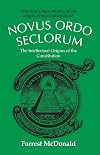
5811. Novus Ordo Seclorum The Intellectual Origins of the Constitution by Forrest McDonald (read 21 Nov 2022) This book, published in 1985, purports to tell the Intellectual reasonings of the authors of the Constitution, delving into their reasoning and detailing the arguments they made at the 1787 Constitutional Convention in Philadelphia. He sets out the arguments made by the delegates , so far as he can deduce them. The author has right-wing leanings but that does not unduly influence his show more account. As I read, it was my feeling that the way the Constitution ended up being adopted was better than what some delegates proposed. The early part of the book was not too interesting to me, but when it got to relating the actual arguments the book became more interesting. None of the amendments to the Constitution are discussed and as we know some of them improved the document adopted after the 1787 Convention. show less
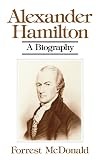
Forrest McDonald is one of my favorite historians. He wrote extensively on the Early Republic time period over his long career. Despite the fame of the Chernow biography of Hamilton, McDonald's older work is, in my humble opinion, a better one.
An excellent read, and an excellent look into the makings of the Constitution. McDonald looks into the ideologies of politics and economics of a wide range of members of the founding generation, as well as how they came together to write a practical compromise in the form of the Constitution.
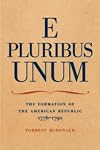
One of the Best books of it's kind
In the 1920s and 30s socialism was all the rage among the "literate" types in US universities as well as Universities world-wide. A writer named Charles Beard made a name for himself in the field of American historiography by claiming that the Founders wrote the Constitution based only on their avarice and greed, that economics was the sole reason that the country was formed. And it was an economics of exclusion, greed and elitism that they created, too. show more Beard was an avowed socialist and communist and his agenda was to knock down the USA's reputation as the democratic light of the world a few pegs, if not to totally destroy it. He succeeded for several decades.
Then came Forrest McDonald..
In 1965, McDonald shattered that anti-American, socialist paradigm. In his two most important books, E Pluribus Unum and Novus Oedo Seclorum, he revealed the philosophical influences as well as the economic ones that guided the minds of the Founders and their contemporaries. And exclusion, elitism and avarice were not some of those principles and philosophies.
McDonald's works are easily read by one not historically versed and clearly laid out. They are a must read if you want an introduction to early American thinkers and their goals and influences. show less
In the 1920s and 30s socialism was all the rage among the "literate" types in US universities as well as Universities world-wide. A writer named Charles Beard made a name for himself in the field of American historiography by claiming that the Founders wrote the Constitution based only on their avarice and greed, that economics was the sole reason that the country was formed. And it was an economics of exclusion, greed and elitism that they created, too. show more Beard was an avowed socialist and communist and his agenda was to knock down the USA's reputation as the democratic light of the world a few pegs, if not to totally destroy it. He succeeded for several decades.
Then came Forrest McDonald..
In 1965, McDonald shattered that anti-American, socialist paradigm. In his two most important books, E Pluribus Unum and Novus Oedo Seclorum, he revealed the philosophical influences as well as the economic ones that guided the minds of the Founders and their contemporaries. And exclusion, elitism and avarice were not some of those principles and philosophies.
McDonald's works are easily read by one not historically versed and clearly laid out. They are a must read if you want an introduction to early American thinkers and their goals and influences. show less
Lists
Awards


You May Also Like


Associated Authors
Statistics
- Works
- 29
- Also by
- 16
- Members
- 1,703
- Popularity
- #15,063
- Rating
- 4.0
- Reviews
- 8
- ISBNs
- 51
- Languages
- 1
- Favorited
- 1