Charles Evans Hughes and the dawning of modern America : how US amphibious units in Europe helped win World War II by Joanne R. Reitano
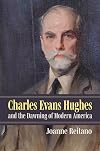
Charles Evans Hughes led a remarkable life. He was a lawyer, governor of New York, associate justice of the United States Supreme Court, Republican presidential nominee (losing narrowly to Woodrow Wilson in 1916), secretary of state under Warren Harding, and, finally, Chief Justice of the United States Supreme Court. This is tough for a biographer because they have to be comfortable writing about diverse topics. Typically, academically trained historians specialize in one of these fields (political, diplomatic, legal), which is likely why it took so long for an historian to summon the courage to write a comprehensive life of Hughes that touches all of these areas. Moreover, there was a staggering amount of research needed to do required to pull it off. This alone warrants admiration for the author, Joanne Reitano. Overall, I think, that this book succeeds in making the case that Hughes was an important person whose life is worth reading about.
A Natural History of Empty Lots: Field Notes from Urban Edgelands, Back Alleys, and Other Wild Places by Christopher Brown Esq
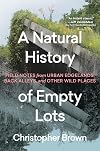
As a suburban/urban dweller who has long been fascinated with empty lots and edgelands (both as a distinct space and as an ecotone), this book speaks to me in a way that few others have. It is a topic that receives little attention in other work and is a theme certainly deserving more attention in the field of environmental history.Some take aways for me: 1) Yes, one will be surprised at one discovers in these edgelands. 2) It blurs the space between "natural and unnatural" with such things as how birds use plastic to reinforce their nests. 3) The value of intentionally getting lost as method of exploring the community. 4) The realization that these places are more common that we think and more vulnerable as sprawl continues to spread across the landscape. There are others, but these are the ones that jump most immediately to mind. I do wish that there was separate photo section. There are number of small black and white photos embedded with the text, but they are hard to make out and appreciate. Finally, as companion reads, I would recommend Ben Goldfarb, Crossings (2023), Peter Alagona, The Accidental Ecosystem (2022), and Henry Thoreau, On Walden (1854).
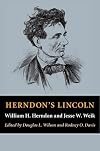
Definitely wouldn't recommend this as an intro to Lincoln, but it is a good biography for those already familiar with life story. Herndon felt it was his duty to depict his friend as he was, a real person, not a demigod, and he succeeded in this. In fact, it still feels somewhat iconoclastic today. He collected many stories from dozens of Lincoln acquaintances from his youth, teens, and early adulthood. And it contains Herndon's own recollections and reminisces of Lincoln, culled from the sixteen years or so as his law partner. The earlier years get a thorough treatment, while the presidency feels like a collection of anecdotes by Springfield friends who travelled to Washington to call on Lincoln during the Civil War. Herndon paints very negative portraits of Abraham's father, Thomas, and wife, Mary Todd. There are lots of long quotes, like extracts from letters that go on for pages, which can bog down the text. The account of the Shields "near duel" in 1842 is particularly rambling and confusing. The best thing about this book, honestly, is the work of the editors. Both their introduction and notes are excellent.
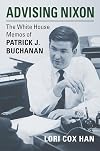
Gives a good view on how the Nixon administration viewed and evaluated news coverage, politics, electorate behavior, polls, interest groups, important personalities, etc.,, and the role of this in shaping their policy formulations and packaging.

I think this is a pretty gritty autobiographical account of the First World War by the standards of the day and one that gives a good view of the soldier's life in the trenches.

Not really an autobiography per se, but collections of previous writings (including those of others) that feel loosely connected and assume a lot of familiarity with environmental issues covered.
Geoengineering, Persuasion, and the Climate Crisis: A Geologic Rhetoric (Rhetoric, Culture, and Social Critique) by Ehren Helmut Pflugfelder
I have not been convinced or persuaded by any the geoengineering solutions that I have heard or read of and this book convinces me to be more suspicious of them than ever.
I liked the reliance on oral histories from those affected. I liked the element the emphasis that natural disasters aren’t quite so natural because of human choices of how we live. And I liked the part about how hard it was to access help from the maze of organizations with rules and regulations that require a lawyer to interpret. What I thought could have been done better was a little more context (what was in there was good) about previous storms, changes in policy, and how Sandy affected other areas in the northeast.
An impressive compilation and collation of a wide range of material that is organized into a well written, flowing narrative. The interaction and evolution of human genes, environment, and culture provide the narrative framework. I really enjoyed the section on storytelling the most, as it gave me a new perspective on that subject, which, I admit, is something that I did not previously attach such importance to. If there is a drawback to this book it is that it feels to me too celebratory. The negative traits are not much explored. In storytelling, for example, where is the boundary between a collective enterprise, shared values, and community on the one hand and lying, propaganda, deceit, etc., on the other hand? We might have risen to our position in nature because of these positive traits, but we must admit that we are a violent species. We prey on one another in a manner that no other species does. There is a very dark strain in our species that is unaddressed in Transcendence.
Makes the reader think about Civil War battles in a different way. Emphasizes the role of tactics and drill to infantry movement, formation, and combat. Claims most units and commanders did fairly well with this considering their minimal preparation. Hess argues that the rifle was not revolutionary to Civil War tactics. It really did not increase the accuracy, firepower, or speed of fire. The rifle offered distance, but few officers, men, or units fired at that range. Chapters describe the different tactical moves through numerous case studies.

Public conversation about global warming/climate change tends to focus on scientific and environmental topics, such as temperature, drought, air quality, oceanic acidification, and mass extinction, etc. Dipesh Chakrabarty argues that what we need is a humanistic understanding of the effect that this is having on our species. The Climate of History in a Planetary Age is an attempt to offer a philosophical/intellectual/humanistic framework to the public discourse on global warming. A couple of key points. First, Chakrabarty wants to re-orient focus to the planet, not the globe. This is more than semantics. The latter conjures up globalism and the human-manufactured world, while the latter, according to Chakrabarty, should be associated with looking more broadly at the planet, as an independent entity in something of James Lovelock Gaia way, that de-centers humankind. In fact, according to his argument, we are not the dominant species and thus the barrier between humans and the natural world is a relic of the Enlightenment that should be discarded altogether. Second, since we are on this point, the Enlightenment created another false belief regarding our relationship with nature, which is that it is full of economic resources that will always provide for or sustain us. Industrialization has completely blown this concept to smithereens. Yet, it is still an essential canon of modern thought. Third, he finds discussions that emphasize capitalism or that claim that the problem show more of climate change cannot be addressed until capitalism is first dismantled are distracting, if not useless. Why? Because, as Chakrabarty writes, socialism doesn’t have a better track record, and, also, while he genuinely decries economic inequality, it is, in his deep history approach, a very recent issue. I think this is to say that the issue is not poverty, but wealth, which is, again, human-centered, global thinking, not one fitting the impending planetary age. We need to emphasize the non-human inhabitants of earth. Of course, there are enormous challenges when everyone wants an air conditioner (a whole chapter is dedicated to this topic) to cool themselves, which is only making the problem worse, and our local, national, and international governments and organizations have no solutions either. I admit that I am not really doing Chakrabarty’s argument anything like justice. This book really speaks to me. I was drawn to it in the first place because it was referenced numerous times in a workshop for scholars working on environmental historians and humanities that I attended in 2022 and frankly I felt embarrassed that was totally unfamiliar with it. Connecting his comments about the Enlightenment to my own observations collected outside this work, really leaves me concerned that we are on the cusp of, or in the midst of, a major paradigm shift. Finally, I understand that others might not be as impressed with this book as I am or might not find his points (and there are so many more than what I enumerated above) convincing or actionable. But I found it thought invoking, and I think that is the best outcome any reader or author can aspire to. show less
The Emancipation Proclamation was real and freed people. Self-Emancipation would be limited without it. President Lincoln began his administration thinking it marked the beginning of the end for slavery and the slave power. As the war progressed Lincoln became convinced that more had to be done. He preferred action at the level of the state legislatures because it would be "court-proof." Even after he settled on an Emancipation Proclamation as a military measure, Guelzo argues that Lincoln did not see any contradiction between it and colonization or compensated emancipation in loyal areas of the union that still had slavery. This book deftly deals with the nuances of Lincoln's policy towards emancipation, the roles of the military leaders, battles, Congress, pro- and anti- administration politicians, journalists, public opinion, etc., on the road to the Emancipation Proclamation. But that was not the stopping point. Lincoln continued to push for legislative soultions. By February 1865 six states ended slavery and Congress had sent what would become the 13th amendment to the states for ratification.
Fun baseball book. I can see why it was considered edgy when it came out in 1960, long before Jim Bouton's Ball Four. Lots of amusing stories and anecdotes, but almost nothing on baseball strategy or tactics. I think one gets a good sense of what major league baseball life was like in the late 1950s and early 1960s.
Good biography of Kentucky Representative, Senator, Senate Majority Leader, and Vice President of the United States under President Harry Truman, Alben Barkley. Mostly focuses on his legislative career. He had a very progressive record and advocated prohibition, which was, as the author explains, a progressive position in 1910s. Wish there would have been a little more on race. Barkley supported anti-lynching and civil rights legislation, for example, despite the fact that Kentucky had segregationist laws. Yet, he was the most popular politician in the state and unbeatable. I felt that this seeming incongruity required some explanation.
The Unending Frontier: An Environmental History of the Early Modern World (California World History Library) by John F. Richards
An important work of global environmental history of impressive scope. Argues that the centralization of states and pushing into frontiers, both contiguous and across oceans, drove resource use, exploitation, and ecological change. Rising populations forced expansion and greater resource, particularly energy, usage. Some states/societies made better choices and/or had better luck than others. Lots of very interesting facts and nuggets of information in this book.
Sets grail stories and quest lore in context of Catholic sacraments and doctrines.
The Market in Birds: Commercial Hunting, Conservation, and the Origins of Wildlife Consumerism, 1850–1920 by Andrea L. Smalley
Fantastic work! Move over buffalo, lets look at the slaughter of birds in the late nineteenth and early twentieth centuries. This book shows the importance of urbanization, industrialization, technology, and railroads to market hunting. Birds were killed to be sold for food to hotels and restaurants and as feathers for the fashion industry. Smalley argues Weeks-McLean (1913) -- and this is true of federal laws in general -- made little difference to the killing of birds because it did not focus on the market. The Migratory Bird Treaty (1918), however, was different because it attacked market hunting. Historians have not come to terms with the role of consumption on the conservation movement.
Although not currently employed in food service, at one point in my life I did work in the accounting department of a now defunct natural foods chain, and have always had an interest in how we make, sell, and eat food. This book scratches some of that itch. Its very chatty with pages of dialogue transcriptions (or recreations of conversations). It can be amusing and interesting but sometimes a little tedious. There are some interesting observations on changing food buying and marketing habits. However, not sure what to do with it all though as a consumer. Produce might be grown in a container instead of on a farm. Ok. Women are buying more alcohol. Ok. Authenticity counts. Agree. Ok. But then what? Most of our food system doesn't feel all that authentic anyway (and its worse if you start peeling back the layers).
Written by a three decade United States Forest Service veteran, this book is partly a study of the degradation of our national parks from climate change and overuse and part memoir about the author's personal battle with ALS. It is a very moving story.
By providing a high level, executive summary of the Bush administration, this volume follows the form of the others in this great series by the University Press of Kansas. Greene provides a sympathetic portrait of a hard-working president who was engaged in the policy and decision-making of his administration, often to the point of obsession. Contrary to public perception in the Bush years, Greene minimizes the role and influence of Vice President Cheney and elevates the role played by First Lady Laura Bush whose calming and steadying presence was not previously recognized. Greene accepts that the errors made by the president and those around him were honest mistakes wrought in the intense emotions and shocks from 9/11, and not old vendettas, runaway militarism, or oil grabs. He rightly emphasizes the importance of AIDS relief to Africa and the role that Bush played in expanding that humanitarian program. Does he give Bush too much of a break? Yes, i think he does. War with Iraq and the destabilization of the entire Middle East, let alone the deaths of US service personnel and Iraqi civilians, is well above and beyond the typical presidential mistake. Then additional errors vastly compounded the original one of starting the war to take it to exponential ends. We won't understand the impact of this for at least another couple of decades. This book was written prior to the US withdrawal of Afghanistan, a fiasco that Bush, who pivoted away from that war in another mistake, show more set the path for the disaster of 2021. show less

Pretty basic baseball memoir with a mix of descriptions of various fields, life on the road, teammates, opponents, some tips and tricks, etc,

There are some of the standard, excellent excerpts in this volume. There are also some less stellar examples. A few of them are very short, comprising between one and three sentences. These were obviously included for the sake of having all the presidents represented. Some of the items are by presidents prior to their becoming president.
s a biographer myself, I really enjoyed Packer's voice and style in this biography. It can be quite insightful and downright humorous at times. Richard Holbrooke is a lively subject who served every Democratic administration in some capacity from John F. Kennedy to Barack Obama. Being best friends with then Secretary of State Dean Rusk's son certainly didn't hurt. But it is telling that while Holbrooke was a gifted networker who amassed a staggering amount of friendships and acquaintances among the elite, he repeatedly demonstrated an extraordinary capability to poison those relationships and alienate these same powerful people. While Rusk served as something of a pseudo father figure to Holbrook, Holbrooke still managed to estrange him. This pattern repeated over and again. Packer, who himself was among Holbrooke's numerous acquaintances, doesn't shy away from the fact that Holbrooke was, to be blunt, an asshole. We get some interesting glimpses of the presidents, bureaucratic battles, turf wars, policy-making, and, most of all, diplomacy in Our Man.
The Memoirs of Field-Marshal Wilhelm Keitel: Chief of the German High Command, 1938-1945 by Walter Görlitz
Written in the shadow of the hangman's noose and he knew it. Keitel frequently claims that Hitler kept him in the dark, obscured the political situation, did not let him make decisions, and duped him. He further adds that the Allies had several important opportunities before the fall of France in 1940 to attack Germany but failed to do so. Keitel defends his deputy General Alfred Jodl, who would also be hanged at Nuremberg. The last chapter was most interesting to me. He was in la-la land as the last days of the war wound down. Walter Gorlitz's introduction paints Keitel as an extremely talented staff officer and hard worker, a portrait quite at odds with the standing view that the Field Marshal (a title he claims he did not want or deserve) was, as Hitler described him, not intellectually fit to be a cinema usher. There are some good nuggets, such as Keitel's account of his discussion with French General Huntziger when the former signed the surrender document in 1940.
The Outlier is book on Jimmy Carter's presidency, but it feels more like a biography than a more traditional history of an administration. Bird presents a very sympathetic view of Carter and his personality, but does not shy away from his flaws and failings. Overall, it is favorable to President Carter, his policies, and achievements. He considers Carter to be an under appreciated, consequential president who was ahead of his time in many policy proposals, especially regarding energy. If there is a villain it is National Security Advisor Zbiginew Brzezinski. It seems his every idea and recommendation to president was the wrong one to follow. Its almost comical. Despite its length, I felt The Outlier omitted some information that I as a reader would have appreciated. For example, there is almost no discussion of votings in the 1976 primaries or either the 1976 or 1980 general elections. Carter's enemies -- be them Democrats or Republicans -- seem to get a very superficial analysis. I felt some legislation/laws were mentioned but their contents went largely unexplained.
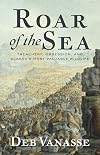
Roar of the Sea is a captivating story of fur seals of Alaska in the late nineteenth and early twentieth centuries. The stories of the American bison/buffalo and passenger pigeons have been oft and well told, but that of the seal is much more limited, especially in the popular literature.
Author Deb Vanasse weaves the story mainly around two individuals. Henry Wood Elliott is the central protagonist. An Ohioan by birth, Elliott was an artist/naturalist sent by the Smithsonian Institution in early 1870s to study the fur seals of Alaska. He believed that the seal fur trade could be an enormous economic asset to the United States, as it had been for the Russians, if properly managed. More importantly, though he fell in love with the seal and spent the remainder of his long life as their champion. His dedication to the seals was often a lonely fight in the face of powerful adversaries. The Alaska Commercial Company (ACC) and later the North American Commercial Company (NCCC) were the federally appointed monopolies with exclusive right to kill seals on land. Their supporters and investors included some of the most powerful economic and political figures in the United States.
If Wood was the hero, Alex McClean was the antagonist. He was a colorful Canadian pirate who made a comfortable living killing seals in the water. Jack London modelled the character of Wolf Larsen in his novel Sea Wolf (1904) on Alex McLean. Vanesse uses McLean’s actions to show the brutality of the seal show more killing on sea, the flow of money in the fur seal skins, and the enormous legal and logistical obstacles to protecting the fur seals. Unlike Elliott who wished to preserve the species from extinction (a fear that became more palpable when Americans came to understand in the 1890s that the buffalo stood on the precipice of extinction), McLean was content to make as much money as he could off the seals, even if that drove them extinction.
Deb Vanasse tells an exciting story. There is corruption, powerful companies, and whistleblowers; threats of war, armed conflict, diplomacy, and treaties; governmental wrongdoing, misdeeds, and cover-up; and questionable hypotheses advanced as proven science by recognized experts. Wood and McLean might be the main characters, but many great men make their appearance on stage as well. Reputations are made, lost, destroyed, and, occasionally, reclaimed.
It is also a story of conservation and wildlife protection. Wildlife conservationist and Bronx Zoo director William T. Hornaday might be the third character in this story. Unlike Elliott, Hornaday was an experienced lobbyist, conservation campaigner, and wildlife publicist, who matched Elliott’s passion for seals with the necessary skills to obtain some measure to protect them. Together they convinced Congress to end the lease system and for the United States to join in multi-power talks that resulted in a treaty in 1911 that protected the seals. Finally finding a respite from a century of relentless commercial killing, the fur seal population recovered. In the end Wood won the day. show less
Author Deb Vanasse weaves the story mainly around two individuals. Henry Wood Elliott is the central protagonist. An Ohioan by birth, Elliott was an artist/naturalist sent by the Smithsonian Institution in early 1870s to study the fur seals of Alaska. He believed that the seal fur trade could be an enormous economic asset to the United States, as it had been for the Russians, if properly managed. More importantly, though he fell in love with the seal and spent the remainder of his long life as their champion. His dedication to the seals was often a lonely fight in the face of powerful adversaries. The Alaska Commercial Company (ACC) and later the North American Commercial Company (NCCC) were the federally appointed monopolies with exclusive right to kill seals on land. Their supporters and investors included some of the most powerful economic and political figures in the United States.
If Wood was the hero, Alex McClean was the antagonist. He was a colorful Canadian pirate who made a comfortable living killing seals in the water. Jack London modelled the character of Wolf Larsen in his novel Sea Wolf (1904) on Alex McLean. Vanesse uses McLean’s actions to show the brutality of the seal show more killing on sea, the flow of money in the fur seal skins, and the enormous legal and logistical obstacles to protecting the fur seals. Unlike Elliott who wished to preserve the species from extinction (a fear that became more palpable when Americans came to understand in the 1890s that the buffalo stood on the precipice of extinction), McLean was content to make as much money as he could off the seals, even if that drove them extinction.
Deb Vanasse tells an exciting story. There is corruption, powerful companies, and whistleblowers; threats of war, armed conflict, diplomacy, and treaties; governmental wrongdoing, misdeeds, and cover-up; and questionable hypotheses advanced as proven science by recognized experts. Wood and McLean might be the main characters, but many great men make their appearance on stage as well. Reputations are made, lost, destroyed, and, occasionally, reclaimed.
It is also a story of conservation and wildlife protection. Wildlife conservationist and Bronx Zoo director William T. Hornaday might be the third character in this story. Unlike Elliott, Hornaday was an experienced lobbyist, conservation campaigner, and wildlife publicist, who matched Elliott’s passion for seals with the necessary skills to obtain some measure to protect them. Together they convinced Congress to end the lease system and for the United States to join in multi-power talks that resulted in a treaty in 1911 that protected the seals. Finally finding a respite from a century of relentless commercial killing, the fur seal population recovered. In the end Wood won the day. show less
 This review was written for LibraryThing Early Reviewers.
Decision in the West: The Atlanta Campaign of 1864 (Modern War Studies (Paperback)) by Albert E. Castel
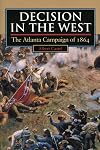
Historian Albert Castel puts General William T. Sherman's 1864 campaign to capture Atlanta in the context of General Ulysses Grant's Overland campaign in Virginia and Abraham Lincoln's re-election bid that fall. The author describes what the various commanders thought, what they knew, what they did not know, what options were before them, and what they actually did. He is critical of many people in their conduct during this campaign, including Sherman, whose objective was Atlanta and not to destroy the Confederate army before him. On the Union side, he is much more favorable towards George Thomas who made many wise and prescient observations and tactical/strategical suggestions that Sherman generally ignored. On the Confederate side, he singles out Generals S.D. Lee and Leonidas Polk for their deficiencies on the battlefield, but also Generals John Hood and Braxton Bragg for their scheming (as well as some oft their decisions). Confederate President Jefferson Davis is faulted for picking commanders based on their relationship to him, not competency, and for harboring some unrealistic expectations. Decisions in the West is told in present tense, which is unusual for a history book. There are ten chapters. One for each month from January through September, plus a last one about the fall. Because of this strict chronological format, the size of the chapters fluctuate from 13 to 134 pages.

A classic work of environmental history on the importance of sportsman to the wildlife conservation movement.
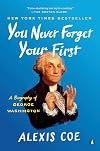
Alexis Coe is right, there have been some real door-stopper biographies of Washington that are mostly hero-worship. Many readers are probably most familiar with the weighty tome by Ron Chernow, which, is, despite its bulk, a very readable book. On the other hand, I once tried to read Douglas Southall Freeman’s biography of Washington but couldn’t get through the mind-numbing genealogy of the extended Washington family that seemed to be an effort to connect every other Virginian family to the great man. And to be upfront about it, I am a George Washington fan. But that doesn’t mean we need to avoid an honest discussion of his life. This is where Coe steps in. She provides a shorter biography of Washington that shifts the discussion into areas of his life that have not received as much coverage as in other works. The most obvious example is his role as an enslaver, which is probably overshadowed in the minds of most readers by his freeing of his slaves …. well, not quite. He willed that “his” enslaved would be freed after Martha’s death. Coe takes on a couple of other Washington myths. First, he was not a very good battlefield commander and lost most of the engagements he fought with the British. She emphasizes a much greater claim to originality: namely, his role as an extremely effective spymaster. Second, she takes on the myth of Washington’s deft handling of the Whiskey Rebellion. To the contrary, she describes it as a massive over-reaction that he show more successfully managed to extricate himself from. Third, she challenges the long-standing idea that George had a very troubled relationship with his mother whom he found a great burden. Coe categorizes this as a slander by male biographers who probably did not really care to investigate their relationship. No surprise, it turns out to be much more complicated than the traditional narrative, and a case could be made that it was never the cold one described my previous biographers. There are other examples. On the whole, I enjoyed the lively writing of this book and found the lists and other sidebar material interesting and informative. I feel that I now have a better and more nuanced understanding of George Washington. show less
War Junk: Munitions Disposal and Postwar Reconstruction in Canada (Studies in Canadian Military History) by Alex Souchen
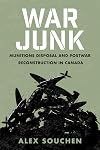
My review at the Michigan War Studies Review: https://www.miwsr.com/2022-017.aspx