
Kristina Cho
Author of Mooncakes and Milk Bread: Sweet and Savory Recipes Inspired by Chinese Bakeries
About the Author
Kristina Cho is a former architectural designer turned food blogger, recipe developer, and cooking instructor living in the San Francisco Bay area. She dedicates her food blog Eat Cho Food, to sharing her unique and personal interpretations of Asian food. On the rare occasion when she's not testing show more recipes, you'll find her tending to her garden and attempting to grow vegetables with her partner, Renben, and rescue pup, Olive. show less
Works by Kristina Cho
Mooncakes and Milk Bread: Sweet and Savory Recipes Inspired by Chinese Bakeries (2021) — Author — 196 copies
Chinese Enough: Homestyle Recipes for Noodles, Dumplings, Stir-Fries, and More (2024) 36 copies, 1 review
Tagged
Common Knowledge
- Gender
- female
- Education
- University of Cincinnati (BS|Architecture)
- Places of residence
- Cleveland, Ohio, USA
San Francisco, California, USA - Map Location
- USA
Members
Reviews
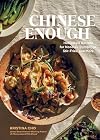
This is a cookbook by a Chinese-American author who grew up in Cleveland Ohio, then moved during college to the San Francisco Bay Area, where she still lives. The book offers neither "authentic" Chinese cooking, nor fully Americanized Chinese food. Rather, the recipes represent the home cooking of someone who grew up in a household with parents and grandparents who had a Chinese restaurant in Cleveland in the 80s and 90s.
Most of the recipes are very clearly written and easy to understand, show more although like nearly every cookbook there are a few points of ambiguity, most often I think around how to handle alternative ingredients. The eight chapters are each organized around a theme ("best with rice", "banquet-worthy", "know your vegetables", etc.) rather than a course (appetizers, soups, mains, etc.), although the final, fruit-themed chapter appears to be all desserts. Reading through I'm struck by how many of the dishes and preparations described are things I want to make, easily 5 or more per chapter, which is huge, considering the chapters have about 15-16 recipes each. There is also a great introductory section on ingredients, techniques, and equipment, as well as a a dozen sample menus, for different sized groups, at the end.
At this point I've used a couple recipes as rough guidelines (my normal way of cooking), and followed one recipe to the letter. I've been very happy with the results overall, although the one I followed literally was too salty. I was willing to attribute that to a difference between my oyster sauce and the author's preferred brand, until I got to the chapter that includes a chicken stock recipe. There, she has you add two tablespoons (!) of kosher salt to only 12 cups of water (for one pound of chicken wings/feet). That, to my mind, is insane. Even assuming a typo where it should be teaspoons, that's still a lot to add before the stock has had a chance to reduce.
To sum up: if you're looking for a good source of approachable, tasty, Chinese (or Chinese-adjacent) recipes, you may want to check this out. But watch out for the salt! show less
Most of the recipes are very clearly written and easy to understand, show more although like nearly every cookbook there are a few points of ambiguity, most often I think around how to handle alternative ingredients. The eight chapters are each organized around a theme ("best with rice", "banquet-worthy", "know your vegetables", etc.) rather than a course (appetizers, soups, mains, etc.), although the final, fruit-themed chapter appears to be all desserts. Reading through I'm struck by how many of the dishes and preparations described are things I want to make, easily 5 or more per chapter, which is huge, considering the chapters have about 15-16 recipes each. There is also a great introductory section on ingredients, techniques, and equipment, as well as a a dozen sample menus, for different sized groups, at the end.
At this point I've used a couple recipes as rough guidelines (my normal way of cooking), and followed one recipe to the letter. I've been very happy with the results overall, although the one I followed literally was too salty. I was willing to attribute that to a difference between my oyster sauce and the author's preferred brand, until I got to the chapter that includes a chicken stock recipe. There, she has you add two tablespoons (!) of kosher salt to only 12 cups of water (for one pound of chicken wings/feet). That, to my mind, is insane. Even assuming a typo where it should be teaspoons, that's still a lot to add before the stock has had a chance to reduce.
To sum up: if you're looking for a good source of approachable, tasty, Chinese (or Chinese-adjacent) recipes, you may want to check this out. But watch out for the salt! show less
Awards


Statistics
- Works
- 2
- Members
- 232
- Popularity
- #97,291
- Rating
- 4.5
- Reviews
- 1
- ISBNs
- 4