
Marc Zvi Brettler
Author of The Jewish Study Bible: Featuring the Jewish Publication Society Tanakh Translation
About the Author
Marc Zvi Brettler is Dora Golding Professor of Biblical Literature and chair of the Department of Near Eastern and Judaic Studies at Brandeis University.
Image credit: via Brandeis University
Works by Marc Zvi Brettler
The Jewish Study Bible: Featuring the Jewish Publication Society Tanakh Translation (1985) — Editor — 1,644 copies, 11 reviews
The Bible with and without Jesus: How Jews and Christians Read the Same Stories Differently (2020) — Author — 218 copies, 3 reviews
The Bible and the Believer: How to Read the Bible Critically and Religiously (2012) — Author — 87 copies
Minḥah le-Naḥum : biblical and other studies presented to Nahum M. Sarna in honour of his 70th birthday (1993) 19 copies
Associated Works
The New Oxford Annotated Bible, New Revised Standard Version with the Apocrypha (1991) — Editor — 4,656 copies, 12 reviews
Approaches to Teaching the Hebrew Bible as Literature in Translation (1989) — Contributor — 15 copies, 1 review
Tagged
Common Knowledge
- Birthdate
- 1958-01-18
- Gender
- male
- Birthplace
- Brooklyn, New York, USA
- Associated Place (for map)
- New York, USA
Members
Discussions
The Jewish Annotated New Testament in Let's Talk Religion (August 2012)
A Different Perspective on the Christian Scriptures in Christianity (April 2012)
Reviews
The Bible With and Without Jesus: How Jews and Christians Read the Same Stories Differently by Amy-Jill Levine
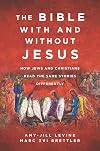
As a Christian lay minister (Church of England) I found this challenging and compelling, but an absolute delight. Challenging because although the authors do their level best to be plain spoken, much of the Jewish terminology was new to me. In the early chapters I had to go back and re-read something, some things several times. Compelling because it was great to see the whole Bible (old and new testaments in Christian-speak) from this new perspective, and to understand how the Jewish bible show more is understood and interpreted in Judaism - especially the rich entanglement of the Tanakh and the Talmud, terms entirely new to me. Makes me almost wish to have been a thelogian!
What we need now is a similar treatise that includes Islam - sadly not yet a feasible prospect. show less
What we need now is a similar treatise that includes Islam - sadly not yet a feasible prospect. show less
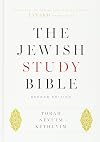
In 2017 my wife read this book. We are studying the Old Testament in church in 2022, so I started to read it also. By the time I got through the introductory material, there were so many things that I wanted to highlight that I bought my own Kindle edition of it.
Why The Jewish Study Bible instead of Christian resources?
Each Christian translation has biases. For example, the King James, which is the one most used in our church, is biased toward Kingship. The Jewish Study Bible I expect to show more have only one principal bias, and I am fine with that. Instead of it having an axe to grind, I find in it a deeper study of what the text means.
This book uses the proposal that the books of the Hebrew Bible are composed as a composite of four sources:
J — Yahveh, Jahwe (German)
E — Elohim God
P — Priestly
D — Duteronomist
The essays make it clear that Jewish interpretation of the Bible changed dramatically over the centuries and describes the competing schools with their attempts to harmonize discrepancies. There are nearly essays at the back of the book. I did not find them as interesting as the Biblical text and notes.
- “The first set of essays, “Jewish Interpretation of the Bible,” surveys, in chronological order, Jewish biblical interpretation in various periods, from earliest times to the present.
- The second set of essays, “Biblical Ideas and Institutions,” surveys various concepts that stand behind the biblical text.
- The third set of essays, “The Bible in Jewish Life,” gives some intimation of the importance of the Bible for Judaism and the Jewish community, an importance that cannot be overstated.
- The fourth set of essays, “Backgrounds for Reading the Bible,” provides contemporary scholarly background material for understanding the Bible.
- The fifth and last set of essays, “The Hebrew Bible in Other Scriptures” recognizes that the authors of both the New Testament and the Qur’an knew and were influenced by the Hebrew Bible, in different ways and to different extents. The two essays juxtapose the uses of Hebrew Scriptures in emerging Christianity and early Islam.”
I did not care for some of the essays
- The Bible in the Dead Sea Scrolls: Seemed to dodge their meaning and instead talked a lot about their classification.
- Classical Rabinic Interpretation: Lots of fussing about fine points, disputations and justifications.
Essays I liked:
- Medieval Jewish Interpretation
- The Bible in the Jewish Philosophical Tradition
- Jewish interpretation of the bible
- Many philosophers and their interpretation of the Bible
“On the other hand, prophecy as a living phenomenon was discouraged. Future prophets had to prove they were “true” and not “false” by producing prophecies that came true before their messages would be heeded (Deut. 18.21), a tautologous condition that effectively abolished prophecy as a living institution after the 5th c. bce, at least in “official” religion. No future revelation could compete with Moses or amend what he had said.” (86%)
Although I have not finished all of the roughly 50 essays at the end of the book, it is time to mark this book as read and move on to New Testament study. show less
Why The Jewish Study Bible instead of Christian resources?
Each Christian translation has biases. For example, the King James, which is the one most used in our church, is biased toward Kingship. The Jewish Study Bible I expect to show more have only one principal bias, and I am fine with that. Instead of it having an axe to grind, I find in it a deeper study of what the text means.
This book uses the proposal that the books of the Hebrew Bible are composed as a composite of four sources:
J — Yahveh, Jahwe (German)
E — Elohim God
P — Priestly
D — Duteronomist
The essays make it clear that Jewish interpretation of the Bible changed dramatically over the centuries and describes the competing schools with their attempts to harmonize discrepancies. There are nearly essays at the back of the book. I did not find them as interesting as the Biblical text and notes.
- “The first set of essays, “Jewish Interpretation of the Bible,” surveys, in chronological order, Jewish biblical interpretation in various periods, from earliest times to the present.
- The second set of essays, “Biblical Ideas and Institutions,” surveys various concepts that stand behind the biblical text.
- The third set of essays, “The Bible in Jewish Life,” gives some intimation of the importance of the Bible for Judaism and the Jewish community, an importance that cannot be overstated.
- The fourth set of essays, “Backgrounds for Reading the Bible,” provides contemporary scholarly background material for understanding the Bible.
- The fifth and last set of essays, “The Hebrew Bible in Other Scriptures” recognizes that the authors of both the New Testament and the Qur’an knew and were influenced by the Hebrew Bible, in different ways and to different extents. The two essays juxtapose the uses of Hebrew Scriptures in emerging Christianity and early Islam.”
I did not care for some of the essays
- The Bible in the Dead Sea Scrolls: Seemed to dodge their meaning and instead talked a lot about their classification.
- Classical Rabinic Interpretation: Lots of fussing about fine points, disputations and justifications.
Essays I liked:
- Medieval Jewish Interpretation
- The Bible in the Jewish Philosophical Tradition
- Jewish interpretation of the bible
- Many philosophers and their interpretation of the Bible
“On the other hand, prophecy as a living phenomenon was discouraged. Future prophets had to prove they were “true” and not “false” by producing prophecies that came true before their messages would be heeded (Deut. 18.21), a tautologous condition that effectively abolished prophecy as a living institution after the 5th c. bce, at least in “official” religion. No future revelation could compete with Moses or amend what he had said.” (86%)
Although I have not finished all of the roughly 50 essays at the end of the book, it is time to mark this book as read and move on to New Testament study. show less
Originally published in 2004, the Second Edition of The Jewish Study Bible (2014) by Marc Zvi Brettle a revised version. I bought this 2,300 pages volume recently to enrich my collection of Bible translations, commentaries and Study bibles. As reference, the Jewish Publication Society translation of the Hebrew Tanakh (among Christians known as First or Old Testament) is used, the latest link in the chain of Jewish Bible Translations. It was made directly from the traditional Hebrew text into show more the idiom of modern English, searching for the meaning of words and phrases. That contrasts the close, literal method of Bible translation applied in the Greek Septuagint, and Targums, which were foundational and influential for translations like the Latin Vulgate (4th Century CE), and English King James Version (1611). The latter was used as source for e.g. Revised Version (1881-1885), and the American Standard Version (1901, revised in 1952).
This treasury for lay readers has the full Tanakh: Torah, Nevi’im, and Kethuvim, Law, Prophets, and Writings, with introductions to each book, footnotes and comments along the running text. True to Jewish tradition 42 essays are included on a plethora of themes categorized in Jewish interpretation of the Bible, Biblical ideas and institutions, and the Bible in Jewish life. Backgrounds for reading the Bible include history, geography, biblical languages, but also textual criticism, canonization of the Bible, and development of the Masoretic Bible. Only one essay is dedicated to the use of the Tanakh in de New Testament and one on use and exegesis in the Qur'an and Muslim Tradition.
It's important to understand that the notes, commentaries and essays reflect a Jewish point of view. It certainly can help Christian readers to re-think their - often exclusive - own interpretation. On the other hand this volume will not invite readers of the Tanakh to (re-)read the Jewish authors of New Testament gospels, letters and revelations. show less
This treasury for lay readers has the full Tanakh: Torah, Nevi’im, and Kethuvim, Law, Prophets, and Writings, with introductions to each book, footnotes and comments along the running text. True to Jewish tradition 42 essays are included on a plethora of themes categorized in Jewish interpretation of the Bible, Biblical ideas and institutions, and the Bible in Jewish life. Backgrounds for reading the Bible include history, geography, biblical languages, but also textual criticism, canonization of the Bible, and development of the Masoretic Bible. Only one essay is dedicated to the use of the Tanakh in de New Testament and one on use and exegesis in the Qur'an and Muslim Tradition.
It's important to understand that the notes, commentaries and essays reflect a Jewish point of view. It certainly can help Christian readers to re-think their - often exclusive - own interpretation. On the other hand this volume will not invite readers of the Tanakh to (re-)read the Jewish authors of New Testament gospels, letters and revelations. show less
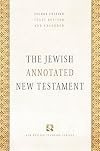
The Jewish Annotated New Testament, (JANT) edited by Amy-Jill Levine and Mark Zvi Brettler, is an exceptional resource for Christians seeking to explore the Jewish roots of their faith This is NRSV translation; each book has scholarly essays and annotations. The introductions to each book, authored by various experts, offers context and a summary. The extensive cross-referencing to the Old Testament, supported by Hellenistic and Talmudic scholarship, clarifies the context and reasoning show more behind New Testament texts. The volume concludes with in-depth essays, such as a comprehensive exploration of the Pharisees. I used JANT as a companion during a three-month study of the New Testament, this study Bible bridges the Old and New Testaments, providing historical and cultural context for Jesus’ life and teachings. show less
Lists
Awards

You May Also Like


Associated Authors
Statistics
- Works
- 18
- Also by
- 5
- Members
- 3,249
- Popularity
- #7,866
- Rating
- 4.3
- Reviews
- 23
- ISBNs
- 49
- Languages
- 1