
James Sturm
Author of Adventures in Cartooning: How to Turn Your Doodles Into Comics
About the Author
Series
Works by James Sturm
Return to Normal 2 copies
The Cereal Killings 2 copies
Fantastic Four : Molécules instables 2 copies
Commix 1 copy
Storylines #1 1 copy
Associated Works
An Anthology of Graphic Fiction, Cartoons, and True Stories (2000) — Contributor — 385 copies, 3 reviews
Nursery Rhyme Comics: 50 Timeless Rhymes from 50 Celebrated Cartoonists (2011) — Illustrator — 227 copies, 27 reviews
Drawn & Quarterly: Twenty-five Years of Contemporary Cartooning, Comics, and Graphic Novels (2015) — Contributor — 150 copies, 5 reviews
Comics Confidential: Thirteen Graphic Novelists Talk Story, Craft, and Life Outside the Box (2016) — Contributor — 62 copies, 4 reviews
Tagged
Common Knowledge
- Canonical name
- Sturm, James
- Birthdate
- 1965-10-08
- Gender
- male
- Education
- University of Wisconsin, Madison
School of Visual Arts - Occupations
- cartoonist
editor
teacher - Organizations
- Center For Cartoon Studies
National Association of Comics Art Educators - Nationality
- USA
- Birthplace
- New York, New York, USA
- Places of residence
- Madison, Wisconsin, USA
Seattle, Washington, USA
Savannah, Georgia, USA
White River Junction, Vermont, USA - Associated Place (for map)
- USA
Members
Reviews
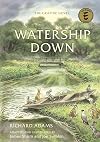
A prophetic bunny and the hell these cute creatures go through! Things get grim here, but it’s not dark or edgy. It is just the perils of man vs animal and animals vs predators. The first warren of rabbits was especially chilly though. I was thoroughly engaged in this story, trying to see how they would survive next.
If you cannot take animal death or cruelty, this isn't the book for you. The rabbits get mangled and bloodied.
I loved Hazel and Fiver’s sibling relationship. His big brother show more really believed in him. I also enjoyed the world-building. The rabbits had their own names for things ex: hrururu = tractor, iron trees = electric towers
Also, Bigwig stood on business every time!
This isn't an enjoyable read due to all the peril and stress, but it's engaging. show less
If you cannot take animal death or cruelty, this isn't the book for you. The rabbits get mangled and bloodied.
I loved Hazel and Fiver’s sibling relationship. His big brother show more really believed in him. I also enjoyed the world-building. The rabbits had their own names for things ex: hrururu = tractor, iron trees = electric towers
Also, Bigwig stood on business every time!
This isn't an enjoyable read due to all the peril and stress, but it's engaging. show less
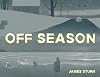
The 2016 election of Donald Trump casts a pall over a marriage disintegrating under the weight of anger and depression. This oddly compelling domestic drama unfolds quickly with just two panels per page but captures the zeitgeist quite well. And despite the characters' dog heads, their humanity is quite evident.
Trigger warning: MAGA hat.
Trigger warning: MAGA hat.

I remember being very bored when I read the overlong original novel back in 1985, and the animated movie did nothing to improve my opinion of the story. But this graphic novel adaptation finally made me care about these rabbits and their desire to start a new life of liberty away from oppressive regimes and deadly predators.
It's a thick adaptation -- and heavy enough to give me a little back strain when I tried to read it while walking -- but the plot has been distilled down to the exciting show more bits and the art is lovely, managing to distinguish most of the large cast of rabbits from each other while still letting them look like real rabbits. show less
It's a thick adaptation -- and heavy enough to give me a little back strain when I tried to read it while walking -- but the plot has been distilled down to the exciting show more bits and the art is lovely, managing to distinguish most of the large cast of rabbits from each other while still letting them look like real rabbits. show less
(Full disclosure: I received a free e-ARC for review through Netgalley. Content warning for death, violence, and allusions to sexual assault.)
-- 4.5 stars --
If you knew me, you'd know how wild it is that I've reached the ripe old age of 46 without reading WATERSHIP DOWN. I've always been a voracious reader and an "animal person," and, especially as a middle schooler, I absolutely devoured stories about animals, particularly anthropomorphized ones (THE SECRET OF NIMH and CHARLOTTE'S WEB are show more favorites). I guess the title gave off strong World War vibes (and, to be fair, it is widely regarded as an allegory for WWII), and I've just never been that into military history. And at 478 pages, it's also a pretty big time commitment for an adult who doesn't have as much time to read as she'd like. Which is all to say that the graphic novel seemed like the perfect entry point into the 'verse of Watership Down.
Before diving in, I brushed up on the basics via Wikipedia and, from what I can see, the graphic novel feels like a rather faithful adaptation. The graphic novel follows the same structure as the novel, from The Journey, to Watership Down, Efrafa, and Hazel-rah. Some of the more ancillary characters are combined or omitted altogether, and only several of the El-ahrairah stories - the folklore of the rabbits - make the cut.
Even with the reduced cast of characters, it's sometimes hard to keep all the rabbits straight. Illustrator Joe Sutphin does a commendable job differentiating between most of the main characters (Bigwig is especially striking), but things do get a little confusing when you add Cowslips's and the Efrafa warrens.
The artwork is simply charming and Sutphin makes it impossible not to fall in love with Hazel, Fiver, Dandelion, Bigwig, Kehaar, and the rest. The rabbit's culture - language, mythology, proverbs, and traditions - is drawn with love and care. Admittedly I haven't spent much time considering the story's parallels to WWII, though I appreciated the lessons about friendship and living in harmony with the natural world (and most notably the Western world's inability to do so).
Something that I didn't expect: much of the story's plot revolves around the Watership Down warren's efforts to procure does for breeding purposes. (Or, put in more noble terms, so that their warren will survive past the current generation.) The founding members are all bucks, and they quickly realize that their efforts will be fleeting without a new generation to take over the warren. They talk about "stealing" does from Efrafa, which reeks of sex trafficking, but it eventually becomes clear that they only intend to rescue those females who will leave with them willingly. Efrafa's leadership, on the other hand, is an authoritarian state that retains its citizens with force, including the threat of death for runaways and traitors. There's even a scene where Hyzenthlay - one of the would-be escapees - asks Bigwig if the does who join Watership Down can "mate with who we choose," heavily implying that they are raped on the regular in Efrafa. It's disappointing that these themes aren't really elaborated upon - but then again, there's an interesting section in the Wikipedia entry about criticisms of gender roles in the book:
[L]iterary critic Jane Resh Thomas said Watership Down "draws upon ... an anti-feminist social tradition which, removed from the usual human context and imposed upon rabbits, is eerie in its clarity". Thomas also called it a "splendid story" in which "anti-feminist bias ... damages the novel in only a minor way".
In terms of adaptations, WATERSHIP DOWN: THE GRAPHIC NOVEL is about as good as it gets; I definitely want to check out the novel(s) and animated movie as well. But the source material definitely isn't without its issues. show less
-- 4.5 stars --
If you knew me, you'd know how wild it is that I've reached the ripe old age of 46 without reading WATERSHIP DOWN. I've always been a voracious reader and an "animal person," and, especially as a middle schooler, I absolutely devoured stories about animals, particularly anthropomorphized ones (THE SECRET OF NIMH and CHARLOTTE'S WEB are show more favorites). I guess the title gave off strong World War vibes (and, to be fair, it is widely regarded as an allegory for WWII), and I've just never been that into military history. And at 478 pages, it's also a pretty big time commitment for an adult who doesn't have as much time to read as she'd like. Which is all to say that the graphic novel seemed like the perfect entry point into the 'verse of Watership Down.
Before diving in, I brushed up on the basics via Wikipedia and, from what I can see, the graphic novel feels like a rather faithful adaptation. The graphic novel follows the same structure as the novel, from The Journey, to Watership Down, Efrafa, and Hazel-rah. Some of the more ancillary characters are combined or omitted altogether, and only several of the El-ahrairah stories - the folklore of the rabbits - make the cut.
Even with the reduced cast of characters, it's sometimes hard to keep all the rabbits straight. Illustrator Joe Sutphin does a commendable job differentiating between most of the main characters (Bigwig is especially striking), but things do get a little confusing when you add Cowslips's and the Efrafa warrens.
The artwork is simply charming and Sutphin makes it impossible not to fall in love with Hazel, Fiver, Dandelion, Bigwig, Kehaar, and the rest. The rabbit's culture - language, mythology, proverbs, and traditions - is drawn with love and care. Admittedly I haven't spent much time considering the story's parallels to WWII, though I appreciated the lessons about friendship and living in harmony with the natural world (and most notably the Western world's inability to do so).
Something that I didn't expect: much of the story's plot revolves around the Watership Down warren's efforts to procure does for breeding purposes. (Or, put in more noble terms, so that their warren will survive past the current generation.) The founding members are all bucks, and they quickly realize that their efforts will be fleeting without a new generation to take over the warren. They talk about "stealing" does from Efrafa, which reeks of sex trafficking, but it eventually becomes clear that they only intend to rescue those females who will leave with them willingly. Efrafa's leadership, on the other hand, is an authoritarian state that retains its citizens with force, including the threat of death for runaways and traitors. There's even a scene where Hyzenthlay - one of the would-be escapees - asks Bigwig if the does who join Watership Down can "mate with who we choose," heavily implying that they are raped on the regular in Efrafa. It's disappointing that these themes aren't really elaborated upon - but then again, there's an interesting section in the Wikipedia entry about criticisms of gender roles in the book:
[L]iterary critic Jane Resh Thomas said Watership Down "draws upon ... an anti-feminist social tradition which, removed from the usual human context and imposed upon rabbits, is eerie in its clarity". Thomas also called it a "splendid story" in which "anti-feminist bias ... damages the novel in only a minor way".
In terms of adaptations, WATERSHIP DOWN: THE GRAPHIC NOVEL is about as good as it gets; I definitely want to check out the novel(s) and animated movie as well. But the source material definitely isn't without its issues. show less
Lists
Awards


You May Also Like


Associated Authors
Statistics
- Works
- 42
- Also by
- 11
- Members
- 2,404
- Popularity
- #10,668
- Rating
- 3.8
- Reviews
- 110
- ISBNs
- 83
- Languages
- 5
- Favorited
- 1