
Hergé (1907–1983)
Author of Tintin in Tibet
About the Author
'Hergé' was born Georges Remi on 22 May, 1907 in Etterbeek, a suburb of Brussels, in Belgium. After leaving school, he worked for the daily newspaper, Le XXe Siècle (The 20th Century). He was responsibe the for the section of the newspaper designed for children. Tintin, the main character in his show more works, was introduced on January 10, 1929 in a story entitled 'Tintin in the Land of the Soviets.' Each story ran as a comic strip in the newspaper and then was published as a book. Some of these books were adapted for the small screen including The Crab With The Golden Claws, Star of Mystery, Red Rakham's Treasure, Black Island, Objective Moon and The Calculus Affair. French TV produced longer versions of twenty of the books in 1992, which have been broadcast in over fifty countries. On 3 March, 1983, he died in Brussels. At the time of his death, he was working on Tintin and the Alpha-Art, which was published in an unfinished form. (Bowker Author Biography) show less
Series
Works by Hergé
The Crab with the Golden Claws / The Shooting Star / The Secret of the Unicorn (1991) 706 copies, 11 reviews
Red Rackham's Treasure / The Seven Crystal Balls / Prisoners of the Sun (1991) 603 copies, 6 reviews
The Adventures of Tintin [1]: Tintin in the Land of the Soviets / Tintin in the Congo (2007) 171 copies, 1 review
The Castafiore Emerald / Flight 714 / Tintin and the Picaros / Tintin and Alph-Art (2007) 115 copies, 1 review
The Secret of the Unicorn (The Adventures of Tintin: Young Readers Edition) (2011) 93 copies, 1 review
The Crab with the Golden Claws (The Adventures of Tintin: Young Readers Edition) (2012) 45 copies, 1 review
Tintin Collection 22-23 (Flight 714/Tintin and the Picaros/Quick and Flupke) (1991) 22 copies, 4 reviews
Hergé : Paris, Grand Palais, Galeries nationales, 28 septembre 2016 - 15 janvier 2017 (2016) 20 copies
The Adventures of Tintin 13-14 (The Seven Crystal Balls/Prisoners of the Sun) (1948) 19 copies, 1 review
Versions originales des albums Tintin : Les Cigares de pharaon (1932) - Le Lotus bleu (1934) - L'Oreille cassée (1935) (1983) 15 copies
La malédiction de Rascar Capac : Le mystère des boules de cristal, tome 1 (2014) 15 copies, 1 review
Tintin Collection 02-03 (Tintin in the Congo/Tintin in America/The Amiable Mr. Mops) (1999) 13 copies
Tintin Collection 13-14 (The Seven Crystal Balls/Prisoners of the Sun/Quick & Flupke) (1999) 13 copies, 1 review
Tintin Collection 11-12 (The Secret of the Unicorn/Red Rackham's Treasure/Quick and Flupke) (1991) 12 copies, 1 review
Tintin Collection 02-03 (Tintin in the Congo/Tintin in America/Biography of Herge) (1996) 11 copies, 1 review
Tintin Collection 09-10 (The Crab with the Golden Claws/The Shooting Star/Quick and Flupke) (1999) 10 copies
Tintin Paperback Boxed Set 23 titles 10 copies
Tintin Collection 20-21 (Tintin in Tibet/The Castafiore Emerald/Quick and Flupke) (2000) 10 copies, 1 review
The Blue Lotus: The Adventures of Tintin - Young Reader Edition (Tintin Young Readers Series) (2013) 10 copies
Tintin Collection 08-09 (King Ottokar's Sceptre/The Crab with the Golden Claws/Mr. Bellum) 9 copies, 1 review
Flight 714 / Secret of the Unicorn / Red Rackham's Treasure (The Adventures of Tintin) (1985) 8 copies
Kuifje collectie : het komplete werk van Hergé. [19]: Hergé, de illustrator en zijn wereld ; De wereld van Hergé gepr (1992) 8 copies, 1 review
"Castafiore Emerald", "Flight 714" and "Tintin and the Picaros" (v. 7): The Castafiore emerald ; Flight 714 ; Tintin and the picaros (Three-in-one volume) 7 copies, 1 review
Kuifje collectie : het komplete werk van Hergé. De guitenstreken van Quick en Flupke. - Vert. van: Les exploits de Quic 7 copies, 1 review
Kuifje collectie : het komplete werk van Hergé. Hoe ontstaat een avontuur van Kuifje. - Vert. van: Le musé imaginaire 7 copies, 1 review
Kuifje collectie : het komplete werk van Hergé. deel 16. De avonturen van Jo, Suus en Jokko. De Najavallei - De Guitenstreken va 6 copies, 1 review
Samlade verk Tintin i andra media ; Herg�e: tecknaren och hans verk ; Intervju med Herg�e (2002) 5 copies
LE PETIT VINGTIEME 5 copies
Tim und Struppi: Tim und Struppi Gesamtausgabe: Alle Comics im hochwertigen Schuber! (2019) 5 copies
The adventures of Tintin. Volume 1 4 copies
Herge, 1922-1932: Les debuts d'un illustrateur (Bibliotheque de Moulinsart) (French Edition) (1987) 4 copies
Coffret intégral Tintin (2019) (Les coffrets et intégrales des aventures de Tintin) (French Edition) (2019) 4 copies
Rackham den Rödes skatt (LP) 3 copies
Jouons avec Tintin à Moulinsart 3 copies
Tintin : Le singe 3 copies
Tintin volume 1 3 copies
The Adventures of Tintin: Volume 1 3 copies
Tintín. El álbum de la película (Las Aventuras De Tintin / the Adventures of Tintin) (Spanish Edition) (2011) 3 copies
Tintin Collection 16-17 (Destination Moon/Explorers on the Moon/They Explored the Moon) (2000) 3 copies
De automobiel I. Van zijn oorsprong tot 1900 — Illustrator — 3 copies
Four Further Adventures of Tintin: "Seven Crystal Balls", "Prisoner of the Sun", "Calculus Affair", "Red Sea Sharks" (BBC Radio Collection) (1999) 3 copies
Tintin : Samlarguide 3 copies
Spelen met Kuifje op Molensloot 3 copies
Die Abenteuer von Jo, Jette und Jocko: Gesamtausgabe: Comic-Abenteuer für Kinder ab 7 Jahren (2025) 3 copies
L'oeuvre intégrale T.5 2 copies
Quim e Filipe 12 2 copies
L'oeuvre intégrale T.4 2 copies
Hergé 2 copies
Tintin en noir et blanc, 9 mini albums dans un coffret allongé, de Tintin au Pays des Soviets à Le crabe aux pinces d'or (1990) 2 copies
Tintim 2 copies
The adventures of Tintin 2 copies
Prisoners of the Sun: Popup 2 copies
L'éléphant 2 copies
Die Abenteuer von Jo, Jette und Jocko: Gesamtausgabe: Comic-Abenteuer für Kinder ab 7 Jahren 2 copies
Het testament van Mr. Pump 2 copies
Tintin le petit livre des dangers 2 copies
Tintin i Amerika ur Tintins äventyr 2 copies
Tintin i Kongo (ur Tintins äventyr) 2 copies
Quick & Flupke 2 copies
Hergé, Tintin et les Soviets 1 copy
Tintim rumo à Lua 1 copy
Tintin couleur colour 1 copy
Tintin #07: The Black Island 1 copy
Ls xarutos de l faraó 1 copy
Il loto blu 1 copy
Le 7 sfere di cristallo 1 copy
Tintin e l'Alph-Art 1 copy
Qi ge shui jing qiu 1 copy
714 hang ban 1 copy
Land of Black Gold (Tintin) 1 copy
Kuifje Integraal deel 1 1 copy
Tim und Struppi Sammelband 2: Vier Abenteuer in einem Band (Tim und Struppi Sammelbandausgabe, Band 2) (2026) 1 copy
Fa lao de xue jia 1 copy
Tai yang shen de qiu tu 1 copy
Tim und Struppi Sammelband 1: Die ersten 3 Abenteuer in einem Band (Tim und Struppi Sammelbandausgabe, Band 1) (2026) 1 copy
Les archives Tintin, tome 12 1 copy
The Adventures of Tintin, Vol. 1 (Tintin in America / Cigars of the Pharaoh / The Blue Lotus) 1 copy
Tintin (various titles) 1 copy
Les Cigares Du Pharaon = Cigars of the Pharaoh (Tintin) (French Edition) by Herge (1999-01-15) 1 copy
Tim und Struppi 1 copy
Tintin agenda 2004 1 copy
Les girafes 1 copy
Quelles chutes ! 1 copy
Quelles douches ! 1 copy
Det hemliga vapnet 1 copy
Agenda Tintin 2000 1 copy
Vliegtuigen Oorlog 1939-1945 — Illustrator — 1 copy
Totor P.L. van de Meikevers 1 copy
Diabruras de Quick e Flupke 1 copy
Blå lotus ur Tintins äventyr 1 copy
kwik en flupke, 7° reeks 1 copy
Kuifje 1 copy
As aventuras de tintim 1 copy
The Adventures of Tin Tin: Tin Tin in The Land Of Soviets and Tin Tin in The Lands of Chicago 1 copy
Drie avonturen van Kuifje: Kuifje in Amerika. De zwarte rotsen. De zaak Zonnebloem — Author — 1 copy
Tintin (BBC) 1 copy
Tintin Books 1 copy
L'oeuvre intégrale T.8 1 copy
L'oeuvre intégrale T.6 1 copy
L'oeuvre intégrale T.3 1 copy
The Adventures of TinTin, Vol 8: Flight 714 To Sydney/ TinTin and the Picaros/ TinTin and Alph-Art 1 copy
blue lotus, The 1 copy
Teyrnwialen Ottokar 1 copy
The Sdventures Of Tintin 1 copy
Tim und Struppig 1 copy
Les Aventures de Tintin / Le Crabe aux Pinces d'Or (French edition of the Crab with the Golden Claws) / Book and DVD Package (1974) 1 copy
Tintin i els animals 1 copy
Le "Manitoba" ne Répond Plus 1 copy
L'Éruption du Karamako 1 copy
Tintín 2/6: La Oreja Rota - La Isla Negra - El Cetro de Ottokar - El Cangrejo de las Pinzas de Oro 1 copy
De avonturen van Kuifje 6 1 copy
O Senhor Sanzot ao telefone 1 copy
Pack Tintin 2020 1 copy
Les aventures de Tintin 1 copy
Associated Works
The Adventures of Tintin: The Secret of the Unicorn [2011 film] (2011) — Original story — 340 copies, 7 reviews
Tintin au pays des mots espagnol-frans, frans-espagnol = Tinten el pade las palabras : EspaFranc FrancEspa (1990) — Illustrator — 9 copies
Corriere della Sera - Sette: Sei fumetti per l'estate - 11 Agosto 2011 — Author — 1 copy
Tagged
Common Knowledge
- Canonical name
- Hergé
- Legal name
- Remi, Georges Prosper
- Birthdate
- 1907-05-22
- Date of death
- 1983-03-03
- Gender
- male
- Occupations
- illustrator
author
cartoonist
graphic designer - Organizations
- Association des Scouts Baden-Powell de Belgique
Movement d’Action catholique
Association catholique de la Jeunesse belge (A.C.J.B.) - Awards and honors
- Musée Hergé, Louvain-la-Neuve, Belgium (2009)
- Short biography
- [excerpted from Wikipedia]
Hergé began his career by contributing illustrations to Scouting magazines, developing his first comic series, The Adventures of Totor, for Le Boy-Scout Belge in 1926. Working for the conservative Catholic newspaper Le Vingtième Siècle, he created The Adventures of Tintin in 1929. Domestically successful, after serialisation the stories were published in book form, with Hergé continuing the series and also developing both the Quick & Flupke and Jo, Zette and Jocko series for Le Vingtième Siècle. Following the German occupation of Belgium in 1940, Le Vingtième Siècle was closed, but Hergé continued his series in Le Soir, a popular newspaper controlled by the Nazi administration.
After the Allied liberation of Belgium in 1944, Le Soir was shut down and its staff – including Hergé – accused of having been collaborators. An official investigation was launched, and although no charges were brought against Hergé, in subsequent years he repeatedly faced accusations of having been a traitor and collaborator. With Raymond Leblanc he established Tintin magazine in 1946, through which he serialised new Adventures of Tintin stories. As the magazine's artistic director, he also oversaw the publication of other successful comics series, such as Edgar P. Jacobs' Blake and Mortimer. In 1950 he established Studios Hergé as a team to aid him in his ongoing projects.
Hoping to imitate the success of the recent animated films Asterix the Gaul (1967) and Asterix and Cleopatra (1968), Hergé agreed to the production of two animated Belvision films based on the Adventures of Tintin. The first, Tintin and the Temple of the Sun (1969), was based on pre-existing comics, whereas the second, Tintin and the Lake of Sharks (1972) was an original story written by Greg. - Cause of death
- cardiac arrest
- Nationality
- Belgium
- Birthplace
- Etterbeek, Brussels, Belgium
- Place of death
- Woluwe-Saint-Lambert, Belgium
- Burial location
- Cemetery on Dieweg, Uccle, Brussels, Belgium
- Map Location
- Belgium
Members
Reviews
http://nwhyte.livejournal.com/2354109.html
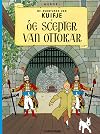
I remembered this fondly from my childhood - it may even have been the first Tintin book I ever read - and very much hoped that it would live up to my memories. I'm glad to say that it did, and if anything it works even better for me now that I have spent several years in the meantime being closely involved with Balkan politics, and also because I now know Brussels rather better than I did when I was 9. (Apparently it was the first Tintin story to be show more translated into English, though that was some time before I was taking much interest in these matters.)
The story is pretty straightforward - Tintin gets recruited by a Balkan culture expert to travel to the mysterious land of Syldavia, where he crucially averts a plot to deprive the young king of his throne, engineered by an internal revolutionary movement which is a proxy for the neighbouring dictatorship of Borduria. There are lots of lovely Balkan/Slavic touches - although Syldavian spelling is closer to Polish than to the Balkans, the towns clearly have minarets and Cyrillic is used; the landscape and army/police uniforms are clearly drawn from the Balkan kingdoms between the wars. The small countries of south-eastern Europe are an easy target, but sometimes this can be done well.
But in fact the Balkans are mere protective coloration for what Hergé was really writing about. The unusually realistic depictions of the Warandepark and Avenue Louise in the early pages give it away. King Ottokar, running a small democracy in fear of annexation by its authoritarian neighbour through a front organisation, is not (as I have heard some speculate) Michael of Romania, but a slightly romanticised Leopold III of Belgium. The Bordurian plot to invade Syldavia could have been based on the Gleiwitz incident, were it not for the fact that it was published in Le Petit Vingtième in the summer of 1939, shortly before the Gleiwitz incident actually happened. Less than a year after Tintin En Syldavie had finished its original run, Belgium was occupied not by the sinister Bordurian activist Müsstler but by a bloke with a similar name.
And considering the general perception that Hergé was not exactly vigorous in resistance to Nazi occupation, it's a bit redemptive to see this story putting down a marker before it actually happened.
Also, given Tom McCarthy's speculation about Hergé's ancestry, it's amusing that he draws himself into two of the court scenes...
This was a good jumping-off point for my lifelong affection for Tintin, and I think I would still recommend it as a starting point today for people who for whatever reason have never yet tried it. The best of the pre-war albums is The Blue Lotus, but to really enjoy it you have to have read the inferior Cigars of the Pharaoh first. King Ottokar's Sceptre works well as a standalone adventure. (Even without Captain Haddock.) show less
I remembered this fondly from my childhood - it may even have been the first Tintin book I ever read - and very much hoped that it would live up to my memories. I'm glad to say that it did, and if anything it works even better for me now that I have spent several years in the meantime being closely involved with Balkan politics, and also because I now know Brussels rather better than I did when I was 9. (Apparently it was the first Tintin story to be show more translated into English, though that was some time before I was taking much interest in these matters.)
The story is pretty straightforward - Tintin gets recruited by a Balkan culture expert to travel to the mysterious land of Syldavia, where he crucially averts a plot to deprive the young king of his throne, engineered by an internal revolutionary movement which is a proxy for the neighbouring dictatorship of Borduria. There are lots of lovely Balkan/Slavic touches - although Syldavian spelling is closer to Polish than to the Balkans, the towns clearly have minarets and Cyrillic is used; the landscape and army/police uniforms are clearly drawn from the Balkan kingdoms between the wars. The small countries of south-eastern Europe are an easy target, but sometimes this can be done well.
But in fact the Balkans are mere protective coloration for what Hergé was really writing about. The unusually realistic depictions of the Warandepark and Avenue Louise in the early pages give it away. King Ottokar, running a small democracy in fear of annexation by its authoritarian neighbour through a front organisation, is not (as I have heard some speculate) Michael of Romania, but a slightly romanticised Leopold III of Belgium. The Bordurian plot to invade Syldavia could have been based on the Gleiwitz incident, were it not for the fact that it was published in Le Petit Vingtième in the summer of 1939, shortly before the Gleiwitz incident actually happened. Less than a year after Tintin En Syldavie had finished its original run, Belgium was occupied not by the sinister Bordurian activist Müsstler but by a bloke with a similar name.
And considering the general perception that Hergé was not exactly vigorous in resistance to Nazi occupation, it's a bit redemptive to see this story putting down a marker before it actually happened.
Also, given Tom McCarthy's speculation about Hergé's ancestry, it's amusing that he draws himself into two of the court scenes...
This was a good jumping-off point for my lifelong affection for Tintin, and I think I would still recommend it as a starting point today for people who for whatever reason have never yet tried it. The best of the pre-war albums is The Blue Lotus, but to really enjoy it you have to have read the inferior Cigars of the Pharaoh first. King Ottokar's Sceptre works well as a standalone adventure. (Even without Captain Haddock.) show less
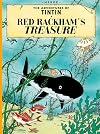
Red Rackham's Treasure: The Official Classic Children’s Illustrated Mystery Adventure Series (The Adventures of Tintin) by Hergé
My review, as published in Tintin Books:
Another hit for Herge, and a clear indicator that he was entering a golden age of storytelling. There's nothing surprising here - it would be many years before Herge decided to break his own format - but again the story is incredibly well done. Professor Cuthbert Calculus is a wonderful addition to the cast: he's very funny and yet also a competent addition to the team. Like Haddock, he appears at first glance to be simply a plot functionary, but was show more immediately popular and would prove his worth in many stories following this one. (Sure, these days the "deaf man mishears thing" trope is overused, but it remains amusing in the "Tintin" albums)
Hergé published this story as a serial in "Le Soir" over the course of 1943: a successful sequel to his own early favourite, "The Secret of the Unicorn". Remaining apolitical, this album is also the first not to feature a typical villain of any kind. Instead, the emphasis is squarely on the adventure. Perhaps because of this, these two stories would be the first translated into English a decade later, and remain some of Tintin's most popular journeys.
It's fair to say that this album doesn't quite reach the heights of "The Secret of the Unicorn". Without the integrated plotlines of that story, and without the commanding presence of the historical tale, this becomes a more traditional adventure. What elevates it is: a) the lack of a villain of any kind, making this an exercise in character and ambience alone; b) the feeling of scientific discovery which will typify the next few albums; c) the fabulous interplay between the lead characters; and d) the lush atmosphere - from bustling Belgium and the waves of the Atlantic, to a Caribbean island, an underwater grotto, and finally the bowels of Marlinspike Hall.
It's fair to say that Herge had mastered his art here. In years to come, he would tire of the formula and begin subverting it, but for now he was riding a wave that would yield several classic works. show less
Another hit for Herge, and a clear indicator that he was entering a golden age of storytelling. There's nothing surprising here - it would be many years before Herge decided to break his own format - but again the story is incredibly well done. Professor Cuthbert Calculus is a wonderful addition to the cast: he's very funny and yet also a competent addition to the team. Like Haddock, he appears at first glance to be simply a plot functionary, but was show more immediately popular and would prove his worth in many stories following this one. (Sure, these days the "deaf man mishears thing" trope is overused, but it remains amusing in the "Tintin" albums)
Hergé published this story as a serial in "Le Soir" over the course of 1943: a successful sequel to his own early favourite, "The Secret of the Unicorn". Remaining apolitical, this album is also the first not to feature a typical villain of any kind. Instead, the emphasis is squarely on the adventure. Perhaps because of this, these two stories would be the first translated into English a decade later, and remain some of Tintin's most popular journeys.
It's fair to say that this album doesn't quite reach the heights of "The Secret of the Unicorn". Without the integrated plotlines of that story, and without the commanding presence of the historical tale, this becomes a more traditional adventure. What elevates it is: a) the lack of a villain of any kind, making this an exercise in character and ambience alone; b) the feeling of scientific discovery which will typify the next few albums; c) the fabulous interplay between the lead characters; and d) the lush atmosphere - from bustling Belgium and the waves of the Atlantic, to a Caribbean island, an underwater grotto, and finally the bowels of Marlinspike Hall.
It's fair to say that Herge had mastered his art here. In years to come, he would tire of the formula and begin subverting it, but for now he was riding a wave that would yield several classic works. show less
My review from Tintin Books:
"As Napoleon said, 'Think of it, soldiers. Forty centuries look down upon you.'"
-- Captain Haddock to Calculus
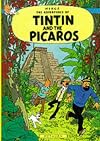
I hadn't read "Tintin and the Picaros" since I was a kid, so it's arguably the completed album I know least. Returning to it, I found much to love. After the creative misstep that was Flight 714, Herge was very much back on track.
Of all the albums in the "Tintin" ouevre, "Picaros" is less clearly aimed at children. (Even the formula-defying The Castafiore show more Emerald features a great deal of slapstick and mistaken identities.) There is a mature, autumnal feel from the first two frames, as Tintin arrives at Marlinspike in different clothes on his motorbike, amidst the barren, tilled fields, dark skies, dead trees and the constant presence of ravens. And there are SO many words! The early pages, during which Haddock and Tintin ponder their connection to the coup in San Theodoros, and whether to travel there to clear their names, is filled with frame after frame of news bulletin and lengthy debate. It's wonderful to see the two personalities going head to head, and for each to make a decision that truly reflects them. (While Tintin's ultimate desire to join his friends is in character, it feels a bit abrupt, it must be said.)
The sequence where Haddock and Calculus travel to San Theodoros must be the longest without Tintin in the canon, and allows them to shine. Here, Calculus is decidedly more subdued, and Haddock seems to have lost his taste for alcohol. (Incidentally, it's nice that many characters - including Nestor - drink, which evens out Tintin's own teetotalism.) Herge is clearly enjoying himself: the crowd scenes are still lively, and he decorates the jungle landscape much more than other recent works (it wouldn't be "Tintin" without a few encounters with the native wildlife), although - oddly - a lot of time is again spent in confined quarters. (Perhaps still echoing his growing interest in comedies of manners?).
There are many small things to enjoy - the comedy of Tintin and Calculus failing to eat the spicy food of the Arumbayas (themselves making a pleasant return after being the focus of The Broken Ear, and General Alcazar has never been more lively than he is here.
It's in the final third of the work that Herge steps things up a level. At first, he makes a point of how alcoholism has destroyed some native tribes, and continues to redress his characters - with Tintin comically forcing the stoic Alcazar to refrain from killing anyone if he wishes for help with his coup. And then we meet Alcazar's wife Peggy: a brash redhead in curlers (who, naturally, only Calculus finds attractive - shades of La Castafiore). Suddenly, the general is washing dishes in his wife's pink apron, and finding himself henpecked morning and night. Over the last 15 pages, Herge begins to deconstruct his own world. "Picaros" is a very personal story, with Tintin forced to step into the local politics to save his own friends. The alcohol mystery is only solved right near the end (when, in a neat bow, it becomes integral to the climax), and Herge delights with some of the later frames - the fire-lit silhouette of the Picaros' last party; the Viva Tapioca party (with wanted posters of the Thom(p)sons in the edge of the frame!).
There's something neat and perfect in the plotting too. Although not much happens (it takes a full third just to get Tintin to San Theodoros, and another third of chases), the climax genuinely feels climactic. There's a haunting sense in the last few pages, as the Thom(p)sons face death with a moving stoicism, while Alcazar cannot get through to the executioner: it's a scene that has played out in countless movies, only here, the soldier first deliberately dials the wrong number, and then gets a voice saying "The number you have dialled does not exist"!!. The delightful climax, in which Tintin travels in an inflatable parade balloon to save his friends, is breathtaking. And the penultimate page ends with an hysterical frame: Castafiore preparing to sing, and everyone she knows looking terrified. We don't even need to hear her sing anymore (and don't here, except on television): the set-up is now as perfect as the joke itself.
I feel like I've said a lot and yet not much. Well, in short, this is never going to be the most remembered "Tintin" album. So much relies on previous events, and - as biographer Michael Farr would argue - the involvement of Herge's studio assistants means that the frames sometimes lose just a little something. (Dialogue scenes, particularly, seem a little less artistically dense than they once were). But truthfully there's very little to criticise: all the supporting cast play roles here, but none overtake the picture. Tintin has developed considerably as a character, with his bike, his yoga and his peace symbol. The politics are clever, the guest cast amusing, and the logic taut.
Of course, it wouldn't be a review without commenting on how things end. Jolyon Wagg has shown up amidst a tour bus headed for the festivities, and Herge has a lot of fun showing these clueless tourists interacting with genuine people, but treating them as if they are some kind of cultural exhibit (perhaps reflecting a little on how readers of "Tintin" could portray themselves as post-racial, while accepting stereotypes and half-truths without question?). On the final page, though, things reach their most terrifying. As Tintin and friends jet off back to the safety of Belgium, they've re-instated Alcazar as General of San Theodoros. In reality, he's already being henpecked by Peggy while - in the album's penultimate frame - Alcazar's grim-faced soldiers patrol a garbage-strewn slum. A happy ending indeed. show less
"As Napoleon said, 'Think of it, soldiers. Forty centuries look down upon you.'"
-- Captain Haddock to Calculus
I hadn't read "Tintin and the Picaros" since I was a kid, so it's arguably the completed album I know least. Returning to it, I found much to love. After the creative misstep that was Flight 714, Herge was very much back on track.
Of all the albums in the "Tintin" ouevre, "Picaros" is less clearly aimed at children. (Even the formula-defying The Castafiore show more Emerald features a great deal of slapstick and mistaken identities.) There is a mature, autumnal feel from the first two frames, as Tintin arrives at Marlinspike in different clothes on his motorbike, amidst the barren, tilled fields, dark skies, dead trees and the constant presence of ravens. And there are SO many words! The early pages, during which Haddock and Tintin ponder their connection to the coup in San Theodoros, and whether to travel there to clear their names, is filled with frame after frame of news bulletin and lengthy debate. It's wonderful to see the two personalities going head to head, and for each to make a decision that truly reflects them. (While Tintin's ultimate desire to join his friends is in character, it feels a bit abrupt, it must be said.)
The sequence where Haddock and Calculus travel to San Theodoros must be the longest without Tintin in the canon, and allows them to shine. Here, Calculus is decidedly more subdued, and Haddock seems to have lost his taste for alcohol. (Incidentally, it's nice that many characters - including Nestor - drink, which evens out Tintin's own teetotalism.) Herge is clearly enjoying himself: the crowd scenes are still lively, and he decorates the jungle landscape much more than other recent works (it wouldn't be "Tintin" without a few encounters with the native wildlife), although - oddly - a lot of time is again spent in confined quarters. (Perhaps still echoing his growing interest in comedies of manners?).
There are many small things to enjoy - the comedy of Tintin and Calculus failing to eat the spicy food of the Arumbayas (themselves making a pleasant return after being the focus of The Broken Ear, and General Alcazar has never been more lively than he is here.
It's in the final third of the work that Herge steps things up a level. At first, he makes a point of how alcoholism has destroyed some native tribes, and continues to redress his characters - with Tintin comically forcing the stoic Alcazar to refrain from killing anyone if he wishes for help with his coup. And then we meet Alcazar's wife Peggy: a brash redhead in curlers (who, naturally, only Calculus finds attractive - shades of La Castafiore). Suddenly, the general is washing dishes in his wife's pink apron, and finding himself henpecked morning and night. Over the last 15 pages, Herge begins to deconstruct his own world. "Picaros" is a very personal story, with Tintin forced to step into the local politics to save his own friends. The alcohol mystery is only solved right near the end (when, in a neat bow, it becomes integral to the climax), and Herge delights with some of the later frames - the fire-lit silhouette of the Picaros' last party; the Viva Tapioca party (with wanted posters of the Thom(p)sons in the edge of the frame!).
There's something neat and perfect in the plotting too. Although not much happens (it takes a full third just to get Tintin to San Theodoros, and another third of chases), the climax genuinely feels climactic. There's a haunting sense in the last few pages, as the Thom(p)sons face death with a moving stoicism, while Alcazar cannot get through to the executioner: it's a scene that has played out in countless movies, only here, the soldier first deliberately dials the wrong number, and then gets a voice saying "The number you have dialled does not exist"!!. The delightful climax, in which Tintin travels in an inflatable parade balloon to save his friends, is breathtaking. And the penultimate page ends with an hysterical frame: Castafiore preparing to sing, and everyone she knows looking terrified. We don't even need to hear her sing anymore (and don't here, except on television): the set-up is now as perfect as the joke itself.
I feel like I've said a lot and yet not much. Well, in short, this is never going to be the most remembered "Tintin" album. So much relies on previous events, and - as biographer Michael Farr would argue - the involvement of Herge's studio assistants means that the frames sometimes lose just a little something. (Dialogue scenes, particularly, seem a little less artistically dense than they once were). But truthfully there's very little to criticise: all the supporting cast play roles here, but none overtake the picture. Tintin has developed considerably as a character, with his bike, his yoga and his peace symbol. The politics are clever, the guest cast amusing, and the logic taut.
Of course, it wouldn't be a review without commenting on how things end. Jolyon Wagg has shown up amidst a tour bus headed for the festivities, and Herge has a lot of fun showing these clueless tourists interacting with genuine people, but treating them as if they are some kind of cultural exhibit (perhaps reflecting a little on how readers of "Tintin" could portray themselves as post-racial, while accepting stereotypes and half-truths without question?). On the final page, though, things reach their most terrifying. As Tintin and friends jet off back to the safety of Belgium, they've re-instated Alcazar as General of San Theodoros. In reality, he's already being henpecked by Peggy while - in the album's penultimate frame - Alcazar's grim-faced soldiers patrol a garbage-strewn slum. A happy ending indeed. show less
My review, as published in Tintin Books:
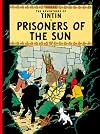
"Prisoners of the Sun" is a memorable 'Tintin' story, full of attention-grabbing set pieces, and there's no surprise it has been adapted so many times. But, it's not one of the greatest 'Tintin' albums, at least in my opinion.
Tintin, Haddock and Snowy set sail for Peru to find the missing Professor Calculus. There, they travel to isolated towns and through the Andes in search of a lost Inca temple. This is a beautifully drawn album, with Herge show more revelling in his research into Peruvian culture. There's a lot of colour, depictions of native wildlife, and movement between lush greens and browns to the whites of the mountains. There's plenty of amusing comedy here - particularly in Haddock's battle with the South American animals, and Calculus' inability to grasp the severity of their situation - and some of the earlier sequences, such as the journey aboard a runaway train, are bracing and thrilling.
Things drag a bit, however, once our heroes reach the Andes. As in many of his middle period albums, Herge was fascinated by the research and spent a lot of time padding his stories. The excursions are lovingly crafted and enjoyable, but not much really happens between Tintin's arrival in Peru and his discovery of the temple. Interestingly, Herge had to cut out page after page of story when he transferred the original comic strips into book form, but most of it was diversions from the narrative anyway. A lot is still left in - including several pages of animal attacks in the Andes. (That's not to say it isn't worthwhile reading, it just doesn't teach us anything new).
Similarly, the period in captivity is not exciting at all. We don't learn anything about the Inca captors, nor about Tintin and his friends. Instead, for several pages, Haddock and Snowy continue to doubt Tintin and wonder how they can escape. It must've played really well to the original readers, I'm sure (!). On the other hand, the cutaways to the Thom[p]sons - who are searching the globe unsuccessfully for Tintin - are hysterical.
The climax of the story - in which Tintin successfully tricks an entire culture using science - always felt a little backward to me, even as a child. Apparently, Herge himself doubted the believability of this story (which was passed down from Christopher Columbus himself), but decided it would make a good climax. In the end, though, the Inca and Tintin come to understand each other, and accept that neither one was entirely right. Herge humours himself a little bit with further dream sequences, and an occult-based resolution to the plot, but his Inca are sincere and well-meaning people who don't come across too much as stereotypes, so it's forgivable.
Reading back on my review, I realise that I sound quite undecided about my feelings. At the end of the day, this is an enjoyable read and uses Herge's characters well, with appropriate emotional resonances and lovely artwork. Unfortunately, it's quite predictable and seems to go on far too long without much to tie things together for the middle third of the story. Not the best, but a welcome addition to the series nonetheless. show less
"Prisoners of the Sun" is a memorable 'Tintin' story, full of attention-grabbing set pieces, and there's no surprise it has been adapted so many times. But, it's not one of the greatest 'Tintin' albums, at least in my opinion.
Tintin, Haddock and Snowy set sail for Peru to find the missing Professor Calculus. There, they travel to isolated towns and through the Andes in search of a lost Inca temple. This is a beautifully drawn album, with Herge show more revelling in his research into Peruvian culture. There's a lot of colour, depictions of native wildlife, and movement between lush greens and browns to the whites of the mountains. There's plenty of amusing comedy here - particularly in Haddock's battle with the South American animals, and Calculus' inability to grasp the severity of their situation - and some of the earlier sequences, such as the journey aboard a runaway train, are bracing and thrilling.
Things drag a bit, however, once our heroes reach the Andes. As in many of his middle period albums, Herge was fascinated by the research and spent a lot of time padding his stories. The excursions are lovingly crafted and enjoyable, but not much really happens between Tintin's arrival in Peru and his discovery of the temple. Interestingly, Herge had to cut out page after page of story when he transferred the original comic strips into book form, but most of it was diversions from the narrative anyway. A lot is still left in - including several pages of animal attacks in the Andes. (That's not to say it isn't worthwhile reading, it just doesn't teach us anything new).
Similarly, the period in captivity is not exciting at all. We don't learn anything about the Inca captors, nor about Tintin and his friends. Instead, for several pages, Haddock and Snowy continue to doubt Tintin and wonder how they can escape. It must've played really well to the original readers, I'm sure (!). On the other hand, the cutaways to the Thom[p]sons - who are searching the globe unsuccessfully for Tintin - are hysterical.
The climax of the story - in which Tintin successfully tricks an entire culture using science - always felt a little backward to me, even as a child. Apparently, Herge himself doubted the believability of this story (which was passed down from Christopher Columbus himself), but decided it would make a good climax. In the end, though, the Inca and Tintin come to understand each other, and accept that neither one was entirely right. Herge humours himself a little bit with further dream sequences, and an occult-based resolution to the plot, but his Inca are sincere and well-meaning people who don't come across too much as stereotypes, so it's forgivable.
Reading back on my review, I realise that I sound quite undecided about my feelings. At the end of the day, this is an enjoyable read and uses Herge's characters well, with appropriate emotional resonances and lovely artwork. Unfortunately, it's quite predictable and seems to go on far too long without much to tie things together for the middle third of the story. Not the best, but a welcome addition to the series nonetheless. show less
Lists
Awards


You May Also Like


Associated Authors
Statistics
- Works
- 553
- Also by
- 5
- Members
- 59,562
- Popularity
- #243
- Rating
- 3.9
- Reviews
- 605
- ISBNs
- 2,785
- Languages
- 49
- Favorited
- 98


