
Mary Kawena Pukui (1895–1986)
Author of New Pocket Hawaiian Dictionary: With a Concise Grammar and Given Names in Hawaiian
About the Author
Works by Mary Kawena Pukui
New Pocket Hawaiian Dictionary: With a Concise Grammar and Given Names in Hawaiian (1992) 243 copies, 1 review
Na Mele Welo: Songs of Our Heritage: Selections from Roberts Mele Collection in Bishop Museum, Honolulu (1995) 12 copies
Legends of Hawaii 4 copies
Volume III. Pacific knowledge, traditions, and perspectives. — Author — 1 copy
Associated Works
Life in the Pacific of the 1700s: The Cook/Forster Collection of the Georg August University of Gottingen (2006) — Author — 3 copies
Tagged
Common Knowledge
- Canonical name
- Pukui, Mary Kawena
- Legal name
- Pukui, Mary Abigail Kawenaʻulaokalaniahiʻiakaikapoliopelekawahineʻaihonuaināleilehuaapele Wiggin
- Birthdate
- 1895
- Date of death
- 1986
- Gender
- female
- Education
- Hawaiian Mission Academy
- Occupations
- translator
teacher
composer
anthropologist
author - Organizations
- Punahou School
- Awards and honors
- Living Treasure of Hawai'i (1977)
Hawaiian Music Hall of Fame (1995) - Nationality
- USA
- Birthplace
- Kaʻū district, Island of Hawaiʻi, Republic of Hawaii
- Places of residence
- Hawaii, USA
- Associated Place (for map)
- USA
Members
Reviews

These are weird and wonderful stories from Hawai'i, collected with love and care. They tell of the origins of the islands, the early actions of the gods...of the foolishness or greed of mortals and how it is repaid, or of the actions of good or bad kupua, the demi-gods of several shapes. They are engaging and accessible, and fascinatingly varied.
The collection is presented beautifully with illustrations of Hawaiian plants. It contains the original Hawaiian text of many of the stories, as show more well. The footnotes, from the original collector and several editors, are very helpful and, crucial to much scholarship, often note alternate versions or details encountered by the collector. show less
The collection is presented beautifully with illustrations of Hawaiian plants. It contains the original Hawaiian text of many of the stories, as show more well. The footnotes, from the original collector and several editors, are very helpful and, crucial to much scholarship, often note alternate versions or details encountered by the collector. show less

Some places make you realize, even today, that people saw (and see) life radically differently, specifically because they saw the natural world upon which they depended as both alive and full of intention. Hawaii is one of those places for me. Hence the interest.
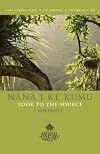
History made fade, rituals may be discarded, and customs changed with the passage of time. Yet many of the basic values of Hawai'i's past remain vital and true and applicable in the present day.
Nana I Ke Kumu (Look to the Source) describes Hawaiian beliefs and customs, bridging Hawai'i's past with the present. In the early 1970s, workers at the Queen Lili'uokaliani Children's Center, to better understand and meet the needs of the Hawaiian families they served, began to research authentic show more Hawaiian culture. Much of the books' material was distilled from seven years of the Center's Hawaiian Cultural Cimmittee's weekly meetings.
Senior author Mary Kawena Pukui believed that 'the Hawaiian needs to understand and appreciate the soundness and beauty of his culture.' Pukui was an ideal participant in this project, having been raised in two cultures, the Hawaiian familiy line of kahuna on her mother's side and the New England heritage of her father. She contributed valuable information from her life experience.
Volume One interprets specific Hawaiian words and phrases and was meant to 'clarify distorted beliefs, suggest the rationale behind Hawaiian ritual, and convey some of the poetic imagery of anicent rites and their underlying concepts.'
Volume Two deals with broader concepts and relationships, including such topics as the child, man and woman, dreams and symbols, holiness and healing. It restates the theme of understanding more fully the influences of Hawaiian culture on life today.
Contents
Foreword
Author's preface
Acknowledgments
Hawaiian topic index and reference
(Bold face type indicates terms of concepts listed and discussed as separate topics. References which define terms or provide some significant information within topic listings are in light-face type. Hawaiian terms merely repeated or used in translated conversations are not indexed. show less
Nana I Ke Kumu (Look to the Source) describes Hawaiian beliefs and customs, bridging Hawai'i's past with the present. In the early 1970s, workers at the Queen Lili'uokaliani Children's Center, to better understand and meet the needs of the Hawaiian families they served, began to research authentic show more Hawaiian culture. Much of the books' material was distilled from seven years of the Center's Hawaiian Cultural Cimmittee's weekly meetings.
Senior author Mary Kawena Pukui believed that 'the Hawaiian needs to understand and appreciate the soundness and beauty of his culture.' Pukui was an ideal participant in this project, having been raised in two cultures, the Hawaiian familiy line of kahuna on her mother's side and the New England heritage of her father. She contributed valuable information from her life experience.
Volume One interprets specific Hawaiian words and phrases and was meant to 'clarify distorted beliefs, suggest the rationale behind Hawaiian ritual, and convey some of the poetic imagery of anicent rites and their underlying concepts.'
Volume Two deals with broader concepts and relationships, including such topics as the child, man and woman, dreams and symbols, holiness and healing. It restates the theme of understanding more fully the influences of Hawaiian culture on life today.
Contents
Foreword
Author's preface
Acknowledgments
Hawaiian topic index and reference
(Bold face type indicates terms of concepts listed and discussed as separate topics. References which define terms or provide some significant information within topic listings are in light-face type. Hawaiian terms merely repeated or used in translated conversations are not indexed. show less
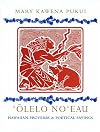
Absolutely wonderful book, full of Hawaiian proverbs and they're literal as well as figurative meanings. I use this book a lot; it's one of the best purchases I've ever made.
You May Also Like


Associated Authors
Statistics
- Works
- 24
- Also by
- 4
- Members
- 960
- Popularity
- #26,837
- Rating
- 4.0
- Reviews
- 5
- ISBNs
- 40
- Languages
- 1
- Favorited
- 1