
Sean Flynn (2)
Author of Why Peacocks?: An Unlikely Search for Meaning in the World's Most Magnificent Bird
For other authors named Sean Flynn, see the disambiguation page.
About the Author
Sean Flynn is a National Magazine Award-winning journalist and author who has reported from six continents during the past thirty years. His work has been widely anthologized and translated into nearly a dozen languages. A longtime correspondent for GQ, he lives in North Carolina with his wife and show more their two boys. show less
Works by Sean Flynn
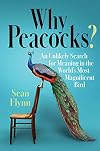
Why Peacocks?: An Unlikely Search for Meaning in the World's Most Magnificent Bird (2021) 48 copies, 5 reviews
Associated Works
Tagged
Common Knowledge
There is no Common Knowledge data for this author yet. You can help.
Members
Reviews
It's a shame the birds of Glendale's Sahuaro Ranch aren't included in this gem of a book about a family's journey (or the author's midlife crisis) to becoming peacock tenders.
Glendale Public Library isn't a bad library, in fact, there's someone at the Main Library that has GREAT taste in books -- I'm always grabbing books from the staff recommendations or spotting personal favorites -- but it is a fairly small system that doesn't have a great financial history. We are close to multiple City show more of Phoenix and Glendale branches, but ultimately we visit Glendale Main because of the peacocks. If Glendale doesn't have the book I'm looking for, then maybe I just wasn't meant to read it!
Birds are incredible beings with little societies only they understand. They squabble and cuddle and sing and stalk. As I type this, a Verdin has popped into my front yard to grab a stray feather. He's clearly gathering materials for one of their many nests. A family of White-Crowned Sparrows is running around and jump-kicking up a scattering of leaves, paying no mind to the Verdin. On a walk a couple of weeks ago, I KNOW Ravens were following me (three of them), curious about the naked monkey in red. But my chickens, they were my gateway bird. Watching them bicker and dominate and communicate, always leaving me curious about some change in behavior. Like why three nights in a row Trixie slept in the small coop with the Lavenders -- was she in a fight with someone? Tired of Birdadette plucking her feathers? I will never know.
All of that to say, Why Peacocks? Because they're a bird. And birds are so freaking cool. show less
Glendale Public Library isn't a bad library, in fact, there's someone at the Main Library that has GREAT taste in books -- I'm always grabbing books from the staff recommendations or spotting personal favorites -- but it is a fairly small system that doesn't have a great financial history. We are close to multiple City show more of Phoenix and Glendale branches, but ultimately we visit Glendale Main because of the peacocks. If Glendale doesn't have the book I'm looking for, then maybe I just wasn't meant to read it!
Birds are incredible beings with little societies only they understand. They squabble and cuddle and sing and stalk. As I type this, a Verdin has popped into my front yard to grab a stray feather. He's clearly gathering materials for one of their many nests. A family of White-Crowned Sparrows is running around and jump-kicking up a scattering of leaves, paying no mind to the Verdin. On a walk a couple of weeks ago, I KNOW Ravens were following me (three of them), curious about the naked monkey in red. But my chickens, they were my gateway bird. Watching them bicker and dominate and communicate, always leaving me curious about some change in behavior. Like why three nights in a row Trixie slept in the small coop with the Lavenders -- was she in a fight with someone? Tired of Birdadette plucking her feathers? I will never know.
All of that to say, Why Peacocks? Because they're a bird. And birds are so freaking cool. show less

Sy Montgomery's warm review in the New York Times of Flynn's engaging book had me reserving it at the library immediately. As it happened, a bookstore I follow on Facebook held a free online live author talk the day the book came in for me. One benefit of Zoom author talks is that the author can present while sitting inside the peacock (or, more correctly, peafowl) pen and we could see the cast of characters wandering around (and shrieking) in the background.
After many years of covering show more wars, mass shootings and other catastrophes, Flynn admits he had gotten to a place where he struggled to maintain his necessary "distance" from the grief and trauma he wrote about. In the online interview, he mentions a career combat photographer he knows who did "brilliant" work in Iraq, Afghanistan and other such hellholes for a long time. And now he only takes photos of fish. Flynn has peacocks. He and his family on their little "phony farm" in North Carolina already had two chickens, a pug, a cat who lived in the okra patch, and a tenant mini-horse. But one day he gets a text asking if he could use a peacock. "Yes, please," replies his wife (a lifelong admirer of Flannery O'Connor, a famous peafowl fancier). They know virtually nothing about them, but his first view of an India blue male in all its splendor mesmerizes him. So there they are, hosts to two peacocks and a peahen (first mistake).
This is not the cute Durrells-in-Corfu kind of charm; madcap pratfalls and hilarity do not consistently ensue - it is often funny, but in the dry, wry voice of a middle-aged man actually a bit puzzled by what has happened to him. He is surprised by the cheery charm of chickens, and it takes him a while to understand the peacocks, who are cautious, quite serious, and much harder to win over. But being a journalist - and a very good one - he knows how to learn about stuff, and writes about it expertly, thoughtfully, and vividly. He weaves in chapters on the history and mythology surrounding peacocks, the structure of their spectacular trains, and the people who breed and keep them (including an heiress who founded a hospital near where I work, and "invented" a new cross-breed of peafowl). There are battles where feral peafowl wander upscale neighborhoods: some people love them, others hate them, and a serial killer starts leaving pea-corpses in the streets. They are big, noisy, destructive - they fight their reflections in shiny car bumpers and scream all night long during the breeding season. Flynn learns they are not at all the elegant, decorative yard ornaments he had expected. They are themselves, with their own needs, desires, and thoughts, just wanting to live their peacock lives. And though he doesn't investigate it in the same long-form journalism way, there is an important thread about how we relate to, are enchanted by, and have our hearts broken by our relationships with animals: his young son's longing for a pet snake, the delightful Barred Rock hens Comet and Snowball, the pug, and how you choose to deal with a foolish young peacock who has gulped down zinc nails and nuts and washers and a copper grommet and requires chelation, weeks of veterinary care and hours of surgery. Warning: animals die in this book.
There might be a bit more background information at more length than is strictly necessary (admirable as he may have been, several pages on Andrew Carnegie feel a bit tangential). But overall, this is a skillfully written, informative, and often moving piece of work (I read it in a day.) It also taught me that when the time comes, I think I will stick with chickens. show less
After many years of covering show more wars, mass shootings and other catastrophes, Flynn admits he had gotten to a place where he struggled to maintain his necessary "distance" from the grief and trauma he wrote about. In the online interview, he mentions a career combat photographer he knows who did "brilliant" work in Iraq, Afghanistan and other such hellholes for a long time. And now he only takes photos of fish. Flynn has peacocks. He and his family on their little "phony farm" in North Carolina already had two chickens, a pug, a cat who lived in the okra patch, and a tenant mini-horse. But one day he gets a text asking if he could use a peacock. "Yes, please," replies his wife (a lifelong admirer of Flannery O'Connor, a famous peafowl fancier). They know virtually nothing about them, but his first view of an India blue male in all its splendor mesmerizes him. So there they are, hosts to two peacocks and a peahen (first mistake).
This is not the cute Durrells-in-Corfu kind of charm; madcap pratfalls and hilarity do not consistently ensue - it is often funny, but in the dry, wry voice of a middle-aged man actually a bit puzzled by what has happened to him. He is surprised by the cheery charm of chickens, and it takes him a while to understand the peacocks, who are cautious, quite serious, and much harder to win over. But being a journalist - and a very good one - he knows how to learn about stuff, and writes about it expertly, thoughtfully, and vividly. He weaves in chapters on the history and mythology surrounding peacocks, the structure of their spectacular trains, and the people who breed and keep them (including an heiress who founded a hospital near where I work, and "invented" a new cross-breed of peafowl). There are battles where feral peafowl wander upscale neighborhoods: some people love them, others hate them, and a serial killer starts leaving pea-corpses in the streets. They are big, noisy, destructive - they fight their reflections in shiny car bumpers and scream all night long during the breeding season. Flynn learns they are not at all the elegant, decorative yard ornaments he had expected. They are themselves, with their own needs, desires, and thoughts, just wanting to live their peacock lives. And though he doesn't investigate it in the same long-form journalism way, there is an important thread about how we relate to, are enchanted by, and have our hearts broken by our relationships with animals: his young son's longing for a pet snake, the delightful Barred Rock hens Comet and Snowball, the pug, and how you choose to deal with a foolish young peacock who has gulped down zinc nails and nuts and washers and a copper grommet and requires chelation, weeks of veterinary care and hours of surgery. Warning: animals die in this book.
There might be a bit more background information at more length than is strictly necessary (admirable as he may have been, several pages on Andrew Carnegie feel a bit tangential). But overall, this is a skillfully written, informative, and often moving piece of work (I read it in a day.) It also taught me that when the time comes, I think I will stick with chickens. show less
There is a restaurant thirty miles or so from my house that pre Covid, my hubby and I would go to once a month. In back of the restaurant was a barn, a pond where the owners kept a range of animals and birds, swans etc. He also had peacocks and when one parked their car the peacocks would often be trolling through the parking lot. Beautiful birds, these not afraid if humans at all.
In this memoir of sorts, the author, explains how he and his family came to own peacocks. Though he himself, not show more his young sons, would be the one that became attached, obsessed with doing everything right for his new charges. Three, Carl, Ethel and Mr. Pickles. He also went to great lengths to learn the history of these birds, so the reader follows along. From early British courts, to Greek mythology, to the Spaldings of Chicago, to of course Flannery O'Connor we learn the historical and personal significance of these birds. He also travels to Scotland and other places where peacocks are kept. The chapter on the killing of these birds was difficult and not pleasant, but the majority of the book is informative, humorous, he has a wry sense of humor, and wonderful to read.
Plus, everytime I think of a peacock named Mr. Pickles, I just have to grin. The wonderful minds of children.
ARC from Edelweiss. show less
In this memoir of sorts, the author, explains how he and his family came to own peacocks. Though he himself, not show more his young sons, would be the one that became attached, obsessed with doing everything right for his new charges. Three, Carl, Ethel and Mr. Pickles. He also went to great lengths to learn the history of these birds, so the reader follows along. From early British courts, to Greek mythology, to the Spaldings of Chicago, to of course Flannery O'Connor we learn the historical and personal significance of these birds. He also travels to Scotland and other places where peacocks are kept. The chapter on the killing of these birds was difficult and not pleasant, but the majority of the book is informative, humorous, he has a wry sense of humor, and wonderful to read.
Plus, everytime I think of a peacock named Mr. Pickles, I just have to grin. The wonderful minds of children.
ARC from Edelweiss. show less
Memoir of a family keeping peacocks as pets--among other critters. Much peacock lore and history here. The book flowed nicely with gentle humor in spots.
Awards

You May Also Like
Associated Authors
Statistics
- Works
- 1
- Also by
- 3
- Members
- 48
- Popularity
- #325,719
- Rating
- 4.1
- Reviews
- 5
- ISBNs
- 28