
Dorothy Clarke Wilson (1904–2003)
Author of The Ten Commandments [1956 film]
About the Author
Image credit: Dorothy Clarke Wilson (1904-2003) from Life in Legacy
Works by Dorothy Clarke Wilson
Alice & Edith : A Biographical Novel of the Two Wives of Theodore Roosevelt (1989) 66 copies, 1 review
Fly with me to India 4 copies
ACESTE MÂINI CARE VINDECĂ 1 copy
Brothers 1 copy
Release 1 copy
The Lost Star 1 copy
Associated Works
Reader's Digest Condensed Books 1970 v04: Lone Woman / The Homecoming / Papillon / Whitewater / The Unexpected Mrs. Pollifax (1970) — Contributor — 48 copies
Reader's Digest Condensed Books 1984 v03: Skyscraper / A Shine of Rainbows / The Reckoning / Lady Washington (1984) 37 copies
Reader's Digest Condensed Books 1986 v05: The Judgment / Kaffir Boy / Unnatural Causes / Queen Dolley (1986) — Contributor — 27 copies
Reader's Digest Condensed Books 1989 v05: Killer's Wake / Blessings / Grass Roots / Alice and Edith (1989) 24 copies
Guideposts Condensed Books: Passing By Samaria/Palace of Healing/Sacred Trust/Safe Places (2000) 3 copies
Reader's Digest Condensed Books 1981 vM: Lincoln's Mothers / The Last Step / All the Days Were Summer / Flight to Landfall (1981) 2 copies
Guideposts Condensed Books: The Art of Forgiving/Lady Washington/A Light in the Window/Journey (1999) 2 copies
Guideposts Condensed Books: Granny Brand: Her Story/Long Train Passing/The Winds of Catawba/Finding God on a Train: A Journey Into Prayer (1997) 2 copies
MAR DE HIERBA. CHACAL. MUJER SOLITARIA. LOS DURRELL EN CORFU (Biblioteca De Selecciones)1972 (1972) — Contributor — 1 copy
Great Lion of God, Love Story, Bomber, and, Lone Woman (Reader's Digest Condensed Books) (1971) — Author — 1 copy
Tagged
Common Knowledge
- Legal name
- Wilson, Dorothy Clarke
- Other names
- Wilson, Dorothy C.
- Birthdate
- 1904-05-09
- Date of death
- 2003-03-26
- Gender
- female
- Education
- Bates College
- Occupations
- novelist
biographer - Organizations
- Maine Christian Association
- Awards and honors
- Phi Beta Kappa
- Nationality
- USA
- Birthplace
- Gardiner, Maine, USA
- Places of residence
- Westbrook, Maine, USA
- Associated Place (for map)
- Maine, USA
Members
Reviews

I don’t quite remember when I first became aware of Ten Fingers for God on our bookshelf, but I know I’ve been wanting to read it for many years. My Mom assured me that it was an interesting read, but our cover was a solid red cloth-bound cover—very uninspiring to someone who is often first drawn into a book by a good cover. I finally picked it up this past month, though, and wow—what a fascinating story!
Several years ago, we read the Benge’s biography of Paul Brand as a family. As show more I started reading this book, I got many flashbacks to that story, but this book is more in-depth, and, in my opinion, even more interesting (if that is possible—I found Benge’s biography fascinating too!). This book was published in 1965, the year Paul Brand moved to the US to continue his research and help with a leprosarium there, so while it covers all of Brand’s formative years and much of his research, it doesn’t cover the entirety of his life.
Personally, I love Wilson’s writing style. It’s engaging, and though she is a biographer, you could almost forget that you’re reading a non-fiction story. She breathes life and breadth into the people in the story, so I almost felt like I was sitting with Paul Brand as a young surgeon on firewatch during the Blitz, or watching him perform his first surgery or autopsy on leprosy victims. I loved the descriptions of his parents and the area he grew up in; the way he doted on his children, and the way he blessed and encouraged those he came in contact with. And the stories he told his family while they were on vacation? Hilarious!
This is a well-written biography, one that I’m sure I’ll want to reread someday. If you’re at all interested in learning about Paul Brand’s life, I highly recommend you pick this up. I’m hoping to find other Dorothy Clarke Wilson books and read them, too—she’s a good author! show less
Several years ago, we read the Benge’s biography of Paul Brand as a family. As show more I started reading this book, I got many flashbacks to that story, but this book is more in-depth, and, in my opinion, even more interesting (if that is possible—I found Benge’s biography fascinating too!). This book was published in 1965, the year Paul Brand moved to the US to continue his research and help with a leprosarium there, so while it covers all of Brand’s formative years and much of his research, it doesn’t cover the entirety of his life.
Personally, I love Wilson’s writing style. It’s engaging, and though she is a biographer, you could almost forget that you’re reading a non-fiction story. She breathes life and breadth into the people in the story, so I almost felt like I was sitting with Paul Brand as a young surgeon on firewatch during the Blitz, or watching him perform his first surgery or autopsy on leprosy victims. I loved the descriptions of his parents and the area he grew up in; the way he doted on his children, and the way he blessed and encouraged those he came in contact with. And the stories he told his family while they were on vacation? Hilarious!
This is a well-written biography, one that I’m sure I’ll want to reread someday. If you’re at all interested in learning about Paul Brand’s life, I highly recommend you pick this up. I’m hoping to find other Dorothy Clarke Wilson books and read them, too—she’s a good author! show less

The best biography of this remarkable woman available. I have read many of them, and this is my favorite. I read it first as a child and later as an adult and enjoyed it equally both time. Easy enough for a child to understand, but with depth and emotion that will engage an adult.
Wilson has an exceptional talent for writing biographies as stories. She makes the reader feel as if they are walking along with the person. I felt I was there with Elizabeth when we was rejected over and over from show more colleges, when she finally got into Geneva, when her dreams of being a surgeon ended and when she finally achieved recognition for her work. A fabulous read for anyone, young or old, boy or girl. show less
Wilson has an exceptional talent for writing biographies as stories. She makes the reader feel as if they are walking along with the person. I felt I was there with Elizabeth when we was rejected over and over from show more colleges, when she finally got into Geneva, when her dreams of being a surgeon ended and when she finally achieved recognition for her work. A fabulous read for anyone, young or old, boy or girl. show less
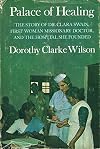
Dr. Clara Swain was one of the first female medical missionaries to India, and the first to be sent by an American missionary organization. She founded the first hospital for women and children in India.
With her usual talent, Wilson brings the reader into the person's life - letting you walk with the character as they traverse their life. Rich in details, this is an excellent book and I highly recommend.
With her usual talent, Wilson brings the reader into the person's life - letting you walk with the character as they traverse their life. Rich in details, this is an excellent book and I highly recommend.

I like biographies and memoirs. This was one I had never heard of, but it was recommended by my dad, so I picked it up. It's the story of a woman in India who studied to be a doctor in the late 40s/early 50s; during her residency, she was in a car accident that almost killed her, but the biography focuses on her entire life and not just the darkest period of it. The accident left her a paraplegic, and as a doctor, she didn't know how she would be able to continue in her profession. Because show more of a new surgery that applied principles of polio treatment to leprosy patients, Dr. Verghese (Mary) was able to work from her wheelchair, doing hand surgeries that gave her patients the chance to work again. I found the information about the hand surgeries and the work with leprosy patients, as well as the details of Mary's experience getting used to her new limitations, fascinating and inspiring. Mary's Christian faith and the support of friends and family really made a difference in her being able to overcome one obstacle after another. The book was a strong reminder to me of how much it means to people to be visited when they're sick or in the hospital. As obvious as that should be, it was still a good thing for me to think about.
So why not more stars? Well, the writing style was rather flowery, and I could only take it in small doses. That's how I usually take my nonfiction anyway, a chapter or two in the morning to start my day, but it was true for more than just the reason of time constraints with this one. A continuous annoyance was having the word "family" in all caps to emphasize how important her family was to Mary. Grrr. Got old. Another periodic bother was the suggestion that when you're suffering, keeping your complaints to yourself is some kind of heroism. I'm not criticizing the people who feel they can't complain as much as I'm criticizing the people who praise them for not complaining. I hate the idea of people keeping their worries, their pain, their experience to themselves so that they don't bother their friends and family. Friends and family should be botherable. And it sounds like Mary had some outstanding people as support. Anyway, that's just a personal beehive of mine that got shaken a few times during the course of the book.
Overall, it was worth the read because Mary had an incredible story, and it was interesting to read about medical practices during that time and the great strides already being made to help paraplegics and quadriplegics toward independent living. I also liked this quote that I read toward the end of the book, from a speech delivered at the Eighth World Congress of the International Society for the Welfare of Cripples (the wording was changed to "rehabilitation of the disabled" that year):
"Once you have justice, peace will come. Peace is like friendship; it cannot be sold or bought; it must be earned. If we could first have world justice, then we would have world peace." show less
So why not more stars? Well, the writing style was rather flowery, and I could only take it in small doses. That's how I usually take my nonfiction anyway, a chapter or two in the morning to start my day, but it was true for more than just the reason of time constraints with this one. A continuous annoyance was having the word "family" in all caps to emphasize how important her family was to Mary. Grrr. Got old. Another periodic bother was the suggestion that when you're suffering, keeping your complaints to yourself is some kind of heroism. I'm not criticizing the people who feel they can't complain as much as I'm criticizing the people who praise them for not complaining. I hate the idea of people keeping their worries, their pain, their experience to themselves so that they don't bother their friends and family. Friends and family should be botherable. And it sounds like Mary had some outstanding people as support. Anyway, that's just a personal beehive of mine that got shaken a few times during the course of the book.
Overall, it was worth the read because Mary had an incredible story, and it was interesting to read about medical practices during that time and the great strides already being made to help paraplegics and quadriplegics toward independent living. I also liked this quote that I read toward the end of the book, from a speech delivered at the Eighth World Congress of the International Society for the Welfare of Cripples (the wording was changed to "rehabilitation of the disabled" that year):
"Once you have justice, peace will come. Peace is like friendship; it cannot be sold or bought; it must be earned. If we could first have world justice, then we would have world peace." show less
Lists
Awards


You May Also Like


Associated Authors
Statistics
- Works
- 58
- Also by
- 11
- Members
- 2,234
- Popularity
- #11,484
- Rating
- 3.7
- Reviews
- 25
- ISBNs
- 91
- Languages
- 3
- Favorited
- 1