
Kritika H. Rao
Author of The Surviving Sky
About the Author
Image credit: Adam + Alexandra Photography
Series
Works by Kritika H. Rao
Tagged
Common Knowledge
- Gender
- female
- Agent
- Naomi Davis
Members
Reviews

I received this book for free, this does not affect my opinion of the book or the content of my review
Seduction is all I've ever known.
I am made for it. I have destroyed lives with it.
I never wanted to.
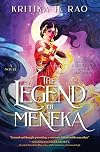
The Legend of Meneka is a reimagining of Hindu mythology where much is told about Sage Vishwamitra, Kaushika in this tale, but not his famous love Meneka, giving the author room to breath new life into the story. I went into this having heard of celestial dancers and the name apsara but show more definitely not a solid base of Hindu mythology. I think this helped in making it a brand new, fresh interesting story and hurt with me having to take it slower as there was a good amount of new terminology and ideology for me to take in. There was a glossary of terms in the beginning that was helpful to refer back to but I think the first half pace may have felt slower to me because of my lack of knowledge.
This place, this mission---never have I been so vulnerable, so powerless.
We come into the story as aspara Meneka is seducing her mark, a queen that has been slowly moving away from worshiping Lord Indra. He's the deva (diety) of Amaravati (heaven) and needs worshipers to fuel his strength. When someone threatens that resource of power in the mortal world, he sends one of his immortal asparas to seduce and negate. Meneka is an immortal but very young, early twenties, and is emotionally tired of having to seduce, she wants to stay in Amaravati, to be near Indra, who she is devoted to but also Rambha, an aspara who was able to gain some freedom, doesn't have to go to the mortal realm to seduce, and that Meneka thinks she is in love with. Meneka makes the mistake of asking Indra for her freedom, he punishes her by sending her on a mission to seduce a sage gaining major power, Kaushika, and which three other asparas have failed. Thinking she'll get her freedom to stay in Amaravati and be with Rambha, Meneka portals to the mortal world to seduce Kaushika.
“That's what you have been taught,” Kaushika says. “But what do you think? For yourself?”
Once in the mortal world, Meneka discovers all is not what it seems and while trying to prove herself worthy to stay and study with Kaushika, in order to seduce him, she begins to question if everything she was taught in Amaravati is really true. This was a lot about self-discovery with religious questioning, what it means to be devout and to the whos, whats, and whys in the Hinduism world. This is all told from Meneka's point-of-view and why it feels more like a self-discovery story but there's also the friction with Kaushika. Friction because he's going against her lord, which will in turn destroy her home city, with her friends who are family, but also she finds that she is feeling seduced when she is the one supposed to be doing the seducing. The first half doesn't have Meneka and Kaushika really circling each other a lot in a romance way, he's off doing sage things and she's trying to tap into her own magic. When they start spending time together more, it was more lust between the two, with some emotion that could be said coming from Meneka for how Kaushika is trying to get her to realize her own power but while Meneka does get Kaushika to question and teach him some things, I'm not sure their romance felt moved beyond those lust feelings.
We are two opposites bound to each other in this game of mark and seducer, each of us taking either role, unknowing, unaware.
The ending gives us some reveals, with some surprising character desires/motivations, Kaushika's background and why he's on his mission to bring about Indra's doom, and brings in a climatic scene with the ultimate clashing between the mortals and immortals. As this is a duology, there wasn't a concrete ending but the story did deliver on how Meneka and Kaushika could have become intertwined, filling in the original legend. There was just a lot of Meneka self-discovery journey to wade through that I thought hurt the pace a lot, and the romance didn't quite shine through as much as I would have liked. If you're new to Hindu terms, mythology, just be ready to take this slower but you'll get a fresh story for your efforts, if albeit a bit slower going. show less
Seduction is all I've ever known.
I am made for it. I have destroyed lives with it.
I never wanted to.
The Legend of Meneka is a reimagining of Hindu mythology where much is told about Sage Vishwamitra, Kaushika in this tale, but not his famous love Meneka, giving the author room to breath new life into the story. I went into this having heard of celestial dancers and the name apsara but show more definitely not a solid base of Hindu mythology. I think this helped in making it a brand new, fresh interesting story and hurt with me having to take it slower as there was a good amount of new terminology and ideology for me to take in. There was a glossary of terms in the beginning that was helpful to refer back to but I think the first half pace may have felt slower to me because of my lack of knowledge.
This place, this mission---never have I been so vulnerable, so powerless.
We come into the story as aspara Meneka is seducing her mark, a queen that has been slowly moving away from worshiping Lord Indra. He's the deva (diety) of Amaravati (heaven) and needs worshipers to fuel his strength. When someone threatens that resource of power in the mortal world, he sends one of his immortal asparas to seduce and negate. Meneka is an immortal but very young, early twenties, and is emotionally tired of having to seduce, she wants to stay in Amaravati, to be near Indra, who she is devoted to but also Rambha, an aspara who was able to gain some freedom, doesn't have to go to the mortal realm to seduce, and that Meneka thinks she is in love with. Meneka makes the mistake of asking Indra for her freedom, he punishes her by sending her on a mission to seduce a sage gaining major power, Kaushika, and which three other asparas have failed. Thinking she'll get her freedom to stay in Amaravati and be with Rambha, Meneka portals to the mortal world to seduce Kaushika.
“That's what you have been taught,” Kaushika says. “But what do you think? For yourself?”
Once in the mortal world, Meneka discovers all is not what it seems and while trying to prove herself worthy to stay and study with Kaushika, in order to seduce him, she begins to question if everything she was taught in Amaravati is really true. This was a lot about self-discovery with religious questioning, what it means to be devout and to the whos, whats, and whys in the Hinduism world. This is all told from Meneka's point-of-view and why it feels more like a self-discovery story but there's also the friction with Kaushika. Friction because he's going against her lord, which will in turn destroy her home city, with her friends who are family, but also she finds that she is feeling seduced when she is the one supposed to be doing the seducing. The first half doesn't have Meneka and Kaushika really circling each other a lot in a romance way, he's off doing sage things and she's trying to tap into her own magic. When they start spending time together more, it was more lust between the two, with some emotion that could be said coming from Meneka for how Kaushika is trying to get her to realize her own power but while Meneka does get Kaushika to question and teach him some things, I'm not sure their romance felt moved beyond those lust feelings.
We are two opposites bound to each other in this game of mark and seducer, each of us taking either role, unknowing, unaware.
The ending gives us some reveals, with some surprising character desires/motivations, Kaushika's background and why he's on his mission to bring about Indra's doom, and brings in a climatic scene with the ultimate clashing between the mortals and immortals. As this is a duology, there wasn't a concrete ending but the story did deliver on how Meneka and Kaushika could have become intertwined, filling in the original legend. There was just a lot of Meneka self-discovery journey to wade through that I thought hurt the pace a lot, and the romance didn't quite shine through as much as I would have liked. If you're new to Hindu terms, mythology, just be ready to take this slower but you'll get a fresh story for your efforts, if albeit a bit slower going. show less
4.5 stars!
This book was a perfect mix of mythology and romance. Before starting this book, I knew nothing about the story this book reimagined, but I loved Rao’s interpretation of it.
The story is told by Meneka, an apsara. She is devoted to Lord Indra, who has become threatened by the actions of sage Kaushika. After three of her sisters were sent to seduce Kaushika and stop him, none returned. Meneka, despite her devotion to Indra, wants freedom more than anything. In exchange, she show more volunteers to go to Kaushika.
I loved the development of Meneka’s relationship with Kaushika, but not only romantically. She comes to understand Kaushika’s goals and reasons as she spends time with him and those studying under him at his hermitage. I also loved the friendships that she formed with those at the hermitage. Everyone there, including Kaushika, was open to Meneka’s ideas, despite her being a newcomer.
The romance was interesting. As an apsara, Meneka is seen as a creature of lust. She uses her magic to seduce and destroy. Because of that, even she can’t tell if her feelings for Kaushika are lust or love. But I enjoyed seeing her work to understand herself, not only in terms of love, but also her identity as an apsara. The character growth for both Meneka and Kaushika was great.
The conflict rose to a point that I didn’t expect, but I loved how it ended. Most issues seemed to be resolved, or at least subdued. There’s a ton of twists, many of which change the course of the story. The book does end in somewhat of a cliffhanger, which I didn’t expect but thought was really interesting.
The mythology does get a bit confusing at times, but I think that’s just because of how Hindu mythology is. For me, it didn’t change my enjoyment of the book at all. I actually very much enjoyed the detailed inclusion of mythological terms, beings, and concepts and loved making connections to what I already knew.
Overall, this is one of the best Hindu mythology-based fantasy books I’ve read!
Thank you to Harper Voyager for the ARC! All opinions are my own. show less
This book was a perfect mix of mythology and romance. Before starting this book, I knew nothing about the story this book reimagined, but I loved Rao’s interpretation of it.
The story is told by Meneka, an apsara. She is devoted to Lord Indra, who has become threatened by the actions of sage Kaushika. After three of her sisters were sent to seduce Kaushika and stop him, none returned. Meneka, despite her devotion to Indra, wants freedom more than anything. In exchange, she show more volunteers to go to Kaushika.
I loved the development of Meneka’s relationship with Kaushika, but not only romantically. She comes to understand Kaushika’s goals and reasons as she spends time with him and those studying under him at his hermitage. I also loved the friendships that she formed with those at the hermitage. Everyone there, including Kaushika, was open to Meneka’s ideas, despite her being a newcomer.
The romance was interesting. As an apsara, Meneka is seen as a creature of lust. She uses her magic to seduce and destroy. Because of that, even she can’t tell if her feelings for Kaushika are lust or love. But I enjoyed seeing her work to understand herself, not only in terms of love, but also her identity as an apsara. The character growth for both Meneka and Kaushika was great.
The conflict rose to a point that I didn’t expect, but I loved how it ended. Most issues seemed to be resolved, or at least subdued. There’s a ton of twists, many of which change the course of the story. The book does end in somewhat of a cliffhanger, which I didn’t expect but thought was really interesting.
The mythology does get a bit confusing at times, but I think that’s just because of how Hindu mythology is. For me, it didn’t change my enjoyment of the book at all. I actually very much enjoyed the detailed inclusion of mythological terms, beings, and concepts and loved making connections to what I already knew.
Overall, this is one of the best Hindu mythology-based fantasy books I’ve read!
Thank you to Harper Voyager for the ARC! All opinions are my own. show less
Another novel that I went back and forth on giving a try. I suspected that it was not for me, and there is no point in reading books just to gift an author with a negative review, but I also need to give new authors doing a new thing a try.
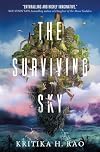
That said, yeah, I was not that impressed with this book. It has its virtues, and Rao is a pretty good word-smith, but I see missed opportunities. For one, if you've roped your main POV characters into a failing marriage that is about to go on the rocks, show more this factor should be front and center to everything else in the novel. This means that we need to have background into how Ahilya & Iravan got stuck into this relationship in the first place (I suspect an arranged marriage), and the way stations on the way to dissolution. Two, there's the related point that the overall pacing of this book feels almost stagnant, when with a looming emergency it should at least be trotting along from the start. Three, I never found Rao's magic system all that convincing; I'll leave the dyed-in-the wool fantasy enthusiasts to comment on that.
Possible solutions, start with the emergency sooner, if at the cost of the world-building (which wasn't that wonderful anyway). Two, give us some flashbacks that illustrate how this marriage came to be, and came apart. Three, I think this book runs on a little two long, and the last chapter should really be something like the start of the second book. Rao has explicitly described this novel as being a dystopia, and I get the point that she wanted to end this book on a hopeful note, and deal with Iravan's getting of wisdom. However, I really don't feel the need to pick up the follow-on after that conclusion. A hard cliff-hanger deals with that issue!
Will I pick up the next book in the trilogy? Maybe. But I'll be a lot less patient. show less
That said, yeah, I was not that impressed with this book. It has its virtues, and Rao is a pretty good word-smith, but I see missed opportunities. For one, if you've roped your main POV characters into a failing marriage that is about to go on the rocks, show more this factor should be front and center to everything else in the novel. This means that we need to have background into how Ahilya & Iravan got stuck into this relationship in the first place (I suspect an arranged marriage), and the way stations on the way to dissolution. Two, there's the related point that the overall pacing of this book feels almost stagnant, when with a looming emergency it should at least be trotting along from the start. Three, I never found Rao's magic system all that convincing; I'll leave the dyed-in-the wool fantasy enthusiasts to comment on that.
Possible solutions, start with the emergency sooner, if at the cost of the world-building (which wasn't that wonderful anyway). Two, give us some flashbacks that illustrate how this marriage came to be, and came apart. Three, I think this book runs on a little two long, and the last chapter should really be something like the start of the second book. Rao has explicitly described this novel as being a dystopia, and I get the point that she wanted to end this book on a hopeful note, and deal with Iravan's getting of wisdom. However, I really don't feel the need to pick up the follow-on after that conclusion. A hard cliff-hanger deals with that issue!
Will I pick up the next book in the trilogy? Maybe. But I'll be a lot less patient. show less
https://www.goodreads.com/review/show/5722885836
I'm wondering if a book being readable is the same as it being good. This book is very readable, in that once it is picked up, you can easily read big chunks of it. That said, I had to make myself pick it up. I think the magic system is interesting - though towards the end it gets pretty incomprehensible.
There are no likable characters in the book. Big chunks of the book are an extended marriage spat in a relationship that is show more as-near-as-makes-no-difference domestically violent. Both partners are variously emotionally abusive to one another, and then every other character enjoys meddling in the marriage. The society is set up in a way that seems to condemn itself.
I think a good editor would have slashed about 100 pages of this. I'd cut big chunks of the marriage spat, and I'd probably cut about 50 pages of the ending where the magic system gets really convoluted and hard to follow. show less
I'm wondering if a book being readable is the same as it being good. This book is very readable, in that once it is picked up, you can easily read big chunks of it. That said, I had to make myself pick it up. I think the magic system is interesting - though towards the end it gets pretty incomprehensible.
There are no likable characters in the book. Big chunks of the book are an extended marriage spat in a relationship that is show more as-near-as-makes-no-difference domestically violent. Both partners are variously emotionally abusive to one another, and then every other character enjoys meddling in the marriage. The society is set up in a way that seems to condemn itself.
I think a good editor would have slashed about 100 pages of this. I'd cut big chunks of the marriage spat, and I'd probably cut about 50 pages of the ending where the magic system gets really convoluted and hard to follow. show less
Awards


You May Also Like
Associated Authors
Statistics
- Works
- 5
- Members
- 377
- Popularity
- #64,010
- Rating
- 3.5
- Reviews
- 6
- ISBNs
- 24
- Languages
- 2