
Deepak M R
Author of Abhimanyu: The Warrior Prince
Works by Deepak M R
Tagged
Common Knowledge
There is no Common Knowledge data for this author yet. You can help.
Members
Reviews
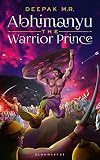
In a Nutshell: Started very poorly but to my surprise, the book improved somewhat as it went on. (Or maybe I just got used to its flat writing.) Not bad, but not great as well.
I don’t think I need to provide a Story Synopsis this time. The plot contains some key events in the Mahabharata, as impacted Prince Abhimanyu, the son of Arjuna and Subhadra. So you could call it a Mahabharata retelling from Abhimanyu’s perspective, as it goes a little beyond that. The story begins and ends with show more Abhimanyu.
The main content begins with Krishna speaking to the unborn Abhimanyu in Subhadra’s womb and continues with Abhimanyu’s birth, formative years, warrior training and so on. Abhimanyu's main contribution to the Mahabharata was in his role as a warrior who singlehandedly changed the course of the Great War. No wonder then that more than half the book is dedicated to the war itself. This gets somewhat saturating as we need to go through twelve days of endless battles to understand what happened on the thirteenth day and why Abhimanyu ended up alone in the ‘chakravyuha’. But once the thirteenth day narration begins, the story became interesting to the extent that I forgot all about the average writing and just went with the flow. Again, keeping with the idea of Abhimanyu as the central character, the story ends at his death, with just an epilogue detailing what happens next in the war and in his wife Uttara’s life.
The author mentions that his version is based on the original text of the Mahabharata as well as some of the folk tales. The main source of this story is the translation by Kisari Mohan Ganguli. I have just an outsider knowledge of the epic and as such, won’t be able to pass comment on how accurate the overall content is. But as far as I could make out, it matches the story I am familiar with. I hadn't ever read of Abhimanyu going in search of his father during the final year of their exile and meeting Uttara. But the author clarifies that this isn't part of the Mahabharata and is based on a folk legend. I'll take his word for it as I know nothing of this. The book is quick-paced, and I loved the detailed insight it gave about the ‘chakravyuha’ battle formation, including a sketch of how it functioned.
Most of us somewhat familiar with the Mahabharata would know that Abhimanyu died in the Kurukshetra War at sixteen. As such, the main reason you would read a story about a brave life cut tragically short would be to know more about him as a person. And the book does a great job of this. Abhimanyu isn’t presented as the picture-perfect epitome of a prince, but as a real person: young yet knowledgeable, courageous yet overconfident, strong yet naïve, brave yet foolhardy. His character is a study in contrast, and as such, his character provides a great angle for a retelling.
At the same time, there are certain limitations to this narrative viewpoint. The initial part of the Mahabharata doesn’t include Abhimanyu, so most of this content is either skipped or scrunched into minimal chapters. As such, there’s no background detailing to the rest of the characters. Except for Abhimanyu and a couple of other characters, the rest of the character development is completely unidimensional. Of course, there’s a list of “Main Characters Who Appear in the Story” and also a Kuru family tree, but the former is quite brief and the latter would work better only if you are somewhat aware of the characters.
Where I was most disappointed was with the average writing.
show less
I don’t think I need to provide a Story Synopsis this time. The plot contains some key events in the Mahabharata, as impacted Prince Abhimanyu, the son of Arjuna and Subhadra. So you could call it a Mahabharata retelling from Abhimanyu’s perspective, as it goes a little beyond that. The story begins and ends with show more Abhimanyu.
The main content begins with Krishna speaking to the unborn Abhimanyu in Subhadra’s womb and continues with Abhimanyu’s birth, formative years, warrior training and so on. Abhimanyu's main contribution to the Mahabharata was in his role as a warrior who singlehandedly changed the course of the Great War. No wonder then that more than half the book is dedicated to the war itself. This gets somewhat saturating as we need to go through twelve days of endless battles to understand what happened on the thirteenth day and why Abhimanyu ended up alone in the ‘chakravyuha’. But once the thirteenth day narration begins, the story became interesting to the extent that I forgot all about the average writing and just went with the flow. Again, keeping with the idea of Abhimanyu as the central character, the story ends at his death, with just an epilogue detailing what happens next in the war and in his wife Uttara’s life.
The author mentions that his version is based on the original text of the Mahabharata as well as some of the folk tales. The main source of this story is the translation by Kisari Mohan Ganguli. I have just an outsider knowledge of the epic and as such, won’t be able to pass comment on how accurate the overall content is. But as far as I could make out, it matches the story I am familiar with. I hadn't ever read of Abhimanyu going in search of his father during the final year of their exile and meeting Uttara. But the author clarifies that this isn't part of the Mahabharata and is based on a folk legend. I'll take his word for it as I know nothing of this. The book is quick-paced, and I loved the detailed insight it gave about the ‘chakravyuha’ battle formation, including a sketch of how it functioned.
Most of us somewhat familiar with the Mahabharata would know that Abhimanyu died in the Kurukshetra War at sixteen. As such, the main reason you would read a story about a brave life cut tragically short would be to know more about him as a person. And the book does a great job of this. Abhimanyu isn’t presented as the picture-perfect epitome of a prince, but as a real person: young yet knowledgeable, courageous yet overconfident, strong yet naïve, brave yet foolhardy. His character is a study in contrast, and as such, his character provides a great angle for a retelling.
At the same time, there are certain limitations to this narrative viewpoint. The initial part of the Mahabharata doesn’t include Abhimanyu, so most of this content is either skipped or scrunched into minimal chapters. As such, there’s no background detailing to the rest of the characters. Except for Abhimanyu and a couple of other characters, the rest of the character development is completely unidimensional. Of course, there’s a list of “Main Characters Who Appear in the Story” and also a Kuru family tree, but the former is quite brief and the latter would work better only if you are somewhat aware of the characters.
Where I was most disappointed was with the average writing.
show less
Statistics
- Works
- 1
- Members
- 3
- Popularity
- #1,791,149
- Rating
- 3.0
- Reviews
- 1
- ISBNs
- 2