

Bryan Forbes (1926–2013)
Author of The Endless Game
About the Author
Works by Bryan Forbes
The Whisperers 7 copies
The Endless Game {1989} — Director — 2 copies
The Raging Moon [1971 film] — Director / Screenwriter — 2 copies
I Am a Dancer 1 copy
Raging Moon 1 copy
Sea Devils [Region 2] 1 copy
De laatste getuige 1 copy
A Caçada Sem Fim 1 copy
Associated Works
Tagged
Common Knowledge
- Canonical name
- Forbes, Bryan
- Legal name
- Clark, John Theobald
- Birthdate
- 1926-07-22
- Date of death
- 2013-05-08
- Gender
- male
- Education
- West Ham Secondary School
Royal Academy of Dramatic Art - Occupations
- actor
film director
screenwriter
novelist
autobiographer - Organizations
- The Writers' Guild of Great Britain
- Awards and honors
- Order of the British Empire (Commander, 2004)
- Relationships
- Newman, Nanette (wife)
- Nationality
- UK
- Birthplace
- Stratford, London, England
- Map Location
- England, UK
Members
Reviews

A beautifully photographed and acted film about a middle aged couple, Myra (Kim Stanley) and her hen-pecked husband Billy (Richard Attenborough), slowly going insane in their suburban house following the trauma of a stillborn birth. Myra is a clairvoyant and is convinced that she's in contact with their dead child. She devises an outlandish plot to kidnap ("borrow" in her parlance) and then locate a child using her "psychic powers". Against Billy's better judgement he agrees to participate show more but things quickly unravel and come to a head at the seance that Myra holds one wet afternoon in the company of police inspector Walsh (Patrick Magee). "Seance on a Wet Afternoon", written and directed by Bryan Forbes, from the novel by Mark McShane, is an overwhelmingly sad film with a strain of desperate melancholy running through virtually every frame. Despite their indefensible actions it is hard not to feel sympathy for Myra and Billy and their unending mental anguish. Much of this is down to the fine performances by Kim Stanley (who was Oscar nominated) and Richard Attenborough, both of whom essay their roles with a stiff upper-lip British middle-class reserve, behind which lies a quiet desperation which eventually overflows into an overwhelming emotional explosion. Forbes hints towards a hidden supernaturalism but keeps the film grounded in the everyday and the grim struggles between Myra and Billy. The film is beautifully shot by Gerry Turpin in crisp, formal monochrome, which gives Billy and Myra's gothic home and all it's strange ornamental paraphernalia a strange, other-worldly feel. John Barry provides a spare score that subtly adds to the tone of the film. Not knowing anything about "Seance on a Wet Afternoon" I anticipated some form of supernatural ghost story and was therefore surprised to discover a slow-burning, claustrophobic psycho-drama played out between a husband and wife, with the themes of parental loss, mental anguish and psychic disintegration all playing a thematic role. The film is brilliantly acted and is technically highly admirable, but given the overall tone of dread and desperation it's difficult to say whether it was actually enjoyable. show less
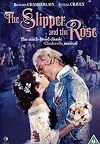
"This is the story of Cinderella, done as a '60s style musical. I wasn't at all sure what to expect, but it was extremely well done. Gemma Craven stars as Cinderella; rather an angry one at first, but as she becomes more and more of a drudge after the death of her father, she becomes sweeter and move loving.
Richard Chamberlain is an excellent fed-up prince, determined to marry for love rather than to suit his father's political aims. I do find it slightly bizarre when a scene suddenly show more breaks into song and dance, then returns to normal as if nothing had happened, but it worked actually well, with some clever dance routines and songs which were almost reminiscent of Gilbert and Sullivan in places.
The real star, for me, however, was the Fairy Godmother, played by Annette Crosbie. She appears when needed, but is obviously very over-worked due to an extreme shortage of Fairy Godmothers. There was even a kind of logic to the whole idea of Cinderella's dress and carriage disappearing at midnight, although it was never explained how she managed the long journey home - nor why her glass slippers remained.
There's nothing deep in this film, and one or two of the songs were a bit dull towards the end, but it was an enjoyable and relaxing way to spend an evening. show less
Richard Chamberlain is an excellent fed-up prince, determined to marry for love rather than to suit his father's political aims. I do find it slightly bizarre when a scene suddenly show more breaks into song and dance, then returns to normal as if nothing had happened, but it worked actually well, with some clever dance routines and songs which were almost reminiscent of Gilbert and Sullivan in places.
The real star, for me, however, was the Fairy Godmother, played by Annette Crosbie. She appears when needed, but is obviously very over-worked due to an extreme shortage of Fairy Godmothers. There was even a kind of logic to the whole idea of Cinderella's dress and carriage disappearing at midnight, although it was never explained how she managed the long journey home - nor why her glass slippers remained.
There's nothing deep in this film, and one or two of the songs were a bit dull towards the end, but it was an enjoyable and relaxing way to spend an evening. show less

There is little doubt that with the thriller, A Spy at Twilight, Bryan Forbes is trying to become a contemporary of Forsyth. Sadly, he fails. See, the secret to Forsyth's success is his enormous dedication to research, details, and planning, as well as intricate story telling. Forbes shares none of these traits. He spins a decent yarn, yes, but not nearly as well as Forsyth.
In this book, a booby trapped corpse explodes when investigated by a couple of British cops, killing both, and setting show more off a massive investigation. England is "ruled" by a socialist prime minister who it's hard to pin down and I attribute that to the author -- the prime minister is clearly influenced by the head of the secret service -- MI6 -- who in this novel is called "Control," which just seems so wrong. What seems even more wrong is the hero of all of the James Bond novels and countless Forsyth novels, "Control" is a Russian plant working to overthrow Britain for Russian rule. That's literally unthinkable to me. And he seems, at times, to have the prime minister working alongside him, and at other times, the prime minister doesn't seem to have a clue about what's going on. It's very confusing.
Another part of the plot involves a former British spy, Hillsden, who has defected to the Russians, who was forced to by the prime minister and Control and who now, just to survive, works for the GRU. And he's bitter. He writes his memoirs and attempts to get them back to a colleague in Britain, but it only leads to various deaths.
Meanwhile, the protagonist, Waddington, is a former MI6 spy, now working for a security company who has been seduced by a mysterious rich hottie who is working for Control, although he of course doesn't know it. And to my total shock, the author kills him off about 80% of the way through the book. So now what? Well, there are secondary characters who now take over, but it's very confusing. You expect to make it through the whole book with the protagonist, don't you? Generally? Perhaps it's post-modern.... I didn't like it though.
Another thing I didn't like was small details like the following: the author several times referred to revolver "magazines." Um, revolvers don't have magazines. I know. I have one. I also have semiautomatic handguns. Those do have magazines. Get it right. The author is also extremely obsessed with AIDS. Now I know this book was published in the middle of the AIDS epidemic in 1989, so I can empathize, but come on. We get it. We are So.Very.Happy.You.Did.Not.Get.AIDS. God, go on and on about it, dude! Additionally, the terrorist known as "The Fat Boy" is not fat. He forces some type of cyanide pill down the throat of the woman who has seduced Waddington by kissing her, which seems a little unlikely. And Keating seems to good to be true, as spy turned movie producer turned good guy.
This isn't really a bad book. It's just not really a good one either. It could have done with some polishing, a little rewriting, some editing, some adjustments. That would have upped my rating to four stars. As it is, it's three stars and uneasily recommended if you can't find any other thrillers to read. show less
In this book, a booby trapped corpse explodes when investigated by a couple of British cops, killing both, and setting show more off a massive investigation. England is "ruled" by a socialist prime minister who it's hard to pin down and I attribute that to the author -- the prime minister is clearly influenced by the head of the secret service -- MI6 -- who in this novel is called "Control," which just seems so wrong. What seems even more wrong is the hero of all of the James Bond novels and countless Forsyth novels, "Control" is a Russian plant working to overthrow Britain for Russian rule. That's literally unthinkable to me. And he seems, at times, to have the prime minister working alongside him, and at other times, the prime minister doesn't seem to have a clue about what's going on. It's very confusing.
Another part of the plot involves a former British spy, Hillsden, who has defected to the Russians, who was forced to by the prime minister and Control and who now, just to survive, works for the GRU. And he's bitter. He writes his memoirs and attempts to get them back to a colleague in Britain, but it only leads to various deaths.
Meanwhile, the protagonist, Waddington, is a former MI6 spy, now working for a security company who has been seduced by a mysterious rich hottie who is working for Control, although he of course doesn't know it. And to my total shock, the author kills him off about 80% of the way through the book. So now what? Well, there are secondary characters who now take over, but it's very confusing. You expect to make it through the whole book with the protagonist, don't you? Generally? Perhaps it's post-modern.... I didn't like it though.
Another thing I didn't like was small details like the following: the author several times referred to revolver "magazines." Um, revolvers don't have magazines. I know. I have one. I also have semiautomatic handguns. Those do have magazines. Get it right. The author is also extremely obsessed with AIDS. Now I know this book was published in the middle of the AIDS epidemic in 1989, so I can empathize, but come on. We get it. We are So.Very.Happy.You.Did.Not.Get.AIDS. God, go on and on about it, dude! Additionally, the terrorist known as "The Fat Boy" is not fat. He forces some type of cyanide pill down the throat of the woman who has seduced Waddington by kissing her, which seems a little unlikely. And Keating seems to good to be true, as spy turned movie producer turned good guy.
This isn't really a bad book. It's just not really a good one either. It could have done with some polishing, a little rewriting, some editing, some adjustments. That would have upped my rating to four stars. As it is, it's three stars and uneasily recommended if you can't find any other thrillers to read. show less

A town's housewives happily do nothing but housework.
Surprisingly suspenseful (especially surprising since everyone knows the twist) and intelligent.
Concept: D
Story: B
Characters: B
Dialog: B
Pacing: B
Cinematography: C
Special effects/design: B
Acting: B
Music: C
Enjoyment: B
GPA: 2.6/4
Surprisingly suspenseful (especially surprising since everyone knows the twist) and intelligent.
Concept: D
Story: B
Characters: B
Dialog: B
Pacing: B
Cinematography: C
Special effects/design: B
Acting: B
Music: C
Enjoyment: B
GPA: 2.6/4
Lists
1970s (1)
Edgar Award (1)
Awards


You May Also Like


Associated Authors
Statistics
- Works
- 49
- Also by
- 8
- Members
- 962
- Popularity
- #26,759
- Rating
- 3.5
- Reviews
- 12
- ISBNs
- 116
- Languages
- 5