
William Hasker
Author of The Openness of God: A Biblical Challenge to the Traditional Understanding of God
About the Author
William Hasker is Professor Emeritus of Philosophy at Huntington University, Indiana.
Works by William Hasker
The Openness of God: A Biblical Challenge to the Traditional Understanding of God (1994) — Contributor — 495 copies, 3 reviews
Reason and Religious Belief: An Introduction to the Philosophy of Religion (1991) — Author — 419 copies, 1 review
God and the Problem of Evil: Five Views (Spectrum Multiview Book Series) (2017) — Contributor — 72 copies
The Triumph of God over Evil: Theodicy for a World of Suffering (Strategic Initiatives in Evangelical Theology) (2008) 53 copies
Middle Knowledge: Theory and Applications (Contributions to Philosophical Theology, Vol. 4) (2000) 4 copies
Providence, Evil and the Openness of God (Routledge Studies in the Philosophy of Religion) (2004) 4 copies
O problema do mal: Uma antologia de textos filosóficos (Fé & Religião Livro 1) (Portuguese Edition) (2013) 1 copy
God_ Time and Knowledge 1 copy
Associated Works
The Soul Hypothesis: Investigations into the Existence of the Soul (2010) — Contributor — 32 copies, 1 review
Tagged
Common Knowledge
- Canonical name
- Hasker, William
- Legal name
- Hasker, R. William
- Birthdate
- 1935
- Gender
- male
- Education
- University of Edinburgh (PhD) (philosophy and theology)
- Occupations
- Professor Emeritus of Philosophy
- Organizations
- Huntington University
Society for the Philosophy of Religion - Nationality
- USA
- Associated Place (for map)
- USA
Members
Reviews
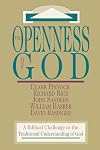
I was introduced to some of these concepts through the writings of G. Campbell Morgan, Terence Fretheim, George MacDonald and Winkie Pratney. (If it's true, it isn't new, and if it's new, it isn't true.) My thoughts on this book in particular:
This book is like an introduction to the "open theology" material. As such, it feels somewhat like a fly by. The biblical chapter did not have many new things to say to me, but the "historical considerations" was much more relevant to me since I am weak show more in that area. The research probably benefits from multiple authors, but I also felt that it made the discussion feel slow, and sometimes repetitive.
If you want to think about ideas like the suffering of God and how we see God's activity in time, I would recommend something more practical and biblical. Many authors (as I mentioned above) have written on these topics without making dogmatic arguments that tend to remove focus from the application of biblical truth. This is an important debate, but it is primarily important because we need to balance our metaphors about God in the same way that the Bible does and live in light of that truth. Expository writing can meet those goals. However, this book is intended as a theological introduction to a way of thinking, and I guess it would meet that goal pretty well if you wanted a clear introduction "open theology." show less
This book is like an introduction to the "open theology" material. As such, it feels somewhat like a fly by. The biblical chapter did not have many new things to say to me, but the "historical considerations" was much more relevant to me since I am weak show more in that area. The research probably benefits from multiple authors, but I also felt that it made the discussion feel slow, and sometimes repetitive.
If you want to think about ideas like the suffering of God and how we see God's activity in time, I would recommend something more practical and biblical. Many authors (as I mentioned above) have written on these topics without making dogmatic arguments that tend to remove focus from the application of biblical truth. This is an important debate, but it is primarily important because we need to balance our metaphors about God in the same way that the Bible does and live in light of that truth. Expository writing can meet those goals. However, this book is intended as a theological introduction to a way of thinking, and I guess it would meet that goal pretty well if you wanted a clear introduction "open theology." show less
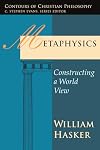
What is ultimately real? What is God like? Do human beings have minds and souls or only brains in bodies? Are humans free agents or are all human acts determined by prior circumstances? Through insightful analysis and careful evaluation, William Hasker helps readers answer these questions and thereby construct a world view to make sense of the universe and the people in it.
A great intro to metaphysics from a Christian point of view.
Awards

You May Also Like


Associated Authors
Statistics
- Works
- 28
- Also by
- 3
- Members
- 1,580
- Popularity
- #16,329
- Rating
- 3.4
- Reviews
- 6
- ISBNs
- 34
- Languages
- 1