
John Rhode (1)
Author of The Paddington Mystery
For other authors named John Rhode, see the disambiguation page.
John Rhode (1) has been aliased into Miles Burton.
Series
Works by John Rhode
Works have been aliased into Miles Burton.
Constance Kent 1 copy
Associated Works
Works have been aliased into Miles Burton.
Bodies from the Library 2: Forgotten Stories of Mystery and Suspense by the Queens of Crime and other Masters of Golden Age Detection (2019) — Contributor — 95 copies, 3 reviews
Tagged
Common Knowledge
- Gender
- male
Members
Reviews
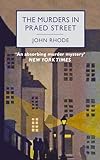
This is the fourth of John Rhode's Dr. Priestley detective novels. This is the first one that I have read. It certainly had a different rhythm than I expected. Dr. Priestley did not appear until Part 2, which was the second half of the novel. So far, he is an unremarkable "consulting detective." Rhode seems to hint more toward Priestley's eccentricities than show them. In hindsight, I was expecting a character along the lines of Dr. Gideon Fell.
I solved the mystery very early, but enjoyed show more reading the "how"--as far-fetched as it was. My plan is to start at the first novel and see how Rhode sets up Dr. Priestley. My hope is that overtime there will be more character development among the primary and secondary characters. show less
I solved the mystery very early, but enjoyed show more reading the "how"--as far-fetched as it was. My plan is to start at the first novel and see how Rhode sets up Dr. Priestley. My hope is that overtime there will be more character development among the primary and secondary characters. show less

Great good fun from two practiced masters of the impossible crime. The murderer and motive were a bit obvious, but the means were as ingenious as they come.
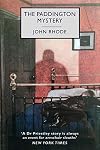
I bought an omnibus of 20 Priestley novels. The first novel I read in it was the 4th novel published The Murders in Praed Street (1928). I had read something interesting about that book, so I read it first. Now I am doubling back to the first novel. Prof. Priestley is a mathematician who consults for the police. He already has this role at the beginning of this book. However, the police are not much involved in The Paddington Mystery. Instead, Priestley helps a young friend of the family show more (and former "almost fiance" of his daughter) get out of a sticky situation. The actions of this young ne'er do well are very coded, according to the times. He's drinking and gambling and sleeping around. The last one is the most coded.
Like Praed Street, I figured this one out really early. It was not until the end of the novel that I realized that Priestley almost never "investigated." He stayed in his study and people came to him, telling stories and giving him evidence. He uses logic to solve the crime. This means that there's a lot of talking and explaining. It gets a little boring. Also, as I said in my previous review, Priestley is a little boring, too. I want him to have more character and more idiosyncrasies. I will read the next two books, for certain, but after that I might look at the internet to see which books qualify as Rhode's "best." I know that Rhode wrote 70+ Priestley novels. I doubt that I will try to be a completionist, like I am with other writers
-- show less
Like Praed Street, I figured this one out really early. It was not until the end of the novel that I realized that Priestley almost never "investigated." He stayed in his study and people came to him, telling stories and giving him evidence. He uses logic to solve the crime. This means that there's a lot of talking and explaining. It gets a little boring. Also, as I said in my previous review, Priestley is a little boring, too. I want him to have more character and more idiosyncrasies. I will read the next two books, for certain, but after that I might look at the internet to see which books qualify as Rhode's "best." I know that Rhode wrote 70+ Priestley novels. I doubt that I will try to be a completionist, like I am with other writers
-- show less
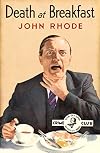
Victor Harleston drops dead shortly after sitting down to breakfast; he was quite obviously poisoned. All clues point to his half-siblings Janet and Philip as the likely culprits; after all, they are the only ones who seem to benefit from his death. However, when Victor’s boss, Mr. Knott, mysteriously disappears just a few days after Victor’s death, the case becomes more complicated. Although all clues point to Gavin Slater as Mr. Knott’s murderer, no one can find a body. And it is show more just too much of a coincidence to suppose that the two murders aren’t connected in some way. Superintendent Hanslet is once more on the case, which seems like a boon for criminals everywhere; fortunately, Dr. Lancelot Priestley is in the background to keep things in perspective.
The narrative begins with Victor Harleston’s murder and the investigation into that crime. Then, after Mr. Knott’s disappearance, the focus switches to the investigation of that mystery. Although the two crimes are interrelated and eventually connected, the sudden switch in focus from one to the other makes the story disjointed.
As usual, Inspector Hanslet comes across as a mindless buffoon. He is highly susceptible to manipulation, and always seems ready to believe the most obvious suspect just has to be guilty and should be immediately arrested. He routinely goes to Dr. Priestley for advice, but rarely seems inclined to take it. One has to imagine that, in cases for which Dr. Priestley is not consulted, countless criminals are walking free and that numerous innocent people have been dragged to the gallows just because of Hanslet’s gross incompetence.
Of course, Dr. Priestley is an equally disagreeable character in his own way. He appears to know the solution to the crimes very early on, but refuses to say directly what is on his mind. He just sort of sits in his armchair giving vague suggestions to Hanslet and Waghorn without explanation or elaboration, while secretly laughing at them behind their backs. Consequently, he comes across as incredibly pompous and self-absorbed. And, because he enjoys toying with the police like they are his personal playthings, the solution of the crime takes about five times longer than it should.
This is an interesting mystery with a well-crafted solution. Unfortunately, it drags on way too long and I found myself skimming towards the end. show less
The narrative begins with Victor Harleston’s murder and the investigation into that crime. Then, after Mr. Knott’s disappearance, the focus switches to the investigation of that mystery. Although the two crimes are interrelated and eventually connected, the sudden switch in focus from one to the other makes the story disjointed.
As usual, Inspector Hanslet comes across as a mindless buffoon. He is highly susceptible to manipulation, and always seems ready to believe the most obvious suspect just has to be guilty and should be immediately arrested. He routinely goes to Dr. Priestley for advice, but rarely seems inclined to take it. One has to imagine that, in cases for which Dr. Priestley is not consulted, countless criminals are walking free and that numerous innocent people have been dragged to the gallows just because of Hanslet’s gross incompetence.
Of course, Dr. Priestley is an equally disagreeable character in his own way. He appears to know the solution to the crimes very early on, but refuses to say directly what is on his mind. He just sort of sits in his armchair giving vague suggestions to Hanslet and Waghorn without explanation or elaboration, while secretly laughing at them behind their backs. Consequently, he comes across as incredibly pompous and self-absorbed. And, because he enjoys toying with the police like they are his personal playthings, the solution of the crime takes about five times longer than it should.
This is an interesting mystery with a well-crafted solution. Unfortunately, it drags on way too long and I found myself skimming towards the end. show less
Lists
Awards


You May Also Like
Associated Authors
Statistics
- Works
- 85
- Also by
- 24
- Members
- 1,189
- Popularity
- #21,620
- Rating
- 3.4
- Reviews
- 17
- ISBNs
- 105
- Languages
- 3