

Georgia Heard
Author of Falling Down the Page: A Book of List Poems
About the Author
This second edition of The Revision Toolbox takes Georgia Heard's classic into a new era. Like Finding the Heart of Nonfiction and Awakening the Heart (one of instructor magazine's 12 Books Every Teacher Should Read), it combines her experiences as a writer, poet, and founding member of the show more Teacher's College Reading and Writing Project to create exemplary instruction. As a consultant and a member of Heinemann PD Services, Georgia brings a poet's ear and a teacher's know-how to the teaching of writing in classrooms worldwide. show less
Works by Georgia Heard
Associated Works
Tagged
Common Knowledge
- Gender
- female
- Education
- Columbia University (MFA|Poetry Writing)
- Organizations
- Teachers College Reading and Writing Project
- Awards and honors
- NCTE Award for Excellence in Poetry for Children (2023)
- Nationality
- USA
- Places of residence
- Singer Island, Florida, USA
- Associated Place (for map)
- Florida, USA
Members
Reviews
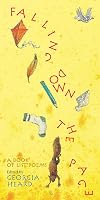
In the introduction to her anthology of list poems for young people, poet and educator Georgian Heard describes moving through the streets of New York City, observing and making a mental list of all her sensory experiences. She writes that walking and attending to one’s surroundings were the practice of Walt Whitman whose Song of Myself is a famous example of a list poem, one the oldest and most accessible of verse forms. She makes clear, however, that list poems are crafted—words must show more be chosen with special care. There are many varieties, and sometimes these pieces are blended with other poetic forms, such as multiple-voice or call-and-response poems.
Physically, Falling Down the Page is a tall, very thin book to reflect the appearance of a list. Some poems are placed on the page in a portrait orientation; others have a landscape presentation. Heard has arranged the 32 poems she’s selected to correspond to the cycles of the school day and the school year. Not all the poems actually concern school. Included are compositions by such children’s literature notables as Eileen Spinelli, Jane Yolen, Kathi Appelt, and Marilyn Singer—to name a few. Female writers are in the majority here. Heard’s goal is clearly to inspire kids to try writing their own list poems.
The pieces are consistently appealing; many are rhyming or have an infectious rhythm. Topics include (in no particular order): greeting friends of different nationalities in their own languages; cleaning out a junk-filled desk or retrieving objects that have ended up under a bed; rock collecting; playing with clay; hands—the tasks they can perform and the objects they can hold; words; poem writing; places in which to read; maps; how school tests are never about the things you know; things that spin; skateboarding; trees . . . There’s a clever poem from the point of view of a sleeping, dreaming school. Another provides a list of things you’d need to do if you were the sun.
My favourite is Patricia Hubble’s short poem “Winter’s Present” for its nice use of metaphor:
Feathers for the sky
New clothes for bare branches
Pom-poms for the fences
Top hats for the mailboxes
Silver spears for house eaves
Blossoms for the windowpanes
Quilts for parked cars
Stars for all mittens
—And for the children?
No school!
All in all, this is a lovely collection. I believe many kids would enjoy it. show less
Physically, Falling Down the Page is a tall, very thin book to reflect the appearance of a list. Some poems are placed on the page in a portrait orientation; others have a landscape presentation. Heard has arranged the 32 poems she’s selected to correspond to the cycles of the school day and the school year. Not all the poems actually concern school. Included are compositions by such children’s literature notables as Eileen Spinelli, Jane Yolen, Kathi Appelt, and Marilyn Singer—to name a few. Female writers are in the majority here. Heard’s goal is clearly to inspire kids to try writing their own list poems.
The pieces are consistently appealing; many are rhyming or have an infectious rhythm. Topics include (in no particular order): greeting friends of different nationalities in their own languages; cleaning out a junk-filled desk or retrieving objects that have ended up under a bed; rock collecting; playing with clay; hands—the tasks they can perform and the objects they can hold; words; poem writing; places in which to read; maps; how school tests are never about the things you know; things that spin; skateboarding; trees . . . There’s a clever poem from the point of view of a sleeping, dreaming school. Another provides a list of things you’d need to do if you were the sun.
My favourite is Patricia Hubble’s short poem “Winter’s Present” for its nice use of metaphor:
Feathers for the sky
New clothes for bare branches
Pom-poms for the fences
Top hats for the mailboxes
Silver spears for house eaves
Blossoms for the windowpanes
Quilts for parked cars
Stars for all mittens
—And for the children?
No school!
All in all, this is a lovely collection. I believe many kids would enjoy it. show less
"Falling Down the Page: A Book of List Poems" by Georgia Heard is a unique and imaginative collection of poems that explores the art of list-making through the lens of poetry. Each poem in this book is structured as a list, but with a twist—these lists don’t just catalog things; they evoke emotions, tell stories, and spark the imagination. Heard’s poems capture the essence of seemingly ordinary things—like "Things I Found in My Pocket" or "Things That Make Me Laugh"—and transform show more them into beautiful, thoughtful reflections. The structure of the poems, which appear like lists at first glance, gives young readers a way to engage with poetry in a way that is accessible and fun.
The book’s illustrations, created by Jason Chin, complement the poems perfectly, with dynamic images that bring the lists to life, adding an extra layer of meaning to each poem. The combination of Heard’s lyrical language and Chin’s vivid illustrations makes this book an excellent resource for sparking creativity and encouraging children to explore the world around them through words. The idea of turning everyday lists into poetic expressions is both creative and accessible. The poems show children that poetry doesn't have to be formal or rigid—it can be free and playful, just like a list. This book is ideal for children in Grades 2-5 (ages 7-11). The poems are accessible for younger readers but also offer enough depth for older children to appreciate the creative language and the concept of using lists as poetry. This book would be perfect for a poetry unit. After reading a few poems, I would encourage students to write their own list poems based on their favorite things or experiences. This would allow them to experiment with the creative potential of lists while developing their writing skills. show less
The book’s illustrations, created by Jason Chin, complement the poems perfectly, with dynamic images that bring the lists to life, adding an extra layer of meaning to each poem. The combination of Heard’s lyrical language and Chin’s vivid illustrations makes this book an excellent resource for sparking creativity and encouraging children to explore the world around them through words. The idea of turning everyday lists into poetic expressions is both creative and accessible. The poems show children that poetry doesn't have to be formal or rigid—it can be free and playful, just like a list. This book is ideal for children in Grades 2-5 (ages 7-11). The poems are accessible for younger readers but also offer enough depth for older children to appreciate the creative language and the concept of using lists as poetry. This book would be perfect for a poetry unit. After reading a few poems, I would encourage students to write their own list poems based on their favorite things or experiences. This would allow them to experiment with the creative potential of lists while developing their writing skills. show less
Although I am not fond of poetry, I enjoyed this book. The book was divided into twelve rooms, each with a different type of poem involving curiosity and things that people might wonder about. I particularly liked the poems in the rooms of curiosity, nature, time and science. I felt that these particular poems taught the reader some things about science without seeming like they were teaching a lesson. For instance, the Room of Science used the correct terminology for each of six types of show more scientists, such as geologist and physicist, while using poetry to show them doing something that a scientist of that nature would do at work.The illustrations were beautiful and were clearly related to the poems on each page. I appreciated the ending that suggested to the reader that they could also wonder about things and could begin to address this wonder by doing something like writing a poem, building a model, or looking through a microscope. I feel this poetry book challenges the reader to do more than just passively read the book and to address their own wonder by doing. show less
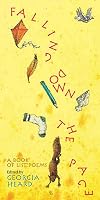
Aside from the covers, this book is very little illustrated, though it uses creative typesetting to enliven the pages, the titles are in blue (the rest is in black), and one poem about the moon has a blue background with the poem in a curved shape, and another (Things to do if you are a pencil) has a an eraser and a pencil point at the ends of the title. It is also bound in an unusual format, narrow and long and bound at the top like a notebook or pad of paper. Most of the poems are long and show more narrow, but a few go the short way.
The poems are of a great variety, only tenuously linked by the theme of being lists. There is no common setting. My five-year-old son found the book immensely amusing. He wanted to read some of the poems again right away. They are quirky, one is quite different from the next. They have a nice rhythm to them, and also have a lot of vocabulary that is likely to be new, and they lend themselves very easily to the kinds of processes identified as important in reading aloud. They are easy to read in an animated, fluent way. They are easy to discuss and connect to the rest of a child’s life. They are easy to extend to an activity where the child makes lists relating to something in his own life. show less
The poems are of a great variety, only tenuously linked by the theme of being lists. There is no common setting. My five-year-old son found the book immensely amusing. He wanted to read some of the poems again right away. They are quirky, one is quite different from the next. They have a nice rhythm to them, and also have a lot of vocabulary that is likely to be new, and they lend themselves very easily to the kinds of processes identified as important in reading aloud. They are easy to read in an animated, fluent way. They are easy to discuss and connect to the rest of a child’s life. They are easy to extend to an activity where the child makes lists relating to something in his own life. show less
Lists
Youth: Poetry (1)
Awards


You May Also Like


Associated Authors
Statistics
- Works
- 27
- Also by
- 1
- Members
- 1,364
- Popularity
- #18,850
- Rating
- 4.1
- Reviews
- 34
- ISBNs
- 39
- Languages
- 1