
Sarah K. Howley
Author of James: Know God's Wisdom
About the Author
Series
Works by Sarah K. Howley
Our Trustworthy God: How Much God Loves You, Joyfully Engages with You, and Trusts You (2025) 5 copies, 4 reviews
Colossians & Philemon: Live Transformed (Seeing the Old Testament in the Epistles Bible Studies) (2026) 1 copy, 1 review
Tagged
Common Knowledge
There is no Common Knowledge data for this author yet. You can help.
Members
Reviews
Our Trustworthy God: How Much God Loves You, Joyfully Engages with You, and Trusts You by Sarah Howley

A thought-provoking and honest book. Right up front the author admits she had little understanding of what trusting God means. Trust, she claims, is two-way, but this seems to be an assumption, as nothing is cited to support the idea. After stating that trust is two-way, she says that as relationship develops, dependency and reliance grow. Certainly she doesn't think that God develops a dependency and reliance upon us, His creatures. Though the book says otherwise, in most relationships the show more level of trust is not fully reciprocal.
What follows are comments made during reading. It is a little long for a book review, but I believe to be important in this case.
She speaks much of how God 'believes' in her. The discussion of what does and does not constitute relationship is quite good.
The illustration she mentions about the olive tree does not, as she suggests, indicate a passage of time. Nothing in the passage in Romans has any reference to time. The illustration is one of function, not time.
We disagree that communication does not make a relationship. It is a primary means of relating and even small conversations with the grocery clerk are relational in nature. That it does or does not develop depth is merely a feature of how much the parties invest in its development.
God's love for us is not an emotion at all, but as the author correctly points out, but does not seem fully understanding of, is that God's love is a commitment choice to care for and about us.
We are told several times that God affirms us, but are not given any clear understanding of what this is. Prior to our entering a relationship with him, he affirms that we are sinful and under his wrath, but that is not likely what she is referring to.
We strongly disagree that having a 'sense' or 'feeling' is communication from the Holy Spirit. These things are subjective and thus come from ourselves. It is one of the key things people misunderstand.
The author states that without trust, our actions may come from a place of obedience. That's a curious statement when the entirety of a Christian's relationship with God is summed up by the term 'Trust & Obey'. Obedience is part and parcel of our relationship with him.
The discussion on Abraham was almost entirely speculation and not derived from the text, with many 'ifs', 'maybes', and 'seemed to bes' throughout. It's reported that God trusted Abram, but no specifics of what this trust entailed are given. The idea that God trusts his creatures is at best odd. God did not 'trust' that Abraham would be the father of many nations, he himself ensured that it would happen. When one is omnipotent the need to trust others is eliminated. The theme of trust plays large in the book. Unfortunately, other than stating that it exists, no support for the concept is given.
The passage listed in 1 Thessalonians speaks of the gospel being entrusted to us, not that God trust us. It says we have been given a responsibility, not that God trusts us. The new translation she gives of this verse shows little understanding of the Greek text or the context of the passage. As a teacher of New Testament Greek, I would not have given a high grade on this 'test'.
Biblically, trust is not an emotion, no matter what it may be called when used in other contexts.
We are asked if we really trust God if we don't take risks with him. In response, we ask if it is a risk at all if we are trusting a truly trustworthy God and suggest that in this case it is indeed no risk.
That God trusts us and believes in us is a major theme of the book. Yet it is never established as true, it is only stated to be the case. Another example of an understanding foreign to the text is the interpretation of Numbers 12:7. The Hebrew word aman, which carries the sense of reliable and is translated 'faithful' in most of the English versions, does not mean that God trusted Moses, but that Moses proved to be reliable. God doesn't get 'pushed away' when we are unreliable. He's not like that.
The author states, "we have to step out and risk in order to know if God is trustworthy." This statement is false and quite the opposite of the message of the entire Bible. God has proven himself utterly trustworthy completely apart from the response of any man. We are given the opportunity and actually the command to trust him as is his due.
We are told that God gave up the earth for safekeeping to Adam and Eve, but no support is given for this idea and is in fact not true. He also did not invite them into his world, he created them. He did not open up to them and become vulnerable. It's rather contradictory that an omnipotent being can also be vulnerable. While sin is disobeying, it is not breaking of trust. All of this is a product of the author, not information from the Bible.
Where in a footnote we are told that Jethro was likely a priest of God in Exodus 18, verse 11 of that chapter makes it clear that the opposite is true. Jethro finds out in this verse that YHWH is greater than all gods, which would be quite unlikely had he already been a priest of YHWH.
The author does not believe that God is how all things come about. This implies that she does not believe God to be completely sovereign, a concept the Bible clearly teaches. For example, Satan could do nothing to Job without God's authorization. God clearly, did allow Satan to do evil to Job, within the limits God ordained. God's prophets often tell God to not forgive his own people for their sins.
She states that the conclusion that nature is evil is confusing to her. Good. Nowhere is it concluded that nature is evil. Genesis does not say that God set the world into motion and that man messed it up. Man messed himself up, not the world. If sometimes calamity is just calamity, then it is happening outside the sovereign control of the omnipotent God.
The description of Satan shows much confusion of understanding. Sinning is labeled as 'poor choices.' God does not consider these activities 'poor choices.' He sees it as sin.
She defines love in a way that is useful for her purposes, but not in harmony with the teaching of Scripture.
The Bible does not say that God works with us to bring about good. Quite the opposite, it says he does this. God works for good with those, not God works with those for good. Word order in English is important. The Greek text is quite clear that it is God who is working to bring about the good to those who love him.
She says she can see no place in the Bible where God caused pain or hardship, but just a small sample of verses suggests otherwise. Is a trumpet blown in a city, and the people are not afraid? Does disaster come to a city, unless the LORD has done it? (Amos 3:6 ESV) I form light and create darkness, I make well-being and create calamity, I am the LORD, who does all these things. (Isa. 45:7 ESV) Is it not from the mouth of the Most High that good and bad come? (Lam. 3:38 ESV) Therefore God sends them a strong delusion, so that they may believe what is false (2 Thess. 2:11 ESV)
She doubts that God is in control. The God who created the universe, who commands people to believe (yes, this is a command in the text, not a suggestion), who is the victor, yet not in control doesn't even make sense. That God did not choose to exercise direct control over enemy armies does not mean he does not have that power, only that he did not choose to use those means. It's hard to understand how God will throw these beings into hell in Revelation if he does not have the power and control.
To pick three words which do not in themselves teach omnipotence and then conclude that God is not omnipotent is simply poor scholarship. Many concepts, like Trinity, do not have a word at all in the Bible, yet the concept is true.
Unlike what the author says, God does not experience our suffering. He knows it, but does not experience it.
The God who is not in control does somehow work evil into good. Now there is a real bit of ... bit of, it's hard to come up with a word that fits here.
The parable of the talents is stated as one of trusting the servants. Pretty plainly, it is one of requiring the servants to do the master's bidding and had nothing to do with his trusting them. Again the problem comes with a misunderstanding of verbiage. Entrusting someone with something does not mean the person himself is trusted. It implies an obligation has been given. The word 'talent' in the Biblical text may be easier to think of as a human talent, but it just isn't what the word in the text means. It's pretty obvious that words are manipulated to suit the agenda of the author, not to treat the text in a trustworthy manner. That little switch works in English, but not in any other language, including the original.
Commission does not mean a co-mission. It means dispensing authority. All uses of commission in our language bear this meaning.
The title of the book is that God is trustworthy, but most of the book expresses the idea that God is trusting. These are two completely different concepts.
With all that I've said, I still recommend the book. Read it. Compare it to the Scripture. Think about the arguments she makes. Draw your own conclusions. show less
What follows are comments made during reading. It is a little long for a book review, but I believe to be important in this case.
She speaks much of how God 'believes' in her. The discussion of what does and does not constitute relationship is quite good.
The illustration she mentions about the olive tree does not, as she suggests, indicate a passage of time. Nothing in the passage in Romans has any reference to time. The illustration is one of function, not time.
We disagree that communication does not make a relationship. It is a primary means of relating and even small conversations with the grocery clerk are relational in nature. That it does or does not develop depth is merely a feature of how much the parties invest in its development.
God's love for us is not an emotion at all, but as the author correctly points out, but does not seem fully understanding of, is that God's love is a commitment choice to care for and about us.
We are told several times that God affirms us, but are not given any clear understanding of what this is. Prior to our entering a relationship with him, he affirms that we are sinful and under his wrath, but that is not likely what she is referring to.
We strongly disagree that having a 'sense' or 'feeling' is communication from the Holy Spirit. These things are subjective and thus come from ourselves. It is one of the key things people misunderstand.
The author states that without trust, our actions may come from a place of obedience. That's a curious statement when the entirety of a Christian's relationship with God is summed up by the term 'Trust & Obey'. Obedience is part and parcel of our relationship with him.
The discussion on Abraham was almost entirely speculation and not derived from the text, with many 'ifs', 'maybes', and 'seemed to bes' throughout. It's reported that God trusted Abram, but no specifics of what this trust entailed are given. The idea that God trusts his creatures is at best odd. God did not 'trust' that Abraham would be the father of many nations, he himself ensured that it would happen. When one is omnipotent the need to trust others is eliminated. The theme of trust plays large in the book. Unfortunately, other than stating that it exists, no support for the concept is given.
The passage listed in 1 Thessalonians speaks of the gospel being entrusted to us, not that God trust us. It says we have been given a responsibility, not that God trusts us. The new translation she gives of this verse shows little understanding of the Greek text or the context of the passage. As a teacher of New Testament Greek, I would not have given a high grade on this 'test'.
Biblically, trust is not an emotion, no matter what it may be called when used in other contexts.
We are asked if we really trust God if we don't take risks with him. In response, we ask if it is a risk at all if we are trusting a truly trustworthy God and suggest that in this case it is indeed no risk.
That God trusts us and believes in us is a major theme of the book. Yet it is never established as true, it is only stated to be the case. Another example of an understanding foreign to the text is the interpretation of Numbers 12:7. The Hebrew word aman, which carries the sense of reliable and is translated 'faithful' in most of the English versions, does not mean that God trusted Moses, but that Moses proved to be reliable. God doesn't get 'pushed away' when we are unreliable. He's not like that.
The author states, "we have to step out and risk in order to know if God is trustworthy." This statement is false and quite the opposite of the message of the entire Bible. God has proven himself utterly trustworthy completely apart from the response of any man. We are given the opportunity and actually the command to trust him as is his due.
We are told that God gave up the earth for safekeeping to Adam and Eve, but no support is given for this idea and is in fact not true. He also did not invite them into his world, he created them. He did not open up to them and become vulnerable. It's rather contradictory that an omnipotent being can also be vulnerable. While sin is disobeying, it is not breaking of trust. All of this is a product of the author, not information from the Bible.
Where in a footnote we are told that Jethro was likely a priest of God in Exodus 18, verse 11 of that chapter makes it clear that the opposite is true. Jethro finds out in this verse that YHWH is greater than all gods, which would be quite unlikely had he already been a priest of YHWH.
The author does not believe that God is how all things come about. This implies that she does not believe God to be completely sovereign, a concept the Bible clearly teaches. For example, Satan could do nothing to Job without God's authorization. God clearly, did allow Satan to do evil to Job, within the limits God ordained. God's prophets often tell God to not forgive his own people for their sins.
She states that the conclusion that nature is evil is confusing to her. Good. Nowhere is it concluded that nature is evil. Genesis does not say that God set the world into motion and that man messed it up. Man messed himself up, not the world. If sometimes calamity is just calamity, then it is happening outside the sovereign control of the omnipotent God.
The description of Satan shows much confusion of understanding. Sinning is labeled as 'poor choices.' God does not consider these activities 'poor choices.' He sees it as sin.
She defines love in a way that is useful for her purposes, but not in harmony with the teaching of Scripture.
The Bible does not say that God works with us to bring about good. Quite the opposite, it says he does this. God works for good with those, not God works with those for good. Word order in English is important. The Greek text is quite clear that it is God who is working to bring about the good to those who love him.
She says she can see no place in the Bible where God caused pain or hardship, but just a small sample of verses suggests otherwise. Is a trumpet blown in a city, and the people are not afraid? Does disaster come to a city, unless the LORD has done it? (Amos 3:6 ESV) I form light and create darkness, I make well-being and create calamity, I am the LORD, who does all these things. (Isa. 45:7 ESV) Is it not from the mouth of the Most High that good and bad come? (Lam. 3:38 ESV) Therefore God sends them a strong delusion, so that they may believe what is false (2 Thess. 2:11 ESV)
She doubts that God is in control. The God who created the universe, who commands people to believe (yes, this is a command in the text, not a suggestion), who is the victor, yet not in control doesn't even make sense. That God did not choose to exercise direct control over enemy armies does not mean he does not have that power, only that he did not choose to use those means. It's hard to understand how God will throw these beings into hell in Revelation if he does not have the power and control.
To pick three words which do not in themselves teach omnipotence and then conclude that God is not omnipotent is simply poor scholarship. Many concepts, like Trinity, do not have a word at all in the Bible, yet the concept is true.
Unlike what the author says, God does not experience our suffering. He knows it, but does not experience it.
The God who is not in control does somehow work evil into good. Now there is a real bit of ... bit of, it's hard to come up with a word that fits here.
The parable of the talents is stated as one of trusting the servants. Pretty plainly, it is one of requiring the servants to do the master's bidding and had nothing to do with his trusting them. Again the problem comes with a misunderstanding of verbiage. Entrusting someone with something does not mean the person himself is trusted. It implies an obligation has been given. The word 'talent' in the Biblical text may be easier to think of as a human talent, but it just isn't what the word in the text means. It's pretty obvious that words are manipulated to suit the agenda of the author, not to treat the text in a trustworthy manner. That little switch works in English, but not in any other language, including the original.
Commission does not mean a co-mission. It means dispensing authority. All uses of commission in our language bear this meaning.
The title of the book is that God is trustworthy, but most of the book expresses the idea that God is trusting. These are two completely different concepts.
With all that I've said, I still recommend the book. Read it. Compare it to the Scripture. Think about the arguments she makes. Draw your own conclusions. show less
 This review was written for LibraryThing Early Reviewers.
This is a very short devotional on 1&2 Peter. While it has some good questions to reflect on when reading through the passages, it is not as in depth as I would have liked. I do like the sections that give connections to readings in the Old Testament. I would likely read another devotional by this writer, although it would probably be in conjunction with other devotionals that go into greater depth, so I could develop a more solid understanding of the passages.
This review was written for LibraryThing Early Reviewers.Our Trustworthy God: How Much God Loves You, Joyfully Engages with You, and Trusts You by Sarah Howley
Our Trustworthy God is a heartfelt exploration of God’s character that keeps circling back to one core conviction: God is not distant or unpredictable, but deeply reliable, loving, and personally involved in our lives. With warmth and pastoral care, Sarah aims to encourage readers who may have grown up with distorted pictures of God—as a harsh judge, a cold rule-keeper, or someone who can’t be counted on when life falls apart.
God is a relational Being and this book repeatedly show more highlights that. Sarah truly wants you to connect with Him and experience His faithfulness.
Overall, Our Trustworthy God is not just a book to read but one to absorb slowly. It offers reassurance for the wounded, hope for the disillusioned, and a steady reminder that God’s love is not theoretical but deeply practical, consistent, and present. For anyone wrestling with doubt, fear, or mistrust of God, this book is a gentle yet firm invitation to rest in His faithfulness. show less
God is a relational Being and this book repeatedly show more highlights that. Sarah truly wants you to connect with Him and experience His faithfulness.
Overall, Our Trustworthy God is not just a book to read but one to absorb slowly. It offers reassurance for the wounded, hope for the disillusioned, and a steady reminder that God’s love is not theoretical but deeply practical, consistent, and present. For anyone wrestling with doubt, fear, or mistrust of God, this book is a gentle yet firm invitation to rest in His faithfulness. show less
This review was written for LibraryThing Early Reviewers.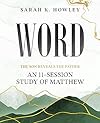
Word: An 11 Session Study of Matthew is a bible study that could be done either by an individual or a small group. Each session is a study of 3 chapters, with the exception of Session 3 on one chapter, Matthew 5. There is an Introduction, Questions, a section on Old Testament Links, and an Application.The sessions are small enough to not be overwhelming, but still meaty enough with good content that requires some reading and meditation, so it's definitely not a simple devotional that you show more just read and move on from. The Introduction begins with questions that could be considered ice breakers in a small group setting or for individuals, something to get your mind turning in the direction the author wants to go. After reading the passage, the section on Questions again seem geared toward small group discussion but obviously could be used individually as well. My favorite section of each session is the Old Testament Links. The author lists Old Testament Scriptures that relate to the passage in Matthew and then provides thoughtful commentary on the connections between the Scriptures. Finally, the Application attempts to apply the lessons from the Matthew passage to your life.
I strongly recommend following all the author's prompts to read the Old Testament Scriptures that correspond to the Matthew passage being studied - otherwise, you're defeating the purpose of the study, in my opinion. Compared to a lot of Bible Studies on the market today, this one is more solid and less fluff, which is good.
Also, I have to add... I'm thankful that this Bible Study, written by a woman, is not covered in flowers or with a stock photo of a woman in a field with her hands raised. That's really annoying. show less
Also, I have to add... I'm thankful that this Bible Study, written by a woman, is not covered in flowers or with a stock photo of a woman in a field with her hands raised. That's really annoying. show less
This review was written for LibraryThing Early Reviewers.Statistics
- Works
- 18
- Members
- 99
- Popularity
- #191,537
- Rating
- 4.2
- Reviews
- 58
- ISBNs
- 33

