
Marissa R. Moss
Author of Her Country: How the Women of Country Music Became the Success They Were Never Supposed to Be
Works by Marissa R. Moss
Her Country: How the Women of Country Music Became the Success They Were Never Supposed to Be (2022) 78 copies, 17 reviews
Tagged
Common Knowledge
There is no Common Knowledge data for this author yet. You can help.
Members
Reviews
Her Country: How the Women of Country Music Became the Success They Were Never Supposed to Be by Marissa R. Moss
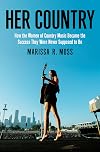
Her Country by Marissa R Moss is an engaging read that will satisfy readers ranging from fans of country music to those interested in women's studies and systemic sexism. The writing is very good and even the parts that most clearly illustrate the good ol' boys club stops short of being preachy and is more about the strength of these women who are, whether they want to or not, battling it and paving the way for those who will come after.
I do not listen to country music as my preferred genre, show more though the country music I like I tend to really like. So while I was looking forward to the music industry anecdotes that wasn't the main reason I came to the book. I was interested in an inside look at exactly how the industry exercises its own type of sexism, heterosexism, and racism. Not because I thought the country music industry was unusual in these things but each industry and field seems to have their own of making these things seem like they are right and rational.
For the most part the stories of these performers is told in such a way that anyone simply wanting to read about them won't be disappointed. The obstacles they faced (and still face) and the things they did to circumvent them makes for an intriguing narrative. If you didn't know very much of this backstory you no doubt had a lot of respect for their music. This will shed new light on just how phenomenal these women are as human beings as well as artists.
Highly recommended for fans of country as well as anyone with an interest in the obstacles that face women in not only country music but pretty much every industry.
Reviewed from a copy made available by the publisher via NetGalley. show less
I do not listen to country music as my preferred genre, show more though the country music I like I tend to really like. So while I was looking forward to the music industry anecdotes that wasn't the main reason I came to the book. I was interested in an inside look at exactly how the industry exercises its own type of sexism, heterosexism, and racism. Not because I thought the country music industry was unusual in these things but each industry and field seems to have their own of making these things seem like they are right and rational.
For the most part the stories of these performers is told in such a way that anyone simply wanting to read about them won't be disappointed. The obstacles they faced (and still face) and the things they did to circumvent them makes for an intriguing narrative. If you didn't know very much of this backstory you no doubt had a lot of respect for their music. This will shed new light on just how phenomenal these women are as human beings as well as artists.
Highly recommended for fans of country as well as anyone with an interest in the obstacles that face women in not only country music but pretty much every industry.
Reviewed from a copy made available by the publisher via NetGalley. show less
Her Country: How the Women of Country Music Became the Success They Were Never Supposed to Be by Marissa R. Moss
It should be no secret that women have more challenges to overcome in the entertainment industry, most of them unfair ones, set into motion by a system predominantly run by - and elevating - men.
Country music is a more challenging industry than most for women, with its conservative take on the role of women in society and in the realm of entertainment.
And so, it's been refreshing to see the emergence of a number of female artists over the past few years who fill arenas, win Grammys, and show more garner critical praise, despite receiving little-to-no radio play.
The stories shared by the women featured in this book - Kacey Musgraves, Maren Morris, and Mickey Guyton, in particular - are troubling. It's the kind of thing you wouldn't imagine still happens in the 21st century...unless you're a woman in America, and can perhaps see all too easily how it happens. Creepy radio reps hitting on artists while on air, being told "we already have a woman on the label" by record execs, and of course, being asked to change lyrics to appease the conservative country audience, when male artists are free to express themselves however they see fit.
It's an infuriating and inspiring read, but I left the book feeling like women are winning, though they are - as they often have had to do - taking a different path, a road less traveled - to find their audiences, workaround the lack of radio support, and form an alliance where they lift each other up in the face of an industry that tells them, "we can only have so many women, so you gals fight it out."
In a business that sees women as the "tomato on the salad" (TomatoGate was an actual scandal in country music a few years back), it's time for them to be centered as the main entree. They've got something to say, and people DO want to hear what they have to offer. Thanks to Marissa Moss for giving them yet one more voice and opportunity for connection. I'm now committed to listen to and share the music of Allison Russell, Amanda Shires, Amythyst Kiah, Brandi Carlisle, Chapel Hart, Kacey Musgraves, Lilly Hiatt, Maggie Rogers, Maren Morris, Margo Price, Mickey Guyton, Miko Marks, Rhiannon Giddens, Rissi Palmer, Valerie June, Waxahatchee, Yola, and others. show less
Country music is a more challenging industry than most for women, with its conservative take on the role of women in society and in the realm of entertainment.
And so, it's been refreshing to see the emergence of a number of female artists over the past few years who fill arenas, win Grammys, and show more garner critical praise, despite receiving little-to-no radio play.
The stories shared by the women featured in this book - Kacey Musgraves, Maren Morris, and Mickey Guyton, in particular - are troubling. It's the kind of thing you wouldn't imagine still happens in the 21st century...unless you're a woman in America, and can perhaps see all too easily how it happens. Creepy radio reps hitting on artists while on air, being told "we already have a woman on the label" by record execs, and of course, being asked to change lyrics to appease the conservative country audience, when male artists are free to express themselves however they see fit.
It's an infuriating and inspiring read, but I left the book feeling like women are winning, though they are - as they often have had to do - taking a different path, a road less traveled - to find their audiences, workaround the lack of radio support, and form an alliance where they lift each other up in the face of an industry that tells them, "we can only have so many women, so you gals fight it out."
In a business that sees women as the "tomato on the salad" (TomatoGate was an actual scandal in country music a few years back), it's time for them to be centered as the main entree. They've got something to say, and people DO want to hear what they have to offer. Thanks to Marissa Moss for giving them yet one more voice and opportunity for connection. I'm now committed to listen to and share the music of Allison Russell, Amanda Shires, Amythyst Kiah, Brandi Carlisle, Chapel Hart, Kacey Musgraves, Lilly Hiatt, Maggie Rogers, Maren Morris, Margo Price, Mickey Guyton, Miko Marks, Rhiannon Giddens, Rissi Palmer, Valerie June, Waxahatchee, Yola, and others. show less
Her Country: How the Women of Country Music Became the Success They Were Never Supposed to Be by Marissa R. Moss
Now I know why I no longer listen to country music. I used to love to hear and sing along with Faith Hill, Martina McBride, Patty Loveless, EmmyLou Harris and so many more years ago, but I never listen to country music stations anymore. After reading Her Country, I now understand that the male power elite of the country music business put a stop to the upward trajectory of female artists. How they limited their airplay and reduced their recording contracts, and flooded the airwaves with show more constant testosterone-fueled odes to beer, pick up trucks and girls in short shorts and tight tops. No wonder it no longer appeals to me as a woman.
I was not aware of the continued harassment of women and the shut-out of women of color and LGBTQ. I had hoped that this had improved, but Marissa Moss’ strong expose of the inner workings of the country music business opened my eyes. Her interviews and factual accounts of the various women trying to break into the country music world were very interesting and enlightening, Definitely food for thought. I appreciated how she included the actual experiences of artists, rather than simply second-hand accounts,
One hopes that the release of this book will open the eyes of those in a position to affect change in the country music business. I will certainly be searching for more female artists and use my pocketbook to show my support. show less
I was not aware of the continued harassment of women and the shut-out of women of color and LGBTQ. I had hoped that this had improved, but Marissa Moss’ strong expose of the inner workings of the country music business opened my eyes. Her interviews and factual accounts of the various women trying to break into the country music world were very interesting and enlightening, Definitely food for thought. I appreciated how she included the actual experiences of artists, rather than simply second-hand accounts,
One hopes that the release of this book will open the eyes of those in a position to affect change in the country music business. I will certainly be searching for more female artists and use my pocketbook to show my support. show less
 This review was written for LibraryThing Early Reviewers.
Her Country: How the Women of Country Music Became the Success They Were Never Supposed to Be by Marissa R. Moss

You wouldn't necessarily know it if you listen to country music radio stations today when three out of four songs are male singers belting out homages to dirt roads, pickup trucks and girls in tank tops, but not so long ago there was a golden era of success for female artists in the genre. The late 1990s and early 2000s saw an explosion of high-charting singles by women like Shania Twain, Mary Chapin Carpenter, Martina McBride, and of course The Dixie Chicks. But it didn't last, and show more journalist Moss lays out a case for why that starts with brute capitalism and ends with our old friend sexism with the obligatory soupçon of racism.
The consolidation of radio stations around the country under the umbrella of just a couple of big corporations — primarily Clear Channel Communications — meant that instead of local deejays at each station choosing music that most appealed to them and their listeners, programming was centralized. And the use of computer algorithms to construct those playlists made things worse. A programming operations manual spelled it out clearly:
I don't want more than two ballads in a row. I want to avoid having more than two female singers in a row.
When you limit the number of tracks by women in any given hour to just a handful, that leaves a lot of talented artists fighting for just a few seats at the table, and it means especially that women of color are largely left standing out in the hall, not even in the room.
The sexism aspect was best illustrated in 2015 by a deejay who said that women were the "tomato" in the country radio salad, while the biggest male stars were the "lettuce." It's a bad sign when an industry is so sure of its monopoly that it no longer has to hide how the sausage gets made.
The answer, so far, has been for female artists to stop trying to appeal to the chauvinists in the country-music establishment and especially the all-powerful country radio wing (where they were expected to endure men ogling them and making crude remarks about their physical attributes, and occasionally looking for other "favors") and to appeal directly to audiences through Spotify and other streaming services as well as live shows. Moss gives readers a look at how some of the biggest names today (Kacey Musgraves, Maren Morris, Miranda Lambert, Mickey Guyton) have found success by refusing to compromise their artistic visions to placate an industry that wouldn't want them even if they followed all the rules.
This is an engaging read, very breezy in style, and I would have finished it much more quickly if I hadn't kept stopping to open up Apple Music and search for tracks by women artists that I wasn't familiar with. I'm not going to lie: While I found a lot I like, others of these women make music that doesn't particularly appeal to me, for all I admire their ability to create their own success. But that's sort of the point: When you make room for more women, you make room for music that doesn't all sound alike and doesn't cater to the same narrow band of listeners.
The biggest critique I have is that this book really could have used an index. Moss tells the story of the artists she features in roughly chronological order, but that means any one person's story is scattered across the whole book. It would have been useful to have a way to hone in on a particular artist or song or event without having the skim the whole book.
For me, as a fan of country music who has no interest in modern country radio, the lesson was to stop thinking of radio or chart success as the harbinger of quality. There's lots of great music getting made out there, and pretty much all of it can be found on streaming services. And when you listen that way, you don't have to put up with constant advertising interruptions or inane deejays breaking the spell. show less
The consolidation of radio stations around the country under the umbrella of just a couple of big corporations — primarily Clear Channel Communications — meant that instead of local deejays at each station choosing music that most appealed to them and their listeners, programming was centralized. And the use of computer algorithms to construct those playlists made things worse. A programming operations manual spelled it out clearly:
I don't want more than two ballads in a row. I want to avoid having more than two female singers in a row.
When you limit the number of tracks by women in any given hour to just a handful, that leaves a lot of talented artists fighting for just a few seats at the table, and it means especially that women of color are largely left standing out in the hall, not even in the room.
The sexism aspect was best illustrated in 2015 by a deejay who said that women were the "tomato" in the country radio salad, while the biggest male stars were the "lettuce." It's a bad sign when an industry is so sure of its monopoly that it no longer has to hide how the sausage gets made.
The answer, so far, has been for female artists to stop trying to appeal to the chauvinists in the country-music establishment and especially the all-powerful country radio wing (where they were expected to endure men ogling them and making crude remarks about their physical attributes, and occasionally looking for other "favors") and to appeal directly to audiences through Spotify and other streaming services as well as live shows. Moss gives readers a look at how some of the biggest names today (Kacey Musgraves, Maren Morris, Miranda Lambert, Mickey Guyton) have found success by refusing to compromise their artistic visions to placate an industry that wouldn't want them even if they followed all the rules.
This is an engaging read, very breezy in style, and I would have finished it much more quickly if I hadn't kept stopping to open up Apple Music and search for tracks by women artists that I wasn't familiar with. I'm not going to lie: While I found a lot I like, others of these women make music that doesn't particularly appeal to me, for all I admire their ability to create their own success. But that's sort of the point: When you make room for more women, you make room for music that doesn't all sound alike and doesn't cater to the same narrow band of listeners.
The biggest critique I have is that this book really could have used an index. Moss tells the story of the artists she features in roughly chronological order, but that means any one person's story is scattered across the whole book. It would have been useful to have a way to hone in on a particular artist or song or event without having the skim the whole book.
For me, as a fan of country music who has no interest in modern country radio, the lesson was to stop thinking of radio or chart success as the harbinger of quality. There's lots of great music getting made out there, and pretty much all of it can be found on streaming services. And when you listen that way, you don't have to put up with constant advertising interruptions or inane deejays breaking the spell. show less
This review was written for LibraryThing Early Reviewers.Lists
Awards

You May Also Like
Associated Authors
Statistics
- Works
- 1
- Members
- 78
- Popularity
- #229,021
- Rating
- 3.8
- Reviews
- 17
- ISBNs
- 4
