
Brian Raftery
Author of Best. Movie. Year. Ever.: How 1999 Blew Up the Big Screen
Works by Brian Raftery
Tagged
Common Knowledge
- Birthdate
- 20th Century
- Gender
- male
- Places of residence
- Brooklyn, New York, USA
- Associated Place (for map)
- New York, USA
Members
Reviews
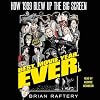
You can guess someone's age from the film years they eulogise. The movies of 1999 came along just as I was beginning to pay attention to films not made by Disney, and via DVDs and TV repeats would hang around right through my adolescence. I have never been as excited for a film as Star Wars: Episode I – The Phantom Menace, never been as scared by one as I was by The Blair Witch Project, and doubt I'll ever again feel the illicit thrill I got from watching American Pie for the first show more time.
And, like anyone, I'm going to enjoy a book that tells me my own personal experience was special and better than other people's.
A compliant audience I may be, but Raftery makes a convincing argument for the importance of 1999 in film history. Even if you're not convinced by his claim that it represented a "30-year harvest", he's persuasive that in its films you can see many important changes occurring – as well as excellent filmmaking. There's the decline of the star vehicle, the emergence of vocal online communities, and the emergence of the studio franchise mega-movies that dominate cinemas today.
It's also difficult to deny the influence of many of the movies that came about that year. Doubtless they were helped by arriving at the perfect moment to ride the explosion in content-hungry TV channels, and the arrival of DVD (the lower unit cost of which made it much more affordable to buy movies to keep). But the novelty and inventiveness of films such as The Matrix, Blair Witch and American Pie is hard to deny when their imitators clogged up cinema screens for much of the following decade.
It's easy, as a film fan, to look back on a time when executives believed complex, difficult-to-categorise films could draw large audiences, but, as David Fincher observes in this book, those executives were wrong. Many of these now-lauded films – Fight Club, Office Space, Election – flopped at the box office and some created serious headaches for their studios. Whether we like it or not, good movies that don't make money will wreck a studio. That's why the mid-budget movie died.
For better and for worse, 1999 set the stage for the films we get today, and Raftery's book is a very good explanation as to why. show less
And, like anyone, I'm going to enjoy a book that tells me my own personal experience was special and better than other people's.
A compliant audience I may be, but Raftery makes a convincing argument for the importance of 1999 in film history. Even if you're not convinced by his claim that it represented a "30-year harvest", he's persuasive that in its films you can see many important changes occurring – as well as excellent filmmaking. There's the decline of the star vehicle, the emergence of vocal online communities, and the emergence of the studio franchise mega-movies that dominate cinemas today.
It's also difficult to deny the influence of many of the movies that came about that year. Doubtless they were helped by arriving at the perfect moment to ride the explosion in content-hungry TV channels, and the arrival of DVD (the lower unit cost of which made it much more affordable to buy movies to keep). But the novelty and inventiveness of films such as The Matrix, Blair Witch and American Pie is hard to deny when their imitators clogged up cinema screens for much of the following decade.
It's easy, as a film fan, to look back on a time when executives believed complex, difficult-to-categorise films could draw large audiences, but, as David Fincher observes in this book, those executives were wrong. Many of these now-lauded films – Fight Club, Office Space, Election – flopped at the box office and some created serious headaches for their studios. Whether we like it or not, good movies that don't make money will wreck a studio. That's why the mid-budget movie died.
For better and for worse, 1999 set the stage for the films we get today, and Raftery's book is a very good explanation as to why. show less
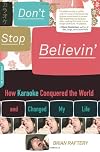
Brian Raftery is a karaoke connoisseur. Oh, I know -- if you're not a karaoke aficionado, this may seem to you a little bit like bragging that Colt 45 is your favorite aperitif. But Raftery is so enthusiastic about his hobby, and so effectively conveys its charms, that by the end of this book, you won't be rolling your eyes anymore.
Raftery not only offers a complete history of karaoke, but also a damn near brilliant deconstruction of what makes a good karaoke tune. Among other things, the show more audience shouldn't have heard it one million times before; it should be varied in tempo, mood, and style; and it shouldn't be too earnest, like "Moondance." For the above reasons, Bob Dylan's "Like a Rolling Stone" is the worst karaoke song ever, and Bobby Brown's "On Our Own" is one of the best. (Night Ranger's "Sister Christian" is apparently the exception that proves the rule.) And as though we needed them, Don't Stop Believin' gives us even more reasons to hate Don Henley, surely making Raftery eligible for some sort of public service award.
Raftery also has an excellent touch with the autobiographical material interspersed throughout, never coming across as solipsistic, or even self-involved -- not an easy task, as anyone who's read a book by John Seabrook or Elizabeth Wurzel can attest. And adding to the fun, he's a damn funny writer. I laughed out loud a few times (and this was on the 7 train to Queens, where no one dares to laugh). He also can turn a phrase like no one's business. Representative sample: "Even a subprime boy band like 98 Degrees could sell 4 million copies of an album, and those guys were little more than overgroomed remoras picking the detritus from Lou Pearlman's great white underbelly."
Hell, if after finishing this book, you're not dying to go to the nearest karaoke bar and belt out The Backstreet Boys "I Want It That Way," I promise I'll give you a good laugh by coming to your living room to give you my rousing rendition of Johnny Cash's "Ring of Fire." (I actually did this one the other day, through the magic of Time Warner Cable's Oh! On Demand Karaoke. My husband went stomping out of the room in disgust, and I can't say I blame him. But I can hardly blame Brian Raftery for that.)
(I got a hold of a bound galley, and if you're reading this, Brian, there are just two teeny copy editing errors that I beg you -- nay, implore you -- to fix for the first printing, if possible. The first one: it's "Nurse Rached," not "Nurse Rachet." The second one: it's "Dexys Midnight Runners," not "Dexy's." Sorry, but I am a bit fussy about that kind of thing.) show less
Raftery not only offers a complete history of karaoke, but also a damn near brilliant deconstruction of what makes a good karaoke tune. Among other things, the show more audience shouldn't have heard it one million times before; it should be varied in tempo, mood, and style; and it shouldn't be too earnest, like "Moondance." For the above reasons, Bob Dylan's "Like a Rolling Stone" is the worst karaoke song ever, and Bobby Brown's "On Our Own" is one of the best. (Night Ranger's "Sister Christian" is apparently the exception that proves the rule.) And as though we needed them, Don't Stop Believin' gives us even more reasons to hate Don Henley, surely making Raftery eligible for some sort of public service award.
Raftery also has an excellent touch with the autobiographical material interspersed throughout, never coming across as solipsistic, or even self-involved -- not an easy task, as anyone who's read a book by John Seabrook or Elizabeth Wurzel can attest. And adding to the fun, he's a damn funny writer. I laughed out loud a few times (and this was on the 7 train to Queens, where no one dares to laugh). He also can turn a phrase like no one's business. Representative sample: "Even a subprime boy band like 98 Degrees could sell 4 million copies of an album, and those guys were little more than overgroomed remoras picking the detritus from Lou Pearlman's great white underbelly."
Hell, if after finishing this book, you're not dying to go to the nearest karaoke bar and belt out The Backstreet Boys "I Want It That Way," I promise I'll give you a good laugh by coming to your living room to give you my rousing rendition of Johnny Cash's "Ring of Fire." (I actually did this one the other day, through the magic of Time Warner Cable's Oh! On Demand Karaoke. My husband went stomping out of the room in disgust, and I can't say I blame him. But I can hardly blame Brian Raftery for that.)
(I got a hold of a bound galley, and if you're reading this, Brian, there are just two teeny copy editing errors that I beg you -- nay, implore you -- to fix for the first printing, if possible. The first one: it's "Nurse Rached," not "Nurse Rachet." The second one: it's "Dexys Midnight Runners," not "Dexy's." Sorry, but I am a bit fussy about that kind of thing.) show less
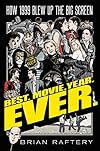
First, the elephant in the room: was 1999 the best movie year ever?
Yes, IMO. I said so at the time. When I saw this book, I ordered it through Amazon, then ran around to all my friends and family waving it about and loudly declaring "Remember how I always said 1999 was the best movie year ever? Well someone else agrees with me!"
On Criticker.com (my equivalent of goodreads, I use it to track what I've seen and how much I liked it, and it recommends new films for me) it divides my films into show more 10 tiers, tier 10 being the set of films with my highest ratings. Of those 129 films in tier 10 (I watch a lot of films, I've rated about 1,600) 12 of them were from 1999 alone (my next fave years would be 1997 and 2001, both with 7 apiece).
My 1999 feeling was that each weekend I would see a film (or two), and it would be great. And every other weekend I would see something especially great, and about once a month I'd see something that jumped up to personal favourite, or instant classic. Raftery actually doesn't even cover some of my all-time favourites from 1999: the outrageous musical South Park Bigger Longer and Uncut, my fave Mike Leigh film Topsy Turvy, the incredibly well-cast The Talented Mr. Ripley (Matt Damon, Jude Law, Gwyneth Paltrow, Philip Seymour Hoffmann, and a new-on-the-scene Cate Blanchett), or Toy Story 2, my favourite of the Toy Story films, complete with the Saddest Song of All Time.
So I'm firmly on board behind the premise of the book.
And then, rather than tell me a bunch of facts I already knew about the films (I am, after all, somewhat well-read and somewhat of a movie buff), he told me a bunch of facts that were mostly new and interesting. Hurrah! A well-written, well-researched book on a subject near-and-dear to my heart? What's not to love.
(Note: 5 stars = amazing, wonderful, 4 = very good book, 3 = decent read, 2 = disappointing, 1 = awful, just awful. I'm fairly good at picking for myself so end up with a lot of 4s). I feel a lot of readers automatically render any book they enjoy 5, but I grade on a curve! show less
Yes, IMO. I said so at the time. When I saw this book, I ordered it through Amazon, then ran around to all my friends and family waving it about and loudly declaring "Remember how I always said 1999 was the best movie year ever? Well someone else agrees with me!"
On Criticker.com (my equivalent of goodreads, I use it to track what I've seen and how much I liked it, and it recommends new films for me) it divides my films into show more 10 tiers, tier 10 being the set of films with my highest ratings. Of those 129 films in tier 10 (I watch a lot of films, I've rated about 1,600) 12 of them were from 1999 alone (my next fave years would be 1997 and 2001, both with 7 apiece).
My 1999 feeling was that each weekend I would see a film (or two), and it would be great. And every other weekend I would see something especially great, and about once a month I'd see something that jumped up to personal favourite, or instant classic. Raftery actually doesn't even cover some of my all-time favourites from 1999: the outrageous musical South Park Bigger Longer and Uncut, my fave Mike Leigh film Topsy Turvy, the incredibly well-cast The Talented Mr. Ripley (Matt Damon, Jude Law, Gwyneth Paltrow, Philip Seymour Hoffmann, and a new-on-the-scene Cate Blanchett), or Toy Story 2, my favourite of the Toy Story films, complete with the Saddest Song of All Time.
So I'm firmly on board behind the premise of the book.
And then, rather than tell me a bunch of facts I already knew about the films (I am, after all, somewhat well-read and somewhat of a movie buff), he told me a bunch of facts that were mostly new and interesting. Hurrah! A well-written, well-researched book on a subject near-and-dear to my heart? What's not to love.
(Note: 5 stars = amazing, wonderful, 4 = very good book, 3 = decent read, 2 = disappointing, 1 = awful, just awful. I'm fairly good at picking for myself so end up with a lot of 4s). I feel a lot of readers automatically render any book they enjoy 5, but I grade on a curve! show less
Best. Movie. Year. Ever. from Brian Raftery makes a very compelling argument for 1999 being (one of) the best movie year ever.
The book is broken into chapters that cover one or a few films, usually grouped by some common element, each. Raftery walks a fine line between being too much film business or too much just gossip. There is enough behind the scenes narrative to satisfy our curiosity, plenty of explanation of how and why each film was made (and often almost not made), and plenty of show more contextualization so we can place these films within the larger context of what was happening in the world.
While the films mentioned are now almost universally known if not appreciated, many were not particularly successful when released. Their inclusion here helps to make this something more than just a "greatest hits" type book. It isn't simply about the box office or the profit, though that must be considered. This book really does make a case for 1999 being a great year in film. The best? That can be debated endlessly and never come to a satisfactory answer. But really, who cares? In retrospect, it really was a great year, even if it took a few years for us to fully realize it.
I highly recommend this to readers who love the cinema and for those, like myself, who like remembering the past through artifacts from the time, in this case film. There is a definite nostalgia trip for those of us who remember 1999 clearly, but without degenerating into just being nostalgia. Understanding why some movies succeeded that year while others, equally good, took time to gain an audience also makes the reader think about how our own views about things have changed with time. Maybe even our feelings about some of these films.
Reviewed from a copy made available by the publisher via NetGalley. show less
The book is broken into chapters that cover one or a few films, usually grouped by some common element, each. Raftery walks a fine line between being too much film business or too much just gossip. There is enough behind the scenes narrative to satisfy our curiosity, plenty of explanation of how and why each film was made (and often almost not made), and plenty of show more contextualization so we can place these films within the larger context of what was happening in the world.
While the films mentioned are now almost universally known if not appreciated, many were not particularly successful when released. Their inclusion here helps to make this something more than just a "greatest hits" type book. It isn't simply about the box office or the profit, though that must be considered. This book really does make a case for 1999 being a great year in film. The best? That can be debated endlessly and never come to a satisfactory answer. But really, who cares? In retrospect, it really was a great year, even if it took a few years for us to fully realize it.
I highly recommend this to readers who love the cinema and for those, like myself, who like remembering the past through artifacts from the time, in this case film. There is a definite nostalgia trip for those of us who remember 1999 clearly, but without degenerating into just being nostalgia. Understanding why some movies succeeded that year while others, equally good, took time to gain an audience also makes the reader think about how our own views about things have changed with time. Maybe even our feelings about some of these films.
Reviewed from a copy made available by the publisher via NetGalley. show less
Lists
Statistics
- Works
- 5
- Members
- 214
- Popularity
- #104,032
- Rating
- 3.9
- Reviews
- 15
- ISBNs
- 9