
Jessica B. Harris
Author of High on the Hog: A Culinary Journey from Africa to America
About the Author
Image credit: Photograph by Chester Higgins Jr.
Series
Works by Jessica B. Harris
Sweet Home Café Cookbook: A Celebration of African American Cooking (2018) — Contributor — 92 copies, 1 review
On the Side: More Than 100 Recipes for the Sides, Salads, and Condiments That Make the Meal (2004) 19 copies
The World Beauty Book: How We Can All Look and Feel Wonderful Using the Natural Beauty Secrets of Women of Color (1995) 18 copies
Vintage Postcards from the African World: In the Dignity of Their Work and the Joy of Their Play (Atlantic Migrations and the African Diaspora) (2020) 11 copies
Associated Works
Tagged
Common Knowledge
- Birthdate
- 1948-03-18
- Gender
- female
- Education
- Bryn Mawr College (A.B.|1968 ∙ French)
New York University (Ph.D|1983)
Queens College, City University of New York (MA|1971)
Université de Nancy, France - Occupations
- professor
journalist
culinary historian - Organizations
- Queens College, City University of New York
New York Amsterdam News - Awards and honors
- James Beard Foundation Special Achievement Award (2010)
Southern Foodways Alliance Lifetime Achievement Award (2004)
James Beard Foundation Lifetime Achievement Award (2020) - Nationality
- USA
- Birthplace
- Queens, New York, USA
- Places of residence
- Brooklyn, New York, USA
Martha's Vineyard, Massachusetts, USA
New Orleans, Louisiana, USA - Associated Place (for map)
- USA
Members
Reviews
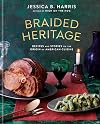
Thank you to NetGalley and the publisher, Clarkson Potter, for this DRC in exchange for a fair and honest review. The thoughts and opinions expressed below are my own.
There's an engraving by the eighteenth-century artist William Blake called "Europe Supported by Africa and America," created in 1796. It depicts three women, one African, one Native American and one European, side by side with each other and connected by a twisted rope of what appears to be either hemp or tobacco. The show more composition of said engraving obviously has some problematic implications, as evidenced by the continued analysis of its imagery to this day. Yet I found myself thinking about it all while reading this book. Jessica B. Harris' latest volume showcases the practical application of Blake's allegory using one of the most common cultural hallmarks: Food. Dr. Harris uses a series of essays and notes in conjunction with the recipes to showcase the development of what she calls the American Braid. In addition to discussing the origins of these dishes, the book includes interviews with culinary innovators with insights into the history of certain foods, as well as passages about foods and crops that have become iconic, such as wild rice, garlic and okra.
The usage of the braid and the rule of three as a framing device works perfectly for this book, as it provides the three roots from which our current understanding (and all the variations) of what we know as American cuisine stem. It is the intersection and interplay between these three peoples, the foods that were native to them and that they encountered, which forms the basis of these recipes. On a macro level, the book also shows how these three peoples contributed to the social foundation of what is now the United States. One of the many appeals of the text is the way in which it manages to cover almost all of the country's regions. I can tell that a lot of thought went into the book's structure and layout, and the end results are very effective. The book chapters are divided into the three main groups of African-Americans, Native Peoples and Europeans; they're then further divided by tribes and ethnic/national groups and the dishes that they contributed to the American Braid.
The photographs here are stunning both in their lighting and the details of the dishes. The textures and composition of the ingredients are clearly seen, and nearly everything looks appetizing, including the things that I wouldn’t normally eat. The flatware and table linens were also chosen with care to be historically accurate and subtly reflect the cultures from which they originated. I found myself looking at the details in the bowls and other dishes as much as I did the food.
Dr. Harris' ability to capture nuance and her attention to detail also add to the book's effectiveness. She acknowledges for example that, due to history, the African-American section doesn't contain recipes by specific tribal groups because of the circumstances of our forced arrival here; it's due in part to that mixing and interacting with the other two groups mentioned that we constitute an ethnic group in our own right, one formed in the present United States. Instead, the chapters in that sections are organized by theme, with a focus on regional differences. I also love the way that she included that there are Black Americans (again, my preferred term for African-Americans) who do not have any Southern roots, and that they have their own unique food traditions. (Reading Abigail Rosen McGrath's recollections on this were insightful; I'm so sorry to hear about her passing.) The inclusion of the names for Native recipes in the tribes’ languages is a great and important addition. I also like the way that the European groups are divided not necessarily by those with the largest numbers, but in chronological order of their arrival in the now-United States. The book never shies away from the hard histories, either, including the groups’ role in colonization.
I was so happy to see the inclusion of foods that I grew up eating here, such as the corn pudding and croquettes. In addition to being an excellent writer who truly understands the why of food and food combinations, Dr. Harris’ sharp wit makes her writings enjoyable. I love her musings on how unforgiving okra is to people who simply just don’t know how to cook it. Shout-out to Dr. Harris for also being a lover of liver. I still hold that those who dislike it mainly do so because whomever prepared it for them simply can’t cook. I was also touched to read her respect for and celebration of foods such as watermelon and Kool-Aid as treasured parts of African-American cuisine; emphasizing that these are things not to be ashamed of, but that make up an important (and tasty) part of our culinary history. show less
There's an engraving by the eighteenth-century artist William Blake called "Europe Supported by Africa and America," created in 1796. It depicts three women, one African, one Native American and one European, side by side with each other and connected by a twisted rope of what appears to be either hemp or tobacco. The show more composition of said engraving obviously has some problematic implications, as evidenced by the continued analysis of its imagery to this day. Yet I found myself thinking about it all while reading this book. Jessica B. Harris' latest volume showcases the practical application of Blake's allegory using one of the most common cultural hallmarks: Food. Dr. Harris uses a series of essays and notes in conjunction with the recipes to showcase the development of what she calls the American Braid. In addition to discussing the origins of these dishes, the book includes interviews with culinary innovators with insights into the history of certain foods, as well as passages about foods and crops that have become iconic, such as wild rice, garlic and okra.
The usage of the braid and the rule of three as a framing device works perfectly for this book, as it provides the three roots from which our current understanding (and all the variations) of what we know as American cuisine stem. It is the intersection and interplay between these three peoples, the foods that were native to them and that they encountered, which forms the basis of these recipes. On a macro level, the book also shows how these three peoples contributed to the social foundation of what is now the United States. One of the many appeals of the text is the way in which it manages to cover almost all of the country's regions. I can tell that a lot of thought went into the book's structure and layout, and the end results are very effective. The book chapters are divided into the three main groups of African-Americans, Native Peoples and Europeans; they're then further divided by tribes and ethnic/national groups and the dishes that they contributed to the American Braid.
The photographs here are stunning both in their lighting and the details of the dishes. The textures and composition of the ingredients are clearly seen, and nearly everything looks appetizing, including the things that I wouldn’t normally eat. The flatware and table linens were also chosen with care to be historically accurate and subtly reflect the cultures from which they originated. I found myself looking at the details in the bowls and other dishes as much as I did the food.
Dr. Harris' ability to capture nuance and her attention to detail also add to the book's effectiveness. She acknowledges for example that, due to history, the African-American section doesn't contain recipes by specific tribal groups because of the circumstances of our forced arrival here; it's due in part to that mixing and interacting with the other two groups mentioned that we constitute an ethnic group in our own right, one formed in the present United States. Instead, the chapters in that sections are organized by theme, with a focus on regional differences. I also love the way that she included that there are Black Americans (again, my preferred term for African-Americans) who do not have any Southern roots, and that they have their own unique food traditions. (Reading Abigail Rosen McGrath's recollections on this were insightful; I'm so sorry to hear about her passing.) The inclusion of the names for Native recipes in the tribes’ languages is a great and important addition. I also like the way that the European groups are divided not necessarily by those with the largest numbers, but in chronological order of their arrival in the now-United States. The book never shies away from the hard histories, either, including the groups’ role in colonization.
I was so happy to see the inclusion of foods that I grew up eating here, such as the corn pudding and croquettes. In addition to being an excellent writer who truly understands the why of food and food combinations, Dr. Harris’ sharp wit makes her writings enjoyable. I love her musings on how unforgiving okra is to people who simply just don’t know how to cook it. Shout-out to Dr. Harris for also being a lover of liver. I still hold that those who dislike it mainly do so because whomever prepared it for them simply can’t cook. I was also touched to read her respect for and celebration of foods such as watermelon and Kool-Aid as treasured parts of African-American cuisine; emphasizing that these are things not to be ashamed of, but that make up an important (and tasty) part of our culinary history. show less
Themes: food, slavery, race, family, work,
Setting: Africa and the US
I didn't get what I expected from this book. I think what I expected was something along the lines of The Fortune Cookie Chronicles, by Jennifer 8 Lee, only about African American food, with the author picking one or two ingredients to highlight and telling how they came from there to here, picking a few popular recipes, maybe her family's favorites or some regional recipes, spotlighting some key historical figures, show more debunking a few myths, then tackling some more serious subjects, and making me hungry along the way.
But Harris chose quite a different route. Yes, she mentions some historical figures and regional recipes, and her family, especially her mother, is part of the story, but this is a more serious look at African American history and how food has played a part in the that experience. It's not a particularly light and easy read, but it was interesting. The recipes at the end are not all mouthwatering (seriously, possum and sweet potatoes? Um, no thanks. Fried chicken is a definite yes, but even the sweet bean pie sounds intriguing but I don't think I'll make it.) but they made for some interesting reading.
I won this book through Good Reads' First Reads and I really appreciate the chance to read it. If you are interested in African American history or food, I can recommend it. 4 stars. show less
Setting: Africa and the US
I didn't get what I expected from this book. I think what I expected was something along the lines of The Fortune Cookie Chronicles, by Jennifer 8 Lee, only about African American food, with the author picking one or two ingredients to highlight and telling how they came from there to here, picking a few popular recipes, maybe her family's favorites or some regional recipes, spotlighting some key historical figures, show more debunking a few myths, then tackling some more serious subjects, and making me hungry along the way.
But Harris chose quite a different route. Yes, she mentions some historical figures and regional recipes, and her family, especially her mother, is part of the story, but this is a more serious look at African American history and how food has played a part in the that experience. It's not a particularly light and easy read, but it was interesting. The recipes at the end are not all mouthwatering (seriously, possum and sweet potatoes? Um, no thanks. Fried chicken is a definite yes, but even the sweet bean pie sounds intriguing but I don't think I'll make it.) but they made for some interesting reading.
I won this book through Good Reads' First Reads and I really appreciate the chance to read it. If you are interested in African American history or food, I can recommend it. 4 stars. show less
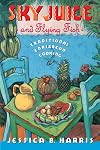
What a marvelous little cookbook! Not only does it give recipes, but it also provides historical perspective on Caribbean foods. There is also a glossary of terms that persons are likely to encounter in Caribbean cookery. I especially loved the island by island tour of the typical foods served on each (and how they came to be there). In reading through the recipes, I've determined that by adding a scotch bonnet pepper, a little rum, or both to a recipe, I can have a taste of the islands. The show more one weakness is the lack of photos. Still, if you are looking for a great book on Caribbean cookery adapted for American kitchens, look no further than this one! show less
This is a very good historical look at how Africa shaped many foods in the United States that still resonate with people to this day. I loved the Netflix series about this and went out and bought this book during this past Juneteenth. I had not had a lot of time to read it due to other reading commitments, but continued to read a chapter here and there while finishing up other books. I think Harris did a great job with this and though at times it gets a bit bogged down in details that may show more bore other readers, I am not surprised when reading anything historical in nature. I think most historians live for the details so just expect their readers do as well.
I do have to say that even though I get why okra was and is used in many African American dishes, I still don't like it. I am sorry, I have tried, I hate it LOL.
Reading about Black colonial chefs was eye-opening to me. I had no idea and would love to read some books about them. Reading about Chef Hercules Posey, he was George Washington's chef who Washington was worried about escaping (and he eventually did---good for him).
I loved the illustrations and recipes we get though. It's a really heavy book in more ways than one. show less
I do have to say that even though I get why okra was and is used in many African American dishes, I still don't like it. I am sorry, I have tried, I hate it LOL.
Reading about Black colonial chefs was eye-opening to me. I had no idea and would love to read some books about them. Reading about Chef Hercules Posey, he was George Washington's chef who Washington was worried about escaping (and he eventually did---good for him).
I loved the illustrations and recipes we get though. It's a really heavy book in more ways than one. show less
Lists
Awards


You May Also Like


Associated Authors
Statistics
- Works
- 20
- Also by
- 3
- Members
- 1,252
- Popularity
- #20,487
- Rating
- 3.9
- Reviews
- 30
- ISBNs
- 50
- Languages
- 2
- Favorited
- 2
