
Irene Roderick
Author of Improv Quilting
Works by Irene Roderick
Tagged
Common Knowledge
There is no Common Knowledge data for this author yet. You can help.
Members
Reviews
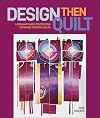
Irene Roderick teaches improvisational quilting and she is a master at the art. Design Then Quilt is a testament to her remarkable ability to teach design. Improvisation is not a haphazard process of guesswork, but employs the elements and principles of design.
I have read many books on art and design in quilting over my thirty-plus years as a quiltmaker and this is the best presentation I have seen. Roderick’s illustrations and descriptions are comprehensive and detailed.
An example is how show more she presets how color changes depending on what color it is placed next to. She shows a single colored square that appears to retreat or change hue depending on what color box surrounds it.
In my experience, value is one of the most important and often overlooked design concerns that can make a quilt less than stellar, so I loved her examples. In the quilt below, you can see how some letters fade into the background because the value of the color of the letters and the background are too similar, easily seen in the black and white version of the quilt. I learned to use a red tinted glass to look for value issues.
The choice of color at the end of the starburst points make them fade into the background or stand out.
Learning how to critique art quilts is an important part of developing one’s art. Critique should be constructive, not about giving advice. It is about describing what you see and feel, then analyzing and interpreting one’s reaction. Roderick offers one of her quilts to consider, with prompt questions.
After covering the essentials of design, Putting It All Into Practice instructs on how to create your quilt. Using patterns, templates, paper piecing, needle-turn applique, foundation piecing, and English paper piecing are techniques quilters are familiar with. She shows how quilting adds texture and trapunto dimensionality to quilts. She provides instructions on all these sewing techniques, including challenging Y-seams and curves.
Roderick typically improvises her quilts by placing large pieces of fabric on the design board. Photos of the process demonstrates how she builds up her design from flat, single color shapes to three dimensional, rounded shapes. She shares photos of the design process for a number of her quilts, descripting her process in detail.
The entire quiltmaking process is included, right up to binding.
Included is a section of Design Exercises tp hone your skills.
Her remarkable art is mostly nonrepresentational but channel emotions and ideas. She shares a gallery of quilts for inspiration.
Her Desperados caught my eye, reminding me of Picasso’s cubist Three Musicians which I saw so often at the Philadelphia Museum of Art.
Roderick mainly works in solid colors but includes quilts that use commercially printed fabrics. Some of the samples are of traditionally constructed quilts.
Although the book is geared toward art quilters, traditional quilters should study this book for the principles of design. And, perhaps will be inspired to try some improvisational art!
Thanks to Schiffer Craft for a review book. show less
I have read many books on art and design in quilting over my thirty-plus years as a quiltmaker and this is the best presentation I have seen. Roderick’s illustrations and descriptions are comprehensive and detailed.
An example is how show more she presets how color changes depending on what color it is placed next to. She shows a single colored square that appears to retreat or change hue depending on what color box surrounds it.
In my experience, value is one of the most important and often overlooked design concerns that can make a quilt less than stellar, so I loved her examples. In the quilt below, you can see how some letters fade into the background because the value of the color of the letters and the background are too similar, easily seen in the black and white version of the quilt. I learned to use a red tinted glass to look for value issues.
The choice of color at the end of the starburst points make them fade into the background or stand out.
Learning how to critique art quilts is an important part of developing one’s art. Critique should be constructive, not about giving advice. It is about describing what you see and feel, then analyzing and interpreting one’s reaction. Roderick offers one of her quilts to consider, with prompt questions.
After covering the essentials of design, Putting It All Into Practice instructs on how to create your quilt. Using patterns, templates, paper piecing, needle-turn applique, foundation piecing, and English paper piecing are techniques quilters are familiar with. She shows how quilting adds texture and trapunto dimensionality to quilts. She provides instructions on all these sewing techniques, including challenging Y-seams and curves.
Roderick typically improvises her quilts by placing large pieces of fabric on the design board. Photos of the process demonstrates how she builds up her design from flat, single color shapes to three dimensional, rounded shapes. She shares photos of the design process for a number of her quilts, descripting her process in detail.
The entire quiltmaking process is included, right up to binding.
Included is a section of Design Exercises tp hone your skills.
Her remarkable art is mostly nonrepresentational but channel emotions and ideas. She shares a gallery of quilts for inspiration.
Her Desperados caught my eye, reminding me of Picasso’s cubist Three Musicians which I saw so often at the Philadelphia Museum of Art.
Roderick mainly works in solid colors but includes quilts that use commercially printed fabrics. Some of the samples are of traditionally constructed quilts.
Although the book is geared toward art quilters, traditional quilters should study this book for the principles of design. And, perhaps will be inspired to try some improvisational art!
Thanks to Schiffer Craft for a review book. show less
Statistics
- Works
- 2
- Members
- 46
- Popularity
- #335,830
- Rating
- 4.3
- Reviews
- 1
- ISBNs
- 3