
Sarah Underwood
Author of Lies We Sing to the Sea
Works by Sarah Underwood
Associated Works
Tagged
Common Knowledge
Members
Reviews
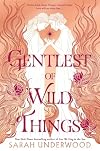
GENTLEST OF WILD THINGS is Sarah Underwood's second novel. Much like her first, it is also inspired by Greek mythology, sapphic, and discusses the ever-ongoing power struggle between men and women. Unlike her debut novel, I did not feel it was all that impressive.
One of the main issues at play here is the fact that if you know anything about Greek mythology and the name Lamia means something to you, there is no surprise reveal. You already know the secret Leandros hides. That reveal makes show more up the major mystery of the story; if you know that one key fact, there is nothing left to uncover other than how Ms. Underwood resolves Eirene's dilemma.
One of the themes I felt Ms. Underwood handles delicately in her debut novel is the power imbalance between men and women. She is not as delicate in GENTLEST OF WILD THINGS, and the story suffers. There are only so many ways you force-feed readers the idea that men suck and women are better off without them, and Ms. Underwood uses them all, starting with Leandros being the one-noted, power-hungry, brutish egomaniac he is.
There is no subtlety to GENTLEST OF WILD THINGS, which I feel is a weakness. There is no doubt that Lamia's story is a violent one, but it needs something to counter the violence. Eirene is too angry to serve as such a counterbalance. Between Eirene, Leandros, and Lamia, you have three large and somewhat overbearing characters vying for space on the page and very little respite from those demands.
Ms. Underwood may have been more obvious in her theme, but I still find her writing beautiful. There is something almost poetic about it that pleases your eye and ear while creating vivid imagery and a crystal-clear emotional context. That the emotional context is only anger does not detract from the beauty of her writing.
GENTLEST OF WILD THINGS may not be as impressive as Ms. Underwood's debut novel, but it is still a powerful story written well. The faults I found within the narrative did not impact my enjoyment of the story, and I will gladly read any future novels Ms. Underwood publishes. show less
One of the main issues at play here is the fact that if you know anything about Greek mythology and the name Lamia means something to you, there is no surprise reveal. You already know the secret Leandros hides. That reveal makes show more up the major mystery of the story; if you know that one key fact, there is nothing left to uncover other than how Ms. Underwood resolves Eirene's dilemma.
One of the themes I felt Ms. Underwood handles delicately in her debut novel is the power imbalance between men and women. She is not as delicate in GENTLEST OF WILD THINGS, and the story suffers. There are only so many ways you force-feed readers the idea that men suck and women are better off without them, and Ms. Underwood uses them all, starting with Leandros being the one-noted, power-hungry, brutish egomaniac he is.
There is no subtlety to GENTLEST OF WILD THINGS, which I feel is a weakness. There is no doubt that Lamia's story is a violent one, but it needs something to counter the violence. Eirene is too angry to serve as such a counterbalance. Between Eirene, Leandros, and Lamia, you have three large and somewhat overbearing characters vying for space on the page and very little respite from those demands.
Ms. Underwood may have been more obvious in her theme, but I still find her writing beautiful. There is something almost poetic about it that pleases your eye and ear while creating vivid imagery and a crystal-clear emotional context. That the emotional context is only anger does not detract from the beauty of her writing.
GENTLEST OF WILD THINGS may not be as impressive as Ms. Underwood's debut novel, but it is still a powerful story written well. The faults I found within the narrative did not impact my enjoyment of the story, and I will gladly read any future novels Ms. Underwood publishes. show less
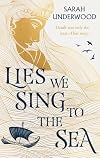
Don’t let the average rating on Goodreads fool you. Lies We Sing to the Sea by Sarah Underwood is a stunning story. It is not a retelling of The Odyssey, as these GR reviews would have you think, and there is nothing wrong with the fact that Ms. Underwood did not read The Odyssey in its entirety. Instead, Ms. Underwood takes one very minor character from The Odyssey, whose arc one can understand in two sentences, and imagines an entire future for her, creating her own mythological story. show more As a debut novel, what Ms. Underwood accomplishes is impressive, and Lies We Sing to the Sea is a beautiful story.
The moment we meet Leto, as a servant dresses her for her impending death by hanging, we know that Lies We Sing to the Sea will not be an easy story to experience. Leto is so full of anger and grief that her scenes are heartbreaking. Even after she meets and falls in love with Melantho, Leto’s past continues to rule her emotions, as well as they should. Some experiences are difficult to forget or forgive, and being hanged is one of them.
At the same time, Leto has a fragility that melts your heart and allows you to forgive her thirst for vengeance. Leto reminds you of what it feels like to be utterly alone, with no one to watch your back or help you when you desperately need it. Her need for Melantho and her attraction to Mathias stems from that need for human connection, which had been missing from her life. This fragility and her other strong emotions draw you to her as a character. She is an underdog in every sense of the word, and there is nothing you want more than for her to get everything her heart desires.
At the heart of Lies We Sing to the Sea is the yearly ritual killing of twelve girls. Ms. Underwood uses Mathias to look at the classic conundrum of whether you kill one, or in this case twelve, to save the many. There is a reason sociologists continue to use this scenario to research humankind; a person’s answer tells so much about their values and their sense of moral obligation. Everyone likes to think they would not let anyone die, but rarely is the answer as simple as that. The answer becomes decidedly more complicated when discussing a deal involving one of the major Greek gods. After all, Mathias has proof that ignoring the ritual means disaster for his people.
Ms. Underwood’s solution to Mathias’ (and Leto’s and Melantho’s) problem is as elegant as it is correct. Her solution, the action Leto must take to end the ritual killing of twelve females every year, balances the scales Odysseus threw out of balance when he killed Penelope’s original twelve maidens. While it doesn’t make what Leto must do any more manageable, there is poetic justice in the necessary action that is satisfying.
One of the more spectacular elements of Lies We Sing to the Sea is Ms. Underwood’s deep dive into ancient Ithaca. In many ways, she brings Ithaca to life in a way that puts all other Greek stories to shame. Moreover, we don’t see one aspect of life in Ithaca. We learn what living in the palace among royalty was like and what it meant to toil outside the palace gates. Ms. Underwood presents as thorough a picture as one could imagine, and her story is the better for it.
Lies We Sing to the Sea is a thoughtful, engaging, and stellar novel that deserves to be on everyone’s radar. It is not another myth retelling. Ms. Underwood goes beyond that to create a vibrant world in which everything from the people to their problems to the solutions is as complex as it would be if it were a true story. The glimpses of magic and godlike powers enhance this already magical story. All three main characters, Leto especially, play on your sympathies and earn their way into your heart. Sarah Underwood’s debut novel is most impressive, and she is an author we will all want to keep our eye on in the future. show less
The moment we meet Leto, as a servant dresses her for her impending death by hanging, we know that Lies We Sing to the Sea will not be an easy story to experience. Leto is so full of anger and grief that her scenes are heartbreaking. Even after she meets and falls in love with Melantho, Leto’s past continues to rule her emotions, as well as they should. Some experiences are difficult to forget or forgive, and being hanged is one of them.
At the same time, Leto has a fragility that melts your heart and allows you to forgive her thirst for vengeance. Leto reminds you of what it feels like to be utterly alone, with no one to watch your back or help you when you desperately need it. Her need for Melantho and her attraction to Mathias stems from that need for human connection, which had been missing from her life. This fragility and her other strong emotions draw you to her as a character. She is an underdog in every sense of the word, and there is nothing you want more than for her to get everything her heart desires.
At the heart of Lies We Sing to the Sea is the yearly ritual killing of twelve girls. Ms. Underwood uses Mathias to look at the classic conundrum of whether you kill one, or in this case twelve, to save the many. There is a reason sociologists continue to use this scenario to research humankind; a person’s answer tells so much about their values and their sense of moral obligation. Everyone likes to think they would not let anyone die, but rarely is the answer as simple as that. The answer becomes decidedly more complicated when discussing a deal involving one of the major Greek gods. After all, Mathias has proof that ignoring the ritual means disaster for his people.
Ms. Underwood’s solution to Mathias’ (and Leto’s and Melantho’s) problem is as elegant as it is correct. Her solution, the action Leto must take to end the ritual killing of twelve females every year, balances the scales Odysseus threw out of balance when he killed Penelope’s original twelve maidens. While it doesn’t make what Leto must do any more manageable, there is poetic justice in the necessary action that is satisfying.
One of the more spectacular elements of Lies We Sing to the Sea is Ms. Underwood’s deep dive into ancient Ithaca. In many ways, she brings Ithaca to life in a way that puts all other Greek stories to shame. Moreover, we don’t see one aspect of life in Ithaca. We learn what living in the palace among royalty was like and what it meant to toil outside the palace gates. Ms. Underwood presents as thorough a picture as one could imagine, and her story is the better for it.
Lies We Sing to the Sea is a thoughtful, engaging, and stellar novel that deserves to be on everyone’s radar. It is not another myth retelling. Ms. Underwood goes beyond that to create a vibrant world in which everything from the people to their problems to the solutions is as complex as it would be if it were a true story. The glimpses of magic and godlike powers enhance this already magical story. All three main characters, Leto especially, play on your sympathies and earn their way into your heart. Sarah Underwood’s debut novel is most impressive, and she is an author we will all want to keep our eye on in the future. show less
Trigger Warnings: Emotional and physical abuse by a parent.
*A HUGE thanks to HarperCollins Canada and NetGalley for an e-ARC of this book! I get no compensation whatsoever, and I write this review willingly.*
As soon as I saw the cover and the blurb for Gentlest of Wild Things, a sapphic Ancient Greece story, I yearned to read it! I’m so delighted HarperCollins Canada offered me an e-ARC of this book, iiiiiiiihhhhhh!!! It was one of my most anticipated reads of 2024, and I am proud to bring show more you this review! :D
Do you want to know why I’m so thrilled about Gentlest of Wild Things?
Read on, loves!
The Positive Points
What a thrilling beginning chapter! I wasn’t expecting that chase. The prologue is confusing, but in a thrilling “I need to know MORE” kind of way. Honestly, the more I kept reading, the faster I read it and I couldn’t stop thinking about this story. I was so enraptured by this book! Another great thing was how the gods were mentioned in expressions such as “Damn her principles to Hades and back”, and other times Eirene thinks about the gods and how she works and none has ever helped. Like, they’re here and alive, but she only believes in them and doesn’t know they’re real. Like it’s a hint to us, readers. About what’s to come and how the story is more supernatural than we think at first.
As for the characters themselves, I must say that both Eirene and Lamia are loveable in their own ways. Their first meeting was explosively dramatic, emotional, and fun as a ready. I wasn’t expecting that to go this awry! It was different from the usual “I like you already” or “love at first meeting” that is prevalent in so many stories it’s become bland. Eirene is so cute and protective, I love her! She is the strong determined sister to protect her sister Phoebe, weaker in health and in a bad situation. On a side note, I love how each girl has a passion. For Eirene, it’s plants and herbs. For Phoebe, it’s weaving. And for Lamia, it’s drawing. It’s more realistic and it’s nice to see they have something, a hobby, to hold onto, something they love. Lamia is such a cutie! Poor her though, she is so ignorant of the world and abused for the villain’s own riches. She was brainwashed into thinking what her father was doing was good… I love her, she is so kind-hearted and caring, and, poor her, innocent, too! What Lamia has as a special gift, I thought it was just so beautiful and poetic, and well handled throughout the story, with an evolution tied to the character’s arc. Wow! Her character arc is where she becomes more assured and grounded in reality. It was beautiful to see! And the fact that Lamia tried so much to save and help Eirene even if it meant she might run away… Awwwwwww, my FEELS! Plus, there is some closure I wasn’t expecting for one aspect of Lamia’s life later on which echoes the very first chapter. What a great thing to weave into the story!
As for the villain, wow, he’s very dangerous just like I thought before we actually met him. Even with Lamia, his own daughter! He emanates shrewdness, danger, and violence. He is so cruel and abusive, both with Lamia and Eirene, mostly with words, and threats, and mean tricks and lies, but also with physical violence and manipulation. I’m sure he’s a beast—at least, to me.
Speaking of Eirene and Lamia, the sapphic romance is sweet and easy to follow. I love how Eirene is rebellious with boys and wishes not to marry, while Lamia is all compliments and admiration for Eirene. Great ways to show them being sapphic before getting to know each other and falling in love. It’s innate even though they don’t know what it is or means. Their little attraction and romance is so cute. It’s soft and sweet by moments, throughout the big problematic mess they’re in. It’s also really sweet how their affection grows naturally and you can notice it through thoughts, awkward touches, and words like “Our Lamia” when Eirene is proud, and more. For example, it is romantic and soft and sensual per moments with them discovering they desire each other. Like how being close to the other feels, and wishing she would just lean over and kiss her… I also let let out a gasp when I learned that Eirene’s goal is in direct conflict with Lamia herself and her affection and love for her. Ouch! You’ll see! The longing was real, I was so waiting for them to get together, iiiiiiihhhhhh! It was very satisfying! This is a story of love (in many shapes), and also of a void of loneliness being filled by someone you come to love.
Fun fact: I didn’t know wrapping a bandage could be so sensual and romantic, but wow, it is, and it’s beautiful.
Awwww, I love when FMCs cut their own hair. I did it twice too for the unease I felt with my long hair and I was at a time where I couldn’t pay for a haircut, so I tried to cut my hair and felt thrilled and wild. And it wasn’t so bad. I love when the FMC feels the same and tries the same thing. It’s also an act of rebellion and to seek wellness in one’s body.
Oh, and I love how Eirene discovers the source of Desire. I have been waiting for their two storylines to merge like this for the intrigue to have its answer. The “how” took me by surprise because I wasn’t waiting for it anymore. Fun!
Gentlest of Wild Things is a clever retelling in ancient times of Psyche and Eros, but make it sapphic. It’s lovely and magical. It’s also a strong “do it yourself” story, which I always love.
Every one of Eirene’s task was fun and exciting, but the last one was the most thrilling and exciting, and full of magic and mythology. What a retelling, and what turn it took! I noticed, like I mentioned earlier, that Lamia underwent the most changes in her arc. Eireine’s is more subtle, yet still there.
This story respects mythology, like the path to Hades not being for mortal eyes, and more. Also, same respect with the time period, like with men acting out the plays.
Lastly, this is a doubtlessly a story of women who stand up to men who abused them in more ways than one. It’s powerful. As for the conclusion itself, it was veeeery satisfying and had me feeling all warm and fuzzy and giddy, rocking my legs and smiling.
The Negative Points
Hm, let’s skip this, shall we? None was to be found, whatsoever. The writing, the character development, the intrigue, everything was great!
In Conclusion
All in all, Gentlest of Wild Things was excellent to the end! It is a feminist, and cutely romantic sapphic tale! And the villain gets what he deserves… Mythology was well mixed with magic and romance as well, it was so nice! I give Gentlest of Wild Things a rating of 5 amphoras out of 5, because it was such a great read and sweet from the beginning to the end with strong emotions, thrills, and a soft romance. I loved all of it! Honestly, I would take a dozen more books like this one!! show less
*A HUGE thanks to HarperCollins Canada and NetGalley for an e-ARC of this book! I get no compensation whatsoever, and I write this review willingly.*
As soon as I saw the cover and the blurb for Gentlest of Wild Things, a sapphic Ancient Greece story, I yearned to read it! I’m so delighted HarperCollins Canada offered me an e-ARC of this book, iiiiiiiihhhhhh!!! It was one of my most anticipated reads of 2024, and I am proud to bring show more you this review! :D
Do you want to know why I’m so thrilled about Gentlest of Wild Things?
Read on, loves!
The Positive Points
What a thrilling beginning chapter! I wasn’t expecting that chase. The prologue is confusing, but in a thrilling “I need to know MORE” kind of way. Honestly, the more I kept reading, the faster I read it and I couldn’t stop thinking about this story. I was so enraptured by this book! Another great thing was how the gods were mentioned in expressions such as “Damn her principles to Hades and back”, and other times Eirene thinks about the gods and how she works and none has ever helped. Like, they’re here and alive, but she only believes in them and doesn’t know they’re real. Like it’s a hint to us, readers. About what’s to come and how the story is more supernatural than we think at first.
As for the characters themselves, I must say that both Eirene and Lamia are loveable in their own ways. Their first meeting was explosively dramatic, emotional, and fun as a ready. I wasn’t expecting that to go this awry! It was different from the usual “I like you already” or “love at first meeting” that is prevalent in so many stories it’s become bland. Eirene is so cute and protective, I love her! She is the strong determined sister to protect her sister Phoebe, weaker in health and in a bad situation. On a side note, I love how each girl has a passion. For Eirene, it’s plants and herbs. For Phoebe, it’s weaving. And for Lamia, it’s drawing. It’s more realistic and it’s nice to see they have something, a hobby, to hold onto, something they love. Lamia is such a cutie! Poor her though, she is so ignorant of the world and abused for the villain’s own riches. She was brainwashed into thinking what her father was doing was good… I love her, she is so kind-hearted and caring, and, poor her, innocent, too! What Lamia has as a special gift, I thought it was just so beautiful and poetic, and well handled throughout the story, with an evolution tied to the character’s arc. Wow! Her character arc is where she becomes more assured and grounded in reality. It was beautiful to see! And the fact that Lamia tried so much to save and help Eirene even if it meant she might run away… Awwwwwww, my FEELS! Plus, there is some closure I wasn’t expecting for one aspect of Lamia’s life later on which echoes the very first chapter. What a great thing to weave into the story!
As for the villain, wow, he’s very dangerous just like I thought before we actually met him. Even with Lamia, his own daughter! He emanates shrewdness, danger, and violence. He is so cruel and abusive, both with Lamia and Eirene, mostly with words, and threats, and mean tricks and lies, but also with physical violence and manipulation. I’m sure he’s a beast—at least, to me.
Speaking of Eirene and Lamia, the sapphic romance is sweet and easy to follow. I love how Eirene is rebellious with boys and wishes not to marry, while Lamia is all compliments and admiration for Eirene. Great ways to show them being sapphic before getting to know each other and falling in love. It’s innate even though they don’t know what it is or means. Their little attraction and romance is so cute. It’s soft and sweet by moments, throughout the big problematic mess they’re in. It’s also really sweet how their affection grows naturally and you can notice it through thoughts, awkward touches, and words like “Our Lamia” when Eirene is proud, and more. For example, it is romantic and soft and sensual per moments with them discovering they desire each other. Like how being close to the other feels, and wishing she would just lean over and kiss her… I also let let out a gasp when I learned that Eirene’s goal is in direct conflict with Lamia herself and her affection and love for her. Ouch! You’ll see! The longing was real, I was so waiting for them to get together, iiiiiiihhhhhh! It was very satisfying! This is a story of love (in many shapes), and also of a void of loneliness being filled by someone you come to love.
Fun fact: I didn’t know wrapping a bandage could be so sensual and romantic, but wow, it is, and it’s beautiful.
Awwww, I love when FMCs cut their own hair. I did it twice too for the unease I felt with my long hair and I was at a time where I couldn’t pay for a haircut, so I tried to cut my hair and felt thrilled and wild. And it wasn’t so bad. I love when the FMC feels the same and tries the same thing. It’s also an act of rebellion and to seek wellness in one’s body.
Oh, and I love how Eirene discovers the source of Desire. I have been waiting for their two storylines to merge like this for the intrigue to have its answer. The “how” took me by surprise because I wasn’t waiting for it anymore. Fun!
Gentlest of Wild Things is a clever retelling in ancient times of Psyche and Eros, but make it sapphic. It’s lovely and magical. It’s also a strong “do it yourself” story, which I always love.
Every one of Eirene’s task was fun and exciting, but the last one was the most thrilling and exciting, and full of magic and mythology. What a retelling, and what turn it took! I noticed, like I mentioned earlier, that Lamia underwent the most changes in her arc. Eireine’s is more subtle, yet still there.
This story respects mythology, like the path to Hades not being for mortal eyes, and more. Also, same respect with the time period, like with men acting out the plays.
Lastly, this is a doubtlessly a story of women who stand up to men who abused them in more ways than one. It’s powerful. As for the conclusion itself, it was veeeery satisfying and had me feeling all warm and fuzzy and giddy, rocking my legs and smiling.
The Negative Points
Hm, let’s skip this, shall we? None was to be found, whatsoever. The writing, the character development, the intrigue, everything was great!
In Conclusion
All in all, Gentlest of Wild Things was excellent to the end! It is a feminist, and cutely romantic sapphic tale! And the villain gets what he deserves… Mythology was well mixed with magic and romance as well, it was so nice! I give Gentlest of Wild Things a rating of 5 amphoras out of 5, because it was such a great read and sweet from the beginning to the end with strong emotions, thrills, and a soft romance. I loved all of it! Honestly, I would take a dozen more books like this one!! show less

This is a let down, save yourself the bother. The blurb compares it to Madeline Miller's Circe and Song of Achilles, trust me when I say it is nowhere near that league on any level.
This takes two short lines from The Odyssey, where one of the 12 maids who are hanged by Odysseus is named as Melantho, the only one who is given a name. From this, the author invents what might have happened next. In this case she invents a curse on Ithaca, where they hang 12 girls every year at the Spring show more equinox in order to placate the sea god. The girls are marked by a ring of black scales around their necks and if they aren't hanged, the sea comes and gets them anyway.
Leto tried to get away from the hanging, but was hanged anyway, and finds herself on the island of Pandu, where Melantho has lived for 3 centuries or so. Every now and then, Poseidon gives back one of the hanged girls, who takes power form the sea and goes back to Ithaca to kill a Prince of Odysseus' line, 12 of them have to die to break the curse. Let is the 12th girl who Poseidon has given back.
Leto & Melantho go to Ithaca and find Mathias, the current Prince of ithaca, and things become complicated when Leto falls in love with him too.
The problem with this is that it is all very amateur. There is little to no character development, the emotions displayed are childish and immature, swinging wildly from extremes - and yet you never actually feel that they are doing anything more than playacting. the romantic interludes do little to develop the character or advance the plot.
The language also suffers from being used unimaginatively, all the characters are beautiful as if that's the only adjective the author knows. It becomes very repetitive on that basis, limited vocabulary used in a book that is overlong.
I'm not sure that the 3 voice structure added anything to the book (apart from unnecessary length). Telling the story from 3 voices that all sound the same adds nothing in terms of the dramatic potential, especially not when all 3 adopt the same childish tone. There are lots of huffs and sulks when people don't listen o make themselves clear.
There are some good elements, The idea is inventive. Both the start and end are strong, it's the overlong middle that lets it down. One the better chapters was the one when Melantho explains how the curse came into being, had the book been more in this style, it may have been a better experience.
It reads a lot like a book aimed at a teen market and I think they're being sold a dud - there are much better books in this vein out there. show less
This takes two short lines from The Odyssey, where one of the 12 maids who are hanged by Odysseus is named as Melantho, the only one who is given a name. From this, the author invents what might have happened next. In this case she invents a curse on Ithaca, where they hang 12 girls every year at the Spring show more equinox in order to placate the sea god. The girls are marked by a ring of black scales around their necks and if they aren't hanged, the sea comes and gets them anyway.
Leto tried to get away from the hanging, but was hanged anyway, and finds herself on the island of Pandu, where Melantho has lived for 3 centuries or so. Every now and then, Poseidon gives back one of the hanged girls, who takes power form the sea and goes back to Ithaca to kill a Prince of Odysseus' line, 12 of them have to die to break the curse. Let is the 12th girl who Poseidon has given back.
Leto & Melantho go to Ithaca and find Mathias, the current Prince of ithaca, and things become complicated when Leto falls in love with him too.
The problem with this is that it is all very amateur. There is little to no character development, the emotions displayed are childish and immature, swinging wildly from extremes - and yet you never actually feel that they are doing anything more than playacting. the romantic interludes do little to develop the character or advance the plot.
The language also suffers from being used unimaginatively, all the characters are beautiful as if that's the only adjective the author knows. It becomes very repetitive on that basis, limited vocabulary used in a book that is overlong.
I'm not sure that the 3 voice structure added anything to the book (apart from unnecessary length). Telling the story from 3 voices that all sound the same adds nothing in terms of the dramatic potential, especially not when all 3 adopt the same childish tone. There are lots of huffs and sulks when people don't listen o make themselves clear.
There are some good elements, The idea is inventive. Both the start and end are strong, it's the overlong middle that lets it down. One the better chapters was the one when Melantho explains how the curse came into being, had the book been more in this style, it may have been a better experience.
It reads a lot like a book aimed at a teen market and I think they're being sold a dud - there are much better books in this vein out there. show less
Lists
YA Fantasy TBR (1)
Awards


You May Also Like
Associated Authors
Statistics
- Works
- 5
- Also by
- 1
- Members
- 822
- Popularity
- #31,033
- Rating
- 3.4
- Reviews
- 16
- ISBNs
- 32
- Languages
- 3