
Victoria Abbott Riccardi
Author of Untangling My Chopsticks: A Culinary Sojourn in Kyoto
Works by Victoria Abbott Riccardi
Associated Works
Tagged
Common Knowledge
- Gender
- female
- Education
- Harvard College (BA|Psychology and Social Relations)
Le Cordon Bleu
Mushanokoji Tea School, Kyoto - Nationality
- USA
- Places of residence
- New York, New York, USA
Kyoto, Japan
Newton, Massachusetts, USA - Associated Place (for map)
- USA
Members
Reviews
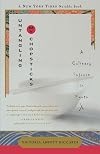
I love Japanese cuisine but tea kaiseki has remained a mystery even as I indulged in a tourist version in Kyoto. Riccardi walks us through that wonderful world, full of subtleties, delicacies and new tastes. It made me appreciate Japanese culture even more, and although I'm not a big cook, I'm tempted to try one of the many recipes included in the book to recapture some of the unique flavours which are not easily available in Canada - the trick will be finding the ingredients! The book does show more contain a thoughtful glossary to help the reader navigate all the intricacies of tastes and manners.
A fascinating and accessible read. show less
A fascinating and accessible read. show less
Perfectly nice book—nothing wrong with a three star rating—but not especially spectacular. If you're interested in the subject (food in Kyoto, in the 1980s, with an emphasis of tea kaiseki) you will enjoy this greatly. But (unlike M.F.K. Fisher's work, say) it doesn't rise above the level of interesting/diverting to become some kind of culinary classic.
(Note: 5 stars = amazing, wonderful, 4 = very good book, 3 = decent read, 2 = disappointing, 1 = awful, just awful. I'm fairly good at show more picking for myself so end up with a lot of 4s). I feel a lot of readers automatically render any book they enjoy 5, but I grade on a curve! show less
(Note: 5 stars = amazing, wonderful, 4 = very good book, 3 = decent read, 2 = disappointing, 1 = awful, just awful. I'm fairly good at show more picking for myself so end up with a lot of 4s). I feel a lot of readers automatically render any book they enjoy 5, but I grade on a curve! show less
As a rare foreign student of traditional Japanese cooking, Riccardi has an experience in Japan unique from other travelers'. Sadly, she shares her story in overwrought metaphors and nearly unreadable meditations on tofu. I loved her perspective on living abroad -- that "when you leave a meal, or a moment, or a place not compltely satisfied, you cherish it that much more because it left you wanting" -- but one good passage does not a good book make.
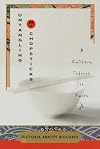
Victoria Abbott had always been in love with Japan, perhaps because her grandparents often traveled there and brought back exotic gifts. So when she had the chance to live in Kyoto and learn the art of tea kaiseki, she jumped at it. Tea kaiseki is a meal consisting of several courses that is served before the better-known tea ceremony. It is practically an art form, with each course tied in somehow to the seasons or to the climactic dish, and replete with symbolic meanings. While there, she show more attended the Mushanokji school to learn this type of cooking, taught English, and learned much about Japanese culture and philosophy that greatly impacted her life. At the end of several chapters, the author includes a few recipes (27 in total) of the food discussed in that chapter.
I enjoyed the idea of this travelogue/cookbook and the window it gives into a lesser-known aspect of Japanese culture. Niggling details lessened my enjoyment, however, particularly the general choppiness of the narrative from sentence fragments to short chapters that felt tacked on to lengthen the book. On one occasion, the author oversimplified, identifying manga only as the comics that businessmen would read to fulfill their fantasies of school girls, rather than the broader range of comics for varying age groups that it truly is. This made me wonder if there were any other areas where she described something in broad strokes that might in actuality be a little different from her interpretation. She also tended towards repetitiveness, such as continually pointing out the difference between tea kaiseki and restaurant kaiseki, rather than mentioning it once, and then depending on her wonderful descriptions of each to reinforce her point. Riccardi was at her best when she describes the food she encounters - from the taste to the presentation to the symbolic meaning of ingredients - which made me want to try some of the recipes included. show less
I enjoyed the idea of this travelogue/cookbook and the window it gives into a lesser-known aspect of Japanese culture. Niggling details lessened my enjoyment, however, particularly the general choppiness of the narrative from sentence fragments to short chapters that felt tacked on to lengthen the book. On one occasion, the author oversimplified, identifying manga only as the comics that businessmen would read to fulfill their fantasies of school girls, rather than the broader range of comics for varying age groups that it truly is. This made me wonder if there were any other areas where she described something in broad strokes that might in actuality be a little different from her interpretation. She also tended towards repetitiveness, such as continually pointing out the difference between tea kaiseki and restaurant kaiseki, rather than mentioning it once, and then depending on her wonderful descriptions of each to reinforce her point. Riccardi was at her best when she describes the food she encounters - from the taste to the presentation to the symbolic meaning of ingredients - which made me want to try some of the recipes included. show less
Lists
Food Memoirs (1)
You May Also Like


Associated Authors
Statistics
- Works
- 1
- Also by
- 1
- Members
- 302
- Popularity
- #77,841
- Rating
- 3.5
- Reviews
- 10
- ISBNs
- 4