
About the Author
Trevor Corson worked aboard commercial lobster boats for two years and has written on subjects as diverse as organ transplants, Japanese Buddhism, and Chinese politics. His writing has appeared in the Atlantic Monthly, the New York Times, the Los Angeles Times, and the Boston Globe. He lives in show more Boston, Massachusetts show less
Works by Trevor Corson
The Secret Life of Lobsters: How Fishermen and Scientists Are Unraveling the Mysteries of Our Favorite Crustacean (2004) 867 copies, 29 reviews
Associated Works
Tagged
Common Knowledge
- Canonical name
- Corson, Trevor
- Birthdate
- 1969-07-05
- Gender
- male
- Education
- Princeton University
- Occupations
- writer
- Relationships
- Partanen, Anu (wife)
- Nationality
- USA
- Birthplace
- Boston, Massachusetts, USA
- Places of residence
- Brooklyn, New York, USA
- Associated Place (for map)
- USA
Members
Reviews
The Secret Life of Lobsters: How Fishermen and Scientists Are Unraveling the Mysteries of Our Favorite Crustacean (P.S.) by Trevor Corson
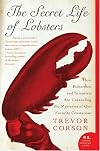
I originally put off reading The Secret Life of Lobsters thinking it was going to be bogged down with dry research statistics. Instead, I found a warm, and humorous yet fact-filled account of not only the life of lobsters but of the men who make their livelihood trying to catch them, Corson included. Chapters alternate between scientists and their research and lobstermen of Little Cranberry Island, Maine, and their struggle to farm the sea. There were things I knew (the cod is the biggest show more natural predator of lobsters and lobster is loaded with sodium) and lots more I didn't know, like there are 52 species of Crustacea and the sex life of a lobster is brutal! show less
I'm the kind of person who has Opinions about sushi; Expensive opinions which are best described by the omakase course at Sushi Tsujita on Sawtelle in Los Angeles. So a book about sushi is very much my style. Corson frames the past, present, and science of sushi around the 12-week course at the California Sushi Academy (operated by legendary chef Toshi Sugiura, once sushi chef to the stars).
The history is fascinating. Sushi evolved from a dish of fish fermented in a box of rice for months to show more a form prizing freshness and bite-sized perfect that we'd recognize in 19th century Japan. The word itself refers to the rice, not the fish. Tokyo-style sushi got a major boost during the post-war occupation, when MacArthur's occupational government approved a standardized plan which allowed sushi stalls to prepare meals using people's limited rice rations. Entrepreneurs in the 80s, including Toshi, found a way to translate exotic raw seafood to American tastes, though not without a lot of editing of the Japanese sushi tradition. Giant rolls drenched in spicy mayo and crunchy tempura bits would be anathema to traditionalists. In Japan, sushi bars are an ultra-masculine place defined by the relationships between the chef and the regulars. America has pioneered innovations like 'all you can eat', sushi boats, and the Rainbow Roll. To meet demand for trained sushi chefs, and to hold back the absolute vestiges of spicy tuna roll barbarity, Toshi compressed the multiyear apprenticeship into a 12 week course open to anyone.
We follow Kate, a 20 year old white girl from San Diego, as she ventures into the very male and very Japanese world of the sushi chef. I'll admit that I didn't much care for Kate initially; she's afraid of her knives, and seems to be a bit of flake. But she preservers, graduates, and gets a job as a chef. Meanwhile, we learn all about the messy process of cleaning meats, the magic of the perfect nigiri, and the science of why fish on rice tastes so good, and why under no circumstances should you make a paste of wasabi and soy sauce and smash your sushi in it.
Corson touches on the problems of overfishing, fish farming, and the problems of rising demand for sushi and falling standards of production. I think a world where more people are eating sushi is a better world, and Corson gives a sense of how even Des Moines can have good sushi. show less
The history is fascinating. Sushi evolved from a dish of fish fermented in a box of rice for months to show more a form prizing freshness and bite-sized perfect that we'd recognize in 19th century Japan. The word itself refers to the rice, not the fish. Tokyo-style sushi got a major boost during the post-war occupation, when MacArthur's occupational government approved a standardized plan which allowed sushi stalls to prepare meals using people's limited rice rations. Entrepreneurs in the 80s, including Toshi, found a way to translate exotic raw seafood to American tastes, though not without a lot of editing of the Japanese sushi tradition. Giant rolls drenched in spicy mayo and crunchy tempura bits would be anathema to traditionalists. In Japan, sushi bars are an ultra-masculine place defined by the relationships between the chef and the regulars. America has pioneered innovations like 'all you can eat', sushi boats, and the Rainbow Roll. To meet demand for trained sushi chefs, and to hold back the absolute vestiges of spicy tuna roll barbarity, Toshi compressed the multiyear apprenticeship into a 12 week course open to anyone.
We follow Kate, a 20 year old white girl from San Diego, as she ventures into the very male and very Japanese world of the sushi chef. I'll admit that I didn't much care for Kate initially; she's afraid of her knives, and seems to be a bit of flake. But she preservers, graduates, and gets a job as a chef. Meanwhile, we learn all about the messy process of cleaning meats, the magic of the perfect nigiri, and the science of why fish on rice tastes so good, and why under no circumstances should you make a paste of wasabi and soy sauce and smash your sushi in it.
Corson touches on the problems of overfishing, fish farming, and the problems of rising demand for sushi and falling standards of production. I think a world where more people are eating sushi is a better world, and Corson gives a sense of how even Des Moines can have good sushi. show less
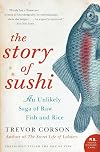
I love this book! Corson doesn’t just write about sushi—he shows you how it traveled, transformed, and embedded itself into global culture. If you’ve ever closed your eyes on a perfect bite of uni and thought, how did this miracle make its way to my plate?—this book answers that. Corson deep dives into sushi’s history and evolution while following students training to become sushi chefs (equal parts inspiring and mildly terrifying). He makes the backstory of raw fish not just show more digestible but downright addictive. A great blend of history, culture, and kitchen grit. show less
The Secret Life of Lobsters: How Fishermen and Scientists Are Unraveling the Mysteries of Our Favorite Crustacean (P.S.) by Trevor Corson
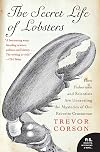
In this fascinating mix of science and anecdote, Corson balances the habits of lobsters with the lives (and habits) of those fishermen and scientists whose lives revolve around the waters off of Maine and the lobsters within. Built from humor and science, the work nonetheless reads as something like a mystery novel, remaining compulsively readable throughout. Whether readers find this work because of interests in conservation or dinner menus, they'll find themselves entertained and amused, show more and learning far more than they thought there was to know or retain.
Absolutely recommended--there's something in this book for everyone, and it's nothing less than a readable roller coaster of ecology, politics, and humor. show less
Absolutely recommended--there's something in this book for everyone, and it's nothing less than a readable roller coaster of ecology, politics, and humor. show less
Lists
Awards

You May Also Like


Associated Authors
Statistics
- Works
- 2
- Also by
- 1
- Members
- 1,468
- Popularity
- #17,498
- Rating
- 3.9
- Reviews
- 59
- ISBNs
- 10
- Languages
- 1
- Favorited
- 1
