
Karin Boye (1900–1941)
Author of Kallocain
About the Author
Image credit: Anna Riwkin/Kungl. Biblioteket
Works by Karin Boye
Kallocaína 4 copies
KALLOCAÍNA 3 copies
Uppgörelser : skisser och noveller 3 copies
Moln : dikter 2 copies
Hun, som bærer Templet 2 copies
Kris - För lite 2 copies
Min son blir inte snickare 1 copy
Uppgörelser - Ur funktion 1 copy
Moln 1 copy
De sju dödssynderna 1 copy
Kvindekalender '87 1 copy
Associated Works
Queer: A Collection of LGBTQ Writing from Ancient Times to Yesterday (2021) — Contributor, some editions — 66 copies
Ordens musik : dikter med klang och rytm från Lasse Lucidor till Tage Danielsson : en antologi (1990) — Contributor — 38 copies
Tagged
Common Knowledge
- Legal name
- Boye, Karin Maria
- Birthdate
- 1900-10-26
- Date of death
- 1941-04-24
- Gender
- female
- Education
- Uppsala University
- Occupations
- poet
short story writer
translator
novelist - Organizations
- Samfundet De Nio
Clarté - Short biography
- Karin Boye was born in Göteborg, Sweden and studied at Uppsala University from 1921 to 1926. Her first collection of poems, Clouds (Moln) appeared in 1922. During the 1920s, she was a member of the Swedish Clarté League, a socialist group opposed to the rise of fascism.
In 1931, she co-founded the modernist poetry magazine Spektrum, introducing Swedish readers to the works of T.S. Eliot and the Surrealists. She translated many of Eliot's works into Swedish, including "The Waste Land." Her best known work outside Sweden is probably her dark dystopian novel Kallocain. It was adapted into a Swedish film in 1981. In 1929, Karin Boye married Leif Björck; they later separated and she had several relationships with women. She died at age 40, apparently of suicide from an overdose of sleeping pills. Today she is considered one of Sweden's best-loved poets.Karin Boye (1900-41), born in Sweden, was a poet and anti-Fascist who translated The Waste Land into Swedish. After undergoing psychoanalysis in Berlin, she left her husband and formed a lifelong relationship with another woman, Margot Hanel. Her most famous book, Kallocain (1940), was partly inspired by eye-opening trips to Nazi Germany and Soviet Russia. Boye committed suicide the year after writing the novel. - Cause of death
- suicide
- Nationality
- Sweden
- Birthplace
- Gothenburg, Västra Götaland, Sweden
- Place of death
- Alingsås, Västra Götaland, Sweden
- Burial location
- Östra kyrkogården, Gothenburg, Sweden
- Map Location
- Sweden
Members
Reviews

I was introduced by a Swedish friend to the work of Karin Boye, who has been described as "Sweden's greatest woman poet," and I will always be grateful to him for the discovery. I have frequently thought that the best of her work seems caught in that limbo between faith and despair, but my perceptions are perhaps influenced by my (limited) knowledge of her struggles with her sexual identity, and her eventual suicide. Two of my favorites:
You Are My Purest Consolation
You are my purest show more consolation,
you are my firmest protection,
you are the best thing I have,
for nothing hurts like you.
No, nothing hurts like you.
You smart like ice and fire,
you cut like steel my soul -
you are the best thing I have.
Yes, of course it hurts
Yes, of course it hurts when buds are breaking.
Why else would the springtime falter?
Why would all our ardent longing
bind itself in frozen, bitter pallor?
After all, the bud was covered all the winter.
What new thing is it that bursts and wears?
Yes, of course it hurts when buds are breaking,
hurts for that which grows
and that which bars.
Yes, it is hard when drops are falling.
Trembling with fear, and heavy hanging,
cleaving to the twig, and swelling, sliding -
weight draws them down, though they go on clinging.
Hard to be uncertain, afraid and divided,
hard to feel the depths attract and call,
yet sit fast and merely tremble -
hard to want to stay
and want to fall.
Then, when things are worst and nothing helps
the tree's buds break as in rejoicing,
then, when no fear holds back any longer,
down in glitter go the twig's drops plunging,
forget that they were frightened by the new,
forget their fear before the flight unfurled -
feel for a second their greatest safety,
rest in that trust
that creates the world.
There is something in these lines which makes me want to crawl away to some secluded corner, and be very quiet with myself... Powerful, in ways I am not always able to understand. show less
You Are My Purest Consolation
You are my purest show more consolation,
you are my firmest protection,
you are the best thing I have,
for nothing hurts like you.
No, nothing hurts like you.
You smart like ice and fire,
you cut like steel my soul -
you are the best thing I have.
Yes, of course it hurts
Yes, of course it hurts when buds are breaking.
Why else would the springtime falter?
Why would all our ardent longing
bind itself in frozen, bitter pallor?
After all, the bud was covered all the winter.
What new thing is it that bursts and wears?
Yes, of course it hurts when buds are breaking,
hurts for that which grows
and that which bars.
Yes, it is hard when drops are falling.
Trembling with fear, and heavy hanging,
cleaving to the twig, and swelling, sliding -
weight draws them down, though they go on clinging.
Hard to be uncertain, afraid and divided,
hard to feel the depths attract and call,
yet sit fast and merely tremble -
hard to want to stay
and want to fall.
Then, when things are worst and nothing helps
the tree's buds break as in rejoicing,
then, when no fear holds back any longer,
down in glitter go the twig's drops plunging,
forget that they were frightened by the new,
forget their fear before the flight unfurled -
feel for a second their greatest safety,
rest in that trust
that creates the world.
There is something in these lines which makes me want to crawl away to some secluded corner, and be very quiet with myself... Powerful, in ways I am not always able to understand. show less
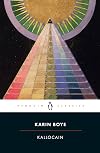
I’m not a big fan of dystopian fiction, mostly because it all seems so obvious. Oh noes, things are bad, this is what they will look like if they carry on in the same vein… Which , of course, they rarely do. And there’s no real evidence dystopian fiction helps prevent what it describes - if anything, it’s the reverse, as pointed out by the oft-repeated meme about a Torment Nexus…
Of course, dystopia is in the eye of the beholder - or rather, the politics of one era define that show more era’s dystopia but may not hold true a decade or a generation later. (On a side-note, I find dystopias where the citizens have been programmed - chemically, technologically, or neuro-surgically - to be happy with their lot fascinating; Alastair Reynolds describes one such in one of his Glitter Band novels, John Varley has written something similar.)
Boye, a Swede who lived in Nazi Germany, wrote Kallocain in 1940, and it was very much a response to her experiences living there. In the world of Kallocain, there is a World State. But it has enemies. And a border. Which means it’s not a world state. But that’s just a name. Leo Kall is a chemist in a Chemistry City (which sounds very Soviet). He discovers a new truth serum, which he names after himself and for which the book is named. It allows the authorities to interrogate people while they are only thinking about crimes - pre-crime, as Philip Dick has it.
Kall uses his discovery to better his situation, and to destroy his superior, who he believes (wrongly) is having an affair with his wife. What follows is pretty much inevitable. There are hints the leaders live lives of luxury and freedom, which reads as a direct dig at the Nazi leadership. The general air of paranoia and deprivation echo both the USSR and the final years of the Nazi regime.
If you’ve read Orwell’s Nineteen Eighty-four or Zamyatin’s We, there’s little here that’s different, although Kallocain is less brutal than the former and less science-fictional than the latter. It should by rights be held in as high regard as those two novels, but it wasn’t translated into English until 1966 and, of course, its author is female. A good historical dystopian novel that stands alongside better-known examples. show less
Of course, dystopia is in the eye of the beholder - or rather, the politics of one era define that show more era’s dystopia but may not hold true a decade or a generation later. (On a side-note, I find dystopias where the citizens have been programmed - chemically, technologically, or neuro-surgically - to be happy with their lot fascinating; Alastair Reynolds describes one such in one of his Glitter Band novels, John Varley has written something similar.)
Boye, a Swede who lived in Nazi Germany, wrote Kallocain in 1940, and it was very much a response to her experiences living there. In the world of Kallocain, there is a World State. But it has enemies. And a border. Which means it’s not a world state. But that’s just a name. Leo Kall is a chemist in a Chemistry City (which sounds very Soviet). He discovers a new truth serum, which he names after himself and for which the book is named. It allows the authorities to interrogate people while they are only thinking about crimes - pre-crime, as Philip Dick has it.
Kall uses his discovery to better his situation, and to destroy his superior, who he believes (wrongly) is having an affair with his wife. What follows is pretty much inevitable. There are hints the leaders live lives of luxury and freedom, which reads as a direct dig at the Nazi leadership. The general air of paranoia and deprivation echo both the USSR and the final years of the Nazi regime.
If you’ve read Orwell’s Nineteen Eighty-four or Zamyatin’s We, there’s little here that’s different, although Kallocain is less brutal than the former and less science-fictional than the latter. It should by rights be held in as high regard as those two novels, but it wasn’t translated into English until 1966 and, of course, its author is female. A good historical dystopian novel that stands alongside better-known examples. show less
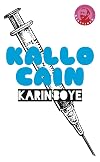
Political dystopias found their form in the first half of the 20th century, with books like Zamyatin's We, Huxley's Brave New World and Orwell's Nineteen Eighty-Four as the big three. Karin Boye's Kallocain (1940) deserves to be mentioned in the same context. It's certainly at least as good, and its central message - that fear, hatred and paranoia demands a conscious effort, which cannot be sustained forever - certainly more hopeful, as bleak as the novel and its author's untimely end is.
The show more setting will be familiar to anyone who's read either of the others; a totalitarian state (officially named The World State, even though there are hints that there are other states and occasional wars), "sometime in the 21st century", where the government controls everything. Children are raised by the state and separated from their parents for good when they hit puberty, every aspect of life is rationalised, standardised and specialised with no free will at all, everyone is taught that they exist solely to serve the state, and it goes without saying that the police have spy cameras and microphones everywhere.
Except in people's minds, obviously.
That is, until the chemist Leo Kall stumbles across a new chemical compound, which he names after himself and which proves to be a perfect truth serum. Kallocain works a little like alcohol, he speculates (alcohol, of course, was banned several generations ago); rather than force people to tell the truth, it simply makes them want to stop lying. Shoot them up and they relax, smile and tell you everything that they've been trying to keep hidden. Perfect for convicting criminals, he thinks - except pretty soon it becomes obvious that it can do so much more. Suddenly the state can prosecute people for their thoughts, and Kall is expected to help - but what if it turns out that the worst threat to a totalitarian government isn't a few isolated pockets of convinced political dissidents, but simply people being people, telling stories and listening to music you can't even march to? And what does it mean for his own marriage to a wife he can't help but suspect of being disloyal to him (in itself of course a crime, since they're both supposed to be loyal only to the state)? What is this word "soul" he keeps hearing the suspects mention, which doesn't seem to serve any purpose at all...?
Kallocain clearly owes a lot to Huxley (it predates Orwell's book by several years), but in a way, it's a very different animal. Boye was first and foremost a poet and that sensibility shows in her SF writing even though the narrator Kall is a pretty cold fish at first. She largely stays away from the big political questions; they're there, definitely, and we find out enough about the world Kall lives in to understand it, but the focus is still on personal politics; about what living under constant pressure to be quiet, lie and serve others does to people. It's tempting, of course, to read it not only in a 1940s context - trapped in a world of totalitarian thinking that created both Stalin and Hitler and the people fighting them, and the big war just starting to gather steam - but also in relation to Boye's personal life; as a lesbian, she faced a very real risk of getting thrown in jail simply for existing, and it's quite likely that that pressure led to her suicide a year after Kallocain came out. But even so, 70 years later, there's something in Kallocain that manages to make it positively uplifting. Because what the smiles on the faces of the victims say as they incriminate themselves is "this is not us. We are human beings, we are fucked up and not always good, but as long as it takes a conscious effort to suppress ourselves, we can never be automatons in the long run."
ETA 160625: Det finns en strålande anpassning för radioteater från 1966 på Sveriges Radios sida. Gunnar Björnstrand! Erland Josephson! show less
The show more setting will be familiar to anyone who's read either of the others; a totalitarian state (officially named The World State, even though there are hints that there are other states and occasional wars), "sometime in the 21st century", where the government controls everything. Children are raised by the state and separated from their parents for good when they hit puberty, every aspect of life is rationalised, standardised and specialised with no free will at all, everyone is taught that they exist solely to serve the state, and it goes without saying that the police have spy cameras and microphones everywhere.
Except in people's minds, obviously.
That is, until the chemist Leo Kall stumbles across a new chemical compound, which he names after himself and which proves to be a perfect truth serum. Kallocain works a little like alcohol, he speculates (alcohol, of course, was banned several generations ago); rather than force people to tell the truth, it simply makes them want to stop lying. Shoot them up and they relax, smile and tell you everything that they've been trying to keep hidden. Perfect for convicting criminals, he thinks - except pretty soon it becomes obvious that it can do so much more. Suddenly the state can prosecute people for their thoughts, and Kall is expected to help - but what if it turns out that the worst threat to a totalitarian government isn't a few isolated pockets of convinced political dissidents, but simply people being people, telling stories and listening to music you can't even march to? And what does it mean for his own marriage to a wife he can't help but suspect of being disloyal to him (in itself of course a crime, since they're both supposed to be loyal only to the state)? What is this word "soul" he keeps hearing the suspects mention, which doesn't seem to serve any purpose at all...?
Kallocain clearly owes a lot to Huxley (it predates Orwell's book by several years), but in a way, it's a very different animal. Boye was first and foremost a poet and that sensibility shows in her SF writing even though the narrator Kall is a pretty cold fish at first. She largely stays away from the big political questions; they're there, definitely, and we find out enough about the world Kall lives in to understand it, but the focus is still on personal politics; about what living under constant pressure to be quiet, lie and serve others does to people. It's tempting, of course, to read it not only in a 1940s context - trapped in a world of totalitarian thinking that created both Stalin and Hitler and the people fighting them, and the big war just starting to gather steam - but also in relation to Boye's personal life; as a lesbian, she faced a very real risk of getting thrown in jail simply for existing, and it's quite likely that that pressure led to her suicide a year after Kallocain came out. But even so, 70 years later, there's something in Kallocain that manages to make it positively uplifting. Because what the smiles on the faces of the victims say as they incriminate themselves is "this is not us. We are human beings, we are fucked up and not always good, but as long as it takes a conscious effort to suppress ourselves, we can never be automatons in the long run."
ETA 160625: Det finns en strålande anpassning för radioteater från 1966 på Sveriges Radios sida. Gunnar Björnstrand! Erland Josephson! show less

I wouldn't call it "hilarious",* for sure, but I definitely agree that Karin Boye has done us a great service in writing this book. Reminiscent of 1984 and also of Yvgeny Zamyatin's WE, KALLOCAIN is actually more frightening than either of those. The mind of the "collaborator," the willing citizen of a totalitarian state, is laid bare; his rationales and fears are thus universalized, and one sees the tyrant in all of us ...
* This review was responding in part to another review on Amazon.com, show more titled, "Hilarious futuristic vision." show less
* This review was responding in part to another review on Amazon.com, show more titled, "Hilarious futuristic vision." show less
Lists
Awards


You May Also Like


Associated Authors
Statistics
- Works
- 61
- Also by
- 3
- Members
- 1,605
- Popularity
- #16,055
- Rating
- 3.8
- Reviews
- 40
- ISBNs
- 169
- Languages
- 14
- Favorited
- 12

