
Timothée Parrique
Author of Ralentir ou périr: L'économie de la décroissance
About the Author
Works by Timothée Parrique
Tagged
Common Knowledge
- Birthdate
- 1989
- Gender
- male
- Nationality
- France
- Birthplace
- Versailles, Yvelines, Île-de-France, France
- Associated Place (for map)
- Île-de-France, France
Members
Reviews
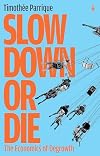
The west has managed to foist the suicidal need for constant economic growth on the whole world. This has implications globally, if only because infinite growth on a finite planet is obviously not possible. We are much closer to the end than the beginning in Timothée Parrique’s Slow Down or Die. It is a translation of his French original edition, and it features France as most of its examples.
Mandatory growth is a function of capitalism, he says, so that the economy spins faster and show more faster every year. Today, anything that does not produce wealth is cast aside. Anything that can possibly produce wealth is exploited to the fullest. The result is that couch surfing is out because everyone has decided to rent out rooms on airbnb. Nothing gets thrown out if it might bring in cash in a yard sale. We no longer tolerate hand-me-downs; everything goes on eBay for a few bucks while it’s still sellable. Everything online seems to be a paid subscription, from news to opinion to tv, to music, to newsletters, to food and drug shopping and gaming. Sharing is out; it is everyone for themselves. Our relationships wither because they produce no income. We are divided, isolated, and alone in our quests to monetize every little thing. We must be making money at all times. Nothing else matters in the late-cycle capitalist economy.
Worse is the overexploitation of the planet. The only time we worry about global warming, Parrique says, is when we consider what it might do to economic growth. We leverage every square foot of farmland to produce more than it ever has before. We pump our food full of chemicals to make it sell better. It cannot go on this way.
The book demonstrates it was not always like this. Adam Smith flicked a switch and the infernal machine kicked into gear. The concept of Gross National Product (GNP) was only just conceived in 1932. The current Gross Domestic Product (GDP) is a totally corrupt and defective number. Nonetheless it is relied on as holy, all over the world. It does not count anything not paid for, including volunteer work, housework, child-rearing, DIY building and repairs, and neighborhood collective actions, among other invalidating defects. No currency changes hands, so no effect is recorded.
Another problem economics has is accurately measuring productivity. Parrique gives the famous example of Moore’s Law, by which computer processing chips double in power every two years. The problem here is that it now takes 18 times more researchers to achieve that doubling than it did in the 1970s, when doubling was the low-hanging fruit.
Similarly, electric vehicles do not pollute less than fossil fuel models. Recycling has been an economic bust. Not only is it difficult when not impossible to recycle many materials, but very little of it is even attempted because of the costs. And the cherry on top is that recycling only works a few times, as the plastics for example, degrade a little more with each recycling. The industry now takes this into account as downcycling, the lowering of value of recycled materials. Producing less in the first place is the real solution.
Parrique says to look at these things as a zero-sum game, where an increase in one thing leads to a decrease somewhere else. Speeding it up doesn’t make it better. He likens ending poverty through GDP growth to trying to change a car’s direction by topping up the gas tank.
His solution is degrowth, as in not constantly pushing for more. We can and must live on fewer goods. We must maximize their usefulness, not their cash value. We must consume less, waste less, and value relationships more. People should go back to relying on other people, sharing tools and labor, aid and assistance.
It means looking at the economy from a post-growth perspective: “a stationary economy in harmony with nature, where decisions are made collectively and wealth is equitably shared, allowing us to prosper without growth.”
Degrowth is dismissed out of hand by all kinds economists, politicians and academics. Having grown up in the whirlwind of constant mandated growth, they see it as natural, innate and obligatory. Margaret Thatcher said there is no other way. Emmanuel Macron says degrowth is the Amish Model. Parrique has an exhaustive collection of negative phrases to describe it, from experts to pundits and everyone in between. The ignorance and rigidity are stunning.
But. Surveys show the French public is in favor of it. By an absolute majority. Local efforts in non-profits, co-ops, community services, local currencies and many more kinds of innovation are popping up, and are popular. Ordinary people know quite intuitively that we are on the wrong path and that they would like to get off this runaway merry-go-round.
It turns out there is a whole industry of degrowth: conferences, papers, journals, debates, proposals… Degrowth is hiding in plain sight. Growth for growth’s sake makes no sense to more and more around the world.
It has its challenges, and Parrique describes them well. He is all about all sides of the issue. But there is also a lot of low-hanging fruit to cull. Cars can be licensed according to their performance ratings. People can be taxed for the flights they take. Private jets can be banned. Cattle production can be restricted. Fossil fuels can be reduced and replaced by renewables.
Mass advertising is a daily hell. And we pay extra for it; nearly 50% of the price of breakfast cereals is due to advertising them. Restricting advertising as well as complex financial products and services would simplify life. The top 10% wealthiest people cause 50% of the greenhouse gas emissions globally, with their jets, yachts, fleets of cars and multiple homes. Parrique says “Wealth and emissions are almost perfectly symmetrical.”
Remarkably, politicians, even Green Party ones, completely ignore degrowth when they aren’t dismissing it entirely. The result is that no one represents the millions who desire it. The French themselves seem much farther along in this way of thinking. Their standard of living is lower than Americans’. Their average salaries are lower. They have more trouble making it to the end of the month (they are usually paid just once a month). And they would like to value their free time much more than they can under these stresses. Degrowth is their answer more and more often.
Parrique examines it finely. It is not a collapse of the economy; it is more of a generalized and managed reduction. The economy does not reduce inequality by growing. The poor stay poor, no matter how much the economy grows every year. If it were otherwise, everyone would be a billionaire after 250 years of capitalism. Stabilized management of the economy works just as well if not better than continual forced growth at all costs.
Oddly, Parrique makes no mention whatever of overpopulation in this otherwise exhaustive mix. This planet is not equipped to host the soon to be ten billion people, their billion dogs and billion cats, their cars and homes and 24 billion cattle. Economies will crater. How will degrowth address it all?
Parrique acknowledges changing the whole economy from accumulation to contentment will be hard. He likens it to getting someone off a hard drug. But like the hard drug, getting off the old economic model is a matter of actual survival. In his words: ”To insist on growing without limit is not development, it is bulimia.”
David Wineberg show less
Mandatory growth is a function of capitalism, he says, so that the economy spins faster and show more faster every year. Today, anything that does not produce wealth is cast aside. Anything that can possibly produce wealth is exploited to the fullest. The result is that couch surfing is out because everyone has decided to rent out rooms on airbnb. Nothing gets thrown out if it might bring in cash in a yard sale. We no longer tolerate hand-me-downs; everything goes on eBay for a few bucks while it’s still sellable. Everything online seems to be a paid subscription, from news to opinion to tv, to music, to newsletters, to food and drug shopping and gaming. Sharing is out; it is everyone for themselves. Our relationships wither because they produce no income. We are divided, isolated, and alone in our quests to monetize every little thing. We must be making money at all times. Nothing else matters in the late-cycle capitalist economy.
Worse is the overexploitation of the planet. The only time we worry about global warming, Parrique says, is when we consider what it might do to economic growth. We leverage every square foot of farmland to produce more than it ever has before. We pump our food full of chemicals to make it sell better. It cannot go on this way.
The book demonstrates it was not always like this. Adam Smith flicked a switch and the infernal machine kicked into gear. The concept of Gross National Product (GNP) was only just conceived in 1932. The current Gross Domestic Product (GDP) is a totally corrupt and defective number. Nonetheless it is relied on as holy, all over the world. It does not count anything not paid for, including volunteer work, housework, child-rearing, DIY building and repairs, and neighborhood collective actions, among other invalidating defects. No currency changes hands, so no effect is recorded.
Another problem economics has is accurately measuring productivity. Parrique gives the famous example of Moore’s Law, by which computer processing chips double in power every two years. The problem here is that it now takes 18 times more researchers to achieve that doubling than it did in the 1970s, when doubling was the low-hanging fruit.
Similarly, electric vehicles do not pollute less than fossil fuel models. Recycling has been an economic bust. Not only is it difficult when not impossible to recycle many materials, but very little of it is even attempted because of the costs. And the cherry on top is that recycling only works a few times, as the plastics for example, degrade a little more with each recycling. The industry now takes this into account as downcycling, the lowering of value of recycled materials. Producing less in the first place is the real solution.
Parrique says to look at these things as a zero-sum game, where an increase in one thing leads to a decrease somewhere else. Speeding it up doesn’t make it better. He likens ending poverty through GDP growth to trying to change a car’s direction by topping up the gas tank.
His solution is degrowth, as in not constantly pushing for more. We can and must live on fewer goods. We must maximize their usefulness, not their cash value. We must consume less, waste less, and value relationships more. People should go back to relying on other people, sharing tools and labor, aid and assistance.
It means looking at the economy from a post-growth perspective: “a stationary economy in harmony with nature, where decisions are made collectively and wealth is equitably shared, allowing us to prosper without growth.”
Degrowth is dismissed out of hand by all kinds economists, politicians and academics. Having grown up in the whirlwind of constant mandated growth, they see it as natural, innate and obligatory. Margaret Thatcher said there is no other way. Emmanuel Macron says degrowth is the Amish Model. Parrique has an exhaustive collection of negative phrases to describe it, from experts to pundits and everyone in between. The ignorance and rigidity are stunning.
But. Surveys show the French public is in favor of it. By an absolute majority. Local efforts in non-profits, co-ops, community services, local currencies and many more kinds of innovation are popping up, and are popular. Ordinary people know quite intuitively that we are on the wrong path and that they would like to get off this runaway merry-go-round.
It turns out there is a whole industry of degrowth: conferences, papers, journals, debates, proposals… Degrowth is hiding in plain sight. Growth for growth’s sake makes no sense to more and more around the world.
It has its challenges, and Parrique describes them well. He is all about all sides of the issue. But there is also a lot of low-hanging fruit to cull. Cars can be licensed according to their performance ratings. People can be taxed for the flights they take. Private jets can be banned. Cattle production can be restricted. Fossil fuels can be reduced and replaced by renewables.
Mass advertising is a daily hell. And we pay extra for it; nearly 50% of the price of breakfast cereals is due to advertising them. Restricting advertising as well as complex financial products and services would simplify life. The top 10% wealthiest people cause 50% of the greenhouse gas emissions globally, with their jets, yachts, fleets of cars and multiple homes. Parrique says “Wealth and emissions are almost perfectly symmetrical.”
Remarkably, politicians, even Green Party ones, completely ignore degrowth when they aren’t dismissing it entirely. The result is that no one represents the millions who desire it. The French themselves seem much farther along in this way of thinking. Their standard of living is lower than Americans’. Their average salaries are lower. They have more trouble making it to the end of the month (they are usually paid just once a month). And they would like to value their free time much more than they can under these stresses. Degrowth is their answer more and more often.
Parrique examines it finely. It is not a collapse of the economy; it is more of a generalized and managed reduction. The economy does not reduce inequality by growing. The poor stay poor, no matter how much the economy grows every year. If it were otherwise, everyone would be a billionaire after 250 years of capitalism. Stabilized management of the economy works just as well if not better than continual forced growth at all costs.
Oddly, Parrique makes no mention whatever of overpopulation in this otherwise exhaustive mix. This planet is not equipped to host the soon to be ten billion people, their billion dogs and billion cats, their cars and homes and 24 billion cattle. Economies will crater. How will degrowth address it all?
Parrique acknowledges changing the whole economy from accumulation to contentment will be hard. He likens it to getting someone off a hard drug. But like the hard drug, getting off the old economic model is a matter of actual survival. In his words: ”To insist on growing without limit is not development, it is bulimia.”
David Wineberg show less
Ralentir ou périr. L'économie de la décroissance: L'économie de la décroissance by Timothée Parrique

Livre prêté à Julien Cardot le 12/06/2023 rendu par Julien en 03/2024

Statistics
- Works
- 3
- Members
- 35
- Popularity
- #405,583
- Rating
- 3.6
- Reviews
- 3
- ISBNs
- 1