
About the Author
Works by
Marília: Kaisa, 2025. 1 copy
Animalia 1 copy
Encounter 1 copy
Collectionneur 1 copy
Erotismo Cotidiano VIII 1 copy
Fumée 1 copy
Erotismo Cotidiano XI 1 copy
Erotismo Cotidiano X 1 copy
Erotismo Cotidiano IX 1 copy
Non Dormo Ancora 1 copy
Erotismo Cotidiano VII 1 copy
Nü Metal 1 copy
O Impacto da Pandemia do COVID-19 no Desemprego do Brasil — Author — 1 copy
"Jiyu": Memórias 1 copy
"Jiyu": Cores 1 copy
Erotismo Cotidiano V 1 copy
A acessibilidade em ambientes informacionais virtuais direcionada à pessoa com deficiência visual — Author — 1 copy
Sierra Leone 1 copy
1964 1 copy
Erotismo Cotidiano VI 1 copy
Cenário 1 copy
Erotismo Cotidiano IV 1 copy
That Lincoln Boy 1 copy
Erotismo Cotidiano III 1 copy
"Jiyu": Lo-fi Pornográfico 1 copy
"Jiyu": Karada 1 copy
"Jiyu": Passagens — Author — 1 copy
"Jiyu": Universos 1 copy
testi per bambini 1 copy
Makoto 1 copy
Fragmentos de Amarelo — Author; Author — 1 copy
Mulheres 1 copy
INFIRMIÈRE 1 copy
Zine 1 copy
Ansia 1 copy
Bianco e nero 1 copy
Erotismo Cotidiano 1 copy
Erotismo Cotidiano II 1 copy
Associated Works
The Thing at the Foot of the Bed and Other Scary Tales (1959) — Illustrator, some editions — 113 copies, 3 reviews
The Merry Miller — Illustrator, some editions — 2 copies
Young Children's Library Mother's Guide: Volume 10 — Illustrator — 1 copy
Mystery Tour — Cover artist — 1 copy
Tagged
Common Knowledge
- Gender
- male
- Nationality
- Roman Empire
- Associated Place (for map)
- Roman Empire
Members
Reviews

Brazen Epiphany really stayed with me. Reading it felt like sharing Jennifer’s struggles and small wins up close. Her honesty made me stop and think about my own fears, and the thread about her father’s letter hit me harder than I expected. It isn’t a flashy story, but it made me feel calm, stronger somehow, like I’d been reminded to keep moving and not let doubt stop me.
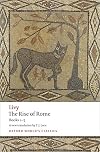
Livy is particularly fantastic at the rhythm of history. His writing is not of a historian but rather a masterful author who knows how to make a brilliant story. There's so much to say about this book from how patrician/plebeian relations are still relevant today and perhaps a lesson in progressive politics. In how war is not necessarily a glorious affair but a mundane one with terrible consequences if not given immense detail.
What I love is Livy's use of set pieces. You have a whole drama show more between the plebeians and patricians but then suddenly you have a whole storyline with a great general or statesman. Figures like Verginius who killed his daughter to prevent her debasement under a decimvir or Coriolanus who fought Rome in his exile or most recently Camilus who captured Veii not through force but through planning and strategy. This shows that Livy perhaps like a moderate balance between great men and long-term structures that created Rome.
Livy is not exactly a brilliant historian. He relies on authorities but does not analyse the sources himself, a severe lack of primary source analysis. Futhermore he refuses to cut out mythology which might show him as more of a propagandist rather than historian. This is apparent to me with the recapture of Rome when he critiques the generals for not carrying out religious rituals before battle (Camilus also argues this later). A serious historian would not rely on religious arguments for a defeat in battle, especially when he himself loved Camilus who argued for strategy and planning that affects fortune.
Regardless of my views of Livy as a historian, this is still an excellent book for its wide array of stories that capture a sense of historical rhythm I haven't seen elsewhere. show less
What I love is Livy's use of set pieces. You have a whole drama show more between the plebeians and patricians but then suddenly you have a whole storyline with a great general or statesman. Figures like Verginius who killed his daughter to prevent her debasement under a decimvir or Coriolanus who fought Rome in his exile or most recently Camilus who captured Veii not through force but through planning and strategy. This shows that Livy perhaps like a moderate balance between great men and long-term structures that created Rome.
Livy is not exactly a brilliant historian. He relies on authorities but does not analyse the sources himself, a severe lack of primary source analysis. Futhermore he refuses to cut out mythology which might show him as more of a propagandist rather than historian. This is apparent to me with the recapture of Rome when he critiques the generals for not carrying out religious rituals before battle (Camilus also argues this later). A serious historian would not rely on religious arguments for a defeat in battle, especially when he himself loved Camilus who argued for strategy and planning that affects fortune.
Regardless of my views of Livy as a historian, this is still an excellent book for its wide array of stories that capture a sense of historical rhythm I haven't seen elsewhere. show less
I'm going to read as much of Livy as I can stomach over the summer. My stomach comes into it because I don't have the patience for or the interest in military hijinx to see me through every page. And I fear that this volume is setting a high bar for those to follow. There's war here, sure, but a real stress on internal matters instead.
And those internal matters are, essentially, what people who haven't read Marx think Marx is: the patricians will come up with any excuse to maintain their show more privileges (inter alia, patriotism, security, religion, dignity, tradition...), and the plebeians will fold sometimes, but always come back and demand better treatment. The early history of Rome, as told by Livy, is class warfare. This is fascinating stuff, if a little repetitive (tribunes introduce a law to give the plebes more land; the senate rejects it; scuffles; appeals to the Greatness of Our State by the senate; plebes let it lie for a while so they can beat up on the Aequii or whomever; the law gets passed; the patricians find a new way to screw over the plebes; repeat from the top). But the repetition is made bearable by some great stories, and the overall pace. We move pretty quickly from year to year.
I was also surprized by Livy's ability to think critically about his sources. Everyone says Livy just reports miracles and tall tales as if they were true; in my experience, he's pretty good about highlighting when that's going on. On the other hand, he has no interest in making his story cohere, which is a bit sad. On the other hand, that lack of coherence means the reader can judge for herself why things happened as they did, and Livy's occasional moralizing never seems to heavy handed, or to influence his actual presentation. Looking forward to the second set of five.
Oh, one thing: the translation is kind of funny. Luce delights in using uncommon words when there's no real need for it; no doubt it's meant to represent archaisms in Livy himself, but it might annoy you. show less
And those internal matters are, essentially, what people who haven't read Marx think Marx is: the patricians will come up with any excuse to maintain their show more privileges (inter alia, patriotism, security, religion, dignity, tradition...), and the plebeians will fold sometimes, but always come back and demand better treatment. The early history of Rome, as told by Livy, is class warfare. This is fascinating stuff, if a little repetitive (tribunes introduce a law to give the plebes more land; the senate rejects it; scuffles; appeals to the Greatness of Our State by the senate; plebes let it lie for a while so they can beat up on the Aequii or whomever; the law gets passed; the patricians find a new way to screw over the plebes; repeat from the top). But the repetition is made bearable by some great stories, and the overall pace. We move pretty quickly from year to year.
I was also surprized by Livy's ability to think critically about his sources. Everyone says Livy just reports miracles and tall tales as if they were true; in my experience, he's pretty good about highlighting when that's going on. On the other hand, he has no interest in making his story cohere, which is a bit sad. On the other hand, that lack of coherence means the reader can judge for herself why things happened as they did, and Livy's occasional moralizing never seems to heavy handed, or to influence his actual presentation. Looking forward to the second set of five.
Oh, one thing: the translation is kind of funny. Luce delights in using uncommon words when there's no real need for it; no doubt it's meant to represent archaisms in Livy himself, but it might annoy you. show less
The Early History of Rome: Books I-V of the History of Rome from its Foundation (Penguin Classics) (Bks. 1-5) by Titus Livy
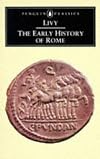
From the founding myth of Rome, narrated so eloquently by Virgil in The Aeneid, augmented with the tale of Romulus and Remus, Livy tells of the history of the republic to the beginning of the fourth century BC. This is an account that presents prosaic events enlivened with exciting moments of wars, political changes, the evolution from a monarchy to a republic, and great speeches by characters both unfamiliar and, sometimes, larger-than-life. Livy himself was born in Padua in 59 BC and died show more in 17 AD (about 40 years after the death of Virgil).
The early years of Roman history include the myth of Aeneas and the historic rule by Numa Pompilius whose life was also chronicled by Plutarch. There are battles like that of Lake Regillus and rulers both good and bad, the latter best represented by Canuleius the demagogue. My favorite was Cincinnatus who was the epitome of the farmer-soldier- ruler and who assumed the consulship only to return to the farm when his moment in the limelight had ended.
The many battles and usual successes highlight a barbarity that provides a foundation for that which is evident in the later empire (see Tacitus for that history). There are also the political battles between the Patricians and Plebes for control of the republic. In some ways they reminded me of more recent political contretemps in our own republic. It may come as a surprise that after many difficulties and resultant growth in the power of Rome, near the end of this part of Roman history the city itself is sacked by the Gauls. It must be the memory of that which explains some of the ruthlessness of the Romans under Caesar in the last days of the Republic (see Caesar's Gallic Wars for that story).
Ultimately Livy's history is readable both because of his engaging prose style and his ability to enliven most of the more critical events of early Roman history. With interpolated speeches from primary leaders the book reminded me of Thucydides masterpiece on the Peloponnesian Wars. show less
The early years of Roman history include the myth of Aeneas and the historic rule by Numa Pompilius whose life was also chronicled by Plutarch. There are battles like that of Lake Regillus and rulers both good and bad, the latter best represented by Canuleius the demagogue. My favorite was Cincinnatus who was the epitome of the farmer-soldier- ruler and who assumed the consulship only to return to the farm when his moment in the limelight had ended.
The many battles and usual successes highlight a barbarity that provides a foundation for that which is evident in the later empire (see Tacitus for that history). There are also the political battles between the Patricians and Plebes for control of the republic. In some ways they reminded me of more recent political contretemps in our own republic. It may come as a surprise that after many difficulties and resultant growth in the power of Rome, near the end of this part of Roman history the city itself is sacked by the Gauls. It must be the memory of that which explains some of the ruthlessness of the Romans under Caesar in the last days of the Republic (see Caesar's Gallic Wars for that story).
Ultimately Livy's history is readable both because of his engaging prose style and his ability to enliven most of the more critical events of early Roman history. With interpolated speeches from primary leaders the book reminded me of Thucydides masterpiece on the Peloponnesian Wars. show less
Lists
Awards


You May Also Like
Associated Authors
Statistics
- Works
- 71
- Also by
- 37
- Members
- 4,026
- Popularity
- #6,261
- Rating
- 3.9
- Reviews
- 21
- ISBNs
- 65
- Languages
- 8