
Timothy May (1)
Author of The Mongol Art of War
For other authors named Timothy May, see the disambiguation page.
Works by Timothy May
Associated Works
Desperta Ferro. Tamerlán — Contributor — 2 copies
Tagged
Common Knowledge
Members
Reviews
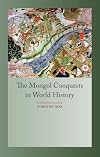
In short: five stars for information quality, four for readability (with a general audience in mind).
This book does two important things: it corrects a few ideas that you are still likely to meet in other coverage; and it looks at the Mongols from a world history perspective (the two are probably interconnected).
Timothy May teaches World History, and he says the advent of this subject has been a leap forward for Mongol studies. It makes sense, of course: I imagine that you can either look at show more them from a Mongolian viewpoint, or from this one of world history, and these are your only chances to see them accurately. Scholars primarily invested in the Chinese or the Iranian worlds won’t see the Mongols as a whole, or in their own terms; while I myself find David Morgan’s standard text The Mongols indescribably European in viewpoint. “The Mongols brought military innovation, international commerce, the spread of world religions and the diffusion of technology and ideas together in one crucible – the Mongol conquests. After the dust had settled, the world had irrefutably changed…” – but to see and assess this, you need to look and think in World History terms. (Another author on the steppe with interesting ideas, David Christian, is into Big History… that’s even bigger…)
The only drawback I see with this book is in its first part, a historical run-through of the Mongols in a hundred pages: the speed, perhaps, makes this inevitably too much like names-and-dates. On the other hand, he does see events consecutively, and so, for instance, one of the corrections I mentioned: “This certainly should not be misconstrued as a view that Chinggis Khan planned the entire thing. Indeed, I am not convinced that Chinggis Khan even wanted an empire, but rather that he would have been quite content ruling Mongolia.” The importance of this is seen in part two, on the Chinggis Exchange.
The Chinggis Exchange is a term he’s made up as “a bit more pithy than ‘The Mongol impact on world history,’” and after the coinage ‘the Columbian Exchange’. I think it’s catchy; let’s help put it into circulation. The chapters in here are self-explanatory: Pax Mongolica and Trade; New Forms of Warfare; The Mongol Administration; Religion and the Mongol Empire; The Mongols and the Plague; Migrations and Demographic Trends; Cultural Exchanges. A couple of notes. To follow on from my thought above: because Timothy May accepts that Chinggis Khan did not intend to go to war with Khwarazm until his trade caravan was attacked, he can take the trade policies of the early Mongols more seriously, and examine them. To my mind, he also takes their religious policies more seriously; it may be just me, but I think there’s a new wave of dismissal of their ‘religious tolerance’, as merely indiscriminate, a sign of their primitive religiosity, where the khans just wanted everybody to pray for them. May is not thus condescending, and that means you get more information out of him.
On the Chinggis Exchange. This is a time when art history has been telling us more about the Mongols than other sorts of history (The Legacy of Genghis Khan: Courtly Art and Culture in Western Asia, 1256-1353)… which indicates the importance of cultural exchanges. Timothy May himself calls Thomas Allsen “arguably the greatest scholar of the Mongol Empire” for his more “integrated perspective” and work on cross-cultural transmission: Culture and Conquest in Mongol Eurasia, Commodity and Exchange in the Mongol Empire: A Cultural History of Islamic Textiles. It’s not just art, or science, or cloth of gold: it’s changed our understanding of the Mongols, and the old political/military history won’t do. Thomas Allsen was the one to introduce the idea that the Mongols weren’t simply dumb facilitators of exchange, but were influential in that they had their own (cultural) predilections and as the patrons, chose what to exchange; and at times they had to clap the scientific heads of Persia and China together, who weren’t much interested in each other’s schools.
Timothy May’s Chinggis Exchange is the place to find overviews of these subjects, in the light of the research going on. Since at present we don’t have an up-to-date standard history, while popular accounts of uncertain value proliferate, this book may be your best bet. show less
This book does two important things: it corrects a few ideas that you are still likely to meet in other coverage; and it looks at the Mongols from a world history perspective (the two are probably interconnected).
Timothy May teaches World History, and he says the advent of this subject has been a leap forward for Mongol studies. It makes sense, of course: I imagine that you can either look at show more them from a Mongolian viewpoint, or from this one of world history, and these are your only chances to see them accurately. Scholars primarily invested in the Chinese or the Iranian worlds won’t see the Mongols as a whole, or in their own terms; while I myself find David Morgan’s standard text The Mongols indescribably European in viewpoint. “The Mongols brought military innovation, international commerce, the spread of world religions and the diffusion of technology and ideas together in one crucible – the Mongol conquests. After the dust had settled, the world had irrefutably changed…” – but to see and assess this, you need to look and think in World History terms. (Another author on the steppe with interesting ideas, David Christian, is into Big History… that’s even bigger…)
The only drawback I see with this book is in its first part, a historical run-through of the Mongols in a hundred pages: the speed, perhaps, makes this inevitably too much like names-and-dates. On the other hand, he does see events consecutively, and so, for instance, one of the corrections I mentioned: “This certainly should not be misconstrued as a view that Chinggis Khan planned the entire thing. Indeed, I am not convinced that Chinggis Khan even wanted an empire, but rather that he would have been quite content ruling Mongolia.” The importance of this is seen in part two, on the Chinggis Exchange.
The Chinggis Exchange is a term he’s made up as “a bit more pithy than ‘The Mongol impact on world history,’” and after the coinage ‘the Columbian Exchange’. I think it’s catchy; let’s help put it into circulation. The chapters in here are self-explanatory: Pax Mongolica and Trade; New Forms of Warfare; The Mongol Administration; Religion and the Mongol Empire; The Mongols and the Plague; Migrations and Demographic Trends; Cultural Exchanges. A couple of notes. To follow on from my thought above: because Timothy May accepts that Chinggis Khan did not intend to go to war with Khwarazm until his trade caravan was attacked, he can take the trade policies of the early Mongols more seriously, and examine them. To my mind, he also takes their religious policies more seriously; it may be just me, but I think there’s a new wave of dismissal of their ‘religious tolerance’, as merely indiscriminate, a sign of their primitive religiosity, where the khans just wanted everybody to pray for them. May is not thus condescending, and that means you get more information out of him.
On the Chinggis Exchange. This is a time when art history has been telling us more about the Mongols than other sorts of history (The Legacy of Genghis Khan: Courtly Art and Culture in Western Asia, 1256-1353)… which indicates the importance of cultural exchanges. Timothy May himself calls Thomas Allsen “arguably the greatest scholar of the Mongol Empire” for his more “integrated perspective” and work on cross-cultural transmission: Culture and Conquest in Mongol Eurasia, Commodity and Exchange in the Mongol Empire: A Cultural History of Islamic Textiles. It’s not just art, or science, or cloth of gold: it’s changed our understanding of the Mongols, and the old political/military history won’t do. Thomas Allsen was the one to introduce the idea that the Mongols weren’t simply dumb facilitators of exchange, but were influential in that they had their own (cultural) predilections and as the patrons, chose what to exchange; and at times they had to clap the scientific heads of Persia and China together, who weren’t much interested in each other’s schools.
Timothy May’s Chinggis Exchange is the place to find overviews of these subjects, in the light of the research going on. Since at present we don’t have an up-to-date standard history, while popular accounts of uncertain value proliferate, this book may be your best bet. show less
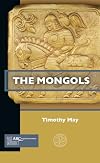
A very solid overview of the history of the Mongols. The first chapter covers the rise of Chinggis Khan and his empire; later thematic chapters cover Mongol military, government, and policy; the reasons behind the decline of the Mongol Empire; and its legacy. Its brevity, clarity, and price point make it ideal for use in the undergraduate classroom, though the number of typos in such a short text by an academic press is jarring.
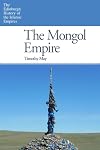
If you know nothing on the Mongol Empire, after you read this book, you'll understand a lot more about it. I'd say it's an intermediate difficult book as the author does not oversimplify complicated issues.
The book can be mostly divided between conquest, administration, civil wars and religion. Most of the time, the author is talking about one of those topics. I found the conquest and administration themes to be the best written because I find those topics to be the most interesting but the show more author does give each theme equal love and attention. show less
The book can be mostly divided between conquest, administration, civil wars and religion. Most of the time, the author is talking about one of those topics. I found the conquest and administration themes to be the best written because I find those topics to be the most interesting but the show more author does give each theme equal love and attention. show less
Lists
Awards

You May Also Like
Associated Authors
Statistics
- Works
- 6
- Also by
- 1
- Members
- 156
- Popularity
- #134,404
- Rating
- 3.7
- Reviews
- 3
- ISBNs
- 22
- Languages
- 1