

Susan Rebecca White
Author of A Soft Place to Land
Works by Susan Rebecca White
Associated Works
Tagged
Common Knowledge
- Gender
- female
- Education
- Brown University
Hollins University - Occupations
- Professor of Creative Writing
- Organizations
- Emory University
- Relationships
- Myracle, Lauren (sister)
Deutschman, Alan (husband) - Nationality
- USA
- Birthplace
- Atlanta Georgia
- Places of residence
- Atlanta, Georgia, USA
San Francisco, California, USA - Associated Place (for map)
- USA
Members
Reviews

College roommates! If you’re unlucky, as I was, you will be relieved when she is expelled. If you’re lucky, you will get along. If you’re really lucky, you will have a lifetime friend. Daniella and Eve were really lucky. Their connection was deep and lasted through their lives. They first met at a small, Southern women’s college where Daniella was denied admission to a sorority because she is Jewish. She was actually Unitarian, but her father was Jewish and she called herself show more Jewnitarian. In solidarity, Eve refused her admission to the sorority and transferred with Daniella to Barnard in New York.
It was a time of activism and organizing and Eve and Daniella went on different paths, met and fell in love with very different men. It is interesting how Eve embodies the activist personality while Daniella is the organizer. They are very different. Eve writes a letter about how the school treats their maids, citing the experience of the maid she knows, who is promptly fired. She never once asks permission of the maid for whom she advocated. That’s an activist for you.
Daniella does the hard work of Freedom Summer, living with Black families and being guided by their opinion. Contrast Eve’s advocating for the maids with Daniella’s complex understanding of being a white ally. “They are the only ones who go through every day of their lives in colored skin, skin they cannot peel off just to have a temporary respite from the abuse it brings. They are the ones who can teach us about oppression in America, because they live on the receiving end of it . And they are the ones who can teach us about resistance, about standing up for human rights. Those of us with white skin can empathize, can stand in solidarity, but we can always trick ourselves into thinking things aren’t so bad. We are allowed to make up stories about “the race situation” because we don’t have to bear the burden of it on our own bodies.”
The difference between activism and organizing is profound and it continues to be a fault line in Eve and Daniella’s friendship. Eve feels contempt for Daniella’s commitment to working to change the system from within, “When it came to the system, the only thing you could “change from within” was yourself. Entering the system would change you. You would acclimate to its norms.” This is a common criticism of those seeking systemic change through lobbying and legislation, though it ignores the many degrees of “within” there are.
Eve’s activism leads to living underground until a crisis forces her to reach out for help to Daniella. The story continues to the next generation, until they, too, go to college. Through it all, you can see how the journey of an activist contrasts to an organizer as Eve is easily led to new enthusiasms while Daniella’s commitment is more measured and constant.
I enjoyed We Are All Good People Here. I don’t know if Susan Rebecca White intended to contrast activists with organizers, but she did. We see that same conflict now, between those who want to win change by doing the work and those who want to be seen wanting to win change. I loved how these women embodied two very different strains of the Sixties and Seventies and how their experiences then affected them and their daughters.
We Are All Good People Here will be released on August 6th. I received an e-galley for review from the publisher through NetGalley.
We Are All Good People Here at Atria | Simon & Schuster
Susan Rebecca White author site
https://tonstantweaderreviews.wordpress.com/2019/07/22/9781451608915/ show less
It was a time of activism and organizing and Eve and Daniella went on different paths, met and fell in love with very different men. It is interesting how Eve embodies the activist personality while Daniella is the organizer. They are very different. Eve writes a letter about how the school treats their maids, citing the experience of the maid she knows, who is promptly fired. She never once asks permission of the maid for whom she advocated. That’s an activist for you.
Daniella does the hard work of Freedom Summer, living with Black families and being guided by their opinion. Contrast Eve’s advocating for the maids with Daniella’s complex understanding of being a white ally. “They are the only ones who go through every day of their lives in colored skin, skin they cannot peel off just to have a temporary respite from the abuse it brings. They are the ones who can teach us about oppression in America, because they live on the receiving end of it . And they are the ones who can teach us about resistance, about standing up for human rights. Those of us with white skin can empathize, can stand in solidarity, but we can always trick ourselves into thinking things aren’t so bad. We are allowed to make up stories about “the race situation” because we don’t have to bear the burden of it on our own bodies.”
The difference between activism and organizing is profound and it continues to be a fault line in Eve and Daniella’s friendship. Eve feels contempt for Daniella’s commitment to working to change the system from within, “When it came to the system, the only thing you could “change from within” was yourself. Entering the system would change you. You would acclimate to its norms.” This is a common criticism of those seeking systemic change through lobbying and legislation, though it ignores the many degrees of “within” there are.
Eve’s activism leads to living underground until a crisis forces her to reach out for help to Daniella. The story continues to the next generation, until they, too, go to college. Through it all, you can see how the journey of an activist contrasts to an organizer as Eve is easily led to new enthusiasms while Daniella’s commitment is more measured and constant.
I enjoyed We Are All Good People Here. I don’t know if Susan Rebecca White intended to contrast activists with organizers, but she did. We see that same conflict now, between those who want to win change by doing the work and those who want to be seen wanting to win change. I loved how these women embodied two very different strains of the Sixties and Seventies and how their experiences then affected them and their daughters.
We Are All Good People Here will be released on August 6th. I received an e-galley for review from the publisher through NetGalley.
We Are All Good People Here at Atria | Simon & Schuster
Susan Rebecca White author site
https://tonstantweaderreviews.wordpress.com/2019/07/22/9781451608915/ show less
This is the story of Eve and Daniella, who meet at a small, private all-female college in the 1960s. The two girls become instant best friends and the friendship transforms Eve, a debutante raised in a wealthy Atlanta household. Daniella is from the north, Jewish and liberal and Eve is immediately drawn to her views, taking them far further. As the years go by, their paths diverge as Eve becomes more and more radical, eventually joining a group similar to The Weathermen, while Daniella show more becomes a lawyer at a time when a woman's career is meant to be a pastime until she get married. But fate brings them back together again.
This is a book with tremendous promise. Eve's story alone, and how she went from obedient debutante to underground radical in hiding provides enough substance for a dozen books. And then there's Daniella's fierce determination to forge a career and have a family regardless of the opposition she faced. But all of this is lost in the sheer amount of time and number of events this novel attempts to encompass. Stretching from 1962, to when their own daughters begin university, there's simply too much to fit in one novel and somehow the most interesting bits, from what motivated Eve to join a radical group that flirted with terrorism and what she thought of it all, to how Daniella negotiated her professional life, working to be taken seriously in a Southern law firm, are glossed over in a single paragraph or omitted entirely, in favor of spending many pages describing the traditions of a sorority neither girl joined. The details were interesting, I enjoyed learning about repousse silver tea sets, but I wonder if those paragraphs might have been better used giving an example of how Daniella managed to make the men in her law firm take her seriously, or how she negotiated her pregnancy while working. Or if those paragraphs might have been better used showing how Eve felt about her open relationship or how she was drawn into the radical group and what she thought about it.
Both characters, as well as their daughters are never given the space to become complex and breathing individuals. Daniella's daughter is the most well-rounded character, but as she mainly reacts to the big events around here, from date rape of a friend, to another friend's same sex relationship, she remains a way to show changes in society than a person in her own right. The novel is well-written and when White does go into detail, it's clear she knows what she's writing about. And there was always something happening. But in the end the novel simply tried to do too much and ended up being a frustrating outline of something better. show less
This is a book with tremendous promise. Eve's story alone, and how she went from obedient debutante to underground radical in hiding provides enough substance for a dozen books. And then there's Daniella's fierce determination to forge a career and have a family regardless of the opposition she faced. But all of this is lost in the sheer amount of time and number of events this novel attempts to encompass. Stretching from 1962, to when their own daughters begin university, there's simply too much to fit in one novel and somehow the most interesting bits, from what motivated Eve to join a radical group that flirted with terrorism and what she thought of it all, to how Daniella negotiated her professional life, working to be taken seriously in a Southern law firm, are glossed over in a single paragraph or omitted entirely, in favor of spending many pages describing the traditions of a sorority neither girl joined. The details were interesting, I enjoyed learning about repousse silver tea sets, but I wonder if those paragraphs might have been better used giving an example of how Daniella managed to make the men in her law firm take her seriously, or how she negotiated her pregnancy while working. Or if those paragraphs might have been better used showing how Eve felt about her open relationship or how she was drawn into the radical group and what she thought about it.
Both characters, as well as their daughters are never given the space to become complex and breathing individuals. Daniella's daughter is the most well-rounded character, but as she mainly reacts to the big events around here, from date rape of a friend, to another friend's same sex relationship, she remains a way to show changes in society than a person in her own right. The novel is well-written and when White does go into detail, it's clear she knows what she's writing about. And there was always something happening. But in the end the novel simply tried to do too much and ended up being a frustrating outline of something better. show less
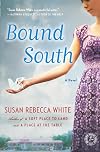
Southern fiction is always high on my list of appealing reads. I love the eccentric characters, the enticing settings, and that indefinable something that marks them undeniably as southern. Combined with the cheery and colorful cover, this guaranteed that I would be buying this book for myself. And I am pleased to say that I was not disappointed in it.
Mostly told in the three alternating voices of Louise, her daughter Caroline, and her maid's daughter Missy, this enchanting novel details show more three very different examples of Southern womanhood.
Louise is a wife and mother struggling with her relationship with her difficult daughter. She is creative and has quite an eye but no outlet for that creativity. She takes on the problems of all of those around her, cantankerous mother-in-law, divorcing friend, and gay son. Over the course of the ten years of the narrative, she learns her own worth and how to best be there for others while still being true to herself.
Caroline is not the typical southern deb in waiting. She is an actress, one who disdains the others at her high school, one who wants to make a difference, one who cannot relate to the mother she finds overly conventional. Like her mother, Caroline learns much about herself throughout the novel, even if she runs away from the south and all that it represents in order to discover it.
Missy is a born again evengelical Christian whose father ran out on her mother and her when she was small. Waiting for him to come back for her and dissatisfied with her life as it is, she looks for her own good works to do. She decides that helping Charles, Louise's son, overcome his homosexuality will be the thing that changes her life. And it is, but not because she succeeds and certainly not in the ways that she expects.
The three main characters will draw the reader in and keep them reading along. The humor made me chuckle repeatedly. And yet White doesn't shy away from controversial topics, treating them fairly and sometimes slyly satirically. This is well written and entertaining and while the ending just tapers off, it is overall a fun slice of southern reading. show less
Mostly told in the three alternating voices of Louise, her daughter Caroline, and her maid's daughter Missy, this enchanting novel details show more three very different examples of Southern womanhood.
Louise is a wife and mother struggling with her relationship with her difficult daughter. She is creative and has quite an eye but no outlet for that creativity. She takes on the problems of all of those around her, cantankerous mother-in-law, divorcing friend, and gay son. Over the course of the ten years of the narrative, she learns her own worth and how to best be there for others while still being true to herself.
Caroline is not the typical southern deb in waiting. She is an actress, one who disdains the others at her high school, one who wants to make a difference, one who cannot relate to the mother she finds overly conventional. Like her mother, Caroline learns much about herself throughout the novel, even if she runs away from the south and all that it represents in order to discover it.
Missy is a born again evengelical Christian whose father ran out on her mother and her when she was small. Waiting for him to come back for her and dissatisfied with her life as it is, she looks for her own good works to do. She decides that helping Charles, Louise's son, overcome his homosexuality will be the thing that changes her life. And it is, but not because she succeeds and certainly not in the ways that she expects.
The three main characters will draw the reader in and keep them reading along. The humor made me chuckle repeatedly. And yet White doesn't shy away from controversial topics, treating them fairly and sometimes slyly satirically. This is well written and entertaining and while the ending just tapers off, it is overall a fun slice of southern reading. show less
3.5
The members of SMASH believed it was better to die in honor than to live as their parents did..."~from We Are All Good People Here by Susan Rebecca While
How do we change society? Can we change society? Who are the 'good people' and can 'good people' do bad things for the right reason and still be 'good'? Can people really change?
I was interested in the questions posed by the novel.
The story begins in the early 1960s when two girls meet in a private women's college in the South and become show more best friends. Their rising awareness of social racism makes them question the values of their society. Decisions are made that take them in different directions. One girl works within the system while accepting the social expectations for a rising female lawyer. The other girl follows a charismatic radical into ever more violent protests and when she has lost everything she seeks out her old friend to help her return to society.
The novel is filled with historical detail and events. Medgar Evans and Fannie Lou Hamer, Bob Dylan and Dr. Strangelove, the murders of James Chaney, Michael Schwerner, and Andrew Goodman, "Hey! Hey! LBJ how many kids did you kill today" are mentioned.
It was very hard to follow Eve into the very dark place she ends up in. I nearly set the book aside as her life became quite disturbing. But I did pick it back up.
Babe, you opted out of a normal life a long time ago.~ from We Are All Good People Here by Susan Rebecca White
Can we keep our pasts a secret? Can we completely change? In the end, Eve became the very person she had sought to avoid becoming. And yet--she still needed a man to guide her. Daniella may have 'sold out' and but she gives it up for important work that better fits her values.
Warren St. Clair was a charismatic and idealistic man who is also misogynistic and self-absorbed. Eve knows his reputation, but can't resist him, following him from place to place. When Warren escalates to violence against the system, Eve follows him underground.
Meanwhile, Daniella marries a 'reformed' Republican, a good man who believes that social change happens slowly. Daniella pushes the envelope as a lawyer, working twice as hard to break into the old-boy network.
Justice does not simply show up on it own, gliding in on the wings of platitudes and the promise of prayers. ~from We Are All Good People Here by Susan Rebecca Smith
In mid-age, both women shift, the radical Eva embracing safety and surety and marriage that brings prosperity, and the widowed conformist Daniella chucking it all for non-profit work helping men on death row.
The book could have ended here, but instead, we see how the women's decisions impact the next generation.
Eve and Danilla each have a daughter. Eve's daughter Anna has everything and more, dressing in Laura Ashley clothing and driving a new car. Daniella is financially well off, too, but she insists on a lifestyle in keeping with her values. Used clothing, no conspicuous consumption.
Daniella works and Eve is a housewife, so Daniella leaves her daughter Sarah with 'Aunt Eve' under the care of the maid. Sarah is envious of Anna's life and she worries that her mom is economically insecure.
Eve has a secret that is exposed. When Anna has learned the truth about her mother, it creates a rift.
There is an interesting theme on religion through the novel that is not central to the plot but takes enough space to show the author's concern.
Early in the novel Eve and Warren St. Clair and have a discussion about the value of the church in society. Warren believes the cathedral is a waste of space better used for affordable housing. Eve thinks there is nothing more useful than a church. Warren mentions the German Lutheran Church was complicit with the Nazis, and Eve retorts, not Bonhoeffer's church. Sure, Warren replies. But Bonhoeffer was executed by the state which proves the church either is complicit or martyrs.
Near the end of the novel Daniella and her daughter Sarah have a talk about religion. Eve has joined a right-wing evangelical church led by a charismatic preacher--still drawn to those charismatic men.
Sarah asks Daniella, what if one must hit 'rock bottom' to be saved? Daniella believes in the social gospel, God's will for "the reconciliation of all people" as opposed to God daming some and saving others.
But Sarah understands that her Aunt Eve is searching for stability and family. Daniella only sees that Eve jumps from one "dogma" to another.
Again, a juxtaposition between two choices arises. Is changing the world better than saving souls? Do we need to become completely powerlessness before we can accept God? Is doing justice and showing mercy the mark of walking humbly with one's God?
The book is summed up in one sentence:
We are all good people here, all trying to muddle through this the best we can. ~from We Are All Good People Here by Susan Rebecca White
I received a free ebook from the publisher through NetGalley in exchange for a fair and unbiased review. show less
The members of SMASH believed it was better to die in honor than to live as their parents did..."~from We Are All Good People Here by Susan Rebecca While
How do we change society? Can we change society? Who are the 'good people' and can 'good people' do bad things for the right reason and still be 'good'? Can people really change?
I was interested in the questions posed by the novel.
The story begins in the early 1960s when two girls meet in a private women's college in the South and become show more best friends. Their rising awareness of social racism makes them question the values of their society. Decisions are made that take them in different directions. One girl works within the system while accepting the social expectations for a rising female lawyer. The other girl follows a charismatic radical into ever more violent protests and when she has lost everything she seeks out her old friend to help her return to society.
The novel is filled with historical detail and events. Medgar Evans and Fannie Lou Hamer, Bob Dylan and Dr. Strangelove, the murders of James Chaney, Michael Schwerner, and Andrew Goodman, "Hey! Hey! LBJ how many kids did you kill today" are mentioned.
It was very hard to follow Eve into the very dark place she ends up in. I nearly set the book aside as her life became quite disturbing. But I did pick it back up.
Babe, you opted out of a normal life a long time ago.~ from We Are All Good People Here by Susan Rebecca White
Can we keep our pasts a secret? Can we completely change? In the end, Eve became the very person she had sought to avoid becoming. And yet--she still needed a man to guide her. Daniella may have 'sold out' and but she gives it up for important work that better fits her values.
Warren St. Clair was a charismatic and idealistic man who is also misogynistic and self-absorbed. Eve knows his reputation, but can't resist him, following him from place to place. When Warren escalates to violence against the system, Eve follows him underground.
Meanwhile, Daniella marries a 'reformed' Republican, a good man who believes that social change happens slowly. Daniella pushes the envelope as a lawyer, working twice as hard to break into the old-boy network.
Justice does not simply show up on it own, gliding in on the wings of platitudes and the promise of prayers. ~from We Are All Good People Here by Susan Rebecca Smith
In mid-age, both women shift, the radical Eva embracing safety and surety and marriage that brings prosperity, and the widowed conformist Daniella chucking it all for non-profit work helping men on death row.
The book could have ended here, but instead, we see how the women's decisions impact the next generation.
Eve and Danilla each have a daughter. Eve's daughter Anna has everything and more, dressing in Laura Ashley clothing and driving a new car. Daniella is financially well off, too, but she insists on a lifestyle in keeping with her values. Used clothing, no conspicuous consumption.
Daniella works and Eve is a housewife, so Daniella leaves her daughter Sarah with 'Aunt Eve' under the care of the maid. Sarah is envious of Anna's life and she worries that her mom is economically insecure.
Eve has a secret that is exposed. When Anna has learned the truth about her mother, it creates a rift.
There is an interesting theme on religion through the novel that is not central to the plot but takes enough space to show the author's concern.
Early in the novel Eve and Warren St. Clair and have a discussion about the value of the church in society. Warren believes the cathedral is a waste of space better used for affordable housing. Eve thinks there is nothing more useful than a church. Warren mentions the German Lutheran Church was complicit with the Nazis, and Eve retorts, not Bonhoeffer's church. Sure, Warren replies. But Bonhoeffer was executed by the state which proves the church either is complicit or martyrs.
Near the end of the novel Daniella and her daughter Sarah have a talk about religion. Eve has joined a right-wing evangelical church led by a charismatic preacher--still drawn to those charismatic men.
Sarah asks Daniella, what if one must hit 'rock bottom' to be saved? Daniella believes in the social gospel, God's will for "the reconciliation of all people" as opposed to God daming some and saving others.
But Sarah understands that her Aunt Eve is searching for stability and family. Daniella only sees that Eve jumps from one "dogma" to another.
Again, a juxtaposition between two choices arises. Is changing the world better than saving souls? Do we need to become completely powerlessness before we can accept God? Is doing justice and showing mercy the mark of walking humbly with one's God?
The book is summed up in one sentence:
We are all good people here, all trying to muddle through this the best we can. ~from We Are All Good People Here by Susan Rebecca White
I received a free ebook from the publisher through NetGalley in exchange for a fair and unbiased review. show less
Lists
Awards


You May Also Like


Associated Authors
Statistics
- Works
- 4
- Also by
- 2
- Members
- 1,064
- Popularity
- #24,196
- Rating
- 3.5
- Reviews
- 50
- ISBNs
- 27
- Favorited
- 3