
Forrest Church (1948–2009)
Author of A Chosen Faith: An Introduction to Unitarian Universalism
About the Author
Forrest Church (1948-2009) served for almost three decades as senior minister and was minister of public theology at All Souls Unitarian Church in New York City. He wrote or edited twenty-five books, including Love Death.
Image credit: Rubin Nizri - WikiMedia Commons
Works by Forrest Church
So Help Me God: The Founding Fathers and the First Great Battle Over Church and State (2007) 195 copies, 5 reviews
The Separation of Church and State: Writings on a Fundamental Freedom by America's Founders (2004) 116 copies, 3 reviews
God and Other Famous Liberals: Recapturing Bible, Flag, and Family from the Far Right (1992) 83 copies
The Devil and Dr. Church: A Guide to Hell for Atheists and True Believers (1986) 65 copies, 1 review
One Prayer at a Time: A Twelve-Step Anthology for People in Recovery and All Who Seek a Deeper Faith (1989) 12 copies
Restoring Faith: America's Religious Leaders — Editor — 1 copy
In the Middle of the Story 1 copy
Earliest Christian Prayers 1 copy
Associated Works
The Jefferson Bible: The Life and Morals of Jesus of Nazareth (1989) — Introduction, some editions — 1,988 copies, 35 reviews
A World of Ideas : Conversations With Thoughtful Men and Women About American Life Today and the Ideas Shaping Our Future (1989) — Interviewee — 602 copies, 1 review
Tagged
Common Knowledge
- Canonical name
- Church, Forrest
- Legal name
- Church, Frank Forrester, IV
- Other names
- Church, F. Forrester
- Birthdate
- 1948-09-23
- Date of death
- 2009-09-24
- Gender
- male
- Education
- Stanford University (A.B.|1970)
Harvard Divinity School (M.Div|1974)
Harvard University (Ph.D|1978) - Occupations
- minister
- Organizations
- Unitarian Universalist
Church of All Souls, New York, New York - Relationships
- Church, Frank (father)
- Cause of death
- esophageal cancer
- Nationality
- USA
- Birthplace
- Palo Alto, California, USA
- Places of residence
- New York, New York, USA
- Place of death
- New York, New York, USA
- Burial location
- Morris Hill Cemetery, Boise, Idaho, USA
- Associated Place (for map)
- USA
Members
Reviews
The Separation of Church and State: Writings on a Fundamental Freedom by America's Founders by Forrest Church
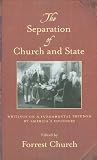
Finished The Separation of Church and State: Writings on a Fundamental Freedom by America's Founders edited by Forrest Church. This short book contains extracts of revolutionary era writings about the separation of church and and state. Favorites such as Thomas Jefferson and George Washington make an appearance as do less well known writers such as Isaac Backus and Oliver Ellsworth.
"Separation of church and state" is a phrase that is bandied around without knowledge of its historical show more origins. First, as I hope we all know, the phrase itself does not appear in the Constitution or the Declaration of Independence. Instead, it first appeared in a letter written by Thomas Jefferson (Ch. 14 in the book):
One common disagreement in modern discussion is whether we should aim for freedom from religion or freedom for religion. Both threads find expression in the writings in the book. As the author says in the introduction:
I feel that freedom of conscience suffers from poor health in modern America. Not just with respect to religion but, in general, Americans are quick to judge someone based only on what they believe, not on their actions. I see this, of course, in debates about religion and its proper role in a secular society. But I also see it more widely. I see it in the fact that some said Larry Summers should not be an economic advisor to the President because of what he had said about gender at Harvard (how is that relevant to being an economic advisor?). I see this in the very current debates about race in this country where we are obsessed with whether or not people think racist thoughts, not whether or not they act on them.
I do not want to imply that people's opinions are irrelevant, but we have come to a place in American society where beliefs are often considered more important than actions. That is sad and destructive. Reading books like this remind us about the fundamental debates that define our country have, at their core, something much deeper than superficial displays of religiousity. show less
"Separation of church and state" is a phrase that is bandied around without knowledge of its historical show more origins. First, as I hope we all know, the phrase itself does not appear in the Constitution or the Declaration of Independence. Instead, it first appeared in a letter written by Thomas Jefferson (Ch. 14 in the book):
Believing with you that religion is a matter which lies solely between man and his God, that he owes account to none other for his faith or his worship, that the legislative powers of government reach actions only, and not opinions, I contemplate with sovereign reverence that act of the whole American people which declared that their legislature would "make no law respecting an establishment of religion, or prohibiting the free exercise thereof," thus building a wall of separation between church and state.
One common disagreement in modern discussion is whether we should aim for freedom from religion or freedom for religion. Both threads find expression in the writings in the book. As the author says in the introduction:
As was true of the broader American struggle for freedom, the revolution that led to religious liberty was powered by two very different engines: one driven by eighteenth-century Enlightenment values, the other guided by Christian imperatives that grew out of the Great Awakening, a spiritual movement that spread like wildfire across the American colonies throughout the middle decades of that same century. The former movement, emphasizing freedom of conscience as both a political and a philosophical virtue, stressed freedom from the dictates of organized religion. The later, stemming from a devout reading of the gospels (especially their proclamation of spiritual liberty from bondage to the world's principalities and powers), demanded freedom for religion.
I feel that freedom of conscience suffers from poor health in modern America. Not just with respect to religion but, in general, Americans are quick to judge someone based only on what they believe, not on their actions. I see this, of course, in debates about religion and its proper role in a secular society. But I also see it more widely. I see it in the fact that some said Larry Summers should not be an economic advisor to the President because of what he had said about gender at Harvard (how is that relevant to being an economic advisor?). I see this in the very current debates about race in this country where we are obsessed with whether or not people think racist thoughts, not whether or not they act on them.
I do not want to imply that people's opinions are irrelevant, but we have come to a place in American society where beliefs are often considered more important than actions. That is sad and destructive. Reading books like this remind us about the fundamental debates that define our country have, at their core, something much deeper than superficial displays of religiousity. show less
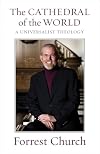
I read Cathedral of the World to get a better sense of universalism, following a pastor friend's statement that he was a universalist. The book didn't change my own theology, which is more aligned with orthodox Protestantism. While I cannot agree with many of Church's universalist beliefs, I did find some wisdom and insight in Church's words. But it was words like the following that give me pause:
Words like this do not make sense to me logically or theologically. But Church does offer some surprises. He claims, in a conservative vein, that "Liberal theology doesn't take sin and evil seriously enough" (p. 98). And I particularly admired Chapter 24, "Love and Death", written shortly before Church died from cancer.
While I don't agree with most of Church's theology -- for a book of this type, there is a glaring lack of a Scripture index -- I'm glad I read the book. show less
Though named after two doctrines [Unitarian Universalism], ours is a nondoctrinal faith. Byshow more
definition, we don't even have to believe in our own name. We can be free from, for, or against whatever we choose. (p. 123)
Words like this do not make sense to me logically or theologically. But Church does offer some surprises. He claims, in a conservative vein, that "Liberal theology doesn't take sin and evil seriously enough" (p. 98). And I particularly admired Chapter 24, "Love and Death", written shortly before Church died from cancer.
While I don't agree with most of Church's theology -- for a book of this type, there is a glaring lack of a Scripture index -- I'm glad I read the book. show less
The Separation of Church and State: Writings on a Fundamental Freedom by America's Founders by Forrest Church
During my lifetime the so-called “culture war” has seen a debate about if the United States was founded as a Christian nation or not, however it turns out that this debate occurred during the nation’s founding. In "The Separation of Church and State: Writings on a Fundamental Freedom by America’s Founders" the issue of religious liberty and if the United States was a Christian nation was presented in 14 chapters of original writings of Founding Fathers and other Americans of the show more Revolutionary period, compiled by editor Forrest Church.
Covering a thirty year period, between 1772 and 1802, Forrest Church provided to the reader 14 writings from a variety of authors. The most famous are Presidents George Washington, John Adams, Thomas Jefferson, and James Madison with material before, during, and after their times in office. Other writers including not as well-known Revolutionary figures Patrick Henry and Samuel Adams as well as largely forgotten Founding Fathers now George Mason and Oliver Ellsworth. However while the well-known and historically prominent were well represented, Church also included the writings of average citizens Isaac Backus, Caleb Wallace, and John Leland to show that not only the ‘political elite’ were debating issue of religious liberty.
The strength of the entire book is the writings presented in this volume and need not be reviewed or critiqued. Although Church does his best to introduce and give context to the writings he presents, these little introductions are in fact that the only compliant one can really have with it. Given the amount of material available during this time period, Church does an admirable job in complying a number of texts from a variety of individuals to present what America’s founders thought and is a must read for anyone interested in the church-state debate in the United States. show less
Covering a thirty year period, between 1772 and 1802, Forrest Church provided to the reader 14 writings from a variety of authors. The most famous are Presidents George Washington, John Adams, Thomas Jefferson, and James Madison with material before, during, and after their times in office. Other writers including not as well-known Revolutionary figures Patrick Henry and Samuel Adams as well as largely forgotten Founding Fathers now George Mason and Oliver Ellsworth. However while the well-known and historically prominent were well represented, Church also included the writings of average citizens Isaac Backus, Caleb Wallace, and John Leland to show that not only the ‘political elite’ were debating issue of religious liberty.
The strength of the entire book is the writings presented in this volume and need not be reviewed or critiqued. Although Church does his best to introduce and give context to the writings he presents, these little introductions are in fact that the only compliant one can really have with it. Given the amount of material available during this time period, Church does an admirable job in complying a number of texts from a variety of individuals to present what America’s founders thought and is a must read for anyone interested in the church-state debate in the United States. show less

I’ve enjoyed attending a Unitarian Universalist church about every other Sunday for a while, and thought I should know a little more about it, so I picked up this book.
That’s a lie. I have no idea where the book came from, whether it was a gift or a request for review or a purchase I forgot I had made. It just appeared on my bookshelf, without getting logged in my review queue. I love mysteries, so I read it.
U.U. is a merger of two denominations—Universalists and Unitarians—and to be show more honest, I didn’t learn a lot from the book. That’s because there is no creed to learn, no rituals to perform, no insistence upon a single belief system, while at the same time it demeans none of them. It’s pluralism to the extreme. Fits me to a T, right?
U.U. is a sort of common-sense, practical religion. It feels, to me, open and honest. There is no denial of sin, death, evil, and suffering, but rather there is a humanitarian call to ease or overcome them. Those U.U.’s who have a Christian bent tend to lean toward “works” in the great faith-vs-works debate. I’ve never been good at denying scientific findings (like evolution), and have a tough time believing in any particular afterlife scenario over another, so U.U. fits me there, too. This quote I found absolutely fascinating:
Death is a fairly recent entry in the scheme of evolution. The beginnings of life on this planet were sponsored by single cell organisms, which replicated themselves by division. One generation of beings followed another, each identical to the last. We were immortal, until we became interesting.
But how do I explain the book? I thought I’d just list a few more quotes, and maybe something will resonate with you as well.
Unitarian Universalism might best be described as a life-affirming rather than death-defying faith.
“The Universalists believe that God is too good to damn them, whereas the Unitarians believe they are too good to be damned!” –Star King, p. 34
The light of God (“God” is not God’s name, but our name for that which is greater than all and yet present in each) not only shines down upon us, but also out from within us.
One Truth, many truths; one God, many faiths; one light (Unitarianism), may windows (Universalism). show less
That’s a lie. I have no idea where the book came from, whether it was a gift or a request for review or a purchase I forgot I had made. It just appeared on my bookshelf, without getting logged in my review queue. I love mysteries, so I read it.
U.U. is a merger of two denominations—Universalists and Unitarians—and to be show more honest, I didn’t learn a lot from the book. That’s because there is no creed to learn, no rituals to perform, no insistence upon a single belief system, while at the same time it demeans none of them. It’s pluralism to the extreme. Fits me to a T, right?
U.U. is a sort of common-sense, practical religion. It feels, to me, open and honest. There is no denial of sin, death, evil, and suffering, but rather there is a humanitarian call to ease or overcome them. Those U.U.’s who have a Christian bent tend to lean toward “works” in the great faith-vs-works debate. I’ve never been good at denying scientific findings (like evolution), and have a tough time believing in any particular afterlife scenario over another, so U.U. fits me there, too. This quote I found absolutely fascinating:
Death is a fairly recent entry in the scheme of evolution. The beginnings of life on this planet were sponsored by single cell organisms, which replicated themselves by division. One generation of beings followed another, each identical to the last. We were immortal, until we became interesting.
But how do I explain the book? I thought I’d just list a few more quotes, and maybe something will resonate with you as well.
Unitarian Universalism might best be described as a life-affirming rather than death-defying faith.
“The Universalists believe that God is too good to damn them, whereas the Unitarians believe they are too good to be damned!” –Star King, p. 34
The light of God (“God” is not God’s name, but our name for that which is greater than all and yet present in each) not only shines down upon us, but also out from within us.
One Truth, many truths; one God, many faiths; one light (Unitarianism), may windows (Universalism). show less
Awards

You May Also Like


Associated Authors
Statistics
- Works
- 33
- Also by
- 4
- Members
- 2,619
- Popularity
- #9,800
- Rating
- 3.8
- Reviews
- 26
- ISBNs
- 48
- Languages
- 2
- Favorited
- 1

