

Thomas R. Buecker
Author of Fort Robinson and the American West, 1874-1899
About the Author
Thomas R. Buecker is the curator of the Fort Robinson Museum in Crawford, Nebraska.
Works by Thomas R. Buecker
Fort Robinson Tour Guide 1 copy
Tagged
Common Knowledge
- Birthdate
- 20th Century
- Gender
- male
- Occupations
- Curator, Fort Robinson State Park Museum, Crawford, Nebraska, USA
- Nationality
- USA
- Places of residence
- Fort Robinson, Nebraska, USA
- Associated Place (for map)
- Nebraska, USA
Members
Reviews
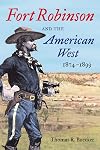
The American frontier is a place of legend and myth. A place fortunes were made and lost several times in one lifetime. A place where achievements were weighed and measured against some of the most legendary men and women the world has ever known. Also it is the setting for Fort Robinson and the American West, 1874-1899, by Thomas R. Buecker. Buecker’s story is about the conception, survival, and eventual thriving legacy of a fort that saw some of the most pleasant and the most show more disheartening days of the last quarter of the nineteenth century.
“The Fort Laramie Treaty of 1868 begat the Red Cloud Agency, and Red Cloud Agency begat Camp Robinson.” Every story has a beginning, and Buecker does a wonderful job describing in detail the beginning of Fort Robinson. There is a level of detail that is so precise in describing the conception of Fort Robinson; it is almost like the author was there two hundred and thirty years ago. The author’s insights are not limited to the beginning of Fort Robinson however. This book covers the first twenty-five years of the saga of Fort Robinson. From the inception of the fort to the Spanish-American War, the reader is delighted with details about military life in the late 19th century. There is no detail that Buecker does not uncover in his research into the history of Fort Robinson.
Buecker details so much in the book perhaps because he has a passion for it. As the curator of the Fort Robinson museum in Crawford, it would be imaginable that Buecker has spent considerable time and effort finding out about life in Fort Robinson, and in the surrounding history. Buecker is an established historian, and has more than one book too his credit.
Fort Robinson is perhaps one of the most strategically located forts on the western frontier. The fort played a role as the base of operations for numerous Great Sioux War expeditions. It also was the location of the dramatic and controversial death of Crazy Horse, the warrior famed for his bravery, and generosity. And while the author does a remarkably good job describing the capture and death of Crazy Horse, he leaves the reader feeling cheated about the legacy of the famed war chief. There is no discussion of the repercussions of the death, and while there is a picture of the grave of Crazy Horse with a fence around it, there is no mention by the author of why the fence was put up in the first place. There is much to be said about the lasting effects that the death of Crazy Horse had on his people and the resulting effects on Fort Robinson, but the Buecker does not give us any indication about this.
Buecker does give a wonderfully detailed version of garrison life in the west in his chapters dealing with the establishment of the post, daily life, and successive construction projects. There are many details about which building was constructed where, when it was constructed, and how much the final construction cost was. Buecker also does a wonderful job describing in minute details how garrison life affected the soldiers stationed in the western fort. On page 68 Buecker is describing what type of luxury food items could be purchased at the post commissary. When describing the delicacies he tells of “pickles, oysters, canned salmon, sardines, jellies, bottled olives, and canned fruits and vegetables”. But one weakness of Buecker is his inability to describe everything. In that same paragraph on page 68, Buecker is telling of the “[additional] foodstuffs to supplement their regular, monotonous mess hall fare.” The problem with this is that the reader is left guessing about what food was eaten.
One other strength of this book is the division. There is a clear division of what happens at Fort Robinson, and there is a division between what happens to the people of Fort Robinson, and a final division that concerns what happens that greatly affects the fort or its people. The chapters are clear and concise, and have an organization that is unparalleled in most modern history books. There is a sense that Buecker is familiar with books, and wanted to make his book easy enough to read. There is a problem with this format however, unnecessary duplication. There is an instance in the book where Buecker is talking about telegraph lines that connected Fort Robinson with the other parts of the Platte District, and then he comes back in a later section of the book and talks about the same telegraph lines. This is confusion and oftentimes makes it difficult for a reader to correlate events occurring at Fort Robinson to events happening in other parts of the country.
This is a good book to look at the history surrounding Fort Robinson, but it is hard to fully appreciate the military post and its role in history without understanding how the Indians viewed the post. This is one area where Buecker is lacking. That’s not to say that he doesn’t have Indian sources, it’s to say that all of his Indian sources at one time or another collaborated with the army and with the garrison at Fort Robinson. There is little mention of what the Indians who weren’t cooperating thought and felt about the military instillation.
Also the book is confusing in regards to name. There are several times in the book where the author is talking about Red Cloud and it is hard to understand whether he means the Indian chief, the Indian agency, or the actual town of Red Cloud. There are also examples of times where the author will introduce a character that is central to some part of the story, and then give no background as to how he came to be critical. There is not a series of relationships that is defined in an easy way in this book.
This book in its entirety is very interesting. There are many aspects of frontier life that are portrayed in great detail. Also there are many historic events that are given detailed explanations. Any student of history would find this book interesting, and any student of frontier history would find this book enjoyable. Thomas Buecker has done the legend of Fort Robinson a great service by producing a quality book that accurately describes the first twenty-five years of the storied history of Fort Robinson. show less
“The Fort Laramie Treaty of 1868 begat the Red Cloud Agency, and Red Cloud Agency begat Camp Robinson.” Every story has a beginning, and Buecker does a wonderful job describing in detail the beginning of Fort Robinson. There is a level of detail that is so precise in describing the conception of Fort Robinson; it is almost like the author was there two hundred and thirty years ago. The author’s insights are not limited to the beginning of Fort Robinson however. This book covers the first twenty-five years of the saga of Fort Robinson. From the inception of the fort to the Spanish-American War, the reader is delighted with details about military life in the late 19th century. There is no detail that Buecker does not uncover in his research into the history of Fort Robinson.
Buecker details so much in the book perhaps because he has a passion for it. As the curator of the Fort Robinson museum in Crawford, it would be imaginable that Buecker has spent considerable time and effort finding out about life in Fort Robinson, and in the surrounding history. Buecker is an established historian, and has more than one book too his credit.
Fort Robinson is perhaps one of the most strategically located forts on the western frontier. The fort played a role as the base of operations for numerous Great Sioux War expeditions. It also was the location of the dramatic and controversial death of Crazy Horse, the warrior famed for his bravery, and generosity. And while the author does a remarkably good job describing the capture and death of Crazy Horse, he leaves the reader feeling cheated about the legacy of the famed war chief. There is no discussion of the repercussions of the death, and while there is a picture of the grave of Crazy Horse with a fence around it, there is no mention by the author of why the fence was put up in the first place. There is much to be said about the lasting effects that the death of Crazy Horse had on his people and the resulting effects on Fort Robinson, but the Buecker does not give us any indication about this.
Buecker does give a wonderfully detailed version of garrison life in the west in his chapters dealing with the establishment of the post, daily life, and successive construction projects. There are many details about which building was constructed where, when it was constructed, and how much the final construction cost was. Buecker also does a wonderful job describing in minute details how garrison life affected the soldiers stationed in the western fort. On page 68 Buecker is describing what type of luxury food items could be purchased at the post commissary. When describing the delicacies he tells of “pickles, oysters, canned salmon, sardines, jellies, bottled olives, and canned fruits and vegetables”. But one weakness of Buecker is his inability to describe everything. In that same paragraph on page 68, Buecker is telling of the “[additional] foodstuffs to supplement their regular, monotonous mess hall fare.” The problem with this is that the reader is left guessing about what food was eaten.
One other strength of this book is the division. There is a clear division of what happens at Fort Robinson, and there is a division between what happens to the people of Fort Robinson, and a final division that concerns what happens that greatly affects the fort or its people. The chapters are clear and concise, and have an organization that is unparalleled in most modern history books. There is a sense that Buecker is familiar with books, and wanted to make his book easy enough to read. There is a problem with this format however, unnecessary duplication. There is an instance in the book where Buecker is talking about telegraph lines that connected Fort Robinson with the other parts of the Platte District, and then he comes back in a later section of the book and talks about the same telegraph lines. This is confusion and oftentimes makes it difficult for a reader to correlate events occurring at Fort Robinson to events happening in other parts of the country.
This is a good book to look at the history surrounding Fort Robinson, but it is hard to fully appreciate the military post and its role in history without understanding how the Indians viewed the post. This is one area where Buecker is lacking. That’s not to say that he doesn’t have Indian sources, it’s to say that all of his Indian sources at one time or another collaborated with the army and with the garrison at Fort Robinson. There is little mention of what the Indians who weren’t cooperating thought and felt about the military instillation.
Also the book is confusing in regards to name. There are several times in the book where the author is talking about Red Cloud and it is hard to understand whether he means the Indian chief, the Indian agency, or the actual town of Red Cloud. There are also examples of times where the author will introduce a character that is central to some part of the story, and then give no background as to how he came to be critical. There is not a series of relationships that is defined in an easy way in this book.
This book in its entirety is very interesting. There are many aspects of frontier life that are portrayed in great detail. Also there are many historic events that are given detailed explanations. Any student of history would find this book interesting, and any student of frontier history would find this book enjoyable. Thomas Buecker has done the legend of Fort Robinson a great service by producing a quality book that accurately describes the first twenty-five years of the storied history of Fort Robinson. show less

If you are a history buff you will find Fort Robinson an interesting read. Fort Robinson was one of many military forts or stations built in the Great Plains to control and subdue the indigenes Indian populations in territories being settled by white people of European decent. A visit to one of these forts being maintained for historical purposes gives a person one perspective while the book Fort Robinson will fill in the details why and how forts locations were determined and details of the show more building, maintenance of the forts and what the men and some women did while stationed in these remote outposts. The book describes every significant military action the soldiers at Fort Robinson were involved in during the period of 1874 to 1899 and they were numerous and included most of the confrontations with the northern plains Indians during that period. Significant research needed to have been done to provide the detail shown. Well written and very informative. Highly recommended. show less
Awards

You May Also Like
Associated Authors
Statistics
- Works
- 12
- Members
- 79
- Popularity
- #226,896
- Rating
- 2.9
- Reviews
- 2
- ISBNs
- 8