
Percy Alfred Scholes (1877–1958)
Author of The Oxford Companion to Music
About the Author
Image credit: Percy Alfred Scholes
Works by Percy Alfred Scholes
The Puritans and music in England and New England; a contribution to the cultural history of two nations (1970) 16 copies
The second book of the great musicians; a further course in appreciation for young readers (1970) 15 copies
Mirror of Music, Eighteen Forty-Four to Nineteen Forty-Four (Select Bibliographies Reprint Series) (1947) 8 copies
The Life and Activities of Sir John Hawkins: Musician, Magistrate and Friend of Johnson (1978) 4 copies
The listener's history of music 2 copies
The first book of the gramophone record,: Giving advice upon the selection of fifty good records from Byrd to Beethoven, (1927) 2 copies
A Miniature History Of Opera 2 copies
Learning to Listen 1 copy
The Scholes Music Handbook 1 copy
'God Save The King!' 1 copy
The Scholes Music Handbook 1 copy
Associated Works
Tagged
Common Knowledge
- Birthdate
- 1877-07-24
- Date of death
- 1958-07-31
- Gender
- male
- Education
- privately educated
- Occupations
- music reviewer
journalist
musician
teacher
organist
school teacher - Nationality
- UK
- Birthplace
- Leeds, Yorkshire, England, UK
- Places of residence
- Vevey, Switzerland
Cornaux, Chamby sur Montreux, Switzerland
Grahamstown, South Africa
Leeds, Yorkshire, England, UK - Place of death
- Vevey, Switzerland
Members
Reviews

So often, in the orchestra, I have faced confusion. Having a dictionary at hand, is an immediate aid, if not the remedy itself. For example, so often the differences in names can throw one down a loop: "The American nomenclature of whole-note, quarter-note, eighth-note, measure, etc. has been preferred to the English semibreve, crotchet, quaver, bar, etc. as being more logical and of greater help to the student." Nice to know!
The entries are professional, avoiding controversy, which is show more always controversial. The Beatles, we recall, broke up in 1967. It's wonderful to flip through the memories; so many improbable things keep occurring.
"Wagner" is lionized as one of few who transformed the art, while also pointing out that he is himself a "musical dead-end". I think the Dictionary misses the point of the womanizing, and the outright theft of property from Jewish musicians. While Wagner was dead fifty years before Hitler's puppet-Reich, the fascist plutocrats who subsidized both remain some of the wealthiest families of Europe. Based on theft.
The dictionary mentions the outright theft and cooperation of Carl Orf, who was happy to steal from Mendelsohnn and rewrite-re-compose the work of oppressed genius to make it Judenfrei. The professionalism of the dictionariat comes through with the entries on Wagner's grandsons and Schoenberg. Why does lieder bring us to tears? Here is a Reference tool thick enough to absorb the salt. show less
The entries are professional, avoiding controversy, which is show more always controversial. The Beatles, we recall, broke up in 1967. It's wonderful to flip through the memories; so many improbable things keep occurring.
"Wagner" is lionized as one of few who transformed the art, while also pointing out that he is himself a "musical dead-end". I think the Dictionary misses the point of the womanizing, and the outright theft of property from Jewish musicians. While Wagner was dead fifty years before Hitler's puppet-Reich, the fascist plutocrats who subsidized both remain some of the wealthiest families of Europe. Based on theft.
The dictionary mentions the outright theft and cooperation of Carl Orf, who was happy to steal from Mendelsohnn and rewrite-re-compose the work of oppressed genius to make it Judenfrei. The professionalism of the dictionariat comes through with the entries on Wagner's grandsons and Schoenberg. Why does lieder bring us to tears? Here is a Reference tool thick enough to absorb the salt. show less

The ninth edition of The Oxford Companion to Music, first published in 1955 and still under the control of the original editor, is authoritative, idiosyncratic and certainly of its time. A typical example of Percy Scholes’ writing style can be seen in the Preface to the original edition of 1938:
Following this preface will be found the long list of the many who have tried to save the author from, at least, the faults of his own ignorance or inadvertence, but should the reader chance to show more discover that the author is anywhere insufficiently saved he should not take it that the blame necessarily falls on those enumerated in the list.
A footnote helpfully tells us that In the present edition this long list, with its many additional names from the seven intervening editions, has been merely summarised. This circumloquacious tendency may appear to explain the nearly twelve hundred pages of this hardback, but in truth they are packed with detailed information and references. The detail includes entries on composers, styles, genres, countries, foreign musical terms, instruments, synopses of operas and much else. Interwoven are close on two hundred monochrome plates illustrating different themes, using old prints, photographs and diagrams.
The text is, naturally for its time, opinionated. The article on Jazz for example, while reasonably well-balanced in its analysis, can still offer displays of prejudice that one hopes would not nowadays appear in an authoritative work of this nature:
There was much that a cultured musician could enjoy in [Swing Music] were it not that the jazz convention still demanded a great deal of deliberate out-of-tune playing and of sour or harsh tone.
While largely superseded by seventy-five years of research and the general availability of internet resources, it’s still useful for its historical take on once-contentious issues, for obscure composers who rarely feature elsewhere now, and for its lovely composer portraits by Oswald Barrett (‘Batt’) of Bach and Schubert, Brahms and Liszt, Mozart and many more. The vigorous portrait of Beethoven ‘in middle life’ which now hangs in the Royal Academy of Music features as a frontispiece, the only one of the pictures in full colour and completed by the artist eight years before his death in 1945 at the early age of 53. When, as a teenager in 1963, I was given this volume by my parents the Batt illustrations struck me forcibly, particularly this one of Beethoven: Barrett aimed to research this composer
‘until I filtered out the very essence of the man and arrived at an aspect which must have been some phase of his existence as a human being, without any superimposed romance, legend or imagination. Then on top of this comes psychology…’
A relic of a bygone era when one man (and it usually was a man) could claim to be the repository of all useful information and opinion on any given topic without too much recourse to advisors and committees, the overarching principles of the one-volume ninth edition are to be found in the most recent incarnation of the Companion, according to the most recent editor, Alison Latham: ‘to be wide-ranging, to be complete in itself, and to be intended for a broad spectrum of readers’. However, ‘it become clear’, she says, ’that one person could not now be expected to command the breadth of knowledge and interest that allowed music historians of an earlier generation to cover the topic as comprehensively as had Scholes.’
At least Scholes’ verbosity had been retained. But it could also be said that the present reviewer, with a corresponding love of verbosity, is also a relic of a bygone era.
http://wp.me/p2oNj1-CY show less
Following this preface will be found the long list of the many who have tried to save the author from, at least, the faults of his own ignorance or inadvertence, but should the reader chance to show more discover that the author is anywhere insufficiently saved he should not take it that the blame necessarily falls on those enumerated in the list.
A footnote helpfully tells us that In the present edition this long list, with its many additional names from the seven intervening editions, has been merely summarised. This circumloquacious tendency may appear to explain the nearly twelve hundred pages of this hardback, but in truth they are packed with detailed information and references. The detail includes entries on composers, styles, genres, countries, foreign musical terms, instruments, synopses of operas and much else. Interwoven are close on two hundred monochrome plates illustrating different themes, using old prints, photographs and diagrams.
The text is, naturally for its time, opinionated. The article on Jazz for example, while reasonably well-balanced in its analysis, can still offer displays of prejudice that one hopes would not nowadays appear in an authoritative work of this nature:
There was much that a cultured musician could enjoy in [Swing Music] were it not that the jazz convention still demanded a great deal of deliberate out-of-tune playing and of sour or harsh tone.
While largely superseded by seventy-five years of research and the general availability of internet resources, it’s still useful for its historical take on once-contentious issues, for obscure composers who rarely feature elsewhere now, and for its lovely composer portraits by Oswald Barrett (‘Batt’) of Bach and Schubert, Brahms and Liszt, Mozart and many more. The vigorous portrait of Beethoven ‘in middle life’ which now hangs in the Royal Academy of Music features as a frontispiece, the only one of the pictures in full colour and completed by the artist eight years before his death in 1945 at the early age of 53. When, as a teenager in 1963, I was given this volume by my parents the Batt illustrations struck me forcibly, particularly this one of Beethoven: Barrett aimed to research this composer
‘until I filtered out the very essence of the man and arrived at an aspect which must have been some phase of his existence as a human being, without any superimposed romance, legend or imagination. Then on top of this comes psychology…’
A relic of a bygone era when one man (and it usually was a man) could claim to be the repository of all useful information and opinion on any given topic without too much recourse to advisors and committees, the overarching principles of the one-volume ninth edition are to be found in the most recent incarnation of the Companion, according to the most recent editor, Alison Latham: ‘to be wide-ranging, to be complete in itself, and to be intended for a broad spectrum of readers’. However, ‘it become clear’, she says, ’that one person could not now be expected to command the breadth of knowledge and interest that allowed music historians of an earlier generation to cover the topic as comprehensively as had Scholes.’
At least Scholes’ verbosity had been retained. But it could also be said that the present reviewer, with a corresponding love of verbosity, is also a relic of a bygone era.
http://wp.me/p2oNj1-CY show less
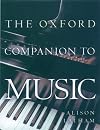
The Oxford Companion to Music is a massive and comprehensive tome for all things Classical Music. When I say all things Classical Music, I don’t just mean that it covers famous composers, since it does that adroitly; the book also covers the instruments used in producing such works, it has various entries on musical notation, it has entries on large countries and how they relate to music, and finally, it has entries on the various eras that exist in Classical Music. So if you need show more information on the Baroque Era just turn to page 101. Do you want to know how the Early Americans saw music? Turn to page 1312 for all the information you need.
As I said, the book focuses on Classical Music, so it mainly covers composers and their works. Depending on how influential a composer was, they might have more than a paragraph of text devoted to them. If you are looking for several pages on Antonio Vivaldi for instance, you might want to look elsewhere, but if you need a lot of information on Ludwig Van Beethoven this book has you covered. It discusses his birth, his musical contributions as related to his increasing deafness, his eventual originality, and his three major periods of work. So it covers the major composers more heavily, but I don’t really know the requirements the editor put forth to have a larger amount written on a certain composer. Maybe if the composer had developed in their style or changed enough? As I said, Beethoven has an arc to his pieces. Then again, I could not imagine this book without long entries on Mozart, Bach, or Beethoven.
As a reference guide, this book is pretty difficult to beat. However, that leads to a weakness in my personal enjoyment of it. The book is a reference guide, that means it wasn’t printed to be read from cover to cover. You could do that if you wanted to, but this book works much better as something that you use to look up a term or instrument that you have never heard of. So if you were looking at some sheet music and found a term like ‘veloce’, or you were going to a symphony and heard that there was an instrument known as the euphonium, or if you have to do a report or essay on Wolfgang Amadeus Mozart, then this is a good place to start. show less
As I said, the book focuses on Classical Music, so it mainly covers composers and their works. Depending on how influential a composer was, they might have more than a paragraph of text devoted to them. If you are looking for several pages on Antonio Vivaldi for instance, you might want to look elsewhere, but if you need a lot of information on Ludwig Van Beethoven this book has you covered. It discusses his birth, his musical contributions as related to his increasing deafness, his eventual originality, and his three major periods of work. So it covers the major composers more heavily, but I don’t really know the requirements the editor put forth to have a larger amount written on a certain composer. Maybe if the composer had developed in their style or changed enough? As I said, Beethoven has an arc to his pieces. Then again, I could not imagine this book without long entries on Mozart, Bach, or Beethoven.
As a reference guide, this book is pretty difficult to beat. However, that leads to a weakness in my personal enjoyment of it. The book is a reference guide, that means it wasn’t printed to be read from cover to cover. You could do that if you wanted to, but this book works much better as something that you use to look up a term or instrument that you have never heard of. So if you were looking at some sheet music and found a term like ‘veloce’, or you were going to a symphony and heard that there was an instrument known as the euphonium, or if you have to do a report or essay on Wolfgang Amadeus Mozart, then this is a good place to start. show less

The original `Companion' by Percy Scholes remains a favourite for its friendly unpompous helpfulness and portraits of the composers by `Batt'.
This is the most famous of all one-volume musical encyclopedias. It contains over a million words on all aspects of music, lucidly and entertainingly presented, and nearly a thousand illustrations.
This is the most famous of all one-volume musical encyclopedias. It contains over a million words on all aspects of music, lucidly and entertainingly presented, and nearly a thousand illustrations.
Awards

You May Also Like


Associated Authors
Statistics
- Works
- 63
- Also by
- 1
- Members
- 1,825
- Popularity
- #14,093
- Rating
- 3.8
- Reviews
- 9
- ISBNs
- 61
- Languages
- 3