
Magnus Magnusson (1929–2007)
Author of Chambers Biographical Dictionary
About the Author
Magnus Magnusson, awarded the Medlicott Medal of the British Historical Association, has published many books on the history of Scotland
Disambiguation Notice:
Magnus Magnusson edited two books published by The Folio Society, both titled Icelandic Sagas. The first volume was first published in 1999 and illustrated by Simon Noyes. The second volume was first published in 2002 and illustrated by John Vernon Lord. He also edited another book titled Iceland Saga, published by Tempus Publishing in 2005. Please do not combine these three books as they are all different.
Series
Works by Magnus Magnusson
Viking: Hammer of the North (Echoes of the ancient world) (1976) — Author, some editions — 174 copies, 1 review
Chronicle: Essays from Ten Years of Television Archaeology (1978) — Contributor — 14 copies, 1 review
Jorvik Viking Centre 5 copies
Funn og fakta i arkeologi 2 copies
Hakon the Old - Hakon who? 2 copies
Neal's Sagaa 1 copy
Iceland Saga 1 copy
Icelandic Sagas, Volume II 1 copy
Ég minnist þeirra 1 copy
Víkingar í stríði og friði 1 copy
Associated Works
The Vinland Sagas: The Icelandic Sagas about the First Documented Voyages across the North Atlantic (1220) — Editor and Translator, some editions — 1,147 copies, 18 reviews
King Harald's Saga: Harald Hardradi of Norway (1976) — Translator, some editions — 780 copies, 6 reviews
The Kingfisher Illustrated History of the World: 40,000 B.C. to Present Day (1992) — Foreword, some editions — 409 copies, 1 review
Hammer and the Cross (The Conversion of the Vikings) (1980) — Foreword, some editions — 7 copies, 1 review
Tagged
Common Knowledge
- Other names
- Sigursteinsson, Magnús
Magnusson, Magnus - Birthdate
- 1929-10-12
- Date of death
- 2007-01-07
- Gender
- male
- Education
- Jesus College, Oxford
Edinburgh Academy - Occupations
- broadcaster
editor
journalist
translator
historian - Organizations
- Royal Society for the Protection of Birds
Scottish Natural Heritage (first chairman) - Awards and honors
- Order of the British Empire (Knight Commander, 1989)
- Relationships
- Magnusson, Anna (daughter)
Magnusson, Sally (daughter)
Magnusson, Jon (son)
Baird, Mamie (spouse)
Stone, Jamie Magnus (grandson) - Short biography
- Magnus Magnusson, KBE (12 October 1929 – 7 January 2007) was an Icelandic television presenter, journalist, translator and writer. He was born in Iceland but lived in Scotland for almost all of his life, although he never took British citizenship. He came to prominence as a BBC television journalist, and was best known as the presenter of the BBC television quiz programme Mastermind, which he hosted for 25 years.
- Cause of death
- pancreatic cancer
- Nationality
- Iceland
- Birthplace
- Reykjavík, Iceland
- Places of residence
- Edinburgh, Midlothian, Scotland, UK
Reykjavík, Iceland - Place of death
- Balmore, Dunbartonshire, Scotland, UK
- Burial location
- Baldernock Churchyard, Glasgow, Lanarkshire, Scotland, UK
- Disambiguation notice
- Magnus Magnusson edited two books published by The Folio Society, both titled Icelandic Sagas. The first volume was first published in 1999 and illustrated by Simon Noyes. The second volume was first published in 2002 and illustrated by John Vernon Lord. He also edited another book titled Iceland Saga, published by Tempus Publishing in 2005. Please do not combine these three books as they are all different.
- Associated Place (for map)
- Scotland, UK
Members
Discussions
Icelandic Sagas in Folio Society Devotees (August 2017)
Reviews

(1991 – I would have bought this when I was in the middle of my degree course, as my subsidiary subject (worth 20% of my whole degree!) was in Old Icelandic)
This was a real treat to read. I love Iceland, I loved some aspects of studying Old Icelandic and did get a love of the sagas from doing so even if the endless translation was a little wearing. I like reading books about Iceland (and have done during other Months of Re-Reading) and I do hope to go there one day.
This book does nothing show more to prevent that happening. It’s sensible, literary, literate, well-written and enjoyable, with interesting asides and a style that is reminiscent in many places of the sagas it discusses. It provides a view of the geographical structure of Iceland, its place names, topographical features, archaeology and existing towns and homesteads, always weaving them in to the sagas and other writings that still live so vividly in the culture of the island until the modern day, with most of the sagas happening in recognisable locations that can be visited today. He takes historical themes such as the settlement of Iceland and the coming of Christianity, deals with important personalities like Snorri Sturluson, and tells the stories of some of the main sagas.
The book’s strength lies in the combination of a supremely knowledgeable author and a very good editor. Mentions of historical characters in one place are tied back to other chapters in which they appear. People who pop up more than one story or saga are cross-referenced so you know where they fit in. This is masterful work and I wonder if that quality would be found in a book published today. Some lovely photos and a good index complete a marvellous book which was a real joy in the reading.
Best of all, perhaps, at the beginning of each chapter was a little bit in Old Icelandic with its translation underneath. Covering up the translations, I managed to make out more of the Icelandic than I thought I would – obviously I’ve not forgotten as much as I feared. This bodes well for brushing it up if I ever go to Iceland myself (Old Icelandic and Modern Icelandic are closer than Shakespearean and Modern English, as they didn’t have a Great Vowel Shift (ouch!) like we did, and the vocabulary has been carefully controlled). show less
This was a real treat to read. I love Iceland, I loved some aspects of studying Old Icelandic and did get a love of the sagas from doing so even if the endless translation was a little wearing. I like reading books about Iceland (and have done during other Months of Re-Reading) and I do hope to go there one day.
This book does nothing show more to prevent that happening. It’s sensible, literary, literate, well-written and enjoyable, with interesting asides and a style that is reminiscent in many places of the sagas it discusses. It provides a view of the geographical structure of Iceland, its place names, topographical features, archaeology and existing towns and homesteads, always weaving them in to the sagas and other writings that still live so vividly in the culture of the island until the modern day, with most of the sagas happening in recognisable locations that can be visited today. He takes historical themes such as the settlement of Iceland and the coming of Christianity, deals with important personalities like Snorri Sturluson, and tells the stories of some of the main sagas.
The book’s strength lies in the combination of a supremely knowledgeable author and a very good editor. Mentions of historical characters in one place are tied back to other chapters in which they appear. People who pop up more than one story or saga are cross-referenced so you know where they fit in. This is masterful work and I wonder if that quality would be found in a book published today. Some lovely photos and a good index complete a marvellous book which was a real joy in the reading.
Best of all, perhaps, at the beginning of each chapter was a little bit in Old Icelandic with its translation underneath. Covering up the translations, I managed to make out more of the Icelandic than I thought I would – obviously I’ve not forgotten as much as I feared. This bodes well for brushing it up if I ever go to Iceland myself (Old Icelandic and Modern Icelandic are closer than Shakespearean and Modern English, as they didn’t have a Great Vowel Shift (ouch!) like we did, and the vocabulary has been carefully controlled). show less
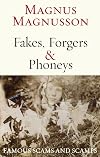
I came across this book and bought it and then forgot about it until finding it again recently. It is really well written and great fun. Magnusson (he of Iceland and Mastermind, the father of Sally; he died in 2007) looks at 16 main forgers or fakers, although he mentions several others en passant. He divides them into four types - art forgeries (Tom Keating, John Drewe and John Myatt, Han van Meegeren, the Cottingley fairies); archaeological frauds (Piltdown Man, Glozel, the Vinland Map, show more the Cardiff giant); impostors and hoaxers (the Tichborne claimant, Ellen and William Craft, the chess playing Turk automaton, George Psalmanazar); and literary forgeries (Thomas Chatterton, James Macpherson, Iolo Morgannwg, William Henry Ireland). Like all journalists he makes one or two mistakes (eg thinking Hammersmith is Hampstead at one point). Interestingly, although those who made money enjoyed it that was rarely the main reason for the fraud. Also, not all the frauds seem to have been that good but if people wanted to believe then they would. In most cases the suspicious could see right through the fraudster. The girls who claimed to see fairies seem to have still believed they had seen them even though they knew their photographs were faked. show less
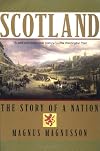
Each chapter in this somewhat quirky history is preceded by a summary of the events to be discussed as they were described by Walter Scott (1771- 1832) in Tales of a Grandfather. As explained by the Walter Scott Digital Archive of Edinburgh University Library:
"While putting the finishing touches to his Life of Napoleon in May 1827, Scott had the idea of writing a History of Scotland addressed to his six-year-old grandchild . . . The project was partly inspired by the success of John Wilson show more Croker's Stories Selected from the History as England (1822), but Scott felt that Croker underestimated the intelligence of his juvenile audience. Children, Scott believed, disliked books 'written down' to their level, preferring a challenge to their understanding and curiosity. He hoped to cater, moreover, for both a juvenile and a popular audience and thus to find a way 'between what a child can comprehend and what shall not yet be absolutely uninteresting to the grown reader' (Journal, July 8, 1827)."
It’s also a history that includes extensive detail only up until the Battle of Culloden. With the end of the Jacobite Movement, there is only one more chapter covering the period after 1746, which is mostly about the personal history of Sir Walter Scott. A short Epilogue takes us to the 1990s. But Magnusson seemed to be “finished” even before the time of Bonnie Prince Charlie; clearly the author lost heart for the story of Scotland with the Act of Union in 1707 and “the end of an auld sang.”
Thus, most of the book is focused on warriors and royalty of old. Those looking for information on the cultural advances that followed Culloden and about the great Scottish Enlightenment should look elsewhere; there is practically nothing on any of that in this book. On the other hand, if you want to know how punitive the English were toward the Scots throughout the early history of the two countries, this is a great place to begin. You also get a large dose of how rough the austere Protestant fundamentalists were on their own people in Scotland. In fact, this is not a book at all about religious toleration or Christian mercy; religious realism, one might say, is more like it.
The author served at one time as Chair of the Ancient Monuments Board for Scotland, and so peppers his history with tidbits about where to find markers today commemorating some of the historical events he describes. Additionally, there is a chronology at the end of the book as well as a list of Kings and Queens of Scotland.
Evaluation: This is an entertaining book, often reading more like a television history broadcast than a standard history, with elements of a travelogue. The addition of passages from Tales of a Grandfather is very illuminating. It is rather heavy on battles though, and I wish the author had added more information on what happened after Culloden. On the other hand, it already weighs in at 700 pages.
A number of maps and pictures are included. show less
"While putting the finishing touches to his Life of Napoleon in May 1827, Scott had the idea of writing a History of Scotland addressed to his six-year-old grandchild . . . The project was partly inspired by the success of John Wilson show more Croker's Stories Selected from the History as England (1822), but Scott felt that Croker underestimated the intelligence of his juvenile audience. Children, Scott believed, disliked books 'written down' to their level, preferring a challenge to their understanding and curiosity. He hoped to cater, moreover, for both a juvenile and a popular audience and thus to find a way 'between what a child can comprehend and what shall not yet be absolutely uninteresting to the grown reader' (Journal, July 8, 1827)."
It’s also a history that includes extensive detail only up until the Battle of Culloden. With the end of the Jacobite Movement, there is only one more chapter covering the period after 1746, which is mostly about the personal history of Sir Walter Scott. A short Epilogue takes us to the 1990s. But Magnusson seemed to be “finished” even before the time of Bonnie Prince Charlie; clearly the author lost heart for the story of Scotland with the Act of Union in 1707 and “the end of an auld sang.”
Thus, most of the book is focused on warriors and royalty of old. Those looking for information on the cultural advances that followed Culloden and about the great Scottish Enlightenment should look elsewhere; there is practically nothing on any of that in this book. On the other hand, if you want to know how punitive the English were toward the Scots throughout the early history of the two countries, this is a great place to begin. You also get a large dose of how rough the austere Protestant fundamentalists were on their own people in Scotland. In fact, this is not a book at all about religious toleration or Christian mercy; religious realism, one might say, is more like it.
The author served at one time as Chair of the Ancient Monuments Board for Scotland, and so peppers his history with tidbits about where to find markers today commemorating some of the historical events he describes. Additionally, there is a chronology at the end of the book as well as a list of Kings and Queens of Scotland.
Evaluation: This is an entertaining book, often reading more like a television history broadcast than a standard history, with elements of a travelogue. The addition of passages from Tales of a Grandfather is very illuminating. It is rather heavy on battles though, and I wish the author had added more information on what happened after Culloden. On the other hand, it already weighs in at 700 pages.
A number of maps and pictures are included. show less
This is a fine book saddled with a rather weak gimmick. Magnus Magnusson has gone back to Walter Scott's Tales of a Grandfather and used excerpts of it as a sort of a literary framework. I found this weak; I quickly stopped reading the excerpts.
Also, there are no source notes.
Omit those facts -- which, for me at least, cost the book a star -- and you have a fine book. It reads well, it is as complete as can be expected in a book with such broad scope, and the index makes it easy to find show more material. Also, Magnusson does a good job of keeping relevant material together -- you won't have to do much page-skipping to find out all there is to know about Malcolm Canmore or James III or whoever you are looking for.
Despite the caveats, this is an excellent book. show less
Also, there are no source notes.
Omit those facts -- which, for me at least, cost the book a star -- and you have a fine book. It reads well, it is as complete as can be expected in a book with such broad scope, and the index makes it easy to find show more material. Also, Magnusson does a good job of keeping relevant material together -- you won't have to do much page-skipping to find out all there is to know about Malcolm Canmore or James III or whoever you are looking for.
Despite the caveats, this is an excellent book. show less
Lists
You May Also Like


Associated Authors
Statistics
- Works
- 46
- Also by
- 17
- Members
- 3,342
- Popularity
- #7,643
- Rating
- 3.8
- Reviews
- 29
- ISBNs
- 103
- Languages
- 7
- Favorited
- 5