

Anonymous (19)
Author of The Poetic Edda
For other authors named Anonymous, see the disambiguation page.
Series
Works by Anonymous
The Vinland Sagas: The Icelandic Sagas about the First Documented Voyages across the North Atlantic (1220) 1,139 copies, 18 reviews
Saga Six Pack - Beowulf, The Prose Edda, Gunnlaug The Worm-Tongue, Eric The Red, The Sea Fight and Sigurd The Volsung (Illustrated) (2015) 18 copies
Saga Six Pack 3 - The Story of Burnt Njál, Magnus the Good, Song of Atli, The Hell-Ride of Brynhild, Saga of Olaf Kyrre and Lay of Hamdir (Illustrated) (2015) 12 copies
The Eyrbyggja Saga and The Story of the Heath-Slayings and The Story of the Heath-Slayings (2011) 6 copies
The Volsunga Saga, Legends of the Wagner Trilogy and Old Norse Sagas Kindred to the Volsung and Niblung Tale (2018) 5 copies
Erikskrönikan 3 copies
Soga um Hønse-Tore 3 copies
Völuspá 2 copies
Soga um jomsvikingane 1 copy
The Norse Myths 1 copy
Soga om Orvar-Odd 1 copy
Soga om ljosvetningane 1 copy
Sigilla Islandica 1 copy
Islandske småsoger (Þættir) 1 copy
Soga um Droplaugs-sønene 1 copy
Soga um Bjørn Hitdølakappe 1 copy
Tagged
Common Knowledge
Members
Discussions
The Poetic Edda LE in Folio Society Devotees (April 25)
Reviews

This was great! Sometimes the old Icelandic sagas can be a bit dry with all the pedigrees and various relationships.
I don't know how much the translator helped, but there were some seriously badass action scenes in this saga - heroes sliding on ice, catching spears and throwing them back, limbs flying everywhere. I wonder if it also counts as one of the earliest courtroom dramas, because legal intrigue is what we get in between the episodes of violence.
Characters' personalities and motives show more are typically understated as usual in such sagas. However you get intriguing glimpses of their natures, such as with Skarp-Hedin's enigmatic smiles.
Definitely one of my favourites of the genre, with action, intrigue, and drama in spades. show less
I don't know how much the translator helped, but there were some seriously badass action scenes in this saga - heroes sliding on ice, catching spears and throwing them back, limbs flying everywhere. I wonder if it also counts as one of the earliest courtroom dramas, because legal intrigue is what we get in between the episodes of violence.
Characters' personalities and motives show more are typically understated as usual in such sagas. However you get intriguing glimpses of their natures, such as with Skarp-Hedin's enigmatic smiles.
Definitely one of my favourites of the genre, with action, intrigue, and drama in spades. show less
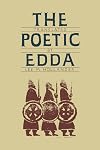
Hollander's translation is the only book that I've ever bought twice; my first copy is locked away in storage and inaccessible, but I had a strong desire to read it, so bit my tongue and put down the money. I'm Norwegian-American down to my socks, but Norse mythology is something that I've had a bit of a love-hate relationship with over the years. While there's a flavor that hits home with me, there's also something distinctly foreign about the pre-Westernized Scandinavians that is show more off-putting. I think it's the anti-egalitarian, anti-altruism, "might is right" brutal spirit of the Vikings. It's fun for mild-mannered Scandinavians and those of the diaspora to joke about, but in reality Norway, Sweden, and Denmark have long since grown beyond that era and left it in the dust. I'm far more familiar with Asbjørnsen and Moe's collection of 19th century folktales, which I find to be more culturally relevant for me.
But the time had come for me to read the Viking-era myths, so I gave the Poetic Edda a read. Some takeaways:
1) I knew that "trolls" had some sort of representation in the Norse era. I did not realize how often the word would be used (alongside others such as "thurs") as a synonym for "giant" (Hollander's "etins"). I also did not realize that the same rule found in Asbjørnsen and Moe, that trolls turn to stone when exposed to daylight, was present in Viking times. I thought that was a development from eight hundred years later.
2) I found that I didn't care much for the Óthin. I found him sinister, not what I would expect for a king of gods. Conversely, I found Thór completely likeable. No wonder the common people in ancient times worshipped Thór, leaving Óthin to the Viking warriors and ruling class.
3) I've read "The Volsunga Saga" before, and I didn't like it. Nor did I like the Sigurd lays in this Edda. I think that, out of all the Old Norse material, the Volsungs story has the least connection to modern Scandinavia.
4) Lee Hollander refers to many different scholars in his translation, but the two that he seems to appreciate the most (based on the quantity of his footnote references) are Sophus Bugge and N.F.S. Grundtvig. There was a coffee shop in Oslo called "Bugges" (Bugge's) that I became fond of while visiting cousins a few years ago (they told me at the time that it was named after a famous writer). And as a Lutheran, I'm very familiar with some of Grundtvig's hymnody ("Built on a rock, the church shall stand, even as temples are falling" and "Den signede dag"). I had no idea that Grundtvig the theologian was also Grundtvig the Norse mythology buff. It was fun to make these two connections. show less
But the time had come for me to read the Viking-era myths, so I gave the Poetic Edda a read. Some takeaways:
1) I knew that "trolls" had some sort of representation in the Norse era. I did not realize how often the word would be used (alongside others such as "thurs") as a synonym for "giant" (Hollander's "etins"). I also did not realize that the same rule found in Asbjørnsen and Moe, that trolls turn to stone when exposed to daylight, was present in Viking times. I thought that was a development from eight hundred years later.
2) I found that I didn't care much for the Óthin. I found him sinister, not what I would expect for a king of gods. Conversely, I found Thór completely likeable. No wonder the common people in ancient times worshipped Thór, leaving Óthin to the Viking warriors and ruling class.
3) I've read "The Volsunga Saga" before, and I didn't like it. Nor did I like the Sigurd lays in this Edda. I think that, out of all the Old Norse material, the Volsungs story has the least connection to modern Scandinavia.
4) Lee Hollander refers to many different scholars in his translation, but the two that he seems to appreciate the most (based on the quantity of his footnote references) are Sophus Bugge and N.F.S. Grundtvig. There was a coffee shop in Oslo called "Bugges" (Bugge's) that I became fond of while visiting cousins a few years ago (they told me at the time that it was named after a famous writer). And as a Lutheran, I'm very familiar with some of Grundtvig's hymnody ("Built on a rock, the church shall stand, even as temples are falling" and "Den signede dag"). I had no idea that Grundtvig the theologian was also Grundtvig the Norse mythology buff. It was fun to make these two connections. show less
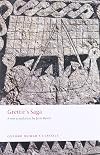
OK, I've read a fair number of Sagas over the years, and this might be becoming my favorite, in the Jesse Byock translation. Or at least right behind Poul Anderson's retelling of Hrolf Kraki's Saga. Njal's Saga is like The Iliad. Grim, inexorable, and a bit of a reading slog. Egil's Saga - well, Egil is even more of an asshole than Grettir, and I remember it as being super long. Grettir's Saga feels so much more readable than many of the sagas, and to my thinking, much more "modern". The show more episodic nature of it, together with the frequent supernatural encounters, livens up the constant feuding over land, insults, horses, and such.
What are we to make of Grettir the Outlaw? He definitely feels more of a modern "anti-hero", rather than a classic hero. He's downright obnoxious and an asshole, pretty much from childhood. Yet the author seems to want us to empathize with him (as a side note, it's interesting the periodic injections of Christianity into this - the events of the saga take place just as Iceland is being Christianized although when it's written, we're 300 years into Christianity in Iceland). The Outlaw as hero feels very akin to how Americans might view someone like Billy the Kid, Jesse James, or Butch Cassidy, who were romanticized and reviled in equal measures. A more modern equivalent might be the Jack Reacher character in Lee Child's books - a giant among men, who succeeds by both talent and by dint of his physical superiority, who has his own code and follows it to the end. (Note: someone actually wrote a novel modernizing Grettir, with a new character, but based on Grettir: Nutcase, by Tony Williams: http://www.textjournal.com.au/oct19/tonywilliams.htm)
Grettir is pretty laconic, and many of his responses are single sentence proverbs: "He is a friend who spares others from problems", "He learns more that tries more", "danger is at your own door when it has entered your neighbors", "only that which is tested is known", "the expected happens, and also the unexpected", "only a slave immediately takes vengeance, a coward never", (and more), and my personal favorite, "Bare is the back of every man, except those who have a brother". This last is one of my favorite Viking sayings, it occurs in many many more modern books, but I don't recall ever having seen it in the original! I've always seen it translated more like "Bare is back without brother to guard it", which I like better than this translation. The original for reference: Ber er hver á bakinu nema sér bróður eigi. (btw you can see the entire Icelandic text here: https://sagadb.org/grettis_saga.is).
It seems like 5 or 10 times, somebody said something, and the response is: "Grettir just grinned" - which just feels so modern in style.
Some of my favorite scenes: the battle on top of the whale carcass, the battle with Glam, the battle with the Trolls & Giants, the scenes on Drangey, the chapters where he feigns friendship with the Berserkers before killing them. The final scenes with Thorstein the Galleon, cavorting with Spes and tricking her husband. Gisli Sheds his Clothes!!
The battle scenes with the monsters (and people), I really liked. The descriptions just seemed so much more kinetic than in other sagas - people crashing around rooms, knocking the door frames off buildings. I loved the visual details: from the peak of the battle with Glam, so visual:
> Just as Glam fell the clouds moved, revealing the moon. Glam stared up at the light, and Grettir later said that this sight was the only one that had ever scared him.
from when Grettir dives into a waterfall for the second troll:
> The priest watched as the soles of Grettir's feet disappeared.
I loved all the nicknames. It seems so much more prevalent in this saga compared to others I've read.
As many others have noted, the Giant troll scenes are very reminiscent of Beowulf (troll with arm ripped off, second creature in a cave under a waterfall). Beowulf predates Grettir by hundreds of years, and some major details are different, but the similarities are striking and too big to be coincidence. There are many studies of this, including a complete book! (https://www.jstor.org/stable/10.3138/j.ctt2ttnhd). show less
What are we to make of Grettir the Outlaw? He definitely feels more of a modern "anti-hero", rather than a classic hero. He's downright obnoxious and an asshole, pretty much from childhood. Yet the author seems to want us to empathize with him (as a side note, it's interesting the periodic injections of Christianity into this - the events of the saga take place just as Iceland is being Christianized although when it's written, we're 300 years into Christianity in Iceland). The Outlaw as hero feels very akin to how Americans might view someone like Billy the Kid, Jesse James, or Butch Cassidy, who were romanticized and reviled in equal measures. A more modern equivalent might be the Jack Reacher character in Lee Child's books - a giant among men, who succeeds by both talent and by dint of his physical superiority, who has his own code and follows it to the end. (Note: someone actually wrote a novel modernizing Grettir, with a new character, but based on Grettir: Nutcase, by Tony Williams: http://www.textjournal.com.au/oct19/tonywilliams.htm)
Grettir is pretty laconic, and many of his responses are single sentence proverbs: "He is a friend who spares others from problems", "He learns more that tries more", "danger is at your own door when it has entered your neighbors", "only that which is tested is known", "the expected happens, and also the unexpected", "only a slave immediately takes vengeance, a coward never", (and more), and my personal favorite, "Bare is the back of every man, except those who have a brother". This last is one of my favorite Viking sayings, it occurs in many many more modern books, but I don't recall ever having seen it in the original! I've always seen it translated more like "Bare is back without brother to guard it", which I like better than this translation. The original for reference: Ber er hver á bakinu nema sér bróður eigi. (btw you can see the entire Icelandic text here: https://sagadb.org/grettis_saga.is).
It seems like 5 or 10 times, somebody said something, and the response is: "Grettir just grinned" - which just feels so modern in style.
Some of my favorite scenes: the battle on top of the whale carcass, the battle with Glam, the battle with the Trolls & Giants, the scenes on Drangey, the chapters where he feigns friendship with the Berserkers before killing them. The final scenes with Thorstein the Galleon, cavorting with Spes and tricking her husband. Gisli Sheds his Clothes!!
The battle scenes with the monsters (and people), I really liked. The descriptions just seemed so much more kinetic than in other sagas - people crashing around rooms, knocking the door frames off buildings. I loved the visual details: from the peak of the battle with Glam, so visual:
> Just as Glam fell the clouds moved, revealing the moon. Glam stared up at the light, and Grettir later said that this sight was the only one that had ever scared him.
from when Grettir dives into a waterfall for the second troll:
> The priest watched as the soles of Grettir's feet disappeared.
I loved all the nicknames. It seems so much more prevalent in this saga compared to others I've read.
As many others have noted, the Giant troll scenes are very reminiscent of Beowulf (troll with arm ripped off, second creature in a cave under a waterfall). Beowulf predates Grettir by hundreds of years, and some major details are different, but the similarities are striking and too big to be coincidence. There are many studies of this, including a complete book! (https://www.jstor.org/stable/10.3138/j.ctt2ttnhd). show less
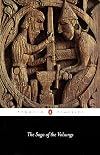
Do you ever feel like most of the family dramas that you read don't have enough incest and murder? If you've ever felt this way, please check out The Saga of the Volsungs. I don't see what's not to like here- dragon killing, constant betrayal, crossed identities, bloodbaths... these stories are ridiculous but impossible to put down!
Lists
Western Canon (1)
The Nibelungs (1)
Loan Library (2)
Awards


You May Also Like


Associated Authors
Statistics
- Works
- 51
- Members
- 14,568
- Popularity
- #1,577
- Rating
- 3.9
- Reviews
- 162
- ISBNs
- 9,893
- Languages
- 64
- Favorited
- 3