
Gwyn Jones (1907–1999)
Author of A History of the Vikings
About the Author
Works by Gwyn Jones
The Norse Atlantic Saga: Being the Norse Voyages of Discovery and Settlement to Iceland, Greenland, and North America (1986) 90 copies
The Green Island 4 copies
El primer descubrimiento de Amřica :(establecimientos de los vikingos en Islandia, Groenlandia y Amřica) (1985) 2 copies
Richard Savage. [A novel.] 2 copies
Structure 1966 1 copy
Norse Atlantic Saga 1 copy
Erik The Red 1 copy
Garland of Bays 1 copy
Prospect of Wales 1 copy
Associated Works
Little Reviews Anthology 1945 — Contributor, some editions — 2 copies
Argosy (UK) [Vol. IV No. 5, June 1943] — Contributor — 1 copy
Tagged
Common Knowledge
- Canonical name
- Jones, Gwyn
- Birthdate
- 1907-05-24
- Date of death
- 1999-12-06
- Gender
- male
- Education
- University College, Cardiff, Wales, UK
- Occupations
- historian
novelist
literary critic
translator
professor (welsh and norse) - Organizations
- University College, Cardiff
University College of Wales, Aberystwyth - Awards and honors
- Order of the Falcon (Knight's Cross, 1963|Commander's Cross, 1987)
Order of the British Empire (Commander, 1965)
Medal of the Honorable Society of Cymmrodorion (1991) - Relationships
- Jones, Mair (wife)
Rees, Alice (wife) - Nationality
- UK
- Birthplace
- New Tredegar, Monmouthshire, Wales, UK
- Places of residence
- Monmouthshire, Wales, UK
Aberystwyth, Dyfed, Wales, UK
Cardiff, Wales, UK - Place of death
- Aberystwyth, Dyfed, Wales, UK
- Map Location
- Wales, UK
Members
Discussions
Vikings (Gwyn Jones vs Neil Price) in Folio Society Devotees (August 2024)
Reviews
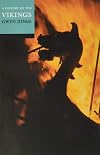
This is an incredibly dense and informative history of the entire Viking era. Jones works his way from pre 700 AD to 1066. He breaks this up into four sections based on time periods and explores the society, culture, legal systems, famous leaders, and religions. He also describes their explorations and expansions into other countries. To me, some of the most interesting sections were about the pre-Christian religious beliefs and descriptions of everyday life. I was also pretty interested in show more the ship building and thought there could have been a bit more about that.
Although the subject matter and detail is fascinating, this book is not an easy read. It was published in the 1960s and the language feels old-fashioned and stuffy. It was really hard to get into the flow of it and had lots of words that are rarely used today. I'm also so used to reading current nonfiction that is or tends toward narrative nonfiction that it took me a while to get used to the style.
While the information in this book is fantastic, you have to be determined to get through the dense language. I definitely got so bored at times that I missed the gist of certain sections.
Original publication date: 1968
Author's Nationality: Welsh
Original Language: English
Length: 504 pages
Other books read by this author: none
Rating: 3.5 stars show less
Although the subject matter and detail is fascinating, this book is not an easy read. It was published in the 1960s and the language feels old-fashioned and stuffy. It was really hard to get into the flow of it and had lots of words that are rarely used today. I'm also so used to reading current nonfiction that is or tends toward narrative nonfiction that it took me a while to get used to the style.
While the information in this book is fantastic, you have to be determined to get through the dense language. I definitely got so bored at times that I missed the gist of certain sections.
Original publication date: 1968
Author's Nationality: Welsh
Original Language: English
Length: 504 pages
Other books read by this author: none
Rating: 3.5 stars show less
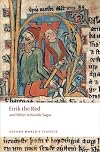
Some of the sagas in this collection really wouldn't have been out of place in Tolkein's [b:Unfinished Tales|797114|Unfinished Tales|J.R.R. Tolkien|http://photo.goodreads.com/books/1207407366s/797114.jpg|2961645]. They read very much like rough early drafts of tales from Middle Earth.
The first few sagas drag somewhat. They mostly consist of vast genealogies (though apparently the translator Gwyn Jones removed some of the extraneous family-tree parts) and then a drawn out blood feud wherein show more two families will take it in turns avenging some crime that has long since been forgotten.
Amongst these is Eirik the Red, a saga famous for recording the settling of Greenland and an Icelandic expedition to North America; it's also a pretty good read.
The best saga is saved till last. King Hrolf and his Champions is by far the longest tale in the collection — albeit still only a hundred pages or so. But this is ample time to actually get involved in the story and allow it to build to a fine climax. The final battle in this saga that closes the book is both suitably epic in scale and surprisingly moving. A fine book overall. show less
The first few sagas drag somewhat. They mostly consist of vast genealogies (though apparently the translator Gwyn Jones removed some of the extraneous family-tree parts) and then a drawn out blood feud wherein show more two families will take it in turns avenging some crime that has long since been forgotten.
Amongst these is Eirik the Red, a saga famous for recording the settling of Greenland and an Icelandic expedition to North America; it's also a pretty good read.
The best saga is saved till last. King Hrolf and his Champions is by far the longest tale in the collection — albeit still only a hundred pages or so. But this is ample time to actually get involved in the story and allow it to build to a fine climax. The final battle in this saga that closes the book is both suitably epic in scale and surprisingly moving. A fine book overall. show less
Some of the sagas in this collection really wouldn't have been out of place in Tolkein's [b:Unfinished Tales|797114|Unfinished Tales|J.R.R. Tolkien|http://photo.goodreads.com/books/1207407366s/797114.jpg|2961645]. They read very much like rough early drafts of tales from Middle Earth.
The first few sagas drag somewhat. They mostly consist of vast genealogies (though apparently the translator Gwyn Jones removed some of the extraneous family-tree parts) and then a drawn out blood feud wherein show more two families will take it in turns avenging some crime that has long since been forgotten.
Amongst these is Eirik the Red, a saga famous for recording the settling of Greenland and an Icelandic expedition to North America; it's also a pretty good read.
The best saga is saved till last. King Hrolf and his Champions is by far the longest tale in the collection — albeit still only a hundred pages or so. But this is ample time to actually get involved in the story and allow it to build to a fine climax. The final battle in this saga that closes the book is both suitably epic in scale and surprisingly moving. A fine book overall. show less
The first few sagas drag somewhat. They mostly consist of vast genealogies (though apparently the translator Gwyn Jones removed some of the extraneous family-tree parts) and then a drawn out blood feud wherein show more two families will take it in turns avenging some crime that has long since been forgotten.
Amongst these is Eirik the Red, a saga famous for recording the settling of Greenland and an Icelandic expedition to North America; it's also a pretty good read.
The best saga is saved till last. King Hrolf and his Champions is by far the longest tale in the collection — albeit still only a hundred pages or so. But this is ample time to actually get involved in the story and allow it to build to a fine climax. The final battle in this saga that closes the book is both suitably epic in scale and surprisingly moving. A fine book overall. show less

It took me a little while to nibble my way through this fairly hefty history of the Viking Age (850 AD - 1066 AD). Jones wrote this history originally in 1964 but updated it in the 1980's. It is considered authoritative amongst the various scholarship out there, but it is a general history and covers a lot of territory. It's broken up in nice chunks ranging from culture, religion, trade, the various movements east, west, and south. Jones' main gist is that there is a lot of undue emphasis show more put on Vikings raping and pillaging all over the place. It's not that they didn't do that, but it's just that they were also doing a lot of other stuff like trading, making art, exploring, farming, and hiring themselves out as mercenaries all over the place. The stereotypical ravaging viking is so engrained in historical memory mainly because that was the only thing written down about Vikings during their time. This is because when the Norse went "viking" they liked to hit easy targets like nice plump monasteries on the coast of Britain and Ireland. No defenses, lots of valuables, weakling monks, why not raid them. Unfortunately the theological nerds had their revenge because they were the only ones really writing anything down for posterity, at least when it came to the Vikings. Most of these accounts are exaggerated too so the Vikings kinda got an inflated rep from the get go.
There is a really good chapter on Iceland, Greenland, and North America. Quite fascinating, especially after watching Valhalla Rising. Iceland really panned out as a Scandinavian colony and got really good at producing poets and sagas. This is mainly because most of the slaves and concubines that they took there were Irish Celts, who brought with them a certain set of skills and habits. It's Iceland, so I guess there isn't a lot to do but write epic war poetry and watch the volcanoes blow.
I didn't know about Normandy being basically a Viking colony turned French. Nor did I know it was basically a right of passage for the more violently inclined Norse to mosey on down to Byzantium to serve the Emperor there as a man-at-arms for a few years to get your fighting notches marked on your belt. They really did range far afield: present day Canada to Baghdad, and before the year 1000! In other words, they were pretty bad ass. Their decline seems to me to be caused by the evolution from nations to kingdoms, as well as the conversion to Christianity. I sort of wish that the Norse communities had kept their Norse pantheon and remained a "heathen" people, but alas, it was not to be. However, if you look at those countries today, they are some of the most atheistic, productive, countries in the world with the highest quality of life marks to boot.
In closing, if you want to read the sagas, or you already have and you need a nice dose of historical skepticism, this is a good book to start with. Also, it has an excellent bibliography pointing the interested reader in the right direction for more specific topics. show less
There is a really good chapter on Iceland, Greenland, and North America. Quite fascinating, especially after watching Valhalla Rising. Iceland really panned out as a Scandinavian colony and got really good at producing poets and sagas. This is mainly because most of the slaves and concubines that they took there were Irish Celts, who brought with them a certain set of skills and habits. It's Iceland, so I guess there isn't a lot to do but write epic war poetry and watch the volcanoes blow.
I didn't know about Normandy being basically a Viking colony turned French. Nor did I know it was basically a right of passage for the more violently inclined Norse to mosey on down to Byzantium to serve the Emperor there as a man-at-arms for a few years to get your fighting notches marked on your belt. They really did range far afield: present day Canada to Baghdad, and before the year 1000! In other words, they were pretty bad ass. Their decline seems to me to be caused by the evolution from nations to kingdoms, as well as the conversion to Christianity. I sort of wish that the Norse communities had kept their Norse pantheon and remained a "heathen" people, but alas, it was not to be. However, if you look at those countries today, they are some of the most atheistic, productive, countries in the world with the highest quality of life marks to boot.
In closing, if you want to read the sagas, or you already have and you need a nice dose of historical skepticism, this is a good book to start with. Also, it has an excellent bibliography pointing the interested reader in the right direction for more specific topics. show less
Lists
Awards


You May Also Like


Associated Authors
Statistics
- Works
- 36
- Also by
- 15
- Members
- 2,633
- Popularity
- #9,753
- Rating
- 3.8
- Reviews
- 20
- ISBNs
- 49
- Languages
- 2
- Favorited
- 1