
R. I. Page (1924–2012)
Author of Runes
About the Author
R. I. Page is Emeritus Professor of Anglo-Saxon, University of Cambridge, and Fellow of Corpus Christi College, Cambridge.
Image credit: R.I. Page [credit: University of Cambridge]
Works by R. I. Page
Associated Works
Tagged
Common Knowledge
- Legal name
- Page, Raymond Ian
- Other names
- Page, Ray
- Birthdate
- 1924-09-25
- Date of death
- 2012-03-10
- Gender
- male
- Education
- King Edward VII School, Sheffield
Rotherham Technical College (mechanical engineering)
University of Sheffield (English)
University of Nottingham (PhD) (Anglo-Saxon rune stones) - Occupations
- Professor of Anglo-Saxon
Runic scholar
historian
librarian
naval officer, Royal Navy - Organizations
- University of Cambridge (Corpus Christi College)
Cambridge Colleges Conservation Consortium
Royal Navy (WWII)
University of Nottingham
Parker Library, Corpus Christi College - Awards and honors
- Honorary Doctorate (Norwegian University of Science and Technology)
- Nationality
- UK
- Birthplace
- Sheffield, South Yorkshire, England, UK
- Places of residence
- Wensleydale, North Yorkshire, England, UK
Copenhagen, Denmark
Cambridge, Cambridgeshire, England, UK - Associated Place (for map)
- England, UK
Members
Reviews
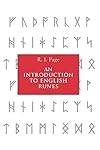
Overall, this is an excellent introduction to English runes. The author clearly describes what runes are, what they meant, who carved them, how scholars interpret them, etc. He lists the runes of various groups across different time periods and regions, and he matches each one to the letter used in transliterating. He tone is easy, and his writing is clear even for people who have not previously studied runes or Old English. His work is clearly divided into chapters by topic, so there is a show more chapter on cryptic runes, and a chapter on ecclesiastical rune-stones, and so on. His maps showing the locations of different findings, as well as the section of photographs, lend even more background to a well-organized volume. As the title suggests, he focuses specifically on English runes, but he also isn't afraid to describe other runic traditions when doing so will help paint a more complete picture. He gives plenty of context for his conclusions. So all of that is good.
In general, information is only as good as its source, and since so much runic interpretation depends on the biases of the scholar, it is necessary to examine that scholar in depth. R. I. Page evidently agrees with this, since he is self-aware enough at the beginning to state that he tends toward the skeptical side of runic interpretation. He does not claim to be always right, or even always completely objective, and he is very open about the difficulties of some interpretations, right from the beginning. This type of honesty comes as sort of a breath of fresh air, and it helps me at least to know where he's coming from in all this. Moreover, throughout the book, he'll make sure to mention differing opinions. He'll describe an inscription, mention that so-and-so scholar thinks XYZ, while such-and-such believes it means ABC, and that he thinks the first one is right. So that is also good.
However—could you tell a "however" was coming?—I am seriously wondering if he started to get tired while writing this. About halfway through, the tone changes a little bit, and his remarks get a little more snide. At one point, he references another professional's opinion of a word's meaning, adding that people who would believe her would tend to believe anything. At first, I thought it might be a form of sexism, that he was disparaging the scholarly efforts of his female peers, but he seems equally dismissive of some of the men in the field. He'll quote some opinions, say that they're completely wrong, and then never speak of them again. On the one hand, I understand that this is meant to be a general overview, and that he can't take the time to outline his reasoning on every point. On the other hand, it felt a little abrupt. He made one very troubling comment about religion that didn't belong in a history book. His opinions about all things runic come so strongly to the center that it's hard to get a sense of the whole picture. It's hard to understand what alternatives exist beyond simply agreeing with him in all things.
And just when I thought I'd had enough, he landed his final insult—on himself. For being so old-fashioned and out-of-date that it was up to his readers (the next generation of scholars) to do even greater things than he. So yes, he was a bit harsh and cold, but he was just as likely to turn that on himself as on others.
Does anyone escape from these judgments and insults? Yes. The readers. Page is insanely protective of those who read his books. Remember how I said that it was okay not to have a background in this? That if you were picking the book up cold, he'd still explain things okay? I stand by that. Furthermore, to people like myself who have dabbled in Old English, the runes seen here are very intimidating. Even transliterated, they don't make sense. Page is absolutely reassuring. He'll say things like "If this section seems confusing to students of Old English, it's because these runes are much older than the manuscripts, and they're in the Northumbrian dialect." That's a paraphrase, since I don't have the book in front of me at the moment, but you get the idea. He anticipated confusion, anxiety, and feelings of being overwhelmed, and he put those all to rest. At times, reading this book felt like someone next to me, holding my hand and saying "Of course it looks tough, but it's not so difficult. Start here, and read this section, and you'll understand." And then he made a completely inappropriate comment about Christianity, and I was unsure, all over again, what to think about this enigmatic author. show less
In general, information is only as good as its source, and since so much runic interpretation depends on the biases of the scholar, it is necessary to examine that scholar in depth. R. I. Page evidently agrees with this, since he is self-aware enough at the beginning to state that he tends toward the skeptical side of runic interpretation. He does not claim to be always right, or even always completely objective, and he is very open about the difficulties of some interpretations, right from the beginning. This type of honesty comes as sort of a breath of fresh air, and it helps me at least to know where he's coming from in all this. Moreover, throughout the book, he'll make sure to mention differing opinions. He'll describe an inscription, mention that so-and-so scholar thinks XYZ, while such-and-such believes it means ABC, and that he thinks the first one is right. So that is also good.
However—could you tell a "however" was coming?—I am seriously wondering if he started to get tired while writing this. About halfway through, the tone changes a little bit, and his remarks get a little more snide. At one point, he references another professional's opinion of a word's meaning, adding that people who would believe her would tend to believe anything. At first, I thought it might be a form of sexism, that he was disparaging the scholarly efforts of his female peers, but he seems equally dismissive of some of the men in the field. He'll quote some opinions, say that they're completely wrong, and then never speak of them again. On the one hand, I understand that this is meant to be a general overview, and that he can't take the time to outline his reasoning on every point. On the other hand, it felt a little abrupt. He made one very troubling comment about religion that didn't belong in a history book. His opinions about all things runic come so strongly to the center that it's hard to get a sense of the whole picture. It's hard to understand what alternatives exist beyond simply agreeing with him in all things.
And just when I thought I'd had enough, he landed his final insult—on himself. For being so old-fashioned and out-of-date that it was up to his readers (the next generation of scholars) to do even greater things than he. So yes, he was a bit harsh and cold, but he was just as likely to turn that on himself as on others.
Does anyone escape from these judgments and insults? Yes. The readers. Page is insanely protective of those who read his books. Remember how I said that it was okay not to have a background in this? That if you were picking the book up cold, he'd still explain things okay? I stand by that. Furthermore, to people like myself who have dabbled in Old English, the runes seen here are very intimidating. Even transliterated, they don't make sense. Page is absolutely reassuring. He'll say things like "If this section seems confusing to students of Old English, it's because these runes are much older than the manuscripts, and they're in the Northumbrian dialect." That's a paraphrase, since I don't have the book in front of me at the moment, but you get the idea. He anticipated confusion, anxiety, and feelings of being overwhelmed, and he put those all to rest. At times, reading this book felt like someone next to me, holding my hand and saying "Of course it looks tough, but it's not so difficult. Start here, and read this section, and you'll understand." And then he made a completely inappropriate comment about Christianity, and I was unsure, all over again, what to think about this enigmatic author. show less
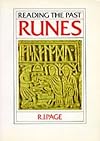
A nice overview of runes. Different chapters by country/region, which gave me a far more complete picture overall than some other, more English-centric runic books I've read. This is a quick read that packs a lot of information into a few pages. Not dry, not dense, and filled with clear photographs and large drawings, this book is sure to interest anyone who is curious about this ancient writing system.
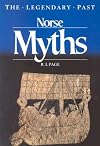
I'm introducing myself to Norse legends and myths, since I've never really spent much time with them outside of Marvel Comics. I picked this one up from my library because it was one of the few non-fiction, non-children's books dealing with the subject.
It isn't quite what I was looking for, but is very interesting regardless. It gives a broad introduction to the history and preservation of the old Norse tales while relating the stories as we have them, based on the few recorded accounts that show more have been preserved.
I really was more interested in just the stories and not so much the history of who recorded them and so this book is kind of thin. It tells the stories, but from a more clinical, less storytelling view.
Good historical accounting of what we know of the stories, but not as much fun as a bedtime tale. show less
It isn't quite what I was looking for, but is very interesting regardless. It gives a broad introduction to the history and preservation of the old Norse tales while relating the stories as we have them, based on the few recorded accounts that show more have been preserved.
I really was more interested in just the stories and not so much the history of who recorded them and so this book is kind of thin. It tells the stories, but from a more clinical, less storytelling view.
Good historical accounting of what we know of the stories, but not as much fun as a bedtime tale. show less

This is written in an engaging style, and not remotely like an academic text, which suited me well.
Overall, a good read. Worth checking if you’re interested in the Anglo-Saxon period.
Overall, a good read. Worth checking if you’re interested in the Anglo-Saxon period.
Awards

You May Also Like


Associated Authors
Statistics
- Works
- 17
- Also by
- 1
- Members
- 1,014
- Popularity
- #25,404
- Rating
- 3.8
- Reviews
- 9
- ISBNs
- 49
- Languages
- 14
- Favorited
- 1