A very thick collection of essays by Christopher Hitchens. Most of the essays are book reviews from magazines like Harpers, the Atlantic, Slate, or Vanity Fair. Reading through these is very helpful in a getting a peripheral view of Hitchens' literary diet from his childhood on. The transformation from a young Marxist intellectual into a more seasoned sceptic of politics and religion is fascinating. Probably one of the best critical minds or our age. I look forward to plowing through some of his other collections. Hopefully there won't be too much repeat.
Weir's follow up after The Martian. Hard not to be a little disappointing with it. The moon setting was interesting and I liked the economics of the city but the main character was difficult to like for me. There were so many unnecessary sex jokes and puns. It was a bit distracting. The reusable condom thing didn't really fit, so to speak. I think the ending could have been different too. Instead of the big nap, maybe Jazz could have rallied the citizens of Artemis to fight off the Brazilian mafia as they landed on the moon. Its certainly readable but not a classic.
Forbidden Brides of the Faceless Slaves in the Secret House of the Night of Dread Desire by Neil Gaiman
Neil is always getting this jab in at the literary snobs. This was a funny way of going about it. A bit short and not my favorite style of illustration, but still fun. Got to love the title for sure.
Metallic bikini on a floating sail barge...nope, not Return of the Jedi. Just Laureline doing her usual thing back in 72. The hollow planet idea is fun and the Lemm people seem familiar, hmm. Can't get enough of these old school euro comics.

A couple years ago I read A Brief and Wondrous Life of Oscar Wao by Junot Diaz, which was delightful and educational. By reading that book I learned alot about the Dominican Republic and classic fantasy and sci fiction. I thought I knew the classics pretty well, but a careful reader can put together a fairly long list of authors by taking good notes throughout Oscar Wao. One of the authors I had never heard of was E.E. "Doc" Smith and so I picked up a cheesy looking paperback copy of Triplanetary, the first "Lensman" volume.
This book was written right after WWII and reads a bit like an old episode of "Lost in Space", but there is something special going on because the book starts out with these strange historical vignettes. These are set in Atlantis, Rome, WWI Front, some future nuclear war, and then post solar system settlement. I could tell, Smith is really into obscure historical details, especially on the Rome and WWI bits. The future vocab of space pirates sounds a lot like the script from a Gidget movie. Good intel is called "dope", and some things "aren't my bag". That aside, there are truly weird aliens and Smith has thought about how they might have evolved on their home worlds. It's a bit more in depth then I thought it might be. I'm curious enough to read the next Lensman book, mainly to see if the author's writing style evolves at all. If and when that happens, I'll let you know.
This book was written right after WWII and reads a bit like an old episode of "Lost in Space", but there is something special going on because the book starts out with these strange historical vignettes. These are set in Atlantis, Rome, WWI Front, some future nuclear war, and then post solar system settlement. I could tell, Smith is really into obscure historical details, especially on the Rome and WWI bits. The future vocab of space pirates sounds a lot like the script from a Gidget movie. Good intel is called "dope", and some things "aren't my bag". That aside, there are truly weird aliens and Smith has thought about how they might have evolved on their home worlds. It's a bit more in depth then I thought it might be. I'm curious enough to read the next Lensman book, mainly to see if the author's writing style evolves at all. If and when that happens, I'll let you know.
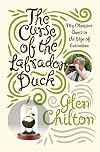
A strange little book about seeing every stuffed Labrador Duck in the world. At times, very funny, although the author seemed a little too focused on sex. I guess there are only so many ways to spice up a book about extinct ducks. Still, I'm glad I read it, especially for the interesting travel observations and the laugh out loud insights.
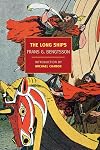
The Long Ships by Frans G. Bengtsson is a classic adventure story set in 900's in and around present day Scandinavia. The story follows the main protagonist Orm, or eventually Red Orm as his deeds are carried out. The story is written in a style similar to the original sagas using primarily verbs and nouns and matter of fact phrasing. Throughout the book is a very subtle sense of sarcasm and understatement which brings about a bit of dark humor. The author never really tells you what the characters are thinking. He is very light on exposition. The reader must discern that on their own, based on the words and actions of the characters. Also, the New York Review of Books edition has some excellent maps in the book which for me is always a plus. One of my many rules of thumb for picking a good book is, if it has a map, more than likely, its going to be entertaining.
As for the story, needless to say, The Long Ships has much in the way of violence, sword fights, ship raids, galley slaves, loot and debauchery, duels of honor, and the wooing of maidens. The writing is reserved when it comes to sex, but its still there and its rather funny. The violence however is very descriptive, as in Bernard Cornwell descriptive, which is how I prefer it. There is also some very clever between-the-lines commentary on the Scandinavian religious transition from Odinistic heathenry to Christianity. Christian priests play a rather large part in the plot both for good and ill. Expectations and show more rules regarding the honor culture of the north also play an integral part in the story line. For me, the honor rules of hospitality and story telling were the most compelling aspects, for it was not over done, but it was not swept under the rug either. Bengtsson also throws in a bunch of historical Easter eggs too, which are fun to explore and dwell on. Overall a refreshing and engaging historical adventure which I highly recommend, especially if you enjoy learning about Vikings. show less
As for the story, needless to say, The Long Ships has much in the way of violence, sword fights, ship raids, galley slaves, loot and debauchery, duels of honor, and the wooing of maidens. The writing is reserved when it comes to sex, but its still there and its rather funny. The violence however is very descriptive, as in Bernard Cornwell descriptive, which is how I prefer it. There is also some very clever between-the-lines commentary on the Scandinavian religious transition from Odinistic heathenry to Christianity. Christian priests play a rather large part in the plot both for good and ill. Expectations and show more rules regarding the honor culture of the north also play an integral part in the story line. For me, the honor rules of hospitality and story telling were the most compelling aspects, for it was not over done, but it was not swept under the rug either. Bengtsson also throws in a bunch of historical Easter eggs too, which are fun to explore and dwell on. Overall a refreshing and engaging historical adventure which I highly recommend, especially if you enjoy learning about Vikings. show less
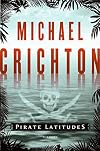
This book was a book club pick and seemed a bit rushed or unfinished. It seems Mr. Crichton had been working on this thing since the 70's and never got around to publishing it. That's probably because he never really put the finishing touches on it. It lacks any real surprises or twists. It's entertaining in a sort of swashbuckling adventure novel sort of way. Crichton was clearly a fan of historical naval trivia. He inserts a great deal of it throughout the book and I found it enjoyable. But some of the chapters felt like synopses that he never gotten around to finishing. Its a bit sad to read really. The family probably should have left this one alone and just treasured it as a family keepsake.
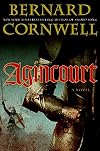
I listened to this book during my commutes this Feb/March. Like all Bernard Cornwell novels, this story was gritty and full of violence. The everyday tasks and annoyances of life in a darker time were in full view. Agincourt gives us an archer's view of this famous battle. Cornwell, as usual, gives us a very detailed look at what a battle must have been like when experienced in the front lines. Great care is given to the details of period armor and weapons, what they were specifically used for and how things like soil condition could turn a battle. The historical elements are also profound. Priests are just men, some are good and some are evil. Yeah, that sounds about right. As far as the archery goes, he hit all the right chords. When you know the things a middle ages archer would worry about on a daily basis, it makes that person slightly more relatable. As always, I look forward to more novels from this fun author.
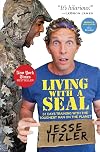
The author of Living with a SEAL, Jesse Itzler, had a plan: to have a Navy Seal live with him for 30 days in order to get in better shape goes about as well as you might imagine. This book started out as series of blog posts and it pretty much reads like one. There were not too many deep observations to be discovered here. I found myself more interested in the work out routine and wondering what the unnamed Navy Seal is thinking. There are a few insights here and there into that view point but not enough. I am a sucker for books about the Navy Seals or books by Navy Seals but sadly this did not really quench my thirst.
The other interesting part that this book offers is a glimpse into the mind of a modern wealthy business guy. Living with a Seal, in a way, falls into that non-fiction genre of "Business Self-Help". Itzler sprinkles humorous anecdotes of his business successes through the various chapters. It's not bragging, but its close.
There is some strange crossover here. When they are not doing insane exercise circuits, Itzler brings SEAL (as the character is referred to throughout the book) to various company meetings and deal pitches where SEAL's mere presence basically seals the deal (pun intended) for Itzler. This is not the intention but it seems to happen a number of times. Itzler never discloses how much he pays SEAL to live with him for a month, but one can only imagine that it is outside the normal family budget. In other words, this may not be feasible advice show more to follow if you too want to spice up your office environment and/or get ripped.
Itzler is very self-depreciating when it comes to the actual work-outs SEAL makes him perform and so that part makes Itzler seem a little more relatable. This is, after all, the man who brought us that 90's classic rap hit "Shake it Like a White Girl". In fact, might I suggest that before you decide to read this book, just go youtube the music video first and ask yourself "Does this man's work out routine matter to me?" If you can get past that answer, then you may not be disappointed in yourself for wasting your time once you finish the book. show less
The other interesting part that this book offers is a glimpse into the mind of a modern wealthy business guy. Living with a Seal, in a way, falls into that non-fiction genre of "Business Self-Help". Itzler sprinkles humorous anecdotes of his business successes through the various chapters. It's not bragging, but its close.
There is some strange crossover here. When they are not doing insane exercise circuits, Itzler brings SEAL (as the character is referred to throughout the book) to various company meetings and deal pitches where SEAL's mere presence basically seals the deal (pun intended) for Itzler. This is not the intention but it seems to happen a number of times. Itzler never discloses how much he pays SEAL to live with him for a month, but one can only imagine that it is outside the normal family budget. In other words, this may not be feasible advice show more to follow if you too want to spice up your office environment and/or get ripped.
Itzler is very self-depreciating when it comes to the actual work-outs SEAL makes him perform and so that part makes Itzler seem a little more relatable. This is, after all, the man who brought us that 90's classic rap hit "Shake it Like a White Girl". In fact, might I suggest that before you decide to read this book, just go youtube the music video first and ask yourself "Does this man's work out routine matter to me?" If you can get past that answer, then you may not be disappointed in yourself for wasting your time once you finish the book. show less
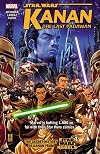
A nice little primer for Star Wars Rebels. Who doesn't love reading about Padawans and Knights training together. I love reading about the weird quirky Jedi Masters from the before time. The writing is great. The art is pretty ok, a little shiny for my taste but that's what sells these days. Still there are some great landscape panels and some neat one page layouts with diagonal panels of moons depicting the passage of time. Overall, a decent addition to the new cannon. I will gladly pick up the next volume.
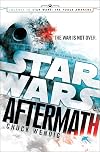
This novel flushes some details out for post Death Star II destruction. There are some interesting relationships and banter going on in this story, but I think its a bit of a set up for novels down the line. Rae Sloan was probably the most compelling character. Finally, a competent Imperial Admiral. I am interested to see where they take her. Wendig also inserted all these little interludes that shows how the downfall of the Empire affected different regions of the galaxy. What this book really makes me think about is how to keep all this new canon organized and straight. This has got to be someone's job at Disney/Lucas Arts. The "Canon Department" perhaps. Can you imagine being a writer tapped to do an approved novel and you have to remember all this stuff, all the nuances, especially when you consider all the secret storylines that Disney probably has in place for new films over the next couple decades. As a writer, do you turn in a script and hope you haven't stepped on somebody's toes, or do you get briefed in a top secret story room before you venture out on your quest to produce the next SW volume. Doesn't sound all that fun to me, but good luck to them.
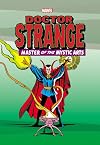
By the Hoary Hosts of Hoggoth! The wife and I went to go see the recent movie and I enjoyed it enough that I thought I owed it to myself to check out the original story line and artwork. This is 336 full color pages of Dr. Strange comics. Stan Lee and Steve Ditko came up with some pretty weird stuff and Dr. Strange probably ranks with some of the weirdest. This isn't like Lovecraft weird or Algernon Blackwood weird, but they were getting there. Most of these issues are standalone and don't really flow into one another until much later in the Strange Tales series. Not a lot of moral conflict in these first issues either. Dr. Strange never fails to do the right and selfless thing. I'm interested to see how this character evolves into the turn of the century. Still, you can taste the rumblings of counter-culture psychic mumbo-jumbo in these first stories. Ectoplasm, ESP, inter-dimensional travel, far east meditation powers, just to name a few. Plus it's married with classic occult tropes. Even demons and "shatan" himself are referenced. All in good fun of course. These are pretty tame but I could see how they might have freaked out some people back in the 60's. Heck, my mother would have burned these in a heartbeat if she ever found them hidden in my room in the 80's. Perhaps that's why they were so popular when they first came out.
Braving It: A Father, a Daughter, and an Unforgettable Journey into the Alaskan Wild by James Campbell
A father takes his teenage daughter on a series of Alaskan arctic wilderness trips. Building a cabin in the bush, trapping and hunting in the winter, and paddling the Hula Hula River. The writing style is similar to a travelogue, not too deep or insightful. Lessons on parenting, where found, are subtle. Despite the lack of big pivotal events or strong stances taken, Campbell's writing style was somehow compelling and easy to read. I kept wanting to continue to the next chapter. I think this might be more interesting for someone who has little experience in backpacking, paddling, or simply not living in Alaska. Our bookclub consensus was positive. We found ourselves discussing some of the risk management decisions in the book. For supplemental readings, the daughter (Aidan) has a very well written blog called "gritty gal".
This was a pretty fun and original graphic novel. As far as I can tell, it was long-form from the outset and it flows pretty well. The main characters are complex, especially Nimona. The setting is fantasy with science. Dragons and lasers. Knights and computers. It's a bit too adorable but it was still engaging. I think this author is also responsible for Lumber Janes, which I have heard interesting things about.
It is a bit hard to describe what this book is exactly. I learned a lot about Ruth Bader Ginsberg by reading Notorious RBG but it doesn't fit nicely into a specific category library genre. Is it a biography? Not really. Is it a memoir? No. Is it a hagiography? Pretty much, but with kitsch. Should we expect to see more titles like this as more millennials start writing books? Absolutely.
Seriously though, I did get a quick fly-by account of RBG's rise to the top of the judicial world with lots of interesting little snippets of trivia. There is probably nothing untrue about RBG in this book. The authors are clearly smitten with RBG and her specific outlook on justice. This is not necessarily a bad thing, but its very clear by the first chapter that you are not going to hear anything critical of the justice throughout the rest of the book. The book is also a bit self-congratulatory in that it sites it's authors tumblr page as being the source of RBG's hip social status in today's social media mindset.
There are lots of visual aids and unique twists to presenting information in the book. Timelines, annotated (and truncated) dissent summaries, and just downright bizarre appendixes. One features a best-of photo gallery of women (and animals) dressed up like Justice Ginsberg. These are obviously from the tumblr account created by the authors prior to the publishing of this book. The fonts are large, as are the margins. There is a two page spread of Marty Ginsberg's favorite show more recipe (milk braised pork). I can see how this might appeal to the fan girl base but I wouldn't site the book in a paper. show less
Seriously though, I did get a quick fly-by account of RBG's rise to the top of the judicial world with lots of interesting little snippets of trivia. There is probably nothing untrue about RBG in this book. The authors are clearly smitten with RBG and her specific outlook on justice. This is not necessarily a bad thing, but its very clear by the first chapter that you are not going to hear anything critical of the justice throughout the rest of the book. The book is also a bit self-congratulatory in that it sites it's authors tumblr page as being the source of RBG's hip social status in today's social media mindset.
There are lots of visual aids and unique twists to presenting information in the book. Timelines, annotated (and truncated) dissent summaries, and just downright bizarre appendixes. One features a best-of photo gallery of women (and animals) dressed up like Justice Ginsberg. These are obviously from the tumblr account created by the authors prior to the publishing of this book. The fonts are large, as are the margins. There is a two page spread of Marty Ginsberg's favorite show more recipe (milk braised pork). I can see how this might appeal to the fan girl base but I wouldn't site the book in a paper. show less
I recently had the opportunity to float down the Yukon River for 8 days through the Yukon Charley National Preserve. Since this was in conjunction with an college level natural science class, I ended up bringing a fair number of books along with me to share with our students. O' Neill's A Land Gone Lonesome was perfect companion history for this trip. In many ways, the book is a follow up to Coming into the Country by John McPhee. It is organized in a way that follows the history of the geographical area while floating down the actual river. Since we were taking the same course as O' Neill, it was convienent to read about bend in the river and its past as we were actually floating by it.
The book itself is very well researched and tackles a paradoxical problem of human relationship's with wilderness. We create preserves to prevent the destruction of a landscape, but the point of the preserve is it's development by humans in the past and human subsistence methods such as fishing, logging, hunting. It may seem like a clear cut argument to not allow any development at all in a national preserve but O' Neill makes a very clear case against the National Park's policies.
I found many similarities to the issues associated to the Chilkoot Pass Trail and their attempts to preserve history and block any changes to the landscape. For instance, take the case of trash as an artifact. There is a cut off date for when trash becomes historically significant. Anything after certain year show more need to be removed and leaving trash in the park is obviously forbidden. However, any "trash", like an old coffee can, or bent nails is an "artifact" which you are not supposed to remove from the park, or in some instance even touch.
In addition to general history, O'Neill uses interviews, legal records, policy documents, artifacts and oral history to illustrate his journey down the river. I found it very interesting and I highly recommend anyone journeying into the Yukon Charley Preserve to give it a read. show less
The book itself is very well researched and tackles a paradoxical problem of human relationship's with wilderness. We create preserves to prevent the destruction of a landscape, but the point of the preserve is it's development by humans in the past and human subsistence methods such as fishing, logging, hunting. It may seem like a clear cut argument to not allow any development at all in a national preserve but O' Neill makes a very clear case against the National Park's policies.
I found many similarities to the issues associated to the Chilkoot Pass Trail and their attempts to preserve history and block any changes to the landscape. For instance, take the case of trash as an artifact. There is a cut off date for when trash becomes historically significant. Anything after certain year show more need to be removed and leaving trash in the park is obviously forbidden. However, any "trash", like an old coffee can, or bent nails is an "artifact" which you are not supposed to remove from the park, or in some instance even touch.
In addition to general history, O'Neill uses interviews, legal records, policy documents, artifacts and oral history to illustrate his journey down the river. I found it very interesting and I highly recommend anyone journeying into the Yukon Charley Preserve to give it a read. show less
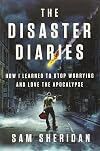
Disaster Diaries is focused on Sheridan traveling around North America learning survival skills that he feels would be useful in an apocalyptic setting. Each chapter explores a new skill set: Stunt Driving, Wilderness EMT, Mental Health, defensive pistol and rifle, building traps and hunting, knife fighting, winter survival, and the list goes on.
I enjoyed the format because for the most part Sheridan was approaching each new skill set as a beginner and he wrote from a beginner's point of view. It reminded me a bit of reading an A.J. Jacobs book (speaking of which, it would be rather fun to read about A.J. Jacobs learning how to build an igloo or how to machete an attacking cannibal). There wasn't really enough information in each chapter to be too useful for someone who is actually wanting to learn these things. This is not an authoritative guide to these skills but it was good summary. It also reminded me of other books that deal with this subject matter and helped reinforce some basic concepts. I thought the book was rather funny in places and it was cool to see someone put themselves through all these grueling classes that I could never afford to take.
Sheridan's writing style implies that he best operates within what some would call traditional gender norms. Sheridan's whole motivation for writing the book and exploring these skills is so that he can feel capable of protecting his wife and newborn son. Even though Sheridan does not come out and say that his wife is show more incapable of protecting herself, some members of our book club felt that he implied this by leaving out women as active characters in his exploration of various skills. I did not pick up on this personally but I have a lot in common with Sheridan's mind set and identity so it is fair to argue that a bias could be in play there.
Regardless, I found the book to be easy to read and interesting. If you are into prepper books or survival non-fiction texts this would entertain you perhaps but not really teach you much. The last chapter was really the most thoughtful and I wish it could have been the first chapter. Try to make it to the end if you pick up the book but can't quite bring yourself to finish it. Even though Disaster Diaries was not all-encompassing when it comes to survival subjects, it's a fun way to start learning about being prepared for disasters. It was very gratifying to come to a new chapter and get a snippet of some expert's wisdom and be able to say "Oh, I already do that, cool!" or "Huh, maybe I should consider that method or strategy." I look forward to reading Sheridan's new material. Perhaps he will write something about fatherhood soon. show less
I enjoyed the format because for the most part Sheridan was approaching each new skill set as a beginner and he wrote from a beginner's point of view. It reminded me a bit of reading an A.J. Jacobs book (speaking of which, it would be rather fun to read about A.J. Jacobs learning how to build an igloo or how to machete an attacking cannibal). There wasn't really enough information in each chapter to be too useful for someone who is actually wanting to learn these things. This is not an authoritative guide to these skills but it was good summary. It also reminded me of other books that deal with this subject matter and helped reinforce some basic concepts. I thought the book was rather funny in places and it was cool to see someone put themselves through all these grueling classes that I could never afford to take.
Sheridan's writing style implies that he best operates within what some would call traditional gender norms. Sheridan's whole motivation for writing the book and exploring these skills is so that he can feel capable of protecting his wife and newborn son. Even though Sheridan does not come out and say that his wife is show more incapable of protecting herself, some members of our book club felt that he implied this by leaving out women as active characters in his exploration of various skills. I did not pick up on this personally but I have a lot in common with Sheridan's mind set and identity so it is fair to argue that a bias could be in play there.
Regardless, I found the book to be easy to read and interesting. If you are into prepper books or survival non-fiction texts this would entertain you perhaps but not really teach you much. The last chapter was really the most thoughtful and I wish it could have been the first chapter. Try to make it to the end if you pick up the book but can't quite bring yourself to finish it. Even though Disaster Diaries was not all-encompassing when it comes to survival subjects, it's a fun way to start learning about being prepared for disasters. It was very gratifying to come to a new chapter and get a snippet of some expert's wisdom and be able to say "Oh, I already do that, cool!" or "Huh, maybe I should consider that method or strategy." I look forward to reading Sheridan's new material. Perhaps he will write something about fatherhood soon. show less
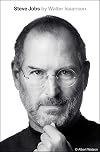
For the past three months I have had this book playing in 10 minute increments in the Jetta when I commute the 4 miles to campus. I like Walter Issacson and his other biographies, but this one seemed a bit forced. Maybe it was the fact that I was listening to it and I wasn't a big fan of the voice which seemed to miss some of the nuanced phrases. Still, it was an informative read if not a bit sad.
More likely though, my discomfort with the book had more to do with the fact that it's about Steve Jobs. For all his accomplishments, Steve was kind of a jerk to almost everyone in his life. He was a jerk, but a jerk who got really good results. The book focuses on this dichotomy and Isaccson doesn't really pull a lot of punches when it comes to painting a picture for the reader. Even though Jobs commissioned Isaccson to write this biography (a typical egoist move on Jobs part), Jobs never really saw the finished product nor did Jobs ask Isaacson to edit out the nasty parts. In effect, what we get is a list of Jobs' leadership accomplishments, which are many, but also a list of the hurt people around him. Issacson interviews everyone, multiple times. The family, the enemies, the frenemies, and they are mostly all frenemies.
It's a bit of a Faustian tale really. What if I told you that you could create a company which created incredible gizmos and networking structures which would completely reshape the world? The only catch is that you will most likely be a dick to everyone. show more History has many examples of this paradox for us to reflect on. Jobs' "reality distortion field" is not a new thing. But was his social inadequacies necessary to push the boundaries of what was possible? I don't want to say yes, but I think most people would be happy for someone else to take that bargain.
I am grateful for Jobs' work but it is still sad to hear about some of the side effects of his peculiar way of dealing with people. It's also tragic that the "reality distortion field" that enabled Jobs to will his vision into existence also betrayed him in the end. When Jobs was diagnosed with cancer, he ignored it for months and months trying to will it away with Zen Buddhism and bizarro pseudoscience. He couldn't follow his doctor's advice when it came to dieting and ultimately he wasted away. I hate to speak ill of the dead but I couldn't help but shake my head in disbelieve when I listened to this part of the book. The man was so brilliant but also believed in the most bizarre hogwash. Carrot diets? I sort of understand where he was coming from, I was vegan for eight years, but when Jobs refused to add protein to his diet after his pancreas was removed I was so angry at him. He has a family depending on him, his company, his shareholders. We want those gizmos so bad. There were several times when I was driving down Northern Lights yelling at the car "Damn it Jobs, just eat the fricking meat! You're killing yourself!" But I knew it was over for him.
Regardless, now we have imacs, apple laptops, ipods, iphones, ipads, icloud, itunes, Pixar, and probably a bunch of other things that are going to come out in the future. Jobs didn't really invent all these things but he was at the helm. I think the world is mostly better off with these devices and technologies. My iphone is extremely useful. I love Pixar movies. My macbook is very handy. Sadly though, reading this book and learning about what it took for Jobs to push it all through is a bit like watching the sausage getting made. show less
More likely though, my discomfort with the book had more to do with the fact that it's about Steve Jobs. For all his accomplishments, Steve was kind of a jerk to almost everyone in his life. He was a jerk, but a jerk who got really good results. The book focuses on this dichotomy and Isaccson doesn't really pull a lot of punches when it comes to painting a picture for the reader. Even though Jobs commissioned Isaccson to write this biography (a typical egoist move on Jobs part), Jobs never really saw the finished product nor did Jobs ask Isaacson to edit out the nasty parts. In effect, what we get is a list of Jobs' leadership accomplishments, which are many, but also a list of the hurt people around him. Issacson interviews everyone, multiple times. The family, the enemies, the frenemies, and they are mostly all frenemies.
It's a bit of a Faustian tale really. What if I told you that you could create a company which created incredible gizmos and networking structures which would completely reshape the world? The only catch is that you will most likely be a dick to everyone. show more History has many examples of this paradox for us to reflect on. Jobs' "reality distortion field" is not a new thing. But was his social inadequacies necessary to push the boundaries of what was possible? I don't want to say yes, but I think most people would be happy for someone else to take that bargain.
I am grateful for Jobs' work but it is still sad to hear about some of the side effects of his peculiar way of dealing with people. It's also tragic that the "reality distortion field" that enabled Jobs to will his vision into existence also betrayed him in the end. When Jobs was diagnosed with cancer, he ignored it for months and months trying to will it away with Zen Buddhism and bizarro pseudoscience. He couldn't follow his doctor's advice when it came to dieting and ultimately he wasted away. I hate to speak ill of the dead but I couldn't help but shake my head in disbelieve when I listened to this part of the book. The man was so brilliant but also believed in the most bizarre hogwash. Carrot diets? I sort of understand where he was coming from, I was vegan for eight years, but when Jobs refused to add protein to his diet after his pancreas was removed I was so angry at him. He has a family depending on him, his company, his shareholders. We want those gizmos so bad. There were several times when I was driving down Northern Lights yelling at the car "Damn it Jobs, just eat the fricking meat! You're killing yourself!" But I knew it was over for him.
Regardless, now we have imacs, apple laptops, ipods, iphones, ipads, icloud, itunes, Pixar, and probably a bunch of other things that are going to come out in the future. Jobs didn't really invent all these things but he was at the helm. I think the world is mostly better off with these devices and technologies. My iphone is extremely useful. I love Pixar movies. My macbook is very handy. Sadly though, reading this book and learning about what it took for Jobs to push it all through is a bit like watching the sausage getting made. show less

For as long as I can remember, I have always wanted to be knowledgeable and useful with tools and how to make things. Despite this desire, as a kid, I never really picked up any real skills even though my father and grandfather were both quite handy. Even now my father is a seasoned mill wright and manages and teaches other mill wrights. He knows his away around wood, metal, and electricity. My mother's father had his own wood working shop filled with electric tools where he made toys and furniture. In fact, almost all the men in my extended family are fairly handy with tools and can simply just make and/or fix things. There is probably a plethora of reasons why this proximity to skilled practitioners never really rub off on me, some psychological some practical. Regardless of the reasons, the desire has always been itching back there in shadows of my mind.
Now, I earn my bread as a seasoned "College Administrator" in which I solve lots of problems but the only things I really shape are young minds. I have always been a "story and ideas" guy, specializing in the abstract. I am often found with my nose in a book. A few years back I read "Shop Class as Soul Craft" by Matthew B. Crawford in which he argues many things, but mainly that the loss of making real things with our hands has deprived humans of a certain sense of meaning. I found his argument convincing and I endeavored to find a way to eek a craft into my over flowing bank of free time.
I've had two children since show more then, so you know how that goes. After lots of sorting and sifting, I settled on wood working, since I have had some nominal success building shelves for all those books I insist on keeping around the house. Woodworking is an intimidating field for a beginner, not to mention expensive. The hardest part is figuring out where to start. As a reader far away from any real wood working classes, I started checking popular publications. It took me a while but after the fifth recommendation from trusted sources, I turned my attention to this fine tome, The Anarchist's Tool Chest.
Some of my friends might think "leave it to Ben to find the only book about woodworking that incorporates fringe political philosophy" and they would be right, but only mostly. Chris Schwarz is the author of the ATC (as it's known in the world of wood working) and Chris happens to be one of the most respected wood workers in the states. This is a fact I wasn't quite apparent of when I first picked up the book. Chris is a former editor of the magazine "Popular Woodworking" and now runs an indy publishing house called Lost Art Press where the staff rescue lost tomes of yore on wood working and republish them so that their secrets might not be lost to time.
The ATC is one part political manifesto, one part tool advice, and one part tool chest plan. It is a trifecta of diverse knowledge, almost 500 pages long. I know what you're thinking: how does one crawl their way through a 500 page diatribe about wood working? Well, my dear friends, you do it with great ease. Chris is an amazing writer and reading the ATC was so enjoyable I find myself reading for hours at a time without really knowing where all of the day went. The book is very funny and I surprised my wife several times laughing out loud as we read next each other in the evening. Amber would often look over with a raised eyebrow and comment about how odd it was that wood working could be so humorous.
Besides enjoyable, the book is also inspiring. Chris makes an impassioned argument for the use of non-powered hand tools in the shop. He is not a purist, he still uses some powered tools, but he is still a champion for the traditional tried and true. He is also a practical man and believes in buying quality tools but not necessarily expensive tools. The best service this book does for the interested amateur is that it takes away some of the scary bits of where to start and what pit traps to avoid. Getting into a hobby like wood working may seem a bit intimidating but this book offers some great guidance.
I feel that the road map for this goal is now laid out for me and all I have to do is press forward. If you are interested in learning more about wood working, especially with traditional hand tools, I highly recommend The Anarchist's Tool Chest.
If you are interested in reading a pretty good blog article that might get you stoked for shop life, check out this post from AoM:
http://www.artofmanliness.com/2016/05/25/7-skills-you-should-have-learned-in-hig...
Next up on Project Wood Wright: The Essential Woodworker by Robert Wearing show less
Now, I earn my bread as a seasoned "College Administrator" in which I solve lots of problems but the only things I really shape are young minds. I have always been a "story and ideas" guy, specializing in the abstract. I am often found with my nose in a book. A few years back I read "Shop Class as Soul Craft" by Matthew B. Crawford in which he argues many things, but mainly that the loss of making real things with our hands has deprived humans of a certain sense of meaning. I found his argument convincing and I endeavored to find a way to eek a craft into my over flowing bank of free time.
I've had two children since show more then, so you know how that goes. After lots of sorting and sifting, I settled on wood working, since I have had some nominal success building shelves for all those books I insist on keeping around the house. Woodworking is an intimidating field for a beginner, not to mention expensive. The hardest part is figuring out where to start. As a reader far away from any real wood working classes, I started checking popular publications. It took me a while but after the fifth recommendation from trusted sources, I turned my attention to this fine tome, The Anarchist's Tool Chest.
Some of my friends might think "leave it to Ben to find the only book about woodworking that incorporates fringe political philosophy" and they would be right, but only mostly. Chris Schwarz is the author of the ATC (as it's known in the world of wood working) and Chris happens to be one of the most respected wood workers in the states. This is a fact I wasn't quite apparent of when I first picked up the book. Chris is a former editor of the magazine "Popular Woodworking" and now runs an indy publishing house called Lost Art Press where the staff rescue lost tomes of yore on wood working and republish them so that their secrets might not be lost to time.
The ATC is one part political manifesto, one part tool advice, and one part tool chest plan. It is a trifecta of diverse knowledge, almost 500 pages long. I know what you're thinking: how does one crawl their way through a 500 page diatribe about wood working? Well, my dear friends, you do it with great ease. Chris is an amazing writer and reading the ATC was so enjoyable I find myself reading for hours at a time without really knowing where all of the day went. The book is very funny and I surprised my wife several times laughing out loud as we read next each other in the evening. Amber would often look over with a raised eyebrow and comment about how odd it was that wood working could be so humorous.
Besides enjoyable, the book is also inspiring. Chris makes an impassioned argument for the use of non-powered hand tools in the shop. He is not a purist, he still uses some powered tools, but he is still a champion for the traditional tried and true. He is also a practical man and believes in buying quality tools but not necessarily expensive tools. The best service this book does for the interested amateur is that it takes away some of the scary bits of where to start and what pit traps to avoid. Getting into a hobby like wood working may seem a bit intimidating but this book offers some great guidance.
I feel that the road map for this goal is now laid out for me and all I have to do is press forward. If you are interested in learning more about wood working, especially with traditional hand tools, I highly recommend The Anarchist's Tool Chest.
If you are interested in reading a pretty good blog article that might get you stoked for shop life, check out this post from AoM:
http://www.artofmanliness.com/2016/05/25/7-skills-you-should-have-learned-in-hig...
Next up on Project Wood Wright: The Essential Woodworker by Robert Wearing show less
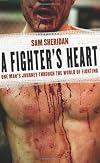
A Fighter's Heart is a memoir about fighting in competitive martial arts. It's about actually fighting in a ring or a cage, not just practicing katas or sets or working out in a school. That's part of the book too, but Sheridan is interested in exploring what makes a fighter a good fighter. Deep down, under all the fighting stuff, this is also a book about masculine psychology. It's a little bit of philosophy, a little bit of travel writing, fitness and diet, and some history regarding the recent evolution of organized fights. All these topics are integrated very well. Sheridan is an excellent writer and I found the book to be very engaging. It made me think quite a bit about violence and human evolution. I practiced a martial art for eight years during and after my college years but I never fought in a match. Part of me has always wanted to and for the same reasons Sheridan does and I was able to identify with his quest to test himself. Sheridan wants to know if he can hack it. If he can show gameness or not.
In the last twenty years or so, MMA has exploded as has the BJJ ground game and Sheridan gets into the specifics of how that came about. He spends a lot of time interviewing coaches and other fighters while he is fighting and training with them at their various gyms and venues. The book follows him through Muay Thai Camp, MMA wrestling in Iowa, BJJ training in Brazil, Pride in Japan, Boxing in Oakland, CA, Tai Chi Chaun in New York, dog fights in the US and the show more Philippines, meditation back in Thailand (and more Muay Thai) and then stunt fighting for Hollywood movies. The similarities between all the fighting arts is fascinating to compare. Sam is writing from a journalist point of view but he is actually training and fighting through out the whole book. If you are interested in exploring the topic of violence then this is a great read. If you practice martial arts, especially if you do cage or ring fighting, then this book might be an interesting read too. I look forward to reading his second book, A Fighter's Mind. show less
In the last twenty years or so, MMA has exploded as has the BJJ ground game and Sheridan gets into the specifics of how that came about. He spends a lot of time interviewing coaches and other fighters while he is fighting and training with them at their various gyms and venues. The book follows him through Muay Thai Camp, MMA wrestling in Iowa, BJJ training in Brazil, Pride in Japan, Boxing in Oakland, CA, Tai Chi Chaun in New York, dog fights in the US and the show more Philippines, meditation back in Thailand (and more Muay Thai) and then stunt fighting for Hollywood movies. The similarities between all the fighting arts is fascinating to compare. Sam is writing from a journalist point of view but he is actually training and fighting through out the whole book. If you are interested in exploring the topic of violence then this is a great read. If you practice martial arts, especially if you do cage or ring fighting, then this book might be an interesting read too. I look forward to reading his second book, A Fighter's Mind. show less
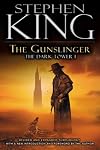
I have been meaning to read this book for quite a while. I bought my current copy six years ago and it has been sitting on my shelf since then. It has been recommended to me often by friends I hold dear, but I was reluctant to start it. This is probably because I know I will want to finish the series and that is a huge time commitment. Well, The Gunslinger was selected last month by our book club and I knew I could avoid it no longer. It took no time at all to finish and it went very quickly. I liked the story very much but I had to work through a lot misconceptions going in. It's Stephen King and Stephen King could mean a lot of things. Horror this was not though. Once I accepted that, the story became more digestable. It's hard for me to describe why I liked this style of writing so much. The story is not straight forward, time and its passing is elusive, and the land the gunslinger inhabits is partially void of reason and logic. King throws around clues here and there but he doesn't come out and just say "sometime in the distant future". It reminds me a great deal of Gene Wolfe's "Claw of the Conciliator" stories in that way. Odd that those came out around the same time. I can also see where perhaps Phillip Pullman got the inspiration for his "Dark Materials" trilogy. Lot's of parallels there.
I look forward to picking up the next title in the series, The Drawing of the Three.
I look forward to picking up the next title in the series, The Drawing of the Three.
The Buried Book is the second book in my Summer 2016 Babylonia Reading List. This volume mainly covers the discovery of the ancient ruins of the Babylonian cities, such as Nineveh, Uruk, and Babylon. To be fair, there locations were already known but no excavations had really taken place until the mid 1800's. Most of chapters have to do with the drama between the different colonial powers racing to uncover new clues in the clay tablet quest. Furthermore, there is even more drama between various British archeologists vying for credit on different discoveries and finds. it's all very colonial with very colorful characters bumbling about in the desert. There is a nice summary chapter on the Babylonian Kingdoms that came right before the Persian take over. It was surprising to see just how complex these cities were. Uruk was just huge. The city walls went on for miles. Whole date orchards were encompassed by these walls. Every merchant you could imagine hawked there wares and services in the cities. According to the Sumerian (pre-Babylonian) poem The Death of Gilgamesh, Gilgamesh is planning his own tomb and listing out all of his favorite people he is going to bring into the netherworld with him. This list includes Gilgamesh's favorite barber. I guess it's not too surprising but I just love the idea that there have been cities with barbers for 4000 years. I can't imagine this particular barber was too thrilled to be "honored" in this way, but there you go.
In that mundane show more vein, another delightful part of The Buried Book involves all the various subjects that these uncovered cuneiform tablets contain. The Epic of Gilgamesh is a grand standard tale that was used to teach new scribes how to write cuneiform (which is why we have so many varying pieces of it). But there are far more day-to-day tablets tabulating all manner of things like inventory lists, missives from workshop masters to his apprentices on how to carry out assignments, and complaint tablets. Which leads me to my favorite tablet: a merchant complaining to the king about how one of the king's sons was driving his chariot too fast through the city of Nineveh and knocked over some barrels and didn't stop to make amends. I can just imagine King Shugli having one of his eunuchs coming into the court room going "Uh, your highness, there is a delicate matter I need to discuss with you regarding Prince Ashabanapli" and the king is just all face-in-palm, groaning. Now remember, this is before Homer and before the first versions of the Old Testament were even being inked out on a scroll. It's just hilarious to me that there is actual literal evidence that teenagers and moving vehicles have been a pain in the ass since the dawn of civilization.
Lastly, there is a curious little epilogue regarding Saddam Hussein's interest in Gilgamesh. In his last years in power, Hussein wrote a bizarre romance novel casting himself as a weird version of Gilgamesh. I was also randomly reminded that Hussein was a trained assassin in his youth which led to some equally bizarre misadventures. Also "Dic-Lit" is apparently a thing: literature written by dictators. It's mostly all pretty bad writing. Surprise, surprise.
Anyway, next up on the Babylonian Reading List is Gods, Graves, and Scholars by G.W. Ceram. I really liked reading about the competition between the Victorian archaeologists and I read somewhere that Indiana Jones' character was partly inspired by the archaeologists outlined in Ceram's volume. For instance, that scene in Raiders of the Lost Ark when Indi finds out that the Nazi's are digging in the wrong spot for the Ark of the Covenant and he gets a bunch of laborers to dig in the middle of the night so that the Nazis wouldn't find out till the morning. Yeah, that sort of actually happened but it was just outside Mosul and it was the British/Arab Hormuzd Rassam digging on French archaeologist Victor Place's turf for the lost Archives of Ashurbanipal (which Rassam totally found in one night by the way). Can't wait to "dig" into that book (see what I did there). But, firstly, I need to read Stephen King's The Gunslinger for book club. It might be awhile before you hear back from me regarding anymore juicy archeologist stories. show less
In that mundane show more vein, another delightful part of The Buried Book involves all the various subjects that these uncovered cuneiform tablets contain. The Epic of Gilgamesh is a grand standard tale that was used to teach new scribes how to write cuneiform (which is why we have so many varying pieces of it). But there are far more day-to-day tablets tabulating all manner of things like inventory lists, missives from workshop masters to his apprentices on how to carry out assignments, and complaint tablets. Which leads me to my favorite tablet: a merchant complaining to the king about how one of the king's sons was driving his chariot too fast through the city of Nineveh and knocked over some barrels and didn't stop to make amends. I can just imagine King Shugli having one of his eunuchs coming into the court room going "Uh, your highness, there is a delicate matter I need to discuss with you regarding Prince Ashabanapli" and the king is just all face-in-palm, groaning. Now remember, this is before Homer and before the first versions of the Old Testament were even being inked out on a scroll. It's just hilarious to me that there is actual literal evidence that teenagers and moving vehicles have been a pain in the ass since the dawn of civilization.
Lastly, there is a curious little epilogue regarding Saddam Hussein's interest in Gilgamesh. In his last years in power, Hussein wrote a bizarre romance novel casting himself as a weird version of Gilgamesh. I was also randomly reminded that Hussein was a trained assassin in his youth which led to some equally bizarre misadventures. Also "Dic-Lit" is apparently a thing: literature written by dictators. It's mostly all pretty bad writing. Surprise, surprise.
Anyway, next up on the Babylonian Reading List is Gods, Graves, and Scholars by G.W. Ceram. I really liked reading about the competition between the Victorian archaeologists and I read somewhere that Indiana Jones' character was partly inspired by the archaeologists outlined in Ceram's volume. For instance, that scene in Raiders of the Lost Ark when Indi finds out that the Nazi's are digging in the wrong spot for the Ark of the Covenant and he gets a bunch of laborers to dig in the middle of the night so that the Nazis wouldn't find out till the morning. Yeah, that sort of actually happened but it was just outside Mosul and it was the British/Arab Hormuzd Rassam digging on French archaeologist Victor Place's turf for the lost Archives of Ashurbanipal (which Rassam totally found in one night by the way). Can't wait to "dig" into that book (see what I did there). But, firstly, I need to read Stephen King's The Gunslinger for book club. It might be awhile before you hear back from me regarding anymore juicy archeologist stories. show less
I am taking on the subject of Babylonian Civilization this summer. To get started, I'm rereading the oldest story ever written by humans. How old? Try 4000 years old. Not only is it the oldest, but it is written in a dead language and it was buried for a couple thousand years before some British archaeologists dug it up in the Iraqi desert in the mid 1800's. It took another 50 years before it was translated into English.
I've read an adaptation of Gilgamesh before but never a scholarly translation that was directly translated from the cuneiform tablets. Andrew George's translation is considered one of the standards and I found it very readable even though there are gaps here and there to represent where the tablets are broken. In a sense, this made the work of translation more apparent and interesting. In fact, there is a whole system in place that emphasizes when and where certainty and speculation are used in the story. Italics and brackets are all over the place, but once you figure out the code, it adds a lot to the reading experience.
In addition to the standard Gilgamesh tablets, there are older Sumerian tablets that are translated and included in this Penguin edition. The Sumerian tablets are older but translated from Sumerian and not Akkadian. They tend to be less standardized, with characters switching names or roles here and there. The notes help sort all this out. The introduction is also very interesting and helps lay some crucial groundwork for placing this show more story in context to the history of the Babylonian Empire.
If you are like me and love Homer and all the other early epics you will want to familiarize yourself with this most excellent story. Just as interesting is the story of its discovery. Check out The Buried Book by David Damrosch to learn more about that. If you want to learn more about the ancient history of the area in audio format, check out Dan Carlin's podcast "Hardcore History -King of Kings" series. show less
I've read an adaptation of Gilgamesh before but never a scholarly translation that was directly translated from the cuneiform tablets. Andrew George's translation is considered one of the standards and I found it very readable even though there are gaps here and there to represent where the tablets are broken. In a sense, this made the work of translation more apparent and interesting. In fact, there is a whole system in place that emphasizes when and where certainty and speculation are used in the story. Italics and brackets are all over the place, but once you figure out the code, it adds a lot to the reading experience.
In addition to the standard Gilgamesh tablets, there are older Sumerian tablets that are translated and included in this Penguin edition. The Sumerian tablets are older but translated from Sumerian and not Akkadian. They tend to be less standardized, with characters switching names or roles here and there. The notes help sort all this out. The introduction is also very interesting and helps lay some crucial groundwork for placing this show more story in context to the history of the Babylonian Empire.
If you are like me and love Homer and all the other early epics you will want to familiarize yourself with this most excellent story. Just as interesting is the story of its discovery. Check out The Buried Book by David Damrosch to learn more about that. If you want to learn more about the ancient history of the area in audio format, check out Dan Carlin's podcast "Hardcore History -King of Kings" series. show less
I know I'm behind on these, to the tune of 15 years or so, but Y : The Last Man falls into a specific category of requisition in my book hunting ethos. That category is the one where I only buy the next volume if I come across it used in a book store. If I bought every hardcover deluxe edition of every comic series that I want to read I would burn through my annual book budget in a month. Buying them half price only when they present themselves through sheer luck keeps things in check.
That's a long way of saying that I was so stoked when I found Volume 3 of YTLM used at my local bookstore for only $14 instead of the usual $30. This volume was great and funny and full of all kinds of sex. This one is definitely going on the high shelf for a while. Yorick makes it all the way California and has some good times and some not so good times. I'm glad that the supernatural cause of the gendercide plague gets pretty much ruled out. I would have been ok with that but I would have wanted a lot more explanation. The best part of the this whole series is how the different groups of women react to Yorick's existence. He inspires hope in some and murder in others. In fact, it's crazy how many people are constantly trying to kill Yorick.
I would love to know more how San Francisco was able to maintain order after the gendercide. Food production, electricity, and trains? Not that women wouldn't be able to handle those tasks, that's not what I mean. More that when you eliminate half the show more population regardless of gender, instantly, it's hard to just staff all those utilities. Not to mention all the post plague suicide rate skyrocketing. I guess you wouldn't have to worry about childcare as much anymore. So many questions. Anyway, there are two more to acquire before the story concludes. show less
That's a long way of saying that I was so stoked when I found Volume 3 of YTLM used at my local bookstore for only $14 instead of the usual $30. This volume was great and funny and full of all kinds of sex. This one is definitely going on the high shelf for a while. Yorick makes it all the way California and has some good times and some not so good times. I'm glad that the supernatural cause of the gendercide plague gets pretty much ruled out. I would have been ok with that but I would have wanted a lot more explanation. The best part of the this whole series is how the different groups of women react to Yorick's existence. He inspires hope in some and murder in others. In fact, it's crazy how many people are constantly trying to kill Yorick.
I would love to know more how San Francisco was able to maintain order after the gendercide. Food production, electricity, and trains? Not that women wouldn't be able to handle those tasks, that's not what I mean. More that when you eliminate half the show more population regardless of gender, instantly, it's hard to just staff all those utilities. Not to mention all the post plague suicide rate skyrocketing. I guess you wouldn't have to worry about childcare as much anymore. So many questions. Anyway, there are two more to acquire before the story concludes. show less
My general expereince with Marvel comics is usually one of disappointment and general "meh". I had heard so many good things about Fraction's Hawkeye though, I had to pick it up when I saw it used at the bookstore last week. I am very glad I did. Fraction and company have got something very refreshing going on here. The cool factor is two fold: 1) Aja and the other illustrators have clearly been influenced by some of the indy graphic novels coming out over the past decade or so. There are a couple pages that look like they came straight out of a Chris Ware book. Also, the color palette is way toned down and is muted to only 5 or 6 colors per page. This gives it an edgy rough pulpy look that had me hooked from the first issue. I am sure there is a more technical term for this, but Marvel's usual fair has been high gloss, 100 colors in a single box, with extremely disproportionate anatomy for both genders. Sometimes I'm all about that, but Fraction's Hawkeye characters look more realistic. Gone are the latex booty pants and Captain Upperbody physiques. Clint and Kate look like normal fit people doing regular things.
That gets me to the second reason why this Hawkeye is so intriguing: the story isn't about Hawkeye the Avenger, it's about Clint after work hanging out in his apartment complex chilling with regular people. Sure there are the bad guys, but it's not "end of the world" bad guys. They are the local Russian Mafia buffoons in their matching Ali G track suits saying show more "Bro" in every text bubble. Clint also has regular everyday lady problems. The relationships are complex, there are no gratuitous sex bits (well, maybe one), and the female characters are clearly more intelligent and thoughtful than Clint is.
There are other superheros here and there, but their not doing superhero stuff that much. The Christmas Issue has Hawkeye and Tony Stark arguing over how to hook up a DVR in Hawkeye's run down loft apartment. Why are they intensely trying to get a DVR hooked up? Because Hawkeye's single-mom neighbor's kids want to watch a Christmas special and she needs some time to go out with her girlfriends. Everybody in the apartment building knows he's "Hawkguy" or "Hawkface" but they don't really care. They just want to hangout on the roof BBQing. Anyway, Fraction's writing is clever and funny. I laughed out loud in every issue. I highly recommend checking it out, especially if you looking for a fresh look with some classic Marvel characters. show less
That gets me to the second reason why this Hawkeye is so intriguing: the story isn't about Hawkeye the Avenger, it's about Clint after work hanging out in his apartment complex chilling with regular people. Sure there are the bad guys, but it's not "end of the world" bad guys. They are the local Russian Mafia buffoons in their matching Ali G track suits saying show more "Bro" in every text bubble. Clint also has regular everyday lady problems. The relationships are complex, there are no gratuitous sex bits (well, maybe one), and the female characters are clearly more intelligent and thoughtful than Clint is.
There are other superheros here and there, but their not doing superhero stuff that much. The Christmas Issue has Hawkeye and Tony Stark arguing over how to hook up a DVR in Hawkeye's run down loft apartment. Why are they intensely trying to get a DVR hooked up? Because Hawkeye's single-mom neighbor's kids want to watch a Christmas special and she needs some time to go out with her girlfriends. Everybody in the apartment building knows he's "Hawkguy" or "Hawkface" but they don't really care. They just want to hangout on the roof BBQing. Anyway, Fraction's writing is clever and funny. I laughed out loud in every issue. I highly recommend checking it out, especially if you looking for a fresh look with some classic Marvel characters. show less
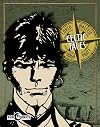
Corto Maltese! This is an awesome 1970's Italian pulp adventure comic given to me by Tom as a birthday present. This particular volume covers some WWI adventures in and around England, Ireland and Germany, hence the subtitle "Celtic Tales". All black and white, almost realist style, everyone is a bit elongated, but it works. Corto is a bit of an anti-hero but has a soft side. Sometimes he's jacking hidden gold on the western front, sometimes he's hanging with Senn Fein operatives, sometimes he's steering a tugboat on a suicide run against a German U-Boat. Here is a sample chapter title: "Concerto in O' Minor for Harp and Nitroglycerine". It's not just pulpy though, there are dozens of literary references throughout: D.H. Lawrence, Hemingway, Morte D'Arthur, The Song of Roland, Cervantes. Hugo Pratt knows his stuff but likes to have fun too.
Speaking of Pratt, the bio on this guy is incredible. His mother trained him at a young age in the esoteric secrets of Kabbalah and cartomancy. When he was fourteen years old he was forced to join the colonial police in Abyssinia where his father served as soldier in the Italian Army. After Italy surrendered in WWII, he returned at the age of 21 and served as an interpreter for the allied forces. Then he moved to Argentina to join a comic writers commune. He traveled the world going on adventures and eventually retired to Switzerland where he died on the Lake of Lausanne in 1995. Sounds like a full life.
Anyway, I thoroughly enjoyed show more the story lines and appreciated a comic where the author expects you to know the cultural high marks of various literary traditions. I plan on picking up the other volumes as they are translated into English by EuroComics IDW. Thanks for hooking me up Tom. show less
Speaking of Pratt, the bio on this guy is incredible. His mother trained him at a young age in the esoteric secrets of Kabbalah and cartomancy. When he was fourteen years old he was forced to join the colonial police in Abyssinia where his father served as soldier in the Italian Army. After Italy surrendered in WWII, he returned at the age of 21 and served as an interpreter for the allied forces. Then he moved to Argentina to join a comic writers commune. He traveled the world going on adventures and eventually retired to Switzerland where he died on the Lake of Lausanne in 1995. Sounds like a full life.
Anyway, I thoroughly enjoyed show more the story lines and appreciated a comic where the author expects you to know the cultural high marks of various literary traditions. I plan on picking up the other volumes as they are translated into English by EuroComics IDW. Thanks for hooking me up Tom. show less
What a super fun space opera! I haven't seen the Expanse but I certainly want to now. Leviathan Wakes was great and very quick to read. The story has an awesome gritty space truckers feel to half of it. I kept imaging the oil rig crew from the movie Abyss. The other half is crime-noir detective but on an asteroid space station. Lot's of gray, lot's of corruption and politics. Best of all, the science was plausible and lent the story another level of verisimilitude. The plot gets progressively complex and there are even some laugh out loud winks to classic sci-fi and horror that I won't spoil here.
Speaking of subtle winks, my copy of the book had an interesting interview in the back and I was surprised to find out that James S. A. Corey is a pen name for two different writers Daniel Abraham and Ty Franck. These two folks are part of the New Mexico Critical Mass Writers Group based in Albuquerque, NM. This writers' group includes George R.R. Martin and S.M. Stirling who I happen to read a lot of. It's fun for me to think about how those conversations look. It's easy for consumers of fiction to forget all the work and refinement that goes into a well crafted story. For every minute it takes for me to read one chapter of good fiction, I need to remember that days and days went into creating it. Even more so for graphic novels.
Anyway, a fun little series that I look forward to following. Ugh, another series that I am hooked on and it's a show which I know I'm going to have show more to watch. Gotta find more time in my week. show less
Speaking of subtle winks, my copy of the book had an interesting interview in the back and I was surprised to find out that James S. A. Corey is a pen name for two different writers Daniel Abraham and Ty Franck. These two folks are part of the New Mexico Critical Mass Writers Group based in Albuquerque, NM. This writers' group includes George R.R. Martin and S.M. Stirling who I happen to read a lot of. It's fun for me to think about how those conversations look. It's easy for consumers of fiction to forget all the work and refinement that goes into a well crafted story. For every minute it takes for me to read one chapter of good fiction, I need to remember that days and days went into creating it. Even more so for graphic novels.
Anyway, a fun little series that I look forward to following. Ugh, another series that I am hooked on and it's a show which I know I'm going to have show more to watch. Gotta find more time in my week. show less
Well, Jack Donovan's new book is out and as usual, his writings give me pause and offer a completely different way of viewing existence. This collection of essays flows nicely and each chapter builds upon the previous to provide a compelling argument for tribalism as a necessary (inevitable?) development for modern civilization. These essays answer a lot of questions that I had after reading The Way of Men. In my undergrad days I read a lot of anarcho-syndicalist material and I see many similarities, at least with the assessment of state power and hyper-capitalism. But what eventually turned me off to Kropotkin and Rocker and Chomsky was their inattention to human nature and cultural tendencies. They were far to idealistic. Donovan is more or less hinging his arguments off of basic principles in evolutionary biology and evolutionary psychology. That still leaves some issues for me but it's closer to seeming plausible.
Donovan acknowledges that the State is too powerful (right now) to go head to head or even just to live in explicit defiance. It is impossible to live outside of the State's reach, therefore one should build a tribal network under the radar, so to speak. This is where things get a little fuzzy. I think Donovan is banking on the slow decline of empire instead of the popularized "one second after" model where every thing goes to crap over a week or so. In the slow decline, there is no one day when the State ceases to be. It's just a gradual loss of economic show more strength and ability to project power. Nature abhors a vaccuum so tribes will fill in the gaps. This is not unlike when Rome started shrinking and leaving it's fringes hanging out to dry (think 500 - 600 AD Brittania). I'm not quite sure we are in the same boat this time around. Who is to say other empires will not fill that void?
Still, I get where he is going with this, and its interesting to ponder. I am left asking a few big questions. Is conquest, exploration, innovation, and expansion possible or important with out the Empire of Nothing? To what end is tribalism? This can easily be asked of the State as well but I'm having trouble imagining small tribes coming together to create new vaccines, optimizing energy use, establishing new colonies on Mars. What does High Barbarian Life look like? If tribalism can't accomplish these things, does it matter? I see the appeal of "what is best in life?" But eventually Conan becomes a king, and the kingdom becomes an empire anew. Is this cyclical nature our destiny? I'm not saying I prefer the Empire of Nothing, but is there no point in trying to break free of that cycle into something more meaningful? show less
Donovan acknowledges that the State is too powerful (right now) to go head to head or even just to live in explicit defiance. It is impossible to live outside of the State's reach, therefore one should build a tribal network under the radar, so to speak. This is where things get a little fuzzy. I think Donovan is banking on the slow decline of empire instead of the popularized "one second after" model where every thing goes to crap over a week or so. In the slow decline, there is no one day when the State ceases to be. It's just a gradual loss of economic show more strength and ability to project power. Nature abhors a vaccuum so tribes will fill in the gaps. This is not unlike when Rome started shrinking and leaving it's fringes hanging out to dry (think 500 - 600 AD Brittania). I'm not quite sure we are in the same boat this time around. Who is to say other empires will not fill that void?
Still, I get where he is going with this, and its interesting to ponder. I am left asking a few big questions. Is conquest, exploration, innovation, and expansion possible or important with out the Empire of Nothing? To what end is tribalism? This can easily be asked of the State as well but I'm having trouble imagining small tribes coming together to create new vaccines, optimizing energy use, establishing new colonies on Mars. What does High Barbarian Life look like? If tribalism can't accomplish these things, does it matter? I see the appeal of "what is best in life?" But eventually Conan becomes a king, and the kingdom becomes an empire anew. Is this cyclical nature our destiny? I'm not saying I prefer the Empire of Nothing, but is there no point in trying to break free of that cycle into something more meaningful? show less
Dang, this is a dense book and I mean that in the physical sense. 1000 + pages makes this tome a formidable improvised weapon. It was easy to plow through though. I enjoyed getting into this fantasy world and exploring all the little cultural nuances Sanderson has planted here and there. He has a reputation for this sort of thing and he did not disappoint me. The main characters were compelling although I think we could of cut a 100 pages here or there from the Bridge Four story and still been alright. Same thing goes for the Dalinar story line. Still, lots of good build up with some clever tie ins and big reveals at the end. The last 100 pages were totally engrossing and I had a hard time putting down the book to get some sleep. Lot's of questions left unanswered and I look forward to checking out the next volume. I need some time though to get through some shorter books before I take on that behemoth.