
Elias Lönnrot (1802–1884)
Author of Kalevala
About the Author
Image credit: Elias Lannrot
Series
Works by Elias Lönnrot
Vanha Kalevala, taikka, Vanhoja Karjalan runoja Suomen kansan muinosista ajoista : 1835 (2017) 6 copies
Kalevala I. Runot 2 copies
Kuva-Kalevala 1 copy
Kantelettaren lauluja 1 copy
Suomalais-ruotsalainen sanakirja. Edellinen osa : A-M = Finskt-svenskt lexikon. Förra delen : A-M 1 copy, 1 review
Suomalais-ruotsalainen sanakirja. Jälkimäinen osa : N-Ö = Finskt-svenskt lexikon. Senare delen : N-Ö 1 copy, 1 review
Kantele 1 copy
Kalevala lood : Martti Haavio ümberjutustus lastele E. Lönnroti koostatud soome rahvuseeposest "Kalevala" (1981) 1 copy
Elias Lönnrotin matkat. I osa : vuosina 1828-1839 - Elias Lönnrotin syntymän satavuotismuistoksi 1 copy
קאַלעװאַלאַ 1 copy
Associated Works
Tagged
Common Knowledge
- Canonical name
- Lönnrot, Elias
- Legal name
- Lönnrot, Elias
- Birthdate
- 1802-04-09
- Date of death
- 1884-03-19
- Gender
- male
- Education
- Academy of Turku
Imperial Alexander University in Finland (MD|1832) - Occupations
- folklorist
poet
philologist
lexicographer
Professor of Finnish Language
physician - Organizations
- Imperial Alexander University in Finland
Finnish Literature Society - Short biography
- Elias Lönnrot (1802–1884) was a Finnish philologist and collector of traditional Finnish oral poetry. He is best known for composing the Kalevala, the Finnish national epic compiled from national folklore. His true passion lay in his native Finnish language. He began writing about the early Finnish language in 1827 and began collecting folk tales from the rural people about that time. Lönnrot went on extended leaves of absence from his doctor's office; he toured the countryside of Finland, Sapmi (Lapland), and nearby portions of Russian Karelia to support his collecting efforts. This led to a series of books: Kantele, 1829–1831 (the kantele is a Finnish traditional instrument); Kalevala, 1835 (better known as the "old" Kalevala); Kanteletar, 1840; Sananlaskuja, 1842 (Proverbs); an expanded second edition of Kalevala, 1849 (the "new" Kalevala); and Finsk-Svenskt lexikon, 1866–1880 (Finnish-Swedish Dictionary). Lönnrot was recognised for his part in preserving Finland's oral traditions by appointment to the Chair of Finnish Literature at the University of Helsinki. He died on 19 March 1884 in Sammatti, in the province of Uusimaa.
- Nationality
- Russian Empire
- Birthplace
- Sammatti, Finland
- Places of residence
- Sammatti, Swedish Finland (birth|now Finland)
Sammatti, Russian Finland (death|now Finland) - Place of death
- Sammatti, Finland
- Map Location
- Finland
Members
Reviews
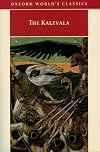
Oh my goodness, this is a real treasure!
I was expecting this classic Finnish mythos, this fantasy epic, to be kinda dense and worldly and weighty, but I didn't expect it to be totally readable, droll, classy, and exciting. I also didn't expect to see it as the source material for so many classics I adore, including most of the stories behind Tolkien's [b:The Silmarillion|7332|The Silmarillion (Middle-Earth Universe)|J.R.R. show more Tolkien|https://d2arxad8u2l0g7.cloudfront.net/books/1336502583s/7332.jpg|4733799] and a good portion of his LoTR.
It reads like a fantastically mythical adventure from start to Finnish and it's no wonder, even in the English translation and the narrator I got for this audiobook, a ton of love was put into it. I see now exactly how well-beloved it is and why it is so. :) :) :)
I'm blown away. By epic poetry. Hmmmm Maybe this means I need to do a poetry kick, next. :)
And no, I didn't do a line by line analysis of this text, but I did pick up some really awesome beauties in it, such as procession of the equinoxes, Rosy-Cross alchemical transformations, World-Tree as Sampo, and the most huge current of the mythical Singer and Smith.
Orpheus? Hell yeah. And the Master Forger? Another hell yeah. The later adventure actually just brought tears to my eyes. :) Totally had me dancing in my seat with joy. :)
My only complaint was the Guides For New Brides and Guides For New Husbands. lol, that stuff was a riot of wtf. Maybe it would have gone down better if I was a brawny anachronism. :) But no, I'm a modern man and none of that shit flew. :)
Everything else, though? I was really impressed that women still refused to lay down and take it, but still a lot of that still happened in the text. And no matter my personal opinions on a lot of what happened, I cannot help but see this epic as totally brilliant. I could see myself memorizing it and doing a cant and impressing all the drunks. :) show less
I was expecting this classic Finnish mythos, this fantasy epic, to be kinda dense and worldly and weighty, but I didn't expect it to be totally readable, droll, classy, and exciting. I also didn't expect to see it as the source material for so many classics I adore, including most of the stories behind Tolkien's [b:The Silmarillion|7332|The Silmarillion (Middle-Earth Universe)|J.R.R. show more Tolkien|https://d2arxad8u2l0g7.cloudfront.net/books/1336502583s/7332.jpg|4733799] and a good portion of his LoTR.
It reads like a fantastically mythical adventure from start to Finnish and it's no wonder, even in the English translation and the narrator I got for this audiobook, a ton of love was put into it. I see now exactly how well-beloved it is and why it is so. :) :) :)
I'm blown away. By epic poetry. Hmmmm Maybe this means I need to do a poetry kick, next. :)
And no, I didn't do a line by line analysis of this text, but I did pick up some really awesome beauties in it, such as procession of the equinoxes, Rosy-Cross alchemical transformations, World-Tree as Sampo, and the most huge current of the mythical Singer and Smith.
Orpheus? Hell yeah. And the Master Forger? Another hell yeah. The later adventure actually just brought tears to my eyes. :) Totally had me dancing in my seat with joy. :)
My only complaint was the Guides For New Brides and Guides For New Husbands. lol, that stuff was a riot of wtf. Maybe it would have gone down better if I was a brawny anachronism. :) But no, I'm a modern man and none of that shit flew. :)
Everything else, though? I was really impressed that women still refused to lay down and take it, but still a lot of that still happened in the text. And no matter my personal opinions on a lot of what happened, I cannot help but see this epic as totally brilliant. I could see myself memorizing it and doing a cant and impressing all the drunks. :) show less
The Kalevala: An Epic Poem after Oral Tradition by Elias Lönnrot (Oxford World's Classics) by Elias Lönnrot
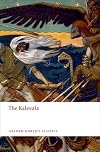
One of the most recent rendering of oral folkore and myth into an epic cycle is Elias Lönnrot’s The Kalevala, shaped as a literary creation in the nineteenth century out of the author’s research collecting oral lore in stories and songs in Finland and rendering them into a continuous narrative in verse. As such it compares with earlier renderings of traditional lore such as Snorri Sturlsson’s Edda and also provides some insights into how oral sources can be shaped into literature as show more they are, for instance, in some of the medieval Welsh tales collected as ‘The Mabinogion’. I have dipped into The Kalevala before in a prose translation but have only recently fully engaged with it in Keith Bosley’s vivid and highly readable verse translation. It is the work of a poet, it is also a work where things happen by the right words being found and spoken to make them happen: “Steady old Väinämöinen. put this into words, spoke thus” and because his words are better than his opponent’s words, the battle is won.
What is striking is the way that the chief characters simultaneously inhabit the personas of gods, shamans, bards and ordinary human beings. This too is reminiscent of, for instance, Rhiannon in the medieval Welsh tales riding magically across the landscape from the Otherworld and then continuing to live here as if she were a human character while also appearing in another tale in the cycle with magical birds that can sing people into an enchanted state. The main character in The Kalevala is Väinämöinen who is first met as an agent of the Creation, helping to put the sky in place and shape the world as we know it. But he continues to inhabit that creation as a human being, sometimes with enhanced powers but at other times as a vulnerable person with all-too-human weaknesses. He is a bard who can use his songs as powerful spells, turning aside the songs of a young rival and consigning him into a swamp with his own songs. He is a shaman who journeys to Tuonela, the Land of the Dead, to gather spells from another powerful shaman who has died. He also travels there to get the words he needs to create a boat to go to woo the daughter of The Mistress of Northland, though when he goes to her his friend, the younger Smith God Ilmarinen, is the preferred suitor and he must stand meekly aside.
When the focus then turns to Ilmarinen, the Smith is given apparently impossible tasks to fulfil, reminiscent of those given in other such wooing stories in the international folklore canon identified as the motif of ‘The Giant’s or Magician’s Daughter’. But it is not a giant or magician who sets the tasks but The Mistress of Northland, and it is now Ilmarinen who must travel to Tuonela to fulfil one of them. Having done so the narrative continues to treat the wedding and subsequent events as if they are the domestic arrangements of ordinary humans, incorporating elements of the folklore wisdom of rural life in Finland. This shifting of the signifier backwards and forwards from mundane through heroic to divine activities occurs quite naturally as the narrative progresses and Bosley’s verse translation (using a short seven-syllable line as a base, but varying from five to nine syllables where required) is always fully engaged with these shifts of significance and evocative in its expression of them at all levels.
In Väinämöinen’s bardic prowess and his claims to having been present at the Creation, there are echoes of the bardic boasts contained in the medieval Welsh Book of Taliesin. Similarly, in his journeys to the Netherwold to get what he wants, in particular to regain words and songs that “should not be hidden” we might also think of the claims of Taliesin or other bards for the source of poetic inspiration or ‘Awen’. Just as The Book of Taliesin has a raid on the Otherworld to capture a magical cauldron, The Kalevala has a raid on what appears to be Lapland in the North to capture a mysterious object called the Sampo which The Mistress of Northland has hidden in a mountain. The North, or Lapland, seems to function here both as a rival territory and as an Otherworld location, but separate from Tuonela, the Netherworld. This parallels the way that ‘Lochlann’ in Irish stories can variously function as a name for Orkney, Scandinavia or as an Otherworld place, or as the ‘Old North’ in Welsh tales is often a location for Otherworld encounters. But The Kalevala raid is not entirely an attempt to loot someone else’s treasure as one of the raiders is Ilmarinen who, earlier in the cycle, had created the Sampo in exchange for being able to woo the daughter of The Mistress of Northland, though she at that time rejected his advances. Here, again, Väinämöinen and Ilmarinen seek to free what has been hidden, regaining an object removed from the world that should have a use in the world.
Looking for parallels across different mythologies we should not ignore the differences that make each set of stories culturally specific. The fact that we can identify international folklore motifs in stories from different cultures is certainly significant, and when we encounter them they often resonate both because they are essentially the same story and because of their distinct differences. We recognise the characters in The Kalevala as gods not so much because of who they are but by what they do. Falling into mythological patterns of behaviour which are recognisable across cultures is one of the clues. But characters in folk tales often also do this without obvious signs of divinity. What makes the characters in Bosley’s translation so obviously divine and yet so characteristically human is a mode of presentation that unselfconsciously allows them to be themselves in a particular landscape and yet transcend that particularity by their enactment of divine themes.
These gods are not remote. They can be lived with, admired, disapproved of, sympathised with, just as people we know in our own lives. Yet they remain larger than life and so can speak to us from another culture and also illuminate our own. At the end of The Kalevala there is an account of the coming of a new god, announcing the arrival of christianity (though churches are mentioned in the preceding chapters) as if to say ‘the time of these gods it at an end’. Väinämöinen bows out after the son of a virgin who had become pregnant by eating a cowberry banishes him, declaring as he goes:
Just let the time pass
one day go, another come
and again I’ll be needed
looked for and longed for
to fix a new Sampo, to
make new music
He leaves behind him the Kantele, the source of music which he had created. But he leaves the world he had helped to create. The folklore sources suggest that acknowledgment of the old gods had run concurrently with christianity for some time before this. There are several references to “The Great Bear”, the constellation that dominates the northern skies, as if it were of cultic significance. ‘God, keeper of heaven’ is often invoked as the source of storm clouds as when the trickster figure Lemminkäinen asks him to whip up a storm so he can escape his pursuers after killing The Master of Northland. One of the set formulas of this epic is that things can be tried three times and the attempt to effect things by spells - spoken words of power - generally proceed by first addressing a local spirit, then a demon and finally ‘The Thunderer, the Old Man, the One in the Sky’. The implication is that there is a final resort to an ultimate God figure, but one who can told what to do if the right words are used. He seems to function as one of the multiple identitities and levels of existence that are encompassed in these stories. But when he baptizes the son of the virgin who had eaten the cowberry everything changes, things become set and the old world passes. Yet still lives in this epic.
☼ show less
What is striking is the way that the chief characters simultaneously inhabit the personas of gods, shamans, bards and ordinary human beings. This too is reminiscent of, for instance, Rhiannon in the medieval Welsh tales riding magically across the landscape from the Otherworld and then continuing to live here as if she were a human character while also appearing in another tale in the cycle with magical birds that can sing people into an enchanted state. The main character in The Kalevala is Väinämöinen who is first met as an agent of the Creation, helping to put the sky in place and shape the world as we know it. But he continues to inhabit that creation as a human being, sometimes with enhanced powers but at other times as a vulnerable person with all-too-human weaknesses. He is a bard who can use his songs as powerful spells, turning aside the songs of a young rival and consigning him into a swamp with his own songs. He is a shaman who journeys to Tuonela, the Land of the Dead, to gather spells from another powerful shaman who has died. He also travels there to get the words he needs to create a boat to go to woo the daughter of The Mistress of Northland, though when he goes to her his friend, the younger Smith God Ilmarinen, is the preferred suitor and he must stand meekly aside.
When the focus then turns to Ilmarinen, the Smith is given apparently impossible tasks to fulfil, reminiscent of those given in other such wooing stories in the international folklore canon identified as the motif of ‘The Giant’s or Magician’s Daughter’. But it is not a giant or magician who sets the tasks but The Mistress of Northland, and it is now Ilmarinen who must travel to Tuonela to fulfil one of them. Having done so the narrative continues to treat the wedding and subsequent events as if they are the domestic arrangements of ordinary humans, incorporating elements of the folklore wisdom of rural life in Finland. This shifting of the signifier backwards and forwards from mundane through heroic to divine activities occurs quite naturally as the narrative progresses and Bosley’s verse translation (using a short seven-syllable line as a base, but varying from five to nine syllables where required) is always fully engaged with these shifts of significance and evocative in its expression of them at all levels.
In Väinämöinen’s bardic prowess and his claims to having been present at the Creation, there are echoes of the bardic boasts contained in the medieval Welsh Book of Taliesin. Similarly, in his journeys to the Netherwold to get what he wants, in particular to regain words and songs that “should not be hidden” we might also think of the claims of Taliesin or other bards for the source of poetic inspiration or ‘Awen’. Just as The Book of Taliesin has a raid on the Otherworld to capture a magical cauldron, The Kalevala has a raid on what appears to be Lapland in the North to capture a mysterious object called the Sampo which The Mistress of Northland has hidden in a mountain. The North, or Lapland, seems to function here both as a rival territory and as an Otherworld location, but separate from Tuonela, the Netherworld. This parallels the way that ‘Lochlann’ in Irish stories can variously function as a name for Orkney, Scandinavia or as an Otherworld place, or as the ‘Old North’ in Welsh tales is often a location for Otherworld encounters. But The Kalevala raid is not entirely an attempt to loot someone else’s treasure as one of the raiders is Ilmarinen who, earlier in the cycle, had created the Sampo in exchange for being able to woo the daughter of The Mistress of Northland, though she at that time rejected his advances. Here, again, Väinämöinen and Ilmarinen seek to free what has been hidden, regaining an object removed from the world that should have a use in the world.
Looking for parallels across different mythologies we should not ignore the differences that make each set of stories culturally specific. The fact that we can identify international folklore motifs in stories from different cultures is certainly significant, and when we encounter them they often resonate both because they are essentially the same story and because of their distinct differences. We recognise the characters in The Kalevala as gods not so much because of who they are but by what they do. Falling into mythological patterns of behaviour which are recognisable across cultures is one of the clues. But characters in folk tales often also do this without obvious signs of divinity. What makes the characters in Bosley’s translation so obviously divine and yet so characteristically human is a mode of presentation that unselfconsciously allows them to be themselves in a particular landscape and yet transcend that particularity by their enactment of divine themes.
These gods are not remote. They can be lived with, admired, disapproved of, sympathised with, just as people we know in our own lives. Yet they remain larger than life and so can speak to us from another culture and also illuminate our own. At the end of The Kalevala there is an account of the coming of a new god, announcing the arrival of christianity (though churches are mentioned in the preceding chapters) as if to say ‘the time of these gods it at an end’. Väinämöinen bows out after the son of a virgin who had become pregnant by eating a cowberry banishes him, declaring as he goes:
Just let the time pass
one day go, another come
and again I’ll be needed
looked for and longed for
to fix a new Sampo, to
make new music
He leaves behind him the Kantele, the source of music which he had created. But he leaves the world he had helped to create. The folklore sources suggest that acknowledgment of the old gods had run concurrently with christianity for some time before this. There are several references to “The Great Bear”, the constellation that dominates the northern skies, as if it were of cultic significance. ‘God, keeper of heaven’ is often invoked as the source of storm clouds as when the trickster figure Lemminkäinen asks him to whip up a storm so he can escape his pursuers after killing The Master of Northland. One of the set formulas of this epic is that things can be tried three times and the attempt to effect things by spells - spoken words of power - generally proceed by first addressing a local spirit, then a demon and finally ‘The Thunderer, the Old Man, the One in the Sky’. The implication is that there is a final resort to an ultimate God figure, but one who can told what to do if the right words are used. He seems to function as one of the multiple identitities and levels of existence that are encompassed in these stories. But when he baptizes the son of the virgin who had eaten the cowberry everything changes, things become set and the old world passes. Yet still lives in this epic.
☼ show less
This is a classic for a reason, with many fascinating story arcs, and some great writing. This English translation did pretty well in my opinion (not being a native Finnish speaker, I can't speak of the accuracy, but I found it very readable)
My one caveat here is that the heroes of these myths are deeply flawed. Heroes aren't always meant to be perfect, but the heroes do some really dumbassed things here. Vainamoinen makes himself so repulsive to the maid Aino that she decides that offing show more herself is better than being married to him. And women... well, don't get me started on the advice given to brides here, or what was expected of women. DON'T look to the Kalevala for marriage/relationship advice!
Ilmarinen is all right but not without issues. Lemminkainen dies because of his own dumbassery so his mommy has to stitch him back together, and Kullervo's an abused kid who goes crazy and does a lot of fucked up shit, partly because of his PTSD and shit.
While the Kalevala doesn't have the best role models, the storytelling itself is epic, with a lot of great lines, so this epic is worth reading for that, if you're a literary buff. 4.5/5 stars. show less
My one caveat here is that the heroes of these myths are deeply flawed. Heroes aren't always meant to be perfect, but the heroes do some really dumbassed things here. Vainamoinen makes himself so repulsive to the maid Aino that she decides that offing show more herself is better than being married to him. And women... well, don't get me started on the advice given to brides here, or what was expected of women. DON'T look to the Kalevala for marriage/relationship advice!
Ilmarinen is all right but not without issues. Lemminkainen dies because of his own dumbassery so his mommy has to stitch him back together, and Kullervo's an abused kid who goes crazy and does a lot of fucked up shit, partly because of his PTSD and shit.
While the Kalevala doesn't have the best role models, the storytelling itself is epic, with a lot of great lines, so this epic is worth reading for that, if you're a literary buff. 4.5/5 stars. show less
Chances are that if you've heard of this work at all it's because it was the inspiration for Longfellow's Hiawatha, you've just heard about the publication of Tolkien's Story of Kullervo or you're some kind of expert in Epic Poetry. Which is to say it's fairly obscure outside it's native Finnland, where, by contrast everybody knows it because it's the National Epic, heavily influencing the development of a Finnish national consciousness.
(A brief aside on Tolkien: he used the Finnish language show more as inspiration for Quenya, the language of the High Elves, as can be seen, for example, in his use of "ilma" , "air" in the name Iluvatar, the creator the world, also seen in the Kalevala's magical smith, Ilmarinen who forged the sky.)
Now, I think this is a crying shame because one doesn't have to get very far (say 3 Cantos out of 50) into the Kalevala, which was constructed by Lonrott from Finnish folk songs he collected, before realising that Hiawatha is a trite, juvenile pastiche that is fairly patronising to both the Native American and Finnish cultures Longfellow stole from in order to create his most famous and hugely popular work. The parallels are obvious but reading the Kalevala will connect you to a mythic time past and a culture evolved but still alive now in a way that cutesy Hiawatha, Minnehaha and co. never can. The heroes of this epic, Vainamoinen, Ilmarinen and others have greater stature, more complex character and more visceral connection to their Scandinavian landscape and lifestyle than Longfellow's pale imitations can even imagine. They also have more interesting, exciting and just plain weird adventures - magical duels by song, I don't know how many visits to the land of the dead, the forging of magical and mysterious artifacts, quests, conflicts and more. It's great stuff.
It's also surprisingly easy to read, especially if you take it at just a Canto at a time, like I did. Being immersed in such a vivid, magical, strange world for a long time is a delight anyway. The verse (of this translation, at least) is not stuck in a nightmare of endless iambic meter that swiftly lulls one to sleep, either. Instead lines of variable length maintain a swift narrative (for the most part see below) and I found it pretty easy to read about 10-15 p (a typical Canto length) without losing focus.
The Finnish folk tradition divides up into men's and women's songs. Lonrott didn't discriminate and collected both. When he came to assemble his epic tale from all the song fragments, he incorporated elements from both traditions. The contrast is strong and remarkable; men's songs focus on adventure, magic, conflict, hunting and history. Women's songs focus on the domestic, weddings, marriage, farming, which are comparatively dull and slow. The revelation of an outrageously sexist society is unavoidable; it sucked to be a woman or girl back then.
Bards and song feature heavily in Epic but never so much, in my experience, as in the Kalevala. The most prominent hero is a bard, magic is primarily performed by song and no opportunity is missed to demonstrate how important music, song and story telling were in that mythic land of legend. And the myths presented here are great; fantastical, preposterous, adventurous and most of all tremendous fun: I shall miss hearing about the exploits of the oldest bard, Vainamoinen, forger of the mysterious Sampo, Ilmarinen, and their cohorts and enemies, such as Louhi, hag of the North who stole the sun and the moon. show less
(A brief aside on Tolkien: he used the Finnish language show more as inspiration for Quenya, the language of the High Elves, as can be seen, for example, in his use of "ilma" , "air" in the name Iluvatar, the creator the world, also seen in the Kalevala's magical smith, Ilmarinen who forged the sky.)
Now, I think this is a crying shame because one doesn't have to get very far (say 3 Cantos out of 50) into the Kalevala, which was constructed by Lonrott from Finnish folk songs he collected, before realising that Hiawatha is a trite, juvenile pastiche that is fairly patronising to both the Native American and Finnish cultures Longfellow stole from in order to create his most famous and hugely popular work. The parallels are obvious but reading the Kalevala will connect you to a mythic time past and a culture evolved but still alive now in a way that cutesy Hiawatha, Minnehaha and co. never can. The heroes of this epic, Vainamoinen, Ilmarinen and others have greater stature, more complex character and more visceral connection to their Scandinavian landscape and lifestyle than Longfellow's pale imitations can even imagine. They also have more interesting, exciting and just plain weird adventures - magical duels by song, I don't know how many visits to the land of the dead, the forging of magical and mysterious artifacts, quests, conflicts and more. It's great stuff.
It's also surprisingly easy to read, especially if you take it at just a Canto at a time, like I did. Being immersed in such a vivid, magical, strange world for a long time is a delight anyway. The verse (of this translation, at least) is not stuck in a nightmare of endless iambic meter that swiftly lulls one to sleep, either. Instead lines of variable length maintain a swift narrative (for the most part see below) and I found it pretty easy to read about 10-15 p (a typical Canto length) without losing focus.
The Finnish folk tradition divides up into men's and women's songs. Lonrott didn't discriminate and collected both. When he came to assemble his epic tale from all the song fragments, he incorporated elements from both traditions. The contrast is strong and remarkable; men's songs focus on adventure, magic, conflict, hunting and history. Women's songs focus on the domestic, weddings, marriage, farming, which are comparatively dull and slow. The revelation of an outrageously sexist society is unavoidable; it sucked to be a woman or girl back then.
Bards and song feature heavily in Epic but never so much, in my experience, as in the Kalevala. The most prominent hero is a bard, magic is primarily performed by song and no opportunity is missed to demonstrate how important music, song and story telling were in that mythic land of legend. And the myths presented here are great; fantastical, preposterous, adventurous and most of all tremendous fun: I shall miss hearing about the exploits of the oldest bard, Vainamoinen, forger of the mysterious Sampo, Ilmarinen, and their cohorts and enemies, such as Louhi, hag of the North who stole the sun and the moon. show less
Lists
Reading LIst (1)
Epic Fiction (1)
Awards


You May Also Like


Associated Authors
Statistics
- Works
- 61
- Also by
- 2
- Members
- 3,224
- Popularity
- #7,937
- Rating
- 4.1
- Reviews
- 39
- ISBNs
- 239
- Languages
- 28
- Favorited
- 8

