
Leena Krohn
Author of Tainaron: Mail from Another City
About the Author
Image credit: Anneli Salo
Works by Leena Krohn
3 sokeaa miestä (ja 1 näkevä) : nähdystä ja näkymättömästä, sanotusta ja sanomattomasta (2003) 22 copies
Collected Fiction Part 1: The Novels 7 copies
Gorgonoids {short story} 1 copy
Datura and pereat mundus 1 copy
Associated Works
The Big Book of Science Fiction: The Ultimate Collection (2016) — Contributor — 520 copies, 8 reviews
Sisters of the Revolution: A Feminist Speculative Fiction Anthology (2015) — Contributor — 345 copies, 8 reviews
The Dedalus Book of Finnish Fantasy (Dedalus Literary Fantasy Anthologies) (2012) — Contributor — 124 copies, 3 reviews
It Came From the North: An Anthology of Finnish Speculative Fiction (2013) — Contributor — 80 copies, 3 reviews
ParaSpheres: Extending Beyond the Spheres of Literary and Genre Fiction: Fabulist and New Wave Fabulist Stories (2006) — Contributor — 65 copies
Tagged
Common Knowledge
- Canonical name
- Krohn, Leena
- Legal name
- Krohn, Leena Elisabet
- Birthdate
- 1947-02-28
- Gender
- female
- Occupations
- kirjailija
- Awards and honors
- Valtion kirjallisuuspalkinto (1971)
Valtion kirjallisuuspalkinto (1975)
Arvid Lydecken -palkinto (1975)
Valtion kirjallisuuspalkinto (1977)
Anni Swan -mitali (1979)
Valtion kirjallisuuspalkinto (1991) (show all 13)
Topelius-palkinto (1993)
Pro Finlandia -mitali (1997)
Vuoden Kiila (1998)
Eläinsuojelun Topelius-palkinto (1998)
Lukiolaisten Nuori Aleksis Kivi -palkinto (1999)
Aleksis Kiven palkinto (2013)
Eino Leinon palkinto (2017) - Relationships
- Krohn, Inari (sister)
- Nationality
- Finland
- Birthplace
- Helsinki, Finland
- Places of residence
- Helsinki, Finland
- Associated Place (for map)
- Helsinki, Finland
Members
Discussions
THE DEEP ONES: "Tainaron: Mail from Another City" by Leena Krohn in The Weird Tradition (March 2023)
Reviews
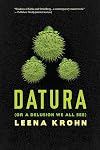
Leena Krohn is considered one of Finnland's finest living writers. Having read Datura (Or a Delusion We All See) (Finnish, 2001; English translation 2013 by Anna Volmari and J. Robert Tupasela), I am convinced that: 1. Such statements are not hyperbole, and 2. If Krohn is representative of Finnish character, then the Finns are an interesting people.
Datura presents itself as the straightforward story of two years in the life of our unnamed narrator, the editor of a paranormal magazine, The show more New Anomalist. While the narrator dislikes her job, due mostly to the cynical management of her friend and boss, "the Marquis," she enjoys getting to know the oddballs and eccentrics attracted to magazines like The New Anomalist. All the while, in an effort to cure her asthma, the narrator consumes the seeds of the datura plan given her as a birthday present. Are the oddities the narrator experiences a result of living in proximity to the Arctic Circle? Is it the influence of the magazine? Or are the datura seeds have unforeseen side effects?
By keeping chapters short, typically two to four pages, Krohn creates a surreal, dreamlike atmosphere. The details related in each chapter are episodic, snapshots in the life of the narrator and her acquaintances. This is not to say that the chapters don't build upon one another, but the relationship of one chapter to the next is often tangential, with the whole only revealed at the end of the book.
Krohn's language is beautiful, even in translation (a testament to the skills of the translators, no doubt). Consider, for instance, this early nugget on the nature of reality: "The dead of winter is like a pocket you can hide in. Winter offers one of the best illusions: the illusion that time can stop. If nothing grows, blooms, or flourishes, nothing can wither away, either" (page 25). Which happens to be exactly the way I feel about winter. Or this: "There are moments when everything is new, as if seen or heard for the first time, even language, words that I've read a thousand times. People, landscapes, items, even books. Now and then I stop at a familiar word as I read, and all of a sudden it amazes me, and I savour it like a new taste. For a fraction of a second I hesitate: what does the word refer to, does it really signify anything at all?" (page 33). What reader hasn't from time to time come across a word or phrase and thought, "But what does this really mean?"
Which, incidentally, most readers will ask themselves as they make their way through Datura. The narrator glides from one odd encounter to the next, with no apparent rhyme or reason. Consider the Master of Sound, who develops a device that can mute all noise. Or the Pendulum Man, who determines whether or not food is safe to eat by swinging a pendulum over his plate. There's Loogaroo, the vampire, or "Otherkin," as the narrator refers to non-humans residing in human bodies. Such ephemera make up the narrator's day to day experience. As with the contents of The New Anomalist, or the occult shop ("parastore") the Marquis installs in the magazine's offices, including a singing fish that bedevils the narrator, some readers may find themselves, "What's the point?" Which, given Krohn's interest in perception and reality, is to miss the point entirely.
Datura is a curious book that defies categorization. Is it "weird fiction"? Perhaps, but there are no cosmic monsters here. Krohn writes with a light touch, gently poking fun at her oddball characters even as she sympathizes with them. If the story seems aimless, be assured that you will enjoy its twists and turns. Krohn's language is hypnotic, compelling the reader ever forward. Highly recommended. show less
Datura presents itself as the straightforward story of two years in the life of our unnamed narrator, the editor of a paranormal magazine, The show more New Anomalist. While the narrator dislikes her job, due mostly to the cynical management of her friend and boss, "the Marquis," she enjoys getting to know the oddballs and eccentrics attracted to magazines like The New Anomalist. All the while, in an effort to cure her asthma, the narrator consumes the seeds of the datura plan given her as a birthday present. Are the oddities the narrator experiences a result of living in proximity to the Arctic Circle? Is it the influence of the magazine? Or are the datura seeds have unforeseen side effects?
By keeping chapters short, typically two to four pages, Krohn creates a surreal, dreamlike atmosphere. The details related in each chapter are episodic, snapshots in the life of the narrator and her acquaintances. This is not to say that the chapters don't build upon one another, but the relationship of one chapter to the next is often tangential, with the whole only revealed at the end of the book.
Krohn's language is beautiful, even in translation (a testament to the skills of the translators, no doubt). Consider, for instance, this early nugget on the nature of reality: "The dead of winter is like a pocket you can hide in. Winter offers one of the best illusions: the illusion that time can stop. If nothing grows, blooms, or flourishes, nothing can wither away, either" (page 25). Which happens to be exactly the way I feel about winter. Or this: "There are moments when everything is new, as if seen or heard for the first time, even language, words that I've read a thousand times. People, landscapes, items, even books. Now and then I stop at a familiar word as I read, and all of a sudden it amazes me, and I savour it like a new taste. For a fraction of a second I hesitate: what does the word refer to, does it really signify anything at all?" (page 33). What reader hasn't from time to time come across a word or phrase and thought, "But what does this really mean?"
Which, incidentally, most readers will ask themselves as they make their way through Datura. The narrator glides from one odd encounter to the next, with no apparent rhyme or reason. Consider the Master of Sound, who develops a device that can mute all noise. Or the Pendulum Man, who determines whether or not food is safe to eat by swinging a pendulum over his plate. There's Loogaroo, the vampire, or "Otherkin," as the narrator refers to non-humans residing in human bodies. Such ephemera make up the narrator's day to day experience. As with the contents of The New Anomalist, or the occult shop ("parastore") the Marquis installs in the magazine's offices, including a singing fish that bedevils the narrator, some readers may find themselves, "What's the point?" Which, given Krohn's interest in perception and reality, is to miss the point entirely.
Datura is a curious book that defies categorization. Is it "weird fiction"? Perhaps, but there are no cosmic monsters here. Krohn writes with a light touch, gently poking fun at her oddball characters even as she sympathizes with them. If the story seems aimless, be assured that you will enjoy its twists and turns. Krohn's language is hypnotic, compelling the reader ever forward. Highly recommended. show less
What a delightful slow burn of a novel. It's brief (~200 pages) and told in blinks of connected stories (~2-3 pages each). It's a quiet story of slipping outside consensus reality, with each story chipping away at our narrator's mental state. The cover name-checks Kafka (maybe I should read more Kafka), but I noticed more [b:The Third Policeman|27208|The Third Policeman|Flann O'Brien|https://d.gr-assets.com/books/1343027425s/27208.jpg|3359269]'s bizarre yet satisfying alternate-world rules, show more [b:Little, Big|90619|Little, Big|John Crowley|https://d.gr-assets.com/books/1435452849s/90619.jpg|518635]'s encouraging smile, a lower-key deprogramming ala [a:Grant Morrison|12732|Grant Morrison|https://d.gr-assets.com/authors/1311378308p2/12732.jpg]'s The Invisibles, or even the quiet [a:Gene Wolfe|23069|Gene Wolfe|https://d.gr-assets.com/authors/1207670073p2/23069.jpg] narrator who accrues a web of clues which point...somewhere?
In a calm and simple manner, it suggests that we all hoodwink each other into the "delusion we all share" from the book's subtitle. It invites us to let go of our stranglehold on who we think we are, to take a chance and step outside the cage of our performative proscribed identities. And all this without coming across pretentious or preachy. It's not the pink collage grenade of The Invisibles--it's closer to the all-pervading "rotting honey" smell from [a:Jeff VanderMeer|33919|Jeff VanderMeer|https://d.gr-assets.com/authors/1400594878p2/33919.jpg]'s Southern Reach.
An easy read with disturbing implications. show less
In a calm and simple manner, it suggests that we all hoodwink each other into the "delusion we all share" from the book's subtitle. It invites us to let go of our stranglehold on who we think we are, to take a chance and step outside the cage of our performative proscribed identities. And all this without coming across pretentious or preachy. It's not the pink collage grenade of The Invisibles--it's closer to the all-pervading "rotting honey" smell from [a:Jeff VanderMeer|33919|Jeff VanderMeer|https://d.gr-assets.com/authors/1400594878p2/33919.jpg]'s Southern Reach.
An easy read with disturbing implications. show less
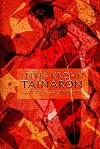
First, the copy I have is of a small hardback book that’s a delight to hold with an eye-catching slip cover, and drawings dotted throughout; a fast read at only 124 pages. The story from this Finnish prize-winning author is a fantasy told in a series of letters written by a foreign visitor and sent from an insect city. There’s no plot. We never know the recipient of these letters and only get to know the writer obliquely. I’ve heard the character writing the letters is female, but I show more never picked up on that and saw the letter writer as male, lost and adrift, having travelled to Tainaron seeking a promise that may never be fulfilled unless it’s found within. The most obvious nuance is one of change. There’s something visceral in the narrative, making this a book with an amorphous emotional impact. I’m sure many will find this nonsensical, bizarre, maybe pointless, yet there’s something memorable and almost poetic about the book. And, like a poem, will have significance for some, be meaningless to others. show less

This is what I think I've learned: reality is nothing more than a working hypothesis. It is an agreement that we don't realize we've made. It's a delusion we all see. Yet it's a shared, necessary illusion, the end product of our intelligence, imagination, and senses, the basis of our health and ability to function, our truth.
Hold on to it. It's all--or nearly all--that you have. Try to set outside of it and your life will change irreversibly, assuming you survive at all.
...
The truth is show more always shared. A reality that belongs to only one person isn't real.
I think my poor reaction to this one is largely due to poor advertising. The author won the World Fantasy award for [b:Tainaron: Mail from Another City|1428609|Tainaron Mail from Another City|Leena Krohn|https://d.gr-assets.com/books/1183510480s/1428609.jpg|1419102], and people who write about oversized insects are automatically compared to Kafka, so her books are being sold as fantasy or New Weird or surreal. This book is not any of those things, which is what I actually wanted. Also, the story has next to nothing to do with the Voynich Manuscript, even though the publisher's blurb implies it plays an important part in the tale (which I also wanted).
What this book actually is is a very lovely drawing of a mind unraveling as the narrator succumbs to datura poisoning, and also a very nice ramble through epistemology, told through the narrator's notes from the time, which she gives to an unnamed 'you'. (Authors do this to pull the reader in, to make them a character in the story, but I rarely find it effective. I always spend all my time trying to figure out who the 'you' is supposed to be in relation to the narrator. In this case, 'a close friend' is all the more detail we get.And of course given the narrator's state, a close friend who may or may not be a figment of her imagination. )
Krohn is a wonderful writer. I very much enjoy her prose and her philosophical vignettes, and as with Tainaron, I found myself wondering if the original Finnish does not somehow convey more of an uncanny sense than English is conveying. Nonetheless, the story is straight up realism. Just a few pages in, the narrator begins consuming the seeds of the moonflower her sister gives her for her birthday to help combat her severe asthma. The story unfolds inevitably from there. (The chilling thing about the tale is really how easily I could see any number of people I know doing the exact same thing.)
I liked this one better than Tainaron (the narrator is not an insufferable woman-child, but rather an adult struggling with illness and reality). Still, I am waiting for the story from this author that really wows me. And I really wish this had been fantasy. And had involved the Voynich Manuscript.
Final verdict: Don't sprinkle seeds from strange plants on your sandwich, people. (At least check the internet first!) show less
Hold on to it. It's all--or nearly all--that you have. Try to set outside of it and your life will change irreversibly, assuming you survive at all.
...
The truth is show more always shared. A reality that belongs to only one person isn't real.
I think my poor reaction to this one is largely due to poor advertising. The author won the World Fantasy award for [b:Tainaron: Mail from Another City|1428609|Tainaron Mail from Another City|Leena Krohn|https://d.gr-assets.com/books/1183510480s/1428609.jpg|1419102], and people who write about oversized insects are automatically compared to Kafka, so her books are being sold as fantasy or New Weird or surreal. This book is not any of those things, which is what I actually wanted. Also, the story has next to nothing to do with the Voynich Manuscript, even though the publisher's blurb implies it plays an important part in the tale (which I also wanted).
What this book actually is is a very lovely drawing of a mind unraveling as the narrator succumbs to datura poisoning, and also a very nice ramble through epistemology, told through the narrator's notes from the time, which she gives to an unnamed 'you'. (Authors do this to pull the reader in, to make them a character in the story, but I rarely find it effective. I always spend all my time trying to figure out who the 'you' is supposed to be in relation to the narrator. In this case, 'a close friend' is all the more detail we get.
Krohn is a wonderful writer. I very much enjoy her prose and her philosophical vignettes, and as with Tainaron, I found myself wondering if the original Finnish does not somehow convey more of an uncanny sense than English is conveying. Nonetheless, the story is straight up realism. Just a few pages in, the narrator begins consuming the seeds of the moonflower her sister gives her for her birthday to help combat her severe asthma. The story unfolds inevitably from there. (The chilling thing about the tale is really how easily I could see any number of people I know doing the exact same thing.)
I liked this one better than Tainaron (the narrator is not an insufferable woman-child, but rather an adult struggling with illness and reality). Still, I am waiting for the story from this author that really wows me. And I really wish this had been fantasy. And had involved the Voynich Manuscript.
Final verdict: Don't sprinkle seeds from strange plants on your sandwich, people. (At least check the internet first!) show less
Lists
Awards


You May Also Like


Associated Authors
Statistics
- Works
- 44
- Also by
- 22
- Members
- 1,276
- Popularity
- #20,105
- Rating
- 3.9
- Reviews
- 15
- ISBNs
- 80
- Languages
- 8
- Favorited
- 19
