
Johanna Sinisalo
Author of Troll: A Love Story
About the Author
Works by Johanna Sinisalo
The Dedalus Book of Finnish Fantasy (Dedalus Literary Fantasy Anthologies) (2012) — Editor; Contributor — 124 copies, 3 reviews
Associated Works
The Big Book of Science Fiction: The Ultimate Collection (2016) — Contributor — 521 copies, 8 reviews
The SFWA European Hall of Fame: Sixteen Contemporary Masterpieces of Science Fiction from the Continent (2007) — Contributor — 134 copies, 4 reviews
The James Tiptree Award Anthology 2: Stories for Men, Women, and the Rest of Us (2006) — Contributor — 101 copies, 3 reviews
It Came From the North: An Anthology of Finnish Speculative Fiction (2013) — Contributor — 80 copies, 3 reviews
Tagged
Common Knowledge
- Canonical name
- Sinisalo, Johanna
- Legal name
- Sinisalo, Aila Johanna
- Birthdate
- 1958-06-22
- Gender
- female
- Education
- University of Tampere (BA|literature, drama)
- Occupations
- novelist
screenwriter - Awards and honors
- Pro Finlandia Medal (2022)
Prometheus Award (2017)
Finlandia prize (2001)
James Tiptree Jr. award (2004)
Atorox prize (1986 ∙ 1989 ∙ 1993 ∙ 1994 ∙ 1997 ∙ 2001)
Kemi National Comic Strip Contest (3X ∙ winner) - Relationships
- Mänttäri, Hammu (partner)
- Nationality
- Finland
- Birthplace
- Sodankylä, Finland
- Places of residence
- Tampere, Finland
- Map Location
- Finland
Members
Reviews

https://nwhyte.livejournal.com/3821173.html
This is a really intense and complex (and short) novel, which it would be slightly unfair to call urban fantasy even though it's about a troll taking up residence in a contemporary Helsinki apartment block. Mikael, who finds and cares for the troll, is a gay photographer who lives upstairs from a Filipina mail-order bride. The troll's pheromones cause massive sexual confusion for everyone, sparsely recounted in that very Finnish way. The narrative show more is bolstered by a history of humanity's coexistence with trolls over the centuries and millennia. Helsinki is a sober nineteenth century city which has undergone some occasionally brutal twentieth century development; but it's not difficult to feel older forces tugging at you when you are there, and Johanna Sinisalo has captured that, as well as exploring some important human issues. show less
This is a really intense and complex (and short) novel, which it would be slightly unfair to call urban fantasy even though it's about a troll taking up residence in a contemporary Helsinki apartment block. Mikael, who finds and cares for the troll, is a gay photographer who lives upstairs from a Filipina mail-order bride. The troll's pheromones cause massive sexual confusion for everyone, sparsely recounted in that very Finnish way. The narrative show more is bolstered by a history of humanity's coexistence with trolls over the centuries and millennia. Helsinki is a sober nineteenth century city which has undergone some occasionally brutal twentieth century development; but it's not difficult to feel older forces tugging at you when you are there, and Johanna Sinisalo has captured that, as well as exploring some important human issues. show less
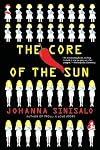
So this is "Finnish weird," huh? I like it and I want more, especially from Johanna Sinisalo.
This book is... well, it's a suspenseful mystery set in a horrifying and plausible dystopian now with some magical realism woven between it all.
Vanna is an addict. A chile addict. In Finland in 2016 chiles, along with other dangerous and addictive substances like alcohol and drugs, are banned. Vanna is also a "morlock"--a woman who doesn't meet societal standards and isn't allowed to breed--except show more Vanna is also an "eloi," or at least she was raised pretending to be one. Her sister, Manna, is an eloi, the type of "femiwoman" Finland has been selectively breeding for for generations. Vanna is also Vera, and Manna is Mira, because soft elois can't have hard Rs in their names. Rs and other special things--like independence and nearly Stepford-like wives--are saved for mascos.
This story is told with letters Vanna/Vera writes to Manna/Mira, which tells their life stories from the beginning when their parents died and they moved to Finland to live with their only relative to the end where Vanna finds out what happend to her missing sister; in excerpts from fictional (and occasionally real!) books and articles about the history of Finland, which explain the history and realities of modern Finland; and through Vanna (and occasionally her masco friend Jare's) present-day actions from Vanna's chile highs and confused grief to Jare's future plans and their shared chile-dealing business with a bit of capsaicin-spirituality over and above it all.
I loved this book. I was shocked by Vanna, I pitied her, her sister, and everyone trapped as they were, I was frightened by the very plausible history of Finnish society the author created, and I was always, always entertained. Also, I really want some spicy peppers now, but Vanna can keep the core of the sun for herself.
[I received this book free from NetGalley in exchange for an unbiased review.] show less
This book is... well, it's a suspenseful mystery set in a horrifying and plausible dystopian now with some magical realism woven between it all.
Vanna is an addict. A chile addict. In Finland in 2016 chiles, along with other dangerous and addictive substances like alcohol and drugs, are banned. Vanna is also a "morlock"--a woman who doesn't meet societal standards and isn't allowed to breed--except show more Vanna is also an "eloi," or at least she was raised pretending to be one. Her sister, Manna, is an eloi, the type of "femiwoman" Finland has been selectively breeding for for generations. Vanna is also Vera, and Manna is Mira, because soft elois can't have hard Rs in their names. Rs and other special things--like independence and nearly Stepford-like wives--are saved for mascos.
This story is told with letters Vanna/Vera writes to Manna/Mira, which tells their life stories from the beginning when their parents died and they moved to Finland to live with their only relative to the end where Vanna finds out what happend to her missing sister; in excerpts from fictional (and occasionally real!) books and articles about the history of Finland, which explain the history and realities of modern Finland; and through Vanna (and occasionally her masco friend Jare's) present-day actions from Vanna's chile highs and confused grief to Jare's future plans and their shared chile-dealing business with a bit of capsaicin-spirituality over and above it all.
I loved this book. I was shocked by Vanna, I pitied her, her sister, and everyone trapped as they were, I was frightened by the very plausible history of Finnish society the author created, and I was always, always entertained. Also, I really want some spicy peppers now, but Vanna can keep the core of the sun for herself.
[I received this book free from NetGalley in exchange for an unbiased review.] show less

I'm not sure how I came across this book but I'm glad I did. Sinisalo invents a uchronic Finland where a human female sub-species has been bred. Known as Eloi, they are submissive, receptive and bred for sex and procreation. Intelligent, independent women, Morlocks, are not permitted to reproduce and are doomed to a life of menial labour. The Eusistocratic Republic of Finland benefits and strengthens the patriarchy.
Vana looks like an Eloi but isn't. She wants to rescue her Eloi sister Manna. show more To do it she needs the money and teams up with a male friend, Jare, to sell chilli. Chilli is considered to be an extremely dangerous stimulant by the Finnish Health authority and the growing or possession of it is illegal. To complicate matters, Vana is an addict and her addiction is getting worse.
Sinisalo tells a truly twisted tale through multiple viewpoints (Vana's and Jare's), letters that Vana writes to Manna that provide the backstory for their current predicament, snatches of government publications, education publications, and excerpts from magazines. The result is an unapologetic social commentary. Sinisalo's satire kicks the patriarchy, and the mechanisms that support it, where it's needed. A highly recommended read from the queen of 'Finnish Weird'. show less
Vana looks like an Eloi but isn't. She wants to rescue her Eloi sister Manna. show more To do it she needs the money and teams up with a male friend, Jare, to sell chilli. Chilli is considered to be an extremely dangerous stimulant by the Finnish Health authority and the growing or possession of it is illegal. To complicate matters, Vana is an addict and her addiction is getting worse.
Sinisalo tells a truly twisted tale through multiple viewpoints (Vana's and Jare's), letters that Vana writes to Manna that provide the backstory for their current predicament, snatches of government publications, education publications, and excerpts from magazines. The result is an unapologetic social commentary. Sinisalo's satire kicks the patriarchy, and the mechanisms that support it, where it's needed. A highly recommended read from the queen of 'Finnish Weird'. show less
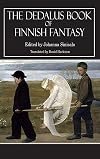
I came for the Estonian werewolves, but I stayed for the Finnish fantasy.
I originally picked up the Dedalus Book of Finnish Fantasy as it has a new English language translation of Aino Kallas' 1928 novella "Sudenmorsian" (The Wolf's Bride) which centres around an Estonian Hiiumaa Island farmwife who is enticed and bewitched into joining a werewolf pack. There is an earlier translation by Alex Matson that is pretty much impossible to find in print. In a slight twist, the extract used in this show more 2006 anthology cuts off at Chapter 8, making it a de facto "happy ending" version, where the werewolves are left to run free in the forests and marshlands and the tragic fate of the bewitched heroine is not revealed. This actually felt totally ok to me as the novella clearly seems to side with the natural world of the werewolves vs. the superstitious strictures of the local authorities and villagers. With a bit of easy googling of "Aino Kallas" + "Wolf's Bride" you can even pick up on some fascinating references to studies that interpret Kallas' werewolves as symbols of modern era women. Having a "happy ending" version of one of the usually grim and despairing tales of Kallas is a separate treasure of its own. Some may be irritated to be left wondering what the real ending is. Trust me I won't spoil it, but it is not "happy".
The rest of this book was a bonus in that it introduced me to about a couple of dozen other Finnish writers in the fantasy realm. The Kallas is actually pretty much the closest the book gets to the horror genre and the rest really is more along the lines of speculative, often dream-like fiction. I especially enjoyed the sample of editor Johanna Sinisalo's short fiction, a tale of a n'er do well who is unwittingly drawn into a dolphin freeing plot by an otherwise seemingly mute girl who seems to have a psychic connection to the underwater mammals. I now discover that Sinisalo is also the writer behind the original story of cult Finnish sci-fi film "Iron Sky" and her "Troll - A Love Story" is definitely going onto my To Be Read shelf.
Anthologies can sometimes be a mixed bag but the variety and the quality here was excellent and I hope to read more from these authors. show less
I originally picked up the Dedalus Book of Finnish Fantasy as it has a new English language translation of Aino Kallas' 1928 novella "Sudenmorsian" (The Wolf's Bride) which centres around an Estonian Hiiumaa Island farmwife who is enticed and bewitched into joining a werewolf pack. There is an earlier translation by Alex Matson that is pretty much impossible to find in print. In a slight twist, the extract used in this show more 2006 anthology cuts off at Chapter 8, making it a de facto "happy ending" version, where the werewolves are left to run free in the forests and marshlands and the tragic fate of the bewitched heroine is not revealed. This actually felt totally ok to me as the novella clearly seems to side with the natural world of the werewolves vs. the superstitious strictures of the local authorities and villagers. With a bit of easy googling of "Aino Kallas" + "Wolf's Bride" you can even pick up on some fascinating references to studies that interpret Kallas' werewolves as symbols of modern era women. Having a "happy ending" version of one of the usually grim and despairing tales of Kallas is a separate treasure of its own. Some may be irritated to be left wondering what the real ending is. Trust me I won't spoil it, but it is not "happy".
The rest of this book was a bonus in that it introduced me to about a couple of dozen other Finnish writers in the fantasy realm. The Kallas is actually pretty much the closest the book gets to the horror genre and the rest really is more along the lines of speculative, often dream-like fiction. I especially enjoyed the sample of editor Johanna Sinisalo's short fiction, a tale of a n'er do well who is unwittingly drawn into a dolphin freeing plot by an otherwise seemingly mute girl who seems to have a psychic connection to the underwater mammals. I now discover that Sinisalo is also the writer behind the original story of cult Finnish sci-fi film "Iron Sky" and her "Troll - A Love Story" is definitely going onto my To Be Read shelf.
Anthologies can sometimes be a mixed bag but the variety and the quality here was excellent and I hope to read more from these authors. show less
Lists
Awards


You May Also Like


Associated Authors
Statistics
- Works
- 25
- Also by
- 31
- Members
- 2,392
- Popularity
- #10,728
- Rating
- 3.6
- Reviews
- 70
- ISBNs
- 89
- Languages
- 12
- Favorited
- 12