

Peter Cochran
Author of Byron and Hobby-O: Lord Byrons Relationship with John CAM Hobhouse
About the Author
Peter Cochran is a well-known Byron scholar. The edition of Byron on his website is much consulted, and this is his nineteenth book on the poet.
Works by Peter Cochran
Tagged
Common Knowledge
There is no Common Knowledge data for this author yet. You can help.
Members
Reviews
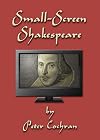
So silly it's mortifying.
Televised Shakespeare is a particular passion of mine, so I was always going to have high standards for a volume such as this - and my expectations were high, as it proclaims (more or less accurately) to review all of the Bard TV adaptations that were available at the time of release. Yet, if I didn't know that Peter Cochran had been both a professional actor and educator, I would believe that he had no understanding whatsoever of either Shakespeare or the show more televisual medium. Instead, and perhaps worse, the late Cochran comes across as a blinkered, ideological fool - and not the Shakespearean kind.
To be fair, Cochran lays out some of his bias in the introduction: he doesn't think Shakespeare really works without an audience, he feels that the small-screen diminishes Shakespeare, and he resists both attempts to 're-interpret' the text and attempts to make it more English than English. All of these limitations leave a narrow space in which to succeed, and one wonders why Cochran set himself the task of reviewing these works in the first place.
Cochran is an astounding example of what Ace G. Pilkington called the reviewer with an "expectational text". He doesn't even feign objectivity when watching a work; instead he sets out exactly how something should be done, and then grounds his thoughts in those expectations. Every second page of this book sees Cochran actively misreading a director's intentions, telling us that a particular line being cut completely destroys a character, or refusing to admit that there are as many ways of doing Shakespeare as there are directors. He'll tell us that an actor plays the part "too well-spoken", "too meekly", "too boisterously", which would be fine if he were directing them, but since he's not - wouldn't it be smarter to consider why the director and actor chose this approach, and then assess whether it worked? Of course not! There is one way to do things, and that's fine, thankyou very much. Heck, he's the first person I've seen (aside from some adorably dimwitted Gen Zs on Letterboxd) who doesn't get the point of Jane Howell's remarkable First Tetralogy for the BBC.
Additionally - and I'm aware of the irony here in my one-star review - Cochran is excessively savage, deciding that the 'hyperbolic bitch' approach to analysis is the way to go. Entire works are written off as "a disgrace" or "a disaster", performances are described as "the worst thing I've ever seen committed to celluloid", directorial ideas that he doesn't understand are often "weird" or "strange" or "incomprehensible". Annoyingly, Cochran also contradicts himself throughout. He proclaims to find the BBC series (1978-1985) "dodgy" but goes on to praise quite a few of the productions, although each time he does so he tells us that it's a 'rare' example of a success! He tells us in the introduction that one of the benefits of home viewing is being able to pause, rewind, and rewatch, only to then criticise productions for artistic sequences that don't make sense upon first viewing. (It also seems remarkably unfair for Cochran to mingle Hollywood films, studio television productions, and filmed theatre. I value all of the above, but it's not comparing like with like, and in this volume he oft tries to do so.)
Funnily enough, when Cochran likes a work, he shows a decent understanding of how an actor operates, and of the structure of Shakespeare's texts. It's a shame, then, that he lets a series of implicit assumptions rule in favour of critical analysis. Of course these plays were designed to be staged with an audience, no-one would deny it. But we benefit immensely from access to this wide range of interpretations. There are certainly plenty of productions that will fail to sell a particular line, shot, sequence, scene, character portrayal, directorial concept, and - yes - occasionally an overall work. Often, though, this 'failure' will reflect little more than a barrier between our view of a work and that of the director and their acting company. Bridging that gap, at least attempting to comprehend what is being done by a group of professionals, is part of the great joy of loving high culture, and an enfeebling, diminishing loss for people who only exist in the realm of pop culture, where the combination of corporate desire and immediate mainstream taste serve up the entertainment equivalent of a thousand McFlurrys.
I'll keep this volume because, in spite of itself, this is a useful resource as one of the few volumes that endeavours to cover most of the Shakespeare onscreen up to 2013. It's just a shame that it's like taking a long road trip with your most exhaustingly insular uncle. show less
Televised Shakespeare is a particular passion of mine, so I was always going to have high standards for a volume such as this - and my expectations were high, as it proclaims (more or less accurately) to review all of the Bard TV adaptations that were available at the time of release. Yet, if I didn't know that Peter Cochran had been both a professional actor and educator, I would believe that he had no understanding whatsoever of either Shakespeare or the show more televisual medium. Instead, and perhaps worse, the late Cochran comes across as a blinkered, ideological fool - and not the Shakespearean kind.
To be fair, Cochran lays out some of his bias in the introduction: he doesn't think Shakespeare really works without an audience, he feels that the small-screen diminishes Shakespeare, and he resists both attempts to 're-interpret' the text and attempts to make it more English than English. All of these limitations leave a narrow space in which to succeed, and one wonders why Cochran set himself the task of reviewing these works in the first place.
Cochran is an astounding example of what Ace G. Pilkington called the reviewer with an "expectational text". He doesn't even feign objectivity when watching a work; instead he sets out exactly how something should be done, and then grounds his thoughts in those expectations. Every second page of this book sees Cochran actively misreading a director's intentions, telling us that a particular line being cut completely destroys a character, or refusing to admit that there are as many ways of doing Shakespeare as there are directors. He'll tell us that an actor plays the part "too well-spoken", "too meekly", "too boisterously", which would be fine if he were directing them, but since he's not - wouldn't it be smarter to consider why the director and actor chose this approach, and then assess whether it worked? Of course not! There is one way to do things, and that's fine, thankyou very much. Heck, he's the first person I've seen (aside from some adorably dimwitted Gen Zs on Letterboxd) who doesn't get the point of Jane Howell's remarkable First Tetralogy for the BBC.
Additionally - and I'm aware of the irony here in my one-star review - Cochran is excessively savage, deciding that the 'hyperbolic bitch' approach to analysis is the way to go. Entire works are written off as "a disgrace" or "a disaster", performances are described as "the worst thing I've ever seen committed to celluloid", directorial ideas that he doesn't understand are often "weird" or "strange" or "incomprehensible". Annoyingly, Cochran also contradicts himself throughout. He proclaims to find the BBC series (1978-1985) "dodgy" but goes on to praise quite a few of the productions, although each time he does so he tells us that it's a 'rare' example of a success! He tells us in the introduction that one of the benefits of home viewing is being able to pause, rewind, and rewatch, only to then criticise productions for artistic sequences that don't make sense upon first viewing. (It also seems remarkably unfair for Cochran to mingle Hollywood films, studio television productions, and filmed theatre. I value all of the above, but it's not comparing like with like, and in this volume he oft tries to do so.)
Funnily enough, when Cochran likes a work, he shows a decent understanding of how an actor operates, and of the structure of Shakespeare's texts. It's a shame, then, that he lets a series of implicit assumptions rule in favour of critical analysis. Of course these plays were designed to be staged with an audience, no-one would deny it. But we benefit immensely from access to this wide range of interpretations. There are certainly plenty of productions that will fail to sell a particular line, shot, sequence, scene, character portrayal, directorial concept, and - yes - occasionally an overall work. Often, though, this 'failure' will reflect little more than a barrier between our view of a work and that of the director and their acting company. Bridging that gap, at least attempting to comprehend what is being done by a group of professionals, is part of the great joy of loving high culture, and an enfeebling, diminishing loss for people who only exist in the realm of pop culture, where the combination of corporate desire and immediate mainstream taste serve up the entertainment equivalent of a thousand McFlurrys.
I'll keep this volume because, in spite of itself, this is a useful resource as one of the few volumes that endeavours to cover most of the Shakespeare onscreen up to 2013. It's just a shame that it's like taking a long road trip with your most exhaustingly insular uncle. show less
A scintillating collection. I don't always agree, but what's that worth?
(Loved his quip that B isn't a poet for walking in the park, but a poet for Monday mornings.)
(Loved his quip that B isn't a poet for walking in the park, but a poet for Monday mornings.)
Statistics
- Works
- 21
- Members
- 51
- Popularity
- #311,766
- Rating
- 3.5
- Reviews
- 2
- ISBNs
- 56