

Erwin Chemerinsky
Author of Constitutional Law: Principles And Policies (Introduction to Law Series)
About the Author
Erwin Chemerinsky is the founding dean and distinguished professor of law at the University of California, Irvine School of Law. He is the author of the leading textbook on constitutional law and has argued numerous cases before the U.S. Supreme Court and various appellate courts.
Works by Erwin Chemerinsky
Constitutional Law: Principles And Policies (Introduction to Law Series) (1997) 237 copies, 1 review
We the People: A Progressive Reading of the Constitution for the Twenty-First Century (2018) 86 copies, 1 review
Presumed Guilty: How the Supreme Court Empowered the Police and Subverted Civil Rights (2021) 69 copies, 1 review
No Democracy Lasts Forever: How the Constitution Threatens the United States (2024) 54 copies, 2 reviews
Associated Works
American Crusade: How the Supreme Court Is Weaponizing Religious Freedom (2022) — Foreword, some editions — 77 copies, 2 reviews
Tagged
Common Knowledge
- Canonical name
- Chemerinsky, Erwin
- Birthdate
- 1953-05-14
- Gender
- male
- Education
- Harvard Law School (JD|1978)
Northwestern University (BS|1975) - Occupations
- law professor
academic administrator - Organizations
- University of California, Berkeley School of Law
University of California, Irvine School of Law
Duke University Law School
University of Southern California Law School
DePaul University College of Law - Awards and honors
- American Academy of Arts & Sciences
American Law Institute - Nationality
- USA
- Birthplace
- Chicago, Illinois, USA
- Places of residence
- Berkeley, California, USA
- Associated Place (for map)
- USA
Members
Reviews
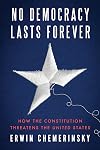
The title of Chemerinsky’s book suggests that the US democracy is fated to eventually fail. Ironically, he makes an eloquent case for the US never really having a democracy. Instead, multiple compromises made by our founders to achieve ratification were fatally flawed. Moreover, the authors of our constitution were not representative of the population. Instead, they were a group of wealthy, educated white men who held land and slaves. At bottom, these men mistrusted democracy. As a result show more of these two historical facts, what they framed was an oligarchy with a thin veneer of democracy aimed at maintaining control by elites. It seems that what they put in place has worked well for the elites. Thus, this framework persists to this day.
Chemerinsky makes the valid point that America muddled along for centuries with a deeply flawed constitution, buoyed by myths like “one man one vote,” “all men are created equal,” and “the rule of law.” Yet, the political elites never really bought into the idea of government by the people. Instead, a covert government by elites persisted until recent years when political events conspired to make this aim more overt. A constitutionally mandated unrepresentative Senate, a gerrymandered House, a Supreme Court that will remain biased for the foreseeable future and an Electoral College that almost guarantees that the Executive will not be the people’s choice have wreaked havoc on all of the levers of power in American Democracy.
Chemerinsky correctly argues that failure to address these core issues has resulted in a crisis that will hasten the demise of American democracy. All of the solutions he proposes, however, seem unrealistic. Although conceivable, legislative reforms seem unlikely considering that the levers of power are in the hands of the elites, who are unlikely to relinquish them. This becomes especially problematic with rulings like “Citizens’ United” and technological advances like “deep fakes.” Likewise, constitutional reforms seem all but impossible given the way that the constitution was written to be almost impossible to amend. Chemerinsky seems enamored with the idea of a second constitutional convention, but this also seems farfetched given the constraints that persist in a deeply polarized government and populace. His default solution is secession with Blue and Red Americas. Some form of peaceful no-fault divorce is appealing but is fraught with multiple complexities, which he explores in detail. Certainly, feelings of helplessness are understandable, but Chemerisky suggests that doing nothing, is really not a viable option either, since things seem to be falling apart at a more rapid pace than anyone ever conceived possible. Clearly, this collapse has been hastened greatly by a leader supported by powerful elites who seem to view him as a “useful idiot.” Furthermore, social unrest seems to be on the rise with constant threats of violence. In the final analysis, America needs to face its problems realistically and seek peaceful solutions. show less
Chemerinsky makes the valid point that America muddled along for centuries with a deeply flawed constitution, buoyed by myths like “one man one vote,” “all men are created equal,” and “the rule of law.” Yet, the political elites never really bought into the idea of government by the people. Instead, a covert government by elites persisted until recent years when political events conspired to make this aim more overt. A constitutionally mandated unrepresentative Senate, a gerrymandered House, a Supreme Court that will remain biased for the foreseeable future and an Electoral College that almost guarantees that the Executive will not be the people’s choice have wreaked havoc on all of the levers of power in American Democracy.
Chemerinsky correctly argues that failure to address these core issues has resulted in a crisis that will hasten the demise of American democracy. All of the solutions he proposes, however, seem unrealistic. Although conceivable, legislative reforms seem unlikely considering that the levers of power are in the hands of the elites, who are unlikely to relinquish them. This becomes especially problematic with rulings like “Citizens’ United” and technological advances like “deep fakes.” Likewise, constitutional reforms seem all but impossible given the way that the constitution was written to be almost impossible to amend. Chemerinsky seems enamored with the idea of a second constitutional convention, but this also seems farfetched given the constraints that persist in a deeply polarized government and populace. His default solution is secession with Blue and Red Americas. Some form of peaceful no-fault divorce is appealing but is fraught with multiple complexities, which he explores in detail. Certainly, feelings of helplessness are understandable, but Chemerisky suggests that doing nothing, is really not a viable option either, since things seem to be falling apart at a more rapid pace than anyone ever conceived possible. Clearly, this collapse has been hastened greatly by a leader supported by powerful elites who seem to view him as a “useful idiot.” Furthermore, social unrest seems to be on the rise with constant threats of violence. In the final analysis, America needs to face its problems realistically and seek peaceful solutions. show less
Presumed Guilty: How the Supreme Court Empowered the Police and Subverted Civil Rights by Erwin Chemerinsky
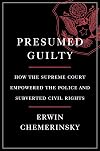
Erwin Chemerinsky, the dean of the University of California Berkeley School of Law, makes a strong and compelling case that the Supreme Court is to blame for enabling police misconduct and not only failing to protect our civil rights, but actively blocking our legal remedies.
If you’re not a lawyer and you want to know how they did it, you’ll need case information, so head to your nearest law school library or open an online resource like Oyez, Cornell Law School’s Legal Information show more Institute, or Justia. This is weighty, maddening stuff, well-told.
Chemerinsky frames his argument chronologically, starting with the Warren Court that placed consequential limits on police action in the mid-1950s and 1960s; however, the increasingly conservative “tough-on-crime” Courts, led by Burger, Rehnquist, and Roberts, decided that the deterrence of crime outweighed our liberty interests.
The results have been serious and at times, deadly. The Burger Court’s The City of Los Angeles v. Lyons (1983) decision that federal courts had no power to address chokeholds, led to a police culture that used them. No one stopped Minneapolis police officer Derek Chauvin from choking George Floyd to death. The Rehnquist Court’s Arkansas v. Wilson (1995) decision allowed the no-knock warrant that led to the death of Brianna Taylor. These tragedies are only two cases of injury and death caused by police action that disproportionately affect people of color.
In case after case, we, the jury, are shown how incrementally the Court legalized police excess, and eroded our rights. Chemerinsky narrates what happened to the people involved and persuades us of the Court’s culpability by amassing evidence from the Court’s jurisprudence.
In summary, the Supreme Court presumes suspects guilty before being charged. The police can stop anyone, anywhere, at any time, and they do, especially in minority communities. Anyone can be falsely identified, especially if of a different race. Anyone can be subject to coercive interrogation, as long as it's not physical, and if egregious force is used by police, people have very little civil recourse.
In closing, Chemerinsky outlines actions that would lead to “meaningful police reform,”especially passage of the George Floyd Justice in Policing Act, and state and local reforms.
It's hard to see this other than working against a stacked deck. The Roberts Court now has a conservative supermajority. Unfortunately, this book was published in August, 2021, so it does not cover the cases adjudicated since. It also predates Trump 2.0 and Trump’s Executive Order to reconsider police department consent decrees that did hold the police accountable and “modify or rescind any that impede the performance of law enforcement functions.” show less
If you’re not a lawyer and you want to know how they did it, you’ll need case information, so head to your nearest law school library or open an online resource like Oyez, Cornell Law School’s Legal Information show more Institute, or Justia. This is weighty, maddening stuff, well-told.
Chemerinsky frames his argument chronologically, starting with the Warren Court that placed consequential limits on police action in the mid-1950s and 1960s; however, the increasingly conservative “tough-on-crime” Courts, led by Burger, Rehnquist, and Roberts, decided that the deterrence of crime outweighed our liberty interests.
The results have been serious and at times, deadly. The Burger Court’s The City of Los Angeles v. Lyons (1983) decision that federal courts had no power to address chokeholds, led to a police culture that used them. No one stopped Minneapolis police officer Derek Chauvin from choking George Floyd to death. The Rehnquist Court’s Arkansas v. Wilson (1995) decision allowed the no-knock warrant that led to the death of Brianna Taylor. These tragedies are only two cases of injury and death caused by police action that disproportionately affect people of color.
In case after case, we, the jury, are shown how incrementally the Court legalized police excess, and eroded our rights. Chemerinsky narrates what happened to the people involved and persuades us of the Court’s culpability by amassing evidence from the Court’s jurisprudence.
In summary, the Supreme Court presumes suspects guilty before being charged. The police can stop anyone, anywhere, at any time, and they do, especially in minority communities. Anyone can be falsely identified, especially if of a different race. Anyone can be subject to coercive interrogation, as long as it's not physical, and if egregious force is used by police, people have very little civil recourse.
In closing, Chemerinsky outlines actions that would lead to “meaningful police reform,”especially passage of the George Floyd Justice in Policing Act, and state and local reforms.
It's hard to see this other than working against a stacked deck. The Roberts Court now has a conservative supermajority. Unfortunately, this book was published in August, 2021, so it does not cover the cases adjudicated since. It also predates Trump 2.0 and Trump’s Executive Order to reconsider police department consent decrees that did hold the police accountable and “modify or rescind any that impede the performance of law enforcement functions.” show less
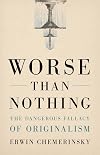
Clear and accessible description of the world that conservative originalists intend for us all to live in. While they pretend their arguments are principled and constitutional, in fact, as Chemerinsky demonstrates, they are political designs cloaked, when convenient and expedient, in a thin veneer of "objective" jurisprudence.
The belief that we should live in a world designed by men in the 18th century beggars the imagination. Society is incomparably larger, more complex, and more global show more than anything the Founders could have imagined. To argue that we are bound by the agrarian society that endorsed slavery, enfranchised only white propertied men, and consisted of only thirteen of today's fifty states, is sheer lunacy. Nonetheless, the majority of the Supreme Court, thanks to the machinations of Mitch McConnell in collusion with Donald Trump, espouse that very belief. We've already seen them overturn Roe and prepare the way to criminalize abortion (again), while this term they're very likely to eliminate affirmative action and tear down the wall between religion and the state.
Chemerinsky's book presents this in a thorough and authoritative manner, so that even originalists should feel they have a burden to show where he is wrong, rather than just pretend their political religion is self-evidently true. show less
The belief that we should live in a world designed by men in the 18th century beggars the imagination. Society is incomparably larger, more complex, and more global show more than anything the Founders could have imagined. To argue that we are bound by the agrarian society that endorsed slavery, enfranchised only white propertied men, and consisted of only thirteen of today's fifty states, is sheer lunacy. Nonetheless, the majority of the Supreme Court, thanks to the machinations of Mitch McConnell in collusion with Donald Trump, espouse that very belief. We've already seen them overturn Roe and prepare the way to criminalize abortion (again), while this term they're very likely to eliminate affirmative action and tear down the wall between religion and the state.
Chemerinsky's book presents this in a thorough and authoritative manner, so that even originalists should feel they have a burden to show where he is wrong, rather than just pretend their political religion is self-evidently true. show less
As an approach to constitutional interpretation, originalism, at first glance, seems perfectly reasonable, even the common sense option. Constitutional provisions, after all, were drafted by the framers with certain intentions; it’s only natural, then, to interpret those provisions according to these original intentions, or to the provisions’ original, commonly understood meanings. The only alternative approach, it seems, would be to allow a small group of unelected Supreme Court show more justices to “legislate from the bench” by reading into the Constitution their own values and policy preferences, which is entirely antithetical to democracy.
So the argument for originalism goes. The only problem is that it’s complete bullshit. And the reasons are fairly obvious, once you actually give the topic some thought. In fact, it would be surprising if you were not persuaded, by the end of this thoroughly researched and argued book, that originalism is both nonsensical and harmful. Here’s why.
Let’s start with what Chemerinsky calls the “epistemological problem” of originalism, the first and most substantial argument against this delusional theory. The author notes that, in almost all cases, “original intent” is impossible to find, or simply doesn’t exist in the first place. Let’s think about this for a moment.
In addition to the fact that the language of the Constitution is exceedingly vague—and that virtually the entire record of the Constitutional Convention consists only of James Madison’s notes (which may not be entirely reliable)—consider just how many people were actually involved in the drafting and ratification of each constitutional provision. As professor John Wofford wrote:
“In order to become part of the Constitution, the provision had to be accepted by the Philadelphia Convention or by the Congress, and then ratified by the states acting either through legislatures or through special conventions. Yet, to admit the relevance of such a large number of states of mind is to set forth a task virtually impossible to fulfill.”
The larger the number of people involved, the more difficult it becomes to determine common intent. And this on top of the fact that the most influential framers often disagreed with each other regarding various provisions (James Madison and Alexander Hamilton famously disagreed with each other on a host of crucial constitutional issues). So in cases of competing interpretations between the framers themselves, whose intent are we supposed to prioritize?
The upshot is that common intent or meaning is an illusion; the “originalist” must cherry-pick from an overwhelming amount of contradictory and conflicting information to find support for a decision he or she preferred all along. Originalism is therefore no different from non-originalism in its tendency towards “judicial activism”; the only real difference is that the originalist pretends to be value-neutral when this is in fact impossible.
This in itself should be enough to convince you of the fallacy of originalism; if original common intent doesn’t exist, or if it’s impossible to decipher, then one cannot be expected to ground decisions in it. But there are additional, serious problems. Briefly, they are:
(1) The incoherence problem, or the idea that following the principles of originalism would compel one to abandon it. Note that the framers themselves did not encourage or recommend an originalist approach to constitutional interpretation; if anything, they went out of their way to conceal their intent. As law professor Boris Bittker commented: “If it were true that the ratifiers wanted their intent to control the courts in deciding constitutional issues, they can be justly accused of gross negligence for failing to take even rudimentary steps to preserve their precious thoughts.” With how much thought was put into the Constitution, do we really think it was an oversight that they didn’t make their intentions clearer?
(2) The abhorrence problem, or the fact that originalist thinking results in morally reprehensible outcomes. One need only remind an originalist that his theory compels him to admit that Brown v. Board of Education—a landmark 1954 Supreme Court case in which the justices ruled unanimously that racial segregation of children in public schools was unconstitutional—was incorrectly decided. Eliminating racial segregation was never part of the original intent of the 14th amendment, but who is going to argue that the “equal protection clause” should not extend to the unconstitutionality of racial segregation? Any reasonable person must admit that the moral landscape changes over time, and that with it so should constitutional interpretation. But the originalist wants to turn a blind eye to anything that wasn’t considered an injustice in the 18th or 19th centuries, which is absurd and irresponsible.
(3) The modernity problem, or the obvious fact that original intent in 1787 is worthless in guiding decisions about, for example, the regulation of the internet. Here’s an example: When a case was being argued in the Supreme Court about the regulation of violent video games, Justice Antonin Scalia, an avowed originalist, insisted on questioning how the law under question could be reconciled with the original understanding of the First Amendment. Justice Samuel Alito interjected by saying, “I think what Justice Scalia wants to know is what James Madison thought about video games.” Relying exclusively on original intent is simply laughable in deciding cases involving modern issues.
(4) Finally, we have the hypocrisy problem, which is the most disturbing of all. It would be one thing if originalists had some intellectual and moral integrity and actually believed and abided by their own reasoning and theory. But this has historically not been the case. Originalists abandon their own theory when it does not produce the conservative outcomes they desire (see Shelby County v. Holder and Citizens United v. FEC). Citizens United is particularly egregious. The originalists of the court ultimately granted first amendment rights to corporations to prevent the government from restricting campaign financing. It shouldn’t require much elaboration to explain why the framers’ original intent in the 18th century could not have included the protection of rights for entities that didn’t yet exist. Yet the originalists had no qualms about inventing this right from the bench, which is precisely the activity originalism is supposed to prevent. And, as Chemerinsky noted, if the originalists were using a broader conception of first amendment rights to extend it to additional entities, then originalism becomes indistinguishable from non-originalism.
Essentially, originalism is purported to solve a problem that is impossible to solve: court decisions based on the political or moral values of the judges. All court decisions inevitably involve a trade-off of values; so while originalism pretends to be neutral, it is actually only a rhetorical device used to justify value-laden conclusions. And by ignoring other factors—history, tradition, moral progress, societal needs, precedent, and a host of other relevant factors—originalism produces decisions that are morally reprehensible and a bane to modern life.
Chemerinsky concludes the book by reminding us that we currently have two self-avowed originalists on a conservative majority Supreme Court, and that this should make us all very afraid. We’ve already seen just what an originalist Supreme Court is capable of, and it is unequivocally not going to be the granting or protecting of additional rights.
Verdict: This is an important book on one of the most important political topics of our time. While we may be stuck with the current Supreme Court justices for quite some time, we at least need to know the dangers we’re up against, rooted in a theory that is just as delusional as it is harmful. The author goes out of his way to present originalism in its strongest form before proceeding to expose its various contradictions, while taking the time to respond to originalist objections. The end-result is a kind of intellectual inoculation against dubious justifications for the questionable rulings that are inevitably to come. show less
So the argument for originalism goes. The only problem is that it’s complete bullshit. And the reasons are fairly obvious, once you actually give the topic some thought. In fact, it would be surprising if you were not persuaded, by the end of this thoroughly researched and argued book, that originalism is both nonsensical and harmful. Here’s why.
Let’s start with what Chemerinsky calls the “epistemological problem” of originalism, the first and most substantial argument against this delusional theory. The author notes that, in almost all cases, “original intent” is impossible to find, or simply doesn’t exist in the first place. Let’s think about this for a moment.
In addition to the fact that the language of the Constitution is exceedingly vague—and that virtually the entire record of the Constitutional Convention consists only of James Madison’s notes (which may not be entirely reliable)—consider just how many people were actually involved in the drafting and ratification of each constitutional provision. As professor John Wofford wrote:
“In order to become part of the Constitution, the provision had to be accepted by the Philadelphia Convention or by the Congress, and then ratified by the states acting either through legislatures or through special conventions. Yet, to admit the relevance of such a large number of states of mind is to set forth a task virtually impossible to fulfill.”
The larger the number of people involved, the more difficult it becomes to determine common intent. And this on top of the fact that the most influential framers often disagreed with each other regarding various provisions (James Madison and Alexander Hamilton famously disagreed with each other on a host of crucial constitutional issues). So in cases of competing interpretations between the framers themselves, whose intent are we supposed to prioritize?
The upshot is that common intent or meaning is an illusion; the “originalist” must cherry-pick from an overwhelming amount of contradictory and conflicting information to find support for a decision he or she preferred all along. Originalism is therefore no different from non-originalism in its tendency towards “judicial activism”; the only real difference is that the originalist pretends to be value-neutral when this is in fact impossible.
This in itself should be enough to convince you of the fallacy of originalism; if original common intent doesn’t exist, or if it’s impossible to decipher, then one cannot be expected to ground decisions in it. But there are additional, serious problems. Briefly, they are:
(1) The incoherence problem, or the idea that following the principles of originalism would compel one to abandon it. Note that the framers themselves did not encourage or recommend an originalist approach to constitutional interpretation; if anything, they went out of their way to conceal their intent. As law professor Boris Bittker commented: “If it were true that the ratifiers wanted their intent to control the courts in deciding constitutional issues, they can be justly accused of gross negligence for failing to take even rudimentary steps to preserve their precious thoughts.” With how much thought was put into the Constitution, do we really think it was an oversight that they didn’t make their intentions clearer?
(2) The abhorrence problem, or the fact that originalist thinking results in morally reprehensible outcomes. One need only remind an originalist that his theory compels him to admit that Brown v. Board of Education—a landmark 1954 Supreme Court case in which the justices ruled unanimously that racial segregation of children in public schools was unconstitutional—was incorrectly decided. Eliminating racial segregation was never part of the original intent of the 14th amendment, but who is going to argue that the “equal protection clause” should not extend to the unconstitutionality of racial segregation? Any reasonable person must admit that the moral landscape changes over time, and that with it so should constitutional interpretation. But the originalist wants to turn a blind eye to anything that wasn’t considered an injustice in the 18th or 19th centuries, which is absurd and irresponsible.
(3) The modernity problem, or the obvious fact that original intent in 1787 is worthless in guiding decisions about, for example, the regulation of the internet. Here’s an example: When a case was being argued in the Supreme Court about the regulation of violent video games, Justice Antonin Scalia, an avowed originalist, insisted on questioning how the law under question could be reconciled with the original understanding of the First Amendment. Justice Samuel Alito interjected by saying, “I think what Justice Scalia wants to know is what James Madison thought about video games.” Relying exclusively on original intent is simply laughable in deciding cases involving modern issues.
(4) Finally, we have the hypocrisy problem, which is the most disturbing of all. It would be one thing if originalists had some intellectual and moral integrity and actually believed and abided by their own reasoning and theory. But this has historically not been the case. Originalists abandon their own theory when it does not produce the conservative outcomes they desire (see Shelby County v. Holder and Citizens United v. FEC). Citizens United is particularly egregious. The originalists of the court ultimately granted first amendment rights to corporations to prevent the government from restricting campaign financing. It shouldn’t require much elaboration to explain why the framers’ original intent in the 18th century could not have included the protection of rights for entities that didn’t yet exist. Yet the originalists had no qualms about inventing this right from the bench, which is precisely the activity originalism is supposed to prevent. And, as Chemerinsky noted, if the originalists were using a broader conception of first amendment rights to extend it to additional entities, then originalism becomes indistinguishable from non-originalism.
Essentially, originalism is purported to solve a problem that is impossible to solve: court decisions based on the political or moral values of the judges. All court decisions inevitably involve a trade-off of values; so while originalism pretends to be neutral, it is actually only a rhetorical device used to justify value-laden conclusions. And by ignoring other factors—history, tradition, moral progress, societal needs, precedent, and a host of other relevant factors—originalism produces decisions that are morally reprehensible and a bane to modern life.
Chemerinsky concludes the book by reminding us that we currently have two self-avowed originalists on a conservative majority Supreme Court, and that this should make us all very afraid. We’ve already seen just what an originalist Supreme Court is capable of, and it is unequivocally not going to be the granting or protecting of additional rights.
Verdict: This is an important book on one of the most important political topics of our time. While we may be stuck with the current Supreme Court justices for quite some time, we at least need to know the dangers we’re up against, rooted in a theory that is just as delusional as it is harmful. The author goes out of his way to present originalism in its strongest form before proceeding to expose its various contradictions, while taking the time to respond to originalist objections. The end-result is a kind of intellectual inoculation against dubious justifications for the questionable rulings that are inevitably to come. show less
Lists
BLM (1)
Awards


You May Also Like


Statistics
- Works
- 39
- Also by
- 1
- Members
- 1,120
- Popularity
- #22,934
- Rating
- 4.2
- Reviews
- 16
- ISBNs
- 131