
Carson Ellis
Author of Home
About the Author
Carson Ellis was born in Vancouver, Canada on October 5, 1975. She received a BFA in painting from the University of Montana in Missoula in 1998. She has illustrated several children's books including The Composer Is Dead by Lemony Snicket, The Mysterious Benedict Society by Trenton Lee Stewart, show more and The Wildwood Chronicles series by her husband Colin Meloy. She received a 2010 Silver Medal from the Society of Illustrators for her art in Dillweed's Revenge by Florence Parry Heide. She also creates album art, t-shirts, websites, posters, and stage sets for the rock band The Decemberists. Carson's picture book, Home, made the New York Times bestseller list in March of 2015. She is the author of the bestseller Du iz tak?. (Bowker Author Biography) show less
Works by Carson Ellis
Under Wildwood 1 copy
Wildwood Imperium 1 copy
Associated Works
The Beautiful Stories of Life: Six Greeks Myths, Retold (2009) — Illustrator — 153 copies, 22 reviews
Tagged
Common Knowledge
- Canonical name
- Ellis, Carson
- Legal name
- Ellis, Carson Friedman
- Birthdate
- 1975-10-05
- Gender
- female
- Agent
- Steve Malk (Writers House)
- Relationships
- Meloy, Colin (spouse)
- Nationality
- USA
- Birthplace
- Vancouver, Britiish Columbia, Canada
- Places of residence
- Portland, Oregon, USA
- Associated Place (for map)
- USA
Members
Reviews
Home by Carson Ellis

Carson Ellis, an illustrator known for her work on her musician/author husband Colin Meloy's album covers and novels, makes her solo debut with this picture-book, which profiles a variety of homes, realistic and imaginary. From houses in the country to apartments in the city, from living underwater to living on the road, a diverse range of homes is profiled here: identified in simple statements, and depicted in lovely folk-art illustrations.
From an aesthetic perspective, I enjoyed Home show more immensely. I appreciated Ellis' subtle but appealing color palette, and found that her use of stylized figures and objects helped to create a charmingly retro-vintage feeling. That said, I wasn't quite as impressed with the narrative, which felt random to me, and not in an appealing way. I found that while I appreciated the individual homes beings portrayed, somehow their juxtaposition just didn't work for me. Still, this is a worthy first endeavor, and I look forward to seeing what Ellis does in her second picture-book, the recently released Du Iz Tak?. Recommended to fans of Ellis' artwork, or to those who have enjoyed Jon Klassen's books, which have a very similar visual feeling to them.
Addendum: I see that Home has been criticized for some stereotyping, when it comes to who lives where - a young girl of color living in a graffiti-covered urban apartment building, for instance - as well as some poorly thought out juxtapositions. Is the pairing of an old sailing ship with people living in a wigwam an intentional reference to first contact between Europeans and Native Americans? If so, what (if anything) is Ellis trying to communicate? Although not offended myself, I can see why some might have concerns. One criticism I have seen that strikes me as misguided is the one that claims that the scene set in a Middle-Eastern palace, complete with underground lair containing piles of gold, is an example of some kind of Orientalist exotification. Coming as it does before the "home" in a shoe - a clear fairy-tale reference - I myself read the Middle-Eastern scene as a reference to the story of Aladdin, and have to wonder if these critics are simply unaware of that story, and ignorant of the wider storytelling tradition of The Arabian Nights. show less
From an aesthetic perspective, I enjoyed Home show more immensely. I appreciated Ellis' subtle but appealing color palette, and found that her use of stylized figures and objects helped to create a charmingly retro-vintage feeling. That said, I wasn't quite as impressed with the narrative, which felt random to me, and not in an appealing way. I found that while I appreciated the individual homes beings portrayed, somehow their juxtaposition just didn't work for me. Still, this is a worthy first endeavor, and I look forward to seeing what Ellis does in her second picture-book, the recently released Du Iz Tak?. Recommended to fans of Ellis' artwork, or to those who have enjoyed Jon Klassen's books, which have a very similar visual feeling to them.
Addendum: I see that Home has been criticized for some stereotyping, when it comes to who lives where - a young girl of color living in a graffiti-covered urban apartment building, for instance - as well as some poorly thought out juxtapositions. Is the pairing of an old sailing ship with people living in a wigwam an intentional reference to first contact between Europeans and Native Americans? If so, what (if anything) is Ellis trying to communicate? Although not offended myself, I can see why some might have concerns. One criticism I have seen that strikes me as misguided is the one that claims that the scene set in a Middle-Eastern palace, complete with underground lair containing piles of gold, is an example of some kind of Orientalist exotification. Coming as it does before the "home" in a shoe - a clear fairy-tale reference - I myself read the Middle-Eastern scene as a reference to the story of Aladdin, and have to wonder if these critics are simply unaware of that story, and ignorant of the wider storytelling tradition of The Arabian Nights. show less
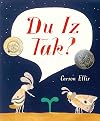
My kid is starting Spanish immersion preschool soon, so this was delightfully hilarious. MJ is only two, but she is super verbal and so the nonsense language in this book drove her crazy. I wouldn't say she enjoyed it, but it challenged her and she wanted to read it again and again trying to figure out the puzzle of what the nonsense words mean.
She also really enjoyed the freaky-looking spider. (Enough with cutesy spiders in picture books! Give me [b:I'm Trying to Love Spiders|23281865|I'm show more Trying to Love Spiders|Bethany Barton|https://images.gr-assets.com/books/1412530391s/23281865.jpg|42819784] any day.) This kind of accidentally became a book about death for us because MJ was very concerned about what happened to the spider. I said the bird ate it. She still wanted to know what happened to it. I said it's gone. Her face was so serious. Where? I was like, TOO SOON. But then I recovered and said it was in the bird's stomach and she let us move on. show less
She also really enjoyed the freaky-looking spider. (Enough with cutesy spiders in picture books! Give me [b:I'm Trying to Love Spiders|23281865|I'm show more Trying to Love Spiders|Bethany Barton|https://images.gr-assets.com/books/1412530391s/23281865.jpg|42819784] any day.) This kind of accidentally became a book about death for us because MJ was very concerned about what happened to the spider. I said the bird ate it. She still wanted to know what happened to it. I said it's gone. Her face was so serious. Where? I was like, TOO SOON. But then I recovered and said it was in the bird's stomach and she let us move on. show less

I feel like the intro to this really downplayed how fun it actually was to read—Carson Ellis is kind of like "I recorded an extremely mundane list of things every day", but it was in fact a weirdly fascinating snapshot of a very specific place and time that may never be repeated. The paintings were great to look at also. I listened to a lot of The Decemberists after reading this; I think it's mandatory.
At first, one might think that this is a picture book published in a different language. It IS technically written in a different language, but this insect language was created by author Carson Ellis. I found myself using my inferring skills and synthesizing skills like crazy when reading this book. When I thought I had deciphered what the insects were saying, the following page and its contents resulted in my making a better translation. By the end of the book, I felt like I could have a show more pretty decent, simple conversation with an insect.
This book was challenging, yet fun to read. I think it would be best for elementary school children to read this with peers or adults. There could be great conversations around readers' inferences and the picture and text clues that support those inferences. show less
This book was challenging, yet fun to read. I think it would be best for elementary school children to read this with peers or adults. There could be great conversations around readers' inferences and the picture and text clues that support those inferences. show less
Lists
Awards


You May Also Like


Associated Authors
Statistics
- Works
- 11
- Also by
- 19
- Members
- 1,546
- Popularity
- #16,659
- Rating
- 3.9
- Reviews
- 98
- ISBNs
- 41
- Languages
- 8
- Favorited
- 1