
Raymond C. Ortlund
Author of The Gospel: How the Church Portrays the Beauty of Christ
About the Author
Image credit: via Goodreads
Works by Raymond C. Ortlund
Good News at Rock Bottom: Finding God When the Pain Goes Deep and Hope Seems Lost (2025) 37 copies, 1 review
Still Not Professionals: Ten Pleas for Today's Pastors — Contributor — 33 copies
Be A New Christian All Your Life: How to Maintain a Vibrant, Fresh Experience with God (1983) 24 copies
El matrimonio y el misterio del evangelio (Estudios Breves de Teología Bíblica) (Spanish Edition) (2022) 2 copies
Avivamento: O modelo bíblico para vivenciar a extraordinária presença de Deus (Portuguese Edition) (2022) 1 copy
Senhor faça da minha vida um milagre - Descobrindo as prioridades de Deus para a sua vida (5th ed.) 1 copy
God at the Center 1 copy
Reach For Life 1 copy
Associated Works
Come, Thou Long-Expected Jesus: Experiencing the Peace and Promise of Christmas (2008) — Contributor, some editions — 511 copies, 2 reviews
Jesus, Keep Me Near the Cross: Experiencing the Passion and Power of Easter (2009) — Contributor, some editions — 386 copies, 4 reviews
Tagged
Common Knowledge
- Other names
- Ortluand, Raymond Carl, Jr. (birth name)
- Birthdate
- 1949-09-07
- Gender
- male
- Education
- University of Aberdeen (PhD|1985)
- Occupations
- cleric
- Places of residence
- Nashville, Tennessee, USA
- Associated Place (for map)
- Tennessee, USA
Members
Reviews

First sentence from the preface: God saves sinners. We don’t believe that. We bank our happiness on other things. But God says to us, “I’m better than you think. You’re worse than you think. Let’s get together.” The prophet Isaiah wants to show us more of God and more of ourselves than we’ve ever seen before. He wants us to know what it means for us to be saved. Do we have the courage to listen? But God has opened a way for us to swim eternally in the ocean of his love. Our show more part is to look beyond ourselves and stake everything on God, who alone saves sinners.
First sentence from chapter one: We can know, because God has spoken.
This was my second time to read Raymond C. Ortlund's commentary on Isaiah. I first read it in April of 2015. I loved it just as much the second time. I read about five or six chapters a week over several weeks.
This commentary covers every chapter of Isaiah. It may not cover every verse of every chapter, but it does serve at the very least as an excellent overview of the book as a whole. And to be honest, this overview has so much depth and substance that most readers would not really feel cheated that perhaps it didn't cover every single verse and sentence. There is so much to unpack.
This commentary is a great happy medium. It is more serious perhaps than J. Vernon McGee's super conversational commentaries. But it is not dry or scholarly. It is still very much written for you and me and everyone. It is meant to be read and understood by all believers. Not just those with a string of alphabet letters behind their name.
I learned so much from each and every chapter. Here's a small taste of what to expect.
From the preface:
As a pastor, it’s not my job to protect people from the living God. My job is to bring people to God, and leave them there.
From chapter one the introduction to Isaiah:
Every day we treat God as incidental to what really matters to us, and we live by our own strategies of self-salvation. We don’t think of our choices that way, but Isaiah can see that our lives are infested with fraudulent idols. Any hope that isn’t from God is an idol of our own making... A salvation we don’t even know how to define, Isaiah is an expert at explaining to us. He wants to lead us into a life that outlasts our earthly expiration date.
J. I. Packer puts into words the greatness of the Isaianic message: God saves sinners. God — the Triune Jehovah, Father, Son and Holy Spirit; three Persons working together in sovereign wisdom, power and love to achieve the salvation of a chosen people, the Father electing, the Son fulfilling the Father’s will by redeeming, the Spirit executing the purpose of the Father and Son by renewing. Saves — does everything, first to last, that is involved in bringing man from death in sin to life in glory: plans, achieves and communicates redemption, calls and keeps, justifies, sanctifies, glorifies. Sinners — men as God finds them, guilty, vile, helpless, powerless, blind, unable to lift a finger to do God’s will or better their spiritual lot. God saves sinners. . . . Sinners do not save themselves in any sense at all, but salvation, first and last, whole and entire, past, present and future, is of the Lord, to whom be glory forever, amen!
If the world is not experiencing the grace of God, the church is being untrue to its destiny.
From chapter two: Our Urgent Need: A New Self Awareness I
We need a sense of sin. We shouldn’t fear it or resent it. It is not destructive. It is life-giving, if we have the courage to let Christ save us. We are often told — or just whispered to — that what we need is more self-esteem. That is false. What we need is more humility and more Christ-esteem.
What is conviction of sin? It is not an oppressive spirit of uncertainty or paralyzing guilt feelings. Conviction of sin is the lance of the divine Surgeon piercing the infected soul, releasing the pressure, letting the infection pour out. Conviction of sin is a health-giving injury. Conviction of sin is the Holy Spirit being kind to us by confronting us with the light we don’t want to see and the truth we’re afraid to admit and the guilt we prefer to ignore. Conviction of sin is the severe love of God overruling our compulsive dishonesty, our willful blindness, our favorite excuses. Conviction of sin is the violent sweetness of God opposing the sins lying comfortably undisturbed in our lives. Conviction of sin is the merciful God declaring war on the false peace we settle for. Conviction of sin is our escape from malaise to joy, from attending church to worship, from faking it to authenticity. Conviction of sin, with the forgiveness of Jesus pouring over our wounds, is life.
The reason we see so little repentance in the world is that the world sees so little repentance in the church.
The church survives because God saves sinners. He sees what we would become, left to ourselves, and in mercy he stretches out his hand and says, “I will not let you go.” That is why the evil inside every one of us doesn’t explode with its actual power, to our destruction (Romans 9:29). Apart from God’s preserving grace, we would relive the story of Sodom and Gomorrah. We are what they were. We deserve what they got. That’s what God says. And the only reason we’re still here is his overruling mercy saving us from ourselves.
From chapter three: Our Urgent Need: A New Self Awareness II
Rebellion against God is our problem. But God saves rebels. And true worship is rebels like us waving the white flag of surrender before our rightful Lord in repentance.
Let’s ask ourselves, what do we think is unbearably repulsive to God, to his very soul, right down to the depths of the Divine Being? We might answer, hard-core crime, the exploitation of children, terrorist mayhem —that sort of thing. It might not occur to us that what the soul of God hates and is burdened and wearied by is the worship we offer him, if we are not in repentance.
The problem with worship — it must take some form or other — is this: The more Biblical and beautiful its form becomes, the more useful it is as a mechanism for evading honest dealings with God and the more plausible as a substitute for repentance.
From chapter four: Our Urgent Need, A New Self Awareness III
What is redemption? Redemption explains how God saves us. How does he? By paying a personal price. In real life, we sin our way right into bondage, and there’s no easy way out. If we try to cover it up or make excuses, we dig ourselves in deeper. Every day we create the conditions in which we literally deserve Hell. But what does God do? He offers to get us out of trouble at his own expense. He offers to absorb within himself the consequences we have set in motion. He pays the price, so that we don’t have to, because we can’t anyway. That’s redemption. If you have sinned your way into helplessness, where you deserve to reap what you have sown, you can be redeemed. God is not only willing to pay the price, he already has — at the cross of Christ. You can enter into redemption freely, by his grace.
We add nothing to the value of Jesus’ sacrifice, but his love does claim all that we are. The flip side of God paying the price is that we are no longer our own (1 Corinthians 6:19b, 20a). What else can we do but repent? We need to repent of our sins every day. We need to repent of our fifth-rate righteousness every day. We need to receive afresh, with the empty hands of faith, real righteousness from Jesus Christ every day. The cross becomes a redeeming power for us as we learn what it means to repent.
From chapter five: The Transforming Power of Hope and Humility
We think too well of ourselves and too poorly of God to believe that his love for his glory and his love for us are one love, drawing him on to the final day when we will be forever happy with his glory alone. But how could it be otherwise? Human fulfillment is union with God.
Do you believe that there is enough glory in God to make you happy forever? If you don’t, why? What failing have you found in God? The gospel promises that his glory will remake the whole world. Stop valuing the idols you not only might lose but inevitably must lose. Learn to enjoy God. The triumph of his glory is enough to make your complete happiness forever invincible.
From chapter eight:
If your heart does not leap at God’s grace in Christ, what you need is more grace. Nothing else can save you from your own deadness. Therefore, fear your own hardness of heart more than anything else.9 Beware of rigidity, ingratitude, a demanding spirit. Beware of an unmelted heart that is never satisfied. Beware of a mind that looks for excuses not to believe. Beware of the impulse that always finds a reason to delay response. Beware of thinking how the sermon applies to someone else. God watches how you hear his Word. If you are ever again to receive it with at least the capacity for response that you have at this very moment, hear it now.
From chapter thirteen:
The heart sings when we accept how little it matters that we are in control and how much it matters that God is in control for us, when we discover how little it matters that we are able and how much it suffices that God is able on our behalf. The day we step into the messianic kingdom and find that God has been true to his word, we redeemed will erupt in music as never before. show less
First sentence from chapter one: We can know, because God has spoken.
This was my second time to read Raymond C. Ortlund's commentary on Isaiah. I first read it in April of 2015. I loved it just as much the second time. I read about five or six chapters a week over several weeks.
This commentary covers every chapter of Isaiah. It may not cover every verse of every chapter, but it does serve at the very least as an excellent overview of the book as a whole. And to be honest, this overview has so much depth and substance that most readers would not really feel cheated that perhaps it didn't cover every single verse and sentence. There is so much to unpack.
This commentary is a great happy medium. It is more serious perhaps than J. Vernon McGee's super conversational commentaries. But it is not dry or scholarly. It is still very much written for you and me and everyone. It is meant to be read and understood by all believers. Not just those with a string of alphabet letters behind their name.
I learned so much from each and every chapter. Here's a small taste of what to expect.
From the preface:
As a pastor, it’s not my job to protect people from the living God. My job is to bring people to God, and leave them there.
From chapter one the introduction to Isaiah:
Every day we treat God as incidental to what really matters to us, and we live by our own strategies of self-salvation. We don’t think of our choices that way, but Isaiah can see that our lives are infested with fraudulent idols. Any hope that isn’t from God is an idol of our own making... A salvation we don’t even know how to define, Isaiah is an expert at explaining to us. He wants to lead us into a life that outlasts our earthly expiration date.
J. I. Packer puts into words the greatness of the Isaianic message: God saves sinners. God — the Triune Jehovah, Father, Son and Holy Spirit; three Persons working together in sovereign wisdom, power and love to achieve the salvation of a chosen people, the Father electing, the Son fulfilling the Father’s will by redeeming, the Spirit executing the purpose of the Father and Son by renewing. Saves — does everything, first to last, that is involved in bringing man from death in sin to life in glory: plans, achieves and communicates redemption, calls and keeps, justifies, sanctifies, glorifies. Sinners — men as God finds them, guilty, vile, helpless, powerless, blind, unable to lift a finger to do God’s will or better their spiritual lot. God saves sinners. . . . Sinners do not save themselves in any sense at all, but salvation, first and last, whole and entire, past, present and future, is of the Lord, to whom be glory forever, amen!
If the world is not experiencing the grace of God, the church is being untrue to its destiny.
From chapter two: Our Urgent Need: A New Self Awareness I
We need a sense of sin. We shouldn’t fear it or resent it. It is not destructive. It is life-giving, if we have the courage to let Christ save us. We are often told — or just whispered to — that what we need is more self-esteem. That is false. What we need is more humility and more Christ-esteem.
What is conviction of sin? It is not an oppressive spirit of uncertainty or paralyzing guilt feelings. Conviction of sin is the lance of the divine Surgeon piercing the infected soul, releasing the pressure, letting the infection pour out. Conviction of sin is a health-giving injury. Conviction of sin is the Holy Spirit being kind to us by confronting us with the light we don’t want to see and the truth we’re afraid to admit and the guilt we prefer to ignore. Conviction of sin is the severe love of God overruling our compulsive dishonesty, our willful blindness, our favorite excuses. Conviction of sin is the violent sweetness of God opposing the sins lying comfortably undisturbed in our lives. Conviction of sin is the merciful God declaring war on the false peace we settle for. Conviction of sin is our escape from malaise to joy, from attending church to worship, from faking it to authenticity. Conviction of sin, with the forgiveness of Jesus pouring over our wounds, is life.
The reason we see so little repentance in the world is that the world sees so little repentance in the church.
The church survives because God saves sinners. He sees what we would become, left to ourselves, and in mercy he stretches out his hand and says, “I will not let you go.” That is why the evil inside every one of us doesn’t explode with its actual power, to our destruction (Romans 9:29). Apart from God’s preserving grace, we would relive the story of Sodom and Gomorrah. We are what they were. We deserve what they got. That’s what God says. And the only reason we’re still here is his overruling mercy saving us from ourselves.
From chapter three: Our Urgent Need: A New Self Awareness II
Rebellion against God is our problem. But God saves rebels. And true worship is rebels like us waving the white flag of surrender before our rightful Lord in repentance.
Let’s ask ourselves, what do we think is unbearably repulsive to God, to his very soul, right down to the depths of the Divine Being? We might answer, hard-core crime, the exploitation of children, terrorist mayhem —that sort of thing. It might not occur to us that what the soul of God hates and is burdened and wearied by is the worship we offer him, if we are not in repentance.
The problem with worship — it must take some form or other — is this: The more Biblical and beautiful its form becomes, the more useful it is as a mechanism for evading honest dealings with God and the more plausible as a substitute for repentance.
From chapter four: Our Urgent Need, A New Self Awareness III
What is redemption? Redemption explains how God saves us. How does he? By paying a personal price. In real life, we sin our way right into bondage, and there’s no easy way out. If we try to cover it up or make excuses, we dig ourselves in deeper. Every day we create the conditions in which we literally deserve Hell. But what does God do? He offers to get us out of trouble at his own expense. He offers to absorb within himself the consequences we have set in motion. He pays the price, so that we don’t have to, because we can’t anyway. That’s redemption. If you have sinned your way into helplessness, where you deserve to reap what you have sown, you can be redeemed. God is not only willing to pay the price, he already has — at the cross of Christ. You can enter into redemption freely, by his grace.
We add nothing to the value of Jesus’ sacrifice, but his love does claim all that we are. The flip side of God paying the price is that we are no longer our own (1 Corinthians 6:19b, 20a). What else can we do but repent? We need to repent of our sins every day. We need to repent of our fifth-rate righteousness every day. We need to receive afresh, with the empty hands of faith, real righteousness from Jesus Christ every day. The cross becomes a redeeming power for us as we learn what it means to repent.
From chapter five: The Transforming Power of Hope and Humility
We think too well of ourselves and too poorly of God to believe that his love for his glory and his love for us are one love, drawing him on to the final day when we will be forever happy with his glory alone. But how could it be otherwise? Human fulfillment is union with God.
Do you believe that there is enough glory in God to make you happy forever? If you don’t, why? What failing have you found in God? The gospel promises that his glory will remake the whole world. Stop valuing the idols you not only might lose but inevitably must lose. Learn to enjoy God. The triumph of his glory is enough to make your complete happiness forever invincible.
From chapter eight:
If your heart does not leap at God’s grace in Christ, what you need is more grace. Nothing else can save you from your own deadness. Therefore, fear your own hardness of heart more than anything else.9 Beware of rigidity, ingratitude, a demanding spirit. Beware of an unmelted heart that is never satisfied. Beware of a mind that looks for excuses not to believe. Beware of the impulse that always finds a reason to delay response. Beware of thinking how the sermon applies to someone else. God watches how you hear his Word. If you are ever again to receive it with at least the capacity for response that you have at this very moment, hear it now.
From chapter thirteen:
The heart sings when we accept how little it matters that we are in control and how much it matters that God is in control for us, when we discover how little it matters that we are able and how much it suffices that God is able on our behalf. The day we step into the messianic kingdom and find that God has been true to his word, we redeemed will erupt in music as never before. show less
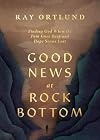
First sentence (from the preface): My plan here is to ask of you as little as I can and to give you as much as I can. You have a busy life to live. But right now, while we are together, literally on the same page, let's make the most of it. Here is what I promise you: I will try to explain the gospel of Jesus honestly and helpfully for your needs. I will not lie to you. And I will try to believe the gospel honestly and helpfully for my own needs. Here is what I ask of you: Give Jesus a show more chance. Allow for the possibility that the good news about him is relevant to what you really, really care about--maybe more relevant that you have ever dared to believe.
Good News at Rock Bottom began its life as a series of talks given at Immanuel Church in Nashville, Tennessee in 2023. The book is about being at ROCK BOTTOM. It is about how there is good news--no, great news, fantastic news--at rock bottom. The book illuminates in particular Isaiah 57:15 though I am not limiting the book's use of Scripture just to one tiny--though important--verse.
There are just five chapters:
Way Up High, Way Down Low
Betrayed
Trapped
Lonely
Dying
The book is about sorrows, trials, tribulations--anything and everything which could lead you--the reader--to being at rock bottom and in need of refreshment [and spiritual healing] that can only come from the Lord Jesus Christ.
It was a fantastic read--always timely and relevant. I do think it falls close to being a must read. If you yourself are not at rock bottom--at the moment--you probably have been or might soon be. OR perhaps someone you love dearly is there now and you could be an encourager.
Quotes:
What helps us most, when we need help urgently, is to discover who Jesus is for people like us. His wisdom is better than our escapism. What we want deep down is Jesus himself, with us, even us.
By God's grace, you can bear the burden of the actual life you're living. He is lifting you into your true dignity and destiny. And on your way there, you'll be encouraged by your fellow sufferers as they walk with you...If we savor Isaiah 57:15 for the rest of our lives, it will keep us going.
God has settled on an arrangement that does two beautiful things at once: it does justice to who God is, and it brings mercy to where we are. The one high and lifted up has mercies for us way down low. And he wants us to be sure of it.
Let's always leave room for God to exceed our highest thoughts of him.
Whatever others might think of you, the risen Christ doesn't despise you.
There is only one thing more costly than giving our hearts away. And that is not giving our hearts away at all.
You are never more like Jesus, never more powerful, than when you forgive the real evil that ruined your life. That merciful you is the most alive you, the most beautiful you, the most consequential you that could exist in this generation.
Our very efforts to make ourselves more presentable only add another layer of sin on top of the sin we committed in the first place. Everything about us is mixed with sin. If evil were color-coded, like yellow police tape at a crime scene, then everything about us at all levels would glow yellow--including our attempts at proving to God that this time we're serious, this time we really mean it. Our grovelling is why verse 14 is here. God lovingly invites us to come now, as we are, and just collapse in his arms, even with all our mess.
The only real barrier between us and the embrace of our Father is our hesitancy is to come.
"Church" isn't one more item on our weekend to-do list. It is an island of humanness in a sea of loneliness. It is God's provision for us. It is a major way he cares for us in our suffering.
Our loneliness is a sorrow God never meant us to bear.
Death is the bottom of rock bottom. Death is the underside of the bottom of rock bottom. And that is why the high and holy one will be so present with you at the moment of your death.
If our majestic Lord is present with us at our death, and he will be, then he is surely with us in all our sufferings leading up to death.
God has dynamic energy. We have exhausted lethargy. The two go really well together, as long as we don't mind staying low before God.
Stake your eternity not on your obedience or your attainments or your virtues, but stake all your hope on the atoning work of Jesus alone. He lived for you the virtuous life you've failed to live, and he died for you the atoning death you aren't even able to die. show less
Good News at Rock Bottom began its life as a series of talks given at Immanuel Church in Nashville, Tennessee in 2023. The book is about being at ROCK BOTTOM. It is about how there is good news--no, great news, fantastic news--at rock bottom. The book illuminates in particular Isaiah 57:15 though I am not limiting the book's use of Scripture just to one tiny--though important--verse.
There are just five chapters:
Way Up High, Way Down Low
Betrayed
Trapped
Lonely
Dying
The book is about sorrows, trials, tribulations--anything and everything which could lead you--the reader--to being at rock bottom and in need of refreshment [and spiritual healing] that can only come from the Lord Jesus Christ.
It was a fantastic read--always timely and relevant. I do think it falls close to being a must read. If you yourself are not at rock bottom--at the moment--you probably have been or might soon be. OR perhaps someone you love dearly is there now and you could be an encourager.
Quotes:
What helps us most, when we need help urgently, is to discover who Jesus is for people like us. His wisdom is better than our escapism. What we want deep down is Jesus himself, with us, even us.
By God's grace, you can bear the burden of the actual life you're living. He is lifting you into your true dignity and destiny. And on your way there, you'll be encouraged by your fellow sufferers as they walk with you...If we savor Isaiah 57:15 for the rest of our lives, it will keep us going.
God has settled on an arrangement that does two beautiful things at once: it does justice to who God is, and it brings mercy to where we are. The one high and lifted up has mercies for us way down low. And he wants us to be sure of it.
Let's always leave room for God to exceed our highest thoughts of him.
Whatever others might think of you, the risen Christ doesn't despise you.
There is only one thing more costly than giving our hearts away. And that is not giving our hearts away at all.
You are never more like Jesus, never more powerful, than when you forgive the real evil that ruined your life. That merciful you is the most alive you, the most beautiful you, the most consequential you that could exist in this generation.
Our very efforts to make ourselves more presentable only add another layer of sin on top of the sin we committed in the first place. Everything about us is mixed with sin. If evil were color-coded, like yellow police tape at a crime scene, then everything about us at all levels would glow yellow--including our attempts at proving to God that this time we're serious, this time we really mean it. Our grovelling is why verse 14 is here. God lovingly invites us to come now, as we are, and just collapse in his arms, even with all our mess.
The only real barrier between us and the embrace of our Father is our hesitancy is to come.
"Church" isn't one more item on our weekend to-do list. It is an island of humanness in a sea of loneliness. It is God's provision for us. It is a major way he cares for us in our suffering.
Our loneliness is a sorrow God never meant us to bear.
Death is the bottom of rock bottom. Death is the underside of the bottom of rock bottom. And that is why the high and holy one will be so present with you at the moment of your death.
If our majestic Lord is present with us at our death, and he will be, then he is surely with us in all our sufferings leading up to death.
God has dynamic energy. We have exhausted lethargy. The two go really well together, as long as we don't mind staying low before God.
Stake your eternity not on your obedience or your attainments or your virtues, but stake all your hope on the atoning work of Jesus alone. He lived for you the virtuous life you've failed to live, and he died for you the atoning death you aren't even able to die. show less

How exactly does one become wise? With the overwhelming flood of information and opinion in our times—much of it a mixture of spin, sound bites, and trivialities—it is crucial we turn back to the Bible and pay close attention to the deep insights that have stood the test of time.
Proverbs 1:20 tells us that “Wisdom cries aloud in the street, in the markets she raises her voice.” The wisdom of God does not stand aloof, but instead graciously moves toward us, into the world where we show more live and struggle day by day—offering us her very best, if we will only listen.
Pastor and teacher Ray Ortlund unpacks the book of Proverbs in 21 straightforward sermons, providing a biblical worldview on everything from money, sex, and power to that of the daily routines of an average life. Drawing relevant parallels from ancient culture to present day, he helps us understand how the book of Proverbs is practical help for ordinary people going through everyday life.
Most importantly, Ortlund shows how the Proverbs point to Jesus and his counsel for the perplexed, his strength for the defeated, his warning to the proud, his mercy for the broken. With careful treatment of the Scriptures and uncomplicated language, Proverbs: Wisdom that Works bridges the gap between real-life experience and the scholarly depth of many commentaries. show less
Proverbs 1:20 tells us that “Wisdom cries aloud in the street, in the markets she raises her voice.” The wisdom of God does not stand aloof, but instead graciously moves toward us, into the world where we show more live and struggle day by day—offering us her very best, if we will only listen.
Pastor and teacher Ray Ortlund unpacks the book of Proverbs in 21 straightforward sermons, providing a biblical worldview on everything from money, sex, and power to that of the daily routines of an average life. Drawing relevant parallels from ancient culture to present day, he helps us understand how the book of Proverbs is practical help for ordinary people going through everyday life.
Most importantly, Ortlund shows how the Proverbs point to Jesus and his counsel for the perplexed, his strength for the defeated, his warning to the proud, his mercy for the broken. With careful treatment of the Scriptures and uncomplicated language, Proverbs: Wisdom that Works bridges the gap between real-life experience and the scholarly depth of many commentaries. show less

Loved it. Great approach through the lens of hope. I appreciated Ortland’s frankness in moments where it’s needed. Porn is a leading factor in the demise of our world and “Death to Porn” is an apt battle cry.
Awards

You May Also Like


Associated Authors
Statistics
- Works
- 49
- Also by
- 4
- Members
- 4,052
- Popularity
- #6,212
- Rating
- 4.3
- Reviews
- 8
- ISBNs
- 86
- Languages
- 5