
Laurence Yep
Author of Dragonwings
About the Author
Laurence Yep was born in San Francisco, California on June 14, 1948. He graduated from the University of California at Santa Cruz in 1970 and received a Ph.D. in English from the State University of New York at Buffalo. He primarily writes fiction for young adults, but has also written and edited show more several works for adults. His first novel, Sweetwater, was published in 1973. His other books include Dragonwings, Dragon's Gate, Shadow Lord, Child of the Owl, The Earth Dragon Awakes: The San Francisco Earthquake of 1906, and The Dragon's Child: A Story of Angel Island. He has won numerous awards for his work including the Newbery Medal Honor Book, the Boston Globe-Horn Book Award, Jane Addams Children's Book Award, and the Laura Ingalls Wilder Award. (Bowker Author Biography) show less
Image credit: Photo credit: Joanne Ryder
(image courtesy of HarperCollins Children's Books)
(image courtesy of HarperCollins Children's Books)
Series
Works by Laurence Yep
Staking a Claim, the Journal of Wong Ming-Chung, a Chinese Miner, California, 1852 (My Name Is America) (2013) 72 copies, 2 reviews
Newbery Award Favorite Library 8 Book Box Set : Charlotte's Web, The One and Only Ivan, Ella Enchanted, Dragonwings (2020) — Contributor — 18 copies
Dragonwings 2 copies
Laurence Yep Books : Dragon's Gate, Dragonwings, Star Fisher (YA Book Sets : Grade 6 -9) (2002) 1 copy
Laurence Yep Collection I (Dragonwings, Dragon's Gate, Dragon Steel, Serpent's Children) (1993) 1 copy
The Selchey Kids 1 copy
Associated Works
Powerful Magic: Learning From Children's Responses To Fantasy Literature (2005) — Foreword — 10 copies
Tagged
Common Knowledge
- Birthdate
- 1948-06-14
- Gender
- male
- Education
- University of California, Santa Cruz
State University of New York, Buffalo (PhD) - Occupations
- children's book author
- Awards and honors
- Laura Ingalls Wilder Medal (2005)
- Relationships
- Ryder, Joanne (wife)
- Nationality
- USA
- Birthplace
- San Francisco, California, USA
- Places of residence
- San Francisco, California, USA
- Map Location
- California, USA
Members
Discussions
Found: YA?? Fantasy-ish, eastern dragon?? in Name that Book (December 2024)
Dragonwings, Laurence Yep in World Reading Circle (September 2013)
Reviews

I have really mixed feelings about this one. I love the focus on Sulu and especially like that it attempts to tackle questions of how Starfleet might be viewed as a colonizer. But I feel like the book is hamstrung because it must be relentlessly pro-Starfleet. We know that the people who oppose Angira's entry into the Federation will be either convinced or defeated. And there's an idea that Angiran society is "broken" and must be fixed. I'm not saying that I am a moral relativist, but there show more ought to be a better and more nuanced way to deal with the two sides of the issue. Still, I don't think that option was open to the author, so I won't blame him. show less
Inspired by coworkers, I'm revisiting juvenile lit from my childhood (and even though it's not May, I am Asian American 12 out of 12 months so every month is AAPI heritage month for me, I suppose).
I remembered the bones of this story: Robin and her grandmother are volunteered by a waiter to pretend to be a lonely cook's family because his own are assumed dead in China. Rereading 15 years later, I noticed things I overlooked when I first read this: for example, the distinction Hong Kong born show more Grandmother notes between her youth and cook Wolf's southern Chinese (Toisan) background, further highlighted when they go to a movie in Chinatown (Jackie Chan's The Young Master!) in Cantonese, but with Chinese subtitles so speakers of other dialects can follow along. Grandmother is in her 60s, which startles me because my parents are currently in theirs, but I'd be hard-pressed to describe either as elderly (though, Grandmother probably uses canes because of her bound feet). The taxi driver mentions being in the US for 58 years and coming over at age 8, which would've been in a tenuous time between the complete ban on immigration in 1924 and/or the repeal of Exclusion in 1943 (which then still limited immigration at 105 Chinese per year). Functionally, these harsh immigration laws delayed the arrival of women, creating bachelor societies in early Chinese America.
Laurence Yep books always resonate with me, probably because I am also a descendant of the Toisanese diaspora, and think often about the balance of being a hyphenated American and the struggles my ancestors went through so I could be here. Wolf sending back money and losing contact with his family during China's political upheavals in the twentieth century reminds me of my maternal side. Robin's mom argues, "When you married me, you also married my family- we're a package deal" to Robin's [Caucasian] dad, a sentiment expressed to me to be cognizant of in serious relationships.
The Cook's Family is a timely reread, as ICE raids for undocumented immigrants are ramping up the weekend I read this (July 13, 2019). In the third act,Wolf's real daughter shows up at the restaurant, an angry, loud foil to Robin's assumptions that an ideal Chinese daughter be quiet and acquiescent. The real Snow Flower is undocumented, desperately traveling in one of those packed containers to come to America and find her lost father and owing a great debt to snakeheads for it. The waiter reveals he didn't give them the full story because he didn't trust strangers who might accidentally talk to the wrong person and attract the attention of immigration officials, and Grandmother agrees, "If someone's here illegally, you shouldn't talk about it to anyone." In this, I also recognize a reticence on relatives' part to discuss how some of my ancestors came to America, even though all relevant parties are long dead. It's not like a corpse can be deported, but there's an instinctive shutdown or evasion of discussion, probably built up from habit.
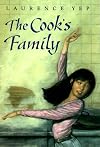
My quibble is minor: Robin describes herself as brown haired and green eyed, a mixed race Chinese American. While lovely, the cover does not reflect this- the later book [b:Angelfish|1495474|Angelfish|Laurence Yep|https://i.gr-assets.com/images/S/compressed.photo.goodreads.com/books/1184256963l/1495474._SY75_.jpg|1486810] has a more accurate depiction. Still, as a voracious adolescent reader, it was nice to see faces like mine on the covers of stuff I read, rather than having to imagine myself as the side character in someone else's story. As mentioned earlier, Yep's work strongly resonates with me because we have similar backgrounds, but I can't think of many other '90s authors who also filled that space (versus say, looking at teen historical fiction set in Tudor England and finding a half dozen authors). I'm envious of today's teens with the feast of #ownvoices YA lit available (which y'know, adults can still read!) and am SO GLAD that kids today have a variety of options to see themselves in. show less
I remembered the bones of this story: Robin and her grandmother are volunteered by a waiter to pretend to be a lonely cook's family because his own are assumed dead in China. Rereading 15 years later, I noticed things I overlooked when I first read this: for example, the distinction Hong Kong born show more Grandmother notes between her youth and cook Wolf's southern Chinese (Toisan) background, further highlighted when they go to a movie in Chinatown (Jackie Chan's The Young Master!) in Cantonese, but with Chinese subtitles so speakers of other dialects can follow along. Grandmother is in her 60s, which startles me because my parents are currently in theirs, but I'd be hard-pressed to describe either as elderly (though, Grandmother probably uses canes because of her bound feet). The taxi driver mentions being in the US for 58 years and coming over at age 8, which would've been in a tenuous time between the complete ban on immigration in 1924 and/or the repeal of Exclusion in 1943 (which then still limited immigration at 105 Chinese per year). Functionally, these harsh immigration laws delayed the arrival of women, creating bachelor societies in early Chinese America.
Laurence Yep books always resonate with me, probably because I am also a descendant of the Toisanese diaspora, and think often about the balance of being a hyphenated American and the struggles my ancestors went through so I could be here. Wolf sending back money and losing contact with his family during China's political upheavals in the twentieth century reminds me of my maternal side. Robin's mom argues, "When you married me, you also married my family- we're a package deal" to Robin's [Caucasian] dad, a sentiment expressed to me to be cognizant of in serious relationships.
The Cook's Family is a timely reread, as ICE raids for undocumented immigrants are ramping up the weekend I read this (July 13, 2019). In the third act,
My quibble is minor: Robin describes herself as brown haired and green eyed, a mixed race Chinese American. While lovely, the cover does not reflect this- the later book [b:Angelfish|1495474|Angelfish|Laurence Yep|https://i.gr-assets.com/images/S/compressed.photo.goodreads.com/books/1184256963l/1495474._SY75_.jpg|1486810] has a more accurate depiction. Still, as a voracious adolescent reader, it was nice to see faces like mine on the covers of stuff I read, rather than having to imagine myself as the side character in someone else's story. As mentioned earlier, Yep's work strongly resonates with me because we have similar backgrounds, but I can't think of many other '90s authors who also filled that space (versus say, looking at teen historical fiction set in Tudor England and finding a half dozen authors). I'm envious of today's teens with the feast of #ownvoices YA lit available (which y'know, adults can still read!) and am SO GLAD that kids today have a variety of options to see themselves in. show less
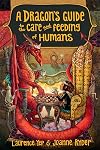
What an unexpected surprise! I had picked up a copy of A Dragon's Guide to the Care and Feeding of Humans on a whim at #alamw15, having not one clue as to what it was about. Yesterday, I was looking for something to read, and picked this up just to check it out and ended up reading it in the one sitting. The story follows Miss Drake, a curmudgeonly dragon who has taken on a new "pet" in the form of Winnie, the grand-niece of her previous pet, Amelia (or Fluffy as Miss Drake liked to call show more her). Winnie is strong willed and very sure herself and at first Miss Drake finds this very discouraging and realizes she's going to have to be very assertive in training her new pet. (Of course, the question actually becomes, exactly who is the pet here?)
Miss Drake, on a shopping excursion for some new tea and biscuits, also buys Winnie a new sketchbook that may be more that it appears to be, and when Winnie starts to sketch all the marvelous, magical creatures she is discovering, the sketchbook releases a magic all its own and the sketches come to life! It is up to Miss Drake and Winnie to find the sketchlings before they are discovered by both the magical and nonmagical worlds.
Putting this all down, A Dragon's Guide to the Care and Feeding of Humans sounds like a typical middle grade adventure story, but what took me completely by surprise was that the story is just as much about love, loss, and the importance of family as it is about anything else. Amidst all the magic and missteps and adventures in the story is a growing underlying theme of the importance that both friends and family can have in a person's life, where friends become family and family become friends. The conclusion is one of the most touching endings to a book that I have read in a very long time, and made me think fondly of those that I have loved and lost in my life. The connections between Miss Drake and Amelie, Winnie and her father, and eventually Miss Drake and Winnie are made so incredibly real in such a short book. Laurence Yep and Joanne Ryder have crafted a beautiful and fun-filled story, and Marie GrandPré's accompanying illustrations are perfect. I would recommend this to anyone with or without a young person in their life; anyone will be able to enjoy this whimsical tale about the strength and love of families. Highly recommended.
A Dragon's Guide to the Care and Feeding of Humans is published by Crown Books for Young Readers and will be available March 10, 2015. show less
Miss Drake, on a shopping excursion for some new tea and biscuits, also buys Winnie a new sketchbook that may be more that it appears to be, and when Winnie starts to sketch all the marvelous, magical creatures she is discovering, the sketchbook releases a magic all its own and the sketches come to life! It is up to Miss Drake and Winnie to find the sketchlings before they are discovered by both the magical and nonmagical worlds.
Putting this all down, A Dragon's Guide to the Care and Feeding of Humans sounds like a typical middle grade adventure story, but what took me completely by surprise was that the story is just as much about love, loss, and the importance of family as it is about anything else. Amidst all the magic and missteps and adventures in the story is a growing underlying theme of the importance that both friends and family can have in a person's life, where friends become family and family become friends. The conclusion is one of the most touching endings to a book that I have read in a very long time, and made me think fondly of those that I have loved and lost in my life. The connections between Miss Drake and Amelie, Winnie and her father, and eventually Miss Drake and Winnie are made so incredibly real in such a short book. Laurence Yep and Joanne Ryder have crafted a beautiful and fun-filled story, and Marie GrandPré's accompanying illustrations are perfect. I would recommend this to anyone with or without a young person in their life; anyone will be able to enjoy this whimsical tale about the strength and love of families. Highly recommended.
A Dragon's Guide to the Care and Feeding of Humans is published by Crown Books for Young Readers and will be available March 10, 2015. show less

Casey has to move in with her grandmother in Chinatown while her father is on the lam from his gambling debts.
This is a very honest look at what it means to be of Chinese heritage in American society. It's often difficult to reconcile how to be both American and Chinese. This book looks at Casey, who is far from the usual "model minority" sidekick. She's the cild of a gambler, used to moving around and relying on her wits more than conventional means to get by.
At first I thought I would like show more a time marker at the beginning of the story, but on reflection I enjoyed discovering that it is set in the 60s. It's a nice portrait of a Chinatown gone-by, but it still feels relevant.
I would recommend this for any elementary school library, and more so if there is a population of children who are 1st or 2nd generation Americans. show less
This is a very honest look at what it means to be of Chinese heritage in American society. It's often difficult to reconcile how to be both American and Chinese. This book looks at Casey, who is far from the usual "model minority" sidekick. She's the cild of a gambler, used to moving around and relying on her wits more than conventional means to get by.
At first I thought I would like show more a time marker at the beginning of the story, but on reflection I enjoyed discovering that it is set in the 60s. It's a nice portrait of a Chinatown gone-by, but it still feels relevant.
I would recommend this for any elementary school library, and more so if there is a population of children who are 1st or 2nd generation Americans. show less
Lists
Awards


You May Also Like


Associated Authors
Statistics
- Works
- 88
- Also by
- 10
- Members
- 20,037
- Popularity
- #1,081
- Rating
- 3.7
- Reviews
- 272
- ISBNs
- 512
- Languages
- 8
- Favorited
- 9