
Christophe Chabouté
Author of Alone
About the Author
Image credit: Crochet.david
Series
Works by Christophe Chabouté
Tagged
Common Knowledge
- Canonical name
- Chabouté, Christophe
- Legal name
- Chabouté, Christophe
- Birthdate
- 1967-02-08
- Gender
- male
- Nationality
- France
- Associated Place (for map)
- France
Members
Reviews
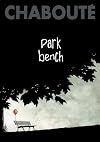
Wow. Just … wow.
Say you're a park bench. A nice, traditional, roomy seat – big enough for two, or three, or four if you're friendly, shaded by a tree in a park. Every day dozens of people go by – you see joggers taking a favorite route, or people on their way to work. Some pause to tie a shoe or take a call or catch their breath – and there's that one bloody dog … And then there are the regulars, who come to enjoy the weather and maybe read or watch people go by – or stretch out show more on you to sleep, since they have nowhere else to go. Sun and rain and snow and starlight, through the four seasons, until …
The saying about pictures and thousands of words is a cliché – but it's a cliché for a reason. As someone who has handled pencils, pens, and brushes, I know how tiny the difference is between a line that evokes an emotion or plays its part in a story, and a line that is … just a line. Christophe Chabouté is French – but that's the other cliché about art, isn't it? It's universal. I didn't have to blow the dust off my high school language course, because without a word a very clear and achingly beautiful story is conveyed – a story with a beginning, a middle, and an end, a climax, a denouement – and an epilogue. Sometimes funny, occasionally heart-rending… the only small weakness I can think of in the book is that one of the threads of the story seemed far too predictable – I had a terrible feeling I knew what would happen. And I was right. And it hurt.
I love this book. In fact, I think I'll go and start it over again.
The usual disclaimer: I received this book via Netgalley for review. show less
Say you're a park bench. A nice, traditional, roomy seat – big enough for two, or three, or four if you're friendly, shaded by a tree in a park. Every day dozens of people go by – you see joggers taking a favorite route, or people on their way to work. Some pause to tie a shoe or take a call or catch their breath – and there's that one bloody dog … And then there are the regulars, who come to enjoy the weather and maybe read or watch people go by – or stretch out show more on you to sleep, since they have nowhere else to go. Sun and rain and snow and starlight, through the four seasons, until …
The saying about pictures and thousands of words is a cliché – but it's a cliché for a reason. As someone who has handled pencils, pens, and brushes, I know how tiny the difference is between a line that evokes an emotion or plays its part in a story, and a line that is … just a line. Christophe Chabouté is French – but that's the other cliché about art, isn't it? It's universal. I didn't have to blow the dust off my high school language course, because without a word a very clear and achingly beautiful story is conveyed – a story with a beginning, a middle, and an end, a climax, a denouement – and an epilogue. Sometimes funny, occasionally heart-rending… the only small weakness I can think of in the book is that one of the threads of the story seemed far too predictable – I had a terrible feeling I knew what would happen. And I was right. And it hurt.
I love this book. In fact, I think I'll go and start it over again.
The usual disclaimer: I received this book via Netgalley for review. show less
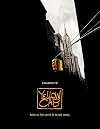
A French filmmaker moves to New York City and has a notion to immerse himself by becoming a cab driver. Much of this graphic novel is him jumping through all the many, convoluted, and necessary bureaucratic hoops and then sitting in his cab brainstorming scenes for his movie as he scrutinizes his passengers, his fellow cab drivers, and the people on the streets of the city. Instead of a film, the real Benoit Cohen turned this endeavor into a 2017 French novel, Yellow Cab, that Christophe show more Chabouté has now adapted into a graphic novel.
It sort of reminds me of stories about method actors going extra lengths to develop their characters, but mostly it reminds me of promotions I've seen for a cheesy reality show called Undercover Boss, where an out-of-touch CEO pretends he's just one of the guys to get the inside scoop on how the other half lives. Cohen's motives, casual deception, discreet recording, and failure to really delve into the ramifications of slumming amongst the common man while enjoying a more privileged lifestyle once he steps out of the cab just left me a bit queasy and uncomfortable. It didn't help when he decided to make his movie's lead character female and started conjecturing how he might have to adapt his experiences to how he imagines a woman might experience them. I'm not sure he has a firm grip on that point of view.
In the end, I was bored as he settled on having the city itself be the main character, focusing on all the little moments with individual people, as if every strange person he sees is his resource to exploit, and as if we haven't seen the same sort of thing done again and again before. Based on this adaptation, I wouldn't want to see his film if it ever does get made. show less
It sort of reminds me of stories about method actors going extra lengths to develop their characters, but mostly it reminds me of promotions I've seen for a cheesy reality show called Undercover Boss, where an out-of-touch CEO pretends he's just one of the guys to get the inside scoop on how the other half lives. Cohen's motives, casual deception, discreet recording, and failure to really delve into the ramifications of slumming amongst the common man while enjoying a more privileged lifestyle once he steps out of the cab just left me a bit queasy and uncomfortable. It didn't help when he decided to make his movie's lead character female and started conjecturing how he might have to adapt his experiences to how he imagines a woman might experience them. I'm not sure he has a firm grip on that point of view.
In the end, I was bored as he settled on having the city itself be the main character, focusing on all the little moments with individual people, as if every strange person he sees is his resource to exploit, and as if we haven't seen the same sort of thing done again and again before. Based on this adaptation, I wouldn't want to see his film if it ever does get made. show less
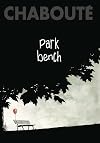
This is a graphic novel, and one without words. I was a bit stunned when I picked it up as it is a thick and heavy book but in fact, I read it in one sitting. I was drawn in immediately. The illustrations are excellent; what emotions Chaboute can convey on just one page, are shown on the face of just one character (pages 2 and 3), and are wonderful. And he does this over and over, throughout the book.
The central character in the book is, obviously, a single park bench. The drama is of the show more life around it, the people (and a dog!) who pass by, seeing the bench (or not), using it (or not), over a period of time. As a reader, I grew to feel I knew the characters, looked forward to seeing them, and followed their *stories* with anticipation and a range of emotions of my own (love, sadness, anger, hope, to name a few). A picture is worth a thousand words, indeed! This book is a little miracle, if you think about it. No translations needed, as it speaks the universal language of emotion.
This was my first introduction to this author but I am going to seek out his other works. show less
The central character in the book is, obviously, a single park bench. The drama is of the show more life around it, the people (and a dog!) who pass by, seeing the bench (or not), using it (or not), over a period of time. As a reader, I grew to feel I knew the characters, looked forward to seeing them, and followed their *stories* with anticipation and a range of emotions of my own (love, sadness, anger, hope, to name a few). A picture is worth a thousand words, indeed! This book is a little miracle, if you think about it. No translations needed, as it speaks the universal language of emotion.
This was my first introduction to this author but I am going to seek out his other works. show less
This book with no words, only graphic images, is worth your reading time. It centers around a park bench, and the occurrences on it and around it. People, and one dog in particular, come and go, and we get glimpses of their lives.
An older couple comes and sits there on a regular basis to share a single pastry, brought in a box. A young man returns repeatedly with a bouquet of flowers, waiting for someone who may never show up. A man with a briefcase purposefully walks by in all weather, show more until something changes, and the bench becomes part of his life, too. A homeless man and a cop are at odds, then find some common ground. There are many humorous encounters, including the man angry at the young tokers who show up, only to sneakily enjoy the joint butt they leave behind.
Everyone uses and passes the bench with only their own life in mind, but we get to see it all. It's a pretty remarkable book, that won multiple awards in France. show less
An older couple comes and sits there on a regular basis to share a single pastry, brought in a box. A young man returns repeatedly with a bouquet of flowers, waiting for someone who may never show up. A man with a briefcase purposefully walks by in all weather, show more until something changes, and the bench becomes part of his life, too. A homeless man and a cop are at odds, then find some common ground. There are many humorous encounters, including the man angry at the young tokers who show up, only to sneakily enjoy the joint butt they leave behind.
Everyone uses and passes the bench with only their own life in mind, but we get to see it all. It's a pretty remarkable book, that won multiple awards in France. show less
Lists
Pipoca & Nanquim (6)
Awards


You May Also Like


Associated Authors
Statistics
- Works
- 43
- Members
- 848
- Popularity
- #30,160
- Rating
- 3.9
- Reviews
- 57
- ISBNs
- 85
- Languages
- 12
- Favorited
- 2