
Jirô Taniguchi (1947–2017)
Author of The Walking Man
About the Author
Jiro Taniguchi was born in Tottori, Japan on August 14, 1947. The manga artist had his first cartoon published in 1970. His works included The Times of Botchan, A Distant Neighbourhood, and The Walking Man. In 2011, the French government awarded him the Knight of the Order of Arts and Letters. He show more died on February 11, 2017 at the age of 69. (Bowker Author Biography) show less
Image credit: Jirô Taniguchi
Series
Works by Jirô Taniguchi
Idacy czlowiek 4 copies
Senseis mappe, Bind 1 2 copies
jiro taniguchi art work book 2 copies
Zoološki vrt zimi 2 copies
Ksiega Wiatru 2 copies
遥かな町へ [Haruka na Machi e] 1 copy
Gourmet 2 1 copy
Szczyt bogów. T. 1 1 copy
Mój rok - wiosna 1 copy
L'uomo che cammina 1 copy
Garouden: lupi famelici 1 copy
La vetta degli dei 1 copy
Min fjerde barndoms by 1 copy
Kaze no Sho Perfect Edition 1 copy
Kniha větru 1 copy
神々の山嶺 上 (ヤングジャンプコミックスGJ 愛蔵版) 1 copy
Vertraute Fremde 1 copy
神の犬 (1) (小学館文庫) 1 copy
Associated Works
Corriere della Sera - Sette: Sei fumetti per l'estate - 11 Agosto 2011 — Author — 1 copy
Tagged
Common Knowledge
- Canonical name
- Taniguchi, Jirô
- Legal name
- Taniguchi, Jirô
- Other names
- Taniguchi, Jiro
- Birthdate
- 1947-08-14
- Date of death
- 2017-02-11
- Gender
- male
- Occupations
- manga artist
- Awards and honors
- Chevalier de l'Ordre des Arts et des Lettres (2011)
- Nationality
- Japan
- Birthplace
- Tottori, Japan
- Place of death
- Tokyo, Japan
- Map Location
- Japan
Members
Reviews
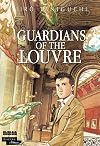
A Japanese mangaka falls ill after a comic convention but still tries to carry through with his plans to tour the Louvre on his own. In a fever dream (or is it something more?) he interacts with the artwork and dead artists represented in the museum.
Despite having to wade through the dream garbage, I was fascinated by the connections, influences and exchange of ideas that Taniguchi revealed between French and Japanese artists. There is also a much-too-short section on the efforts the French show more people undertook to protect the treasures of the Louvre from the invading Nazi forces during World War II. These true guardians should have been the focus of the whole book. show less
Despite having to wade through the dream garbage, I was fascinated by the connections, influences and exchange of ideas that Taniguchi revealed between French and Japanese artists. There is also a much-too-short section on the efforts the French show more people undertook to protect the treasures of the Louvre from the invading Nazi forces during World War II. These true guardians should have been the focus of the whole book. show less
"You know, I asked my old man, and from what I gather, she doesn't have any relatives anywhere, and she's almost always all alone. Your father's probably the only one that comes to visit her. I'm not sure but . . . they say she doesn't have long left."
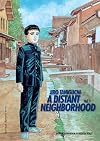
A Distant Neighborhood, Volumes 1 and 2, by Jiro Taniguchi, is the story of a 48 year old businessman, Hiroshi, who finds himself inexplicably sent back into his 14 year old body at the time right before his father disappeared from his family's show more lives. He feels the joy of the lightness of his body, and appreciates the happiness of his family more than he did the first time around. He has mixed feelings about the mutual attraction he feels with smart Tomoko Nagase, as he knows he actually is much older than she is, and he has a wife and family back in his "real life". Will he be able to solve the mystery of why his seemingly happy father left them? Will he be able to stop him? Will he correct past mistakes, will he change his life? Will he ever get back to his own time?
Taniguchi has become one of my favorite graphic novelists, with a beautiful, detailed drawing style and relatively simple, engaging stories that feature believable characters. His The Walking Man features a salaryman wandering away from his usual route and finding a life full of grace in small moments, like a woman returning to the cherry tree of her childhood to lie down in its blossoms. Here, Hiroshi believably deals with his knowledge of the future and desire to alter the past. Time with Nagase at the beach, riding a motorcycle with her, questioning his father about his happiness, getting drunk with his friend Shimada, meeting Shimada at a distant hospital . . . We pull for Hiroshi to find his way, and for his family and companions to find theirs. It may be too sentimental for some readers, but not this one. show less
A Distant Neighborhood, Volumes 1 and 2, by Jiro Taniguchi, is the story of a 48 year old businessman, Hiroshi, who finds himself inexplicably sent back into his 14 year old body at the time right before his father disappeared from his family's show more lives. He feels the joy of the lightness of his body, and appreciates the happiness of his family more than he did the first time around. He has mixed feelings about the mutual attraction he feels with smart Tomoko Nagase, as he knows he actually is much older than she is, and he has a wife and family back in his "real life". Will he be able to solve the mystery of why his seemingly happy father left them? Will he be able to stop him? Will he correct past mistakes, will he change his life? Will he ever get back to his own time?
Taniguchi has become one of my favorite graphic novelists, with a beautiful, detailed drawing style and relatively simple, engaging stories that feature believable characters. His The Walking Man features a salaryman wandering away from his usual route and finding a life full of grace in small moments, like a woman returning to the cherry tree of her childhood to lie down in its blossoms. Here, Hiroshi believably deals with his knowledge of the future and desire to alter the past. Time with Nagase at the beach, riding a motorcycle with her, questioning his father about his happiness, getting drunk with his friend Shimada, meeting Shimada at a distant hospital . . . We pull for Hiroshi to find his way, and for his family and companions to find theirs. It may be too sentimental for some readers, but not this one. show less

Jiro Taniguchi was France's favorite manga creator, and this bande dessinée co-published with the Louvre was one of his final works. The quasi-autobiographical fantasy has as its narrator a manga artist who has come to Europe from Tokyo for a comics festival in Barcelona and goes afterwards to visit Paris. With the story set in 2013, the unnamed artist appears much younger than Taniguchi's age 65 in that year. The implied background also features the artist character's wife's death in an show more accident more than three years earlier.
In any case, the paneled pages lead the artist and the reader in tours of the Louvre, mixed with visions of the history of art, where Taniguchi uses figures like Asai Chu, Jean-Baptiste Camille Corot, and Antonio Fontanesi to illustrate the dialogue between European and Japanese art painting. The spirit of the statue of the Winged Victory of Samothrace serves as a psychopomp, and she eventually narrates the story of the preservation of the Louvre collection against anticipated Nazi pillaging in World War II.
The five days in Paris include one side trip to Auvers, which may just be a dream, since it includes a face-to-face conversation with Vincent Van Gogh. The book concludes with a final chapter that gives personal closure to the protagonist and affirms his discovered faith in the imaginal "guardians" of the Louvre.
The English edition I read is in BD folio format, with the painted illustrations printed in full color on glossy paper. It is bound and laid out right-to-left, manga style. There is a two-page appendix with encyclopedia-style articles on a few of the artists (and the writer Tokutomi Roka) who appear in the story. show less
In any case, the paneled pages lead the artist and the reader in tours of the Louvre, mixed with visions of the history of art, where Taniguchi uses figures like Asai Chu, Jean-Baptiste Camille Corot, and Antonio Fontanesi to illustrate the dialogue between European and Japanese art painting. The spirit of the statue of the Winged Victory of Samothrace serves as a psychopomp, and she eventually narrates the story of the preservation of the Louvre collection against anticipated Nazi pillaging in World War II.
The five days in Paris include one side trip to Auvers, which may just be a dream, since it includes a face-to-face conversation with Vincent Van Gogh. The book concludes with a final chapter that gives personal closure to the protagonist and affirms his discovered faith in the imaginal "guardians" of the Louvre.
The English edition I read is in BD folio format, with the painted illustrations printed in full color on glossy paper. It is bound and laid out right-to-left, manga style. There is a two-page appendix with encyclopedia-style articles on a few of the artists (and the writer Tokutomi Roka) who appear in the story. show less
Ghosts in the Gallery
Review of the NBM Publishing hardcover edition (2016) translated by Kumar Sivasubramanian from the original Japanese 千年の翼、百年の夢 (Millennium Wings, Centennial Dreams) (2015*)
In Guardians of the Louvre a young Japanese manga artist is on a trip to Europe to attend a comics convention. After the convention he plans to spend time in the museums of Paris, but instead falls sick with a fever in his hotel room. Apparently recovered, (you begin to wonder if show more perhaps the rest of the book isn't a fever dream) he does go to The Louvre but discouraged by the crowds he wanders off alone. He then encounters a vision of the restored Winged Victory of Samothrace, who identifies herself as a Guardian of the Louvre. Communing with the Guardians allows the man to encounter various artists and personalities associated with the museum and its history. In the end he meets someone from his own past.
See image at https://irenebrination.typepad.com/.a/6a00e55290e7c4883301b7c8724f28970b-800wi
A sample page from Guardians of the Louvre. Image sourced from a review at Irenebrination.
On the whole the story here was not very dramatic, until we hear about the World War II project to save the Louvre's most precious works from Nazi looting and destruction. Previously the encounters with the spirits of artists such as Jean-Baptiste-Camille Corot (1796-1875) and Vincent Van Gogh (1853-1890) were quite uneventful.
The artwork, as always with Taniguchi, is beautiful of course. The museum interiors though do not provide for quite the same expansive beauty as his city vistas in another late commissioned work [book:Venice|34679287] (2014).
The book, even in this English translation, is presented in Japanese manga format, so that you read the pages from back to front and the panels from right to left.
Trivia and Link
* As the book was a commission by the Louvre, the French language edition was actually published first as Les Gardiens du Louvre (2014). show less
Review of the NBM Publishing hardcover edition (2016) translated by Kumar Sivasubramanian from the original Japanese 千年の翼、百年の夢 (Millennium Wings, Centennial Dreams) (2015*)
In Guardians of the Louvre a young Japanese manga artist is on a trip to Europe to attend a comics convention. After the convention he plans to spend time in the museums of Paris, but instead falls sick with a fever in his hotel room. Apparently recovered, (you begin to wonder if show more perhaps the rest of the book isn't a fever dream) he does go to The Louvre but discouraged by the crowds he wanders off alone. He then encounters a vision of the restored Winged Victory of Samothrace, who identifies herself as a Guardian of the Louvre. Communing with the Guardians allows the man to encounter various artists and personalities associated with the museum and its history. In the end he meets someone from his own past.
See image at https://irenebrination.typepad.com/.a/6a00e55290e7c4883301b7c8724f28970b-800wi
A sample page from Guardians of the Louvre. Image sourced from a review at Irenebrination.
On the whole the story here was not very dramatic, until we hear about the World War II project to save the Louvre's most precious works from Nazi looting and destruction. Previously the encounters with the spirits of artists such as Jean-Baptiste-Camille Corot (1796-1875) and Vincent Van Gogh (1853-1890) were quite uneventful.
The artwork, as always with Taniguchi, is beautiful of course. The museum interiors though do not provide for quite the same expansive beauty as his city vistas in another late commissioned work [book:Venice|34679287] (2014).
The book, even in this English translation, is presented in Japanese manga format, so that you read the pages from back to front and the panels from right to left.
Trivia and Link
* As the book was a commission by the Louvre, the French language edition was actually published first as Les Gardiens du Louvre (2014). show less
Lists
Awards


You May Also Like


Associated Authors
Statistics
- Works
- 136
- Also by
- 3
- Members
- 4,732
- Popularity
- #5,321
- Rating
- 3.9
- Reviews
- 182
- ISBNs
- 425
- Languages
- 14
- Favorited
- 15