
Keiji Nakazawa (1939–2012)
Author of Barefoot Gen: A Cartoon Story of Hiroshima, Volume 1
About the Author
Series
Works by Keiji Nakazawa
Gen of Hiroshima #1 2 copies
Pies Descalzos B01 [1/3] 1 copy
Barefoot Gen 1 copy
Barefoot Gen The Moview 1 & 2 The Bombingof Hiroshima as Seen Through the Eyes of a Young Boy 1 copy
جن الحافي (10): بداية جديدة 1 copy
Gen di Hiroshima (Vol. 2) — Author — 1 copy
Gen di Hiroshima (Vol. 4) — Author — 1 copy
Gen di Hiroshima (Vol. 3) 1 copy
By Keiji Nakazawa - Barefoot Gen, Vol. 3: Life After the Bomb (New Tra Su) (2015-03-12) [Paperback] (2015) 1 copy
جن الحافي (5): حرب لا تنتهي 1 copy
Associated Works
Tagged
Common Knowledge
- Canonical name
- Nakazawa, Keiji
- Birthdate
- 1939-03-14
- Date of death
- 2012-12-19
- Gender
- male
- Occupations
- Manga artist
writer - Cause of death
- lung cancer
- Nationality
- Japan
- Birthplace
- Hiroshima, Japan
- Place of death
- Hiroshima, Japan
- Map Location
- Hiroshima, Japan
Members
Reviews
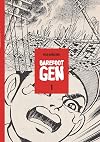
A fascinating book on a few levels. The most obvious being a (fictionalized) account of the bombing of Hiroshima by someone who was on the ground when it happened. However, the style in which the story is told is jarring.
I’m assuming the aspects I found distracting came from not being exposed to much manga and being unfamiliar with the styles and tropes unique to the medium. It’s very cartoony (not a criticism unto itself, just that in the West we tend to think cartoony=for children) and show more periodic slapstick violence played for laughs. Imagine Homer choking Bart but then a few pages later we see Ned Flanders with his eyeballs melted out and his skin hanging as he staggers around begging for water.
If you can take such weird shifts in tone it’s a riveting story and the cartoony style works when you consider we’re seeing it through the eyes of a child. Horrific suffering depicted in a juvenile style reflects how Gen’s innocence had to cope with his new reality show less
I’m assuming the aspects I found distracting came from not being exposed to much manga and being unfamiliar with the styles and tropes unique to the medium. It’s very cartoony (not a criticism unto itself, just that in the West we tend to think cartoony=for children) and show more periodic slapstick violence played for laughs. Imagine Homer choking Bart but then a few pages later we see Ned Flanders with his eyeballs melted out and his skin hanging as he staggers around begging for water.
If you can take such weird shifts in tone it’s a riveting story and the cartoony style works when you consider we’re seeing it through the eyes of a child. Horrific suffering depicted in a juvenile style reflects how Gen’s innocence had to cope with his new reality show less
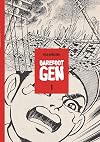
I picked this up after reading fannyprice's very thoughtful review (see below). I'm tempted to limit my review to just "Holy f---". That combined with the title, and the knowledge this is a graphic novel written by a survivor of the Hiroshima atomic bomb says about everything I need to say and might say it better than this commentary.
Keiji was 6 years old when the first bomb was dropped on Hiroshima, which he survived only thanks to a brick wall he was standing next to. His father, sister show more and younger brother were trapped under their collapsed house and burned alive, while his mother helplessly watched. I don't think I'm giving anything away here as we're told this up front, in the author's preface.
Barefoot Gen is a fictionalized Keiji, and the story is essentially his story. It's 10 volumes. The 10th volume is actually due out in English in November this year. Volume One covers the last few months in 1945 before the bomb was dropped, ending the day it was dropped. Remarkably, and perhaps unfortunately, it's not about vilifying the US. As he explores life before the bomb, and the constant starving and the cultural pressure to cooperate, the anger is mainly directed at the Japanese leadership and culture.
As a graphic novel, this is a quick read. There are no chapters, it's difficult to stop, especially when another half hour reading covers another 60 pages. Cartoons in Japan apparently don't have the juvenile connotations we have in west. They are taken very seriously, the images creating a kind of code that becomes more meaningful as the story progresses. Here the images aren't elegant artistic pictures, and there are no deep thoughts expressed. The drawing is rough, simple, not especially nice to look at, and yet very effective.
The only thing I can compare this to is Art Spiegelman's Maus I & Maus II. It's worth noting Spiegelman wrote the introduction, and he mentions having read this while writing this first Maus volume. Maus was perhaps similarly effective, but different. There is an elegance to Maus, and, in order to write it Spiegelman has to psychologically come to terms with himself and his own problems - all of which is expressed within. Not so here. Gen is merely a kid, and what happens is simply beyond any singular human's psychology.
As a initial impression, just after finishing this, it seems like the best thing I've read in years...
2009
http://www.librarything.com/topic/68641#1453076 show less
Keiji was 6 years old when the first bomb was dropped on Hiroshima, which he survived only thanks to a brick wall he was standing next to. His father, sister show more and younger brother were trapped under their collapsed house and burned alive, while his mother helplessly watched. I don't think I'm giving anything away here as we're told this up front, in the author's preface.
Barefoot Gen is a fictionalized Keiji, and the story is essentially his story. It's 10 volumes. The 10th volume is actually due out in English in November this year. Volume One covers the last few months in 1945 before the bomb was dropped, ending the day it was dropped. Remarkably, and perhaps unfortunately, it's not about vilifying the US. As he explores life before the bomb, and the constant starving and the cultural pressure to cooperate, the anger is mainly directed at the Japanese leadership and culture.
As a graphic novel, this is a quick read. There are no chapters, it's difficult to stop, especially when another half hour reading covers another 60 pages. Cartoons in Japan apparently don't have the juvenile connotations we have in west. They are taken very seriously, the images creating a kind of code that becomes more meaningful as the story progresses. Here the images aren't elegant artistic pictures, and there are no deep thoughts expressed. The drawing is rough, simple, not especially nice to look at, and yet very effective.
The only thing I can compare this to is Art Spiegelman's Maus I & Maus II. It's worth noting Spiegelman wrote the introduction, and he mentions having read this while writing this first Maus volume. Maus was perhaps similarly effective, but different. There is an elegance to Maus, and, in order to write it Spiegelman has to psychologically come to terms with himself and his own problems - all of which is expressed within. Not so here. Gen is merely a kid, and what happens is simply beyond any singular human's psychology.
As a initial impression, just after finishing this, it seems like the best thing I've read in years...
2009
http://www.librarything.com/topic/68641#1453076 show less

In his fictionalized memoir, artist Keiji Nakazawa tells the story of his childhood during WWII and his survival of the atomic bombing of Hiroshima. In this first volume of ten, Nakazawa depicts the hardships of life in Japan during the war with mandatory homeland defense training, near starvation, and constant bombing. Gen's father is outspoken about his anti-war views and he serves time in jail, leaving his family to fend for themselves. Gen's mother is pregnant, and falls ill due to show more malnutrition and overwork. Gen, his younger brother, and older sister live at home and are treated abominably by the neighbors for being related to a anti-war traitor. Gen and his brother retaliate violently, but it often backfires and brings down more trouble. One of Gen's older brothers joins the Naval Air Corps to be a kamikaze pilot and bring honor to the family, much against his family's wishes. The other, a third grader, is evacuated with his school class to the countryside where he works in the fields in harsh conditions. When Gen's father returns home, the family rejoices, but is also subject to his casual violence as he tries to beat his values into his children.
The fate of Gen's family when the bomb falls on August 6, 1945 is harrowing and true to life, with the exception that in the book Gen returns home in time to witness the events that Nakazawa actually learns later that day from his mother. Although the author describes these events in the introduction, and thus it's not really a spoiler, I am going to avoid relating what happens as the impact of reading Nakazawa words cannot be replicated.
After finishing the book, I had very mixed feelings. The memoir itself is exceptional, if difficult to read, but I had a hard time with the stylized grimacing and sweating faces of the characters. I am not familiar with manga and found the art off-putting. I also found the casual brutality depicted in the book, both within Gen's family and within the larger community, to be very disturbing, especially the violence to and by children. (Although, of course, this violence is nothing compared to the horror of the atomic bombing.) In his introduction, [[Art Spiegelman]] addresses both of these issues, and I found his explanations helpful, if not palliative. In short, according to Spiegelman, both violence and the stylized faces are typical of manga of the time and would not be seen as out of place to a Japanese audience. Nor would the length of the entire Barefoot Gen series, which runs to almost 2000 pages. Although I am glad that I read the first volume, I am going to cancel my interlibrary loan of the next two volumes, at least for now. For me, it's a story best digested in small chunks. show less
The fate of Gen's family when the bomb falls on August 6, 1945 is harrowing and true to life, with the exception that in the book Gen returns home in time to witness the events that Nakazawa actually learns later that day from his mother. Although the author describes these events in the introduction, and thus it's not really a spoiler, I am going to avoid relating what happens as the impact of reading Nakazawa words cannot be replicated.
After finishing the book, I had very mixed feelings. The memoir itself is exceptional, if difficult to read, but I had a hard time with the stylized grimacing and sweating faces of the characters. I am not familiar with manga and found the art off-putting. I also found the casual brutality depicted in the book, both within Gen's family and within the larger community, to be very disturbing, especially the violence to and by children. (Although, of course, this violence is nothing compared to the horror of the atomic bombing.) In his introduction, [[Art Spiegelman]] addresses both of these issues, and I found his explanations helpful, if not palliative. In short, according to Spiegelman, both violence and the stylized faces are typical of manga of the time and would not be seen as out of place to a Japanese audience. Nor would the length of the entire Barefoot Gen series, which runs to almost 2000 pages. Although I am glad that I read the first volume, I am going to cancel my interlibrary loan of the next two volumes, at least for now. For me, it's a story best digested in small chunks. show less

Every now and then I come across a book that I wish was required reading when I was in high school; in my estimation Barefoot Gen: Vol 1 is one of those books. Barefoot Gen is the first hand account of the author's, Keiji Nakazawa, experiences of the atomic bomb dropped on Hiroshima. Nakazawa is certainly a competent illustrator, but more importantly it's the story he tells through his panels that makes the this personal re-telling of history so compelling.
Most of the first volume takes show more place well before the bomb is dropped, setting the stage for the ultimate tragedy. However, the small unjustices of Gen's family in the days prior to the bombing amount to a tragedy all their own. Gen’s father is outspoken about his opposition to the war; he sees the famine it’s brought, the lives it takes and the values it twists, such as the group suicides who seek honor in taking their lives rather than face capture. Nakazawa looks down upon this so-called honor, instead focusing directly on the daily hardships in wartime and the futility of hope and superstitions. Nakazawa witnessed the blind loyalty of Japanese citizens to the Emperor, endured the stigma of being one of the few families opposed to the war in his village, saw the flesh dripping off the bodies of those victims caught directly in the bomb’s blast. What he puts on the illustrated page is not necessarily realistic, but it is haunting and terrible all the same. Even mixing the over-the-top comical elements (silly and strange dialogue; overt use of violence when characters disagree; even fart jokes) that is so common with Manga. I wouldn't say the Manga elements are seamlessly integrated into the story, but the story simply wouldn't be the same without them.
Nakazawa, through Gen’s family, offers one of the greatest explorations of the concept of humanity ever put in print. Loyalty and sacrifice for an ideal mean nothing when fellow neighbors are in immediate need of help. Gen’s town turns on his family once they’re branded as traitors, but it’s those who still offer them food and support that stand out in the story. I think this series will remain in my mind for a long time to come. show less
Most of the first volume takes show more place well before the bomb is dropped, setting the stage for the ultimate tragedy. However, the small unjustices of Gen's family in the days prior to the bombing amount to a tragedy all their own. Gen’s father is outspoken about his opposition to the war; he sees the famine it’s brought, the lives it takes and the values it twists, such as the group suicides who seek honor in taking their lives rather than face capture. Nakazawa looks down upon this so-called honor, instead focusing directly on the daily hardships in wartime and the futility of hope and superstitions. Nakazawa witnessed the blind loyalty of Japanese citizens to the Emperor, endured the stigma of being one of the few families opposed to the war in his village, saw the flesh dripping off the bodies of those victims caught directly in the bomb’s blast. What he puts on the illustrated page is not necessarily realistic, but it is haunting and terrible all the same. Even mixing the over-the-top comical elements (silly and strange dialogue; overt use of violence when characters disagree; even fart jokes) that is so common with Manga. I wouldn't say the Manga elements are seamlessly integrated into the story, but the story simply wouldn't be the same without them.
Nakazawa, through Gen’s family, offers one of the greatest explorations of the concept of humanity ever put in print. Loyalty and sacrifice for an ideal mean nothing when fellow neighbors are in immediate need of help. Gen’s town turns on his family once they’re branded as traitors, but it’s those who still offer them food and support that stand out in the story. I think this series will remain in my mind for a long time to come. show less
Lists
Awards


You May Also Like


Associated Authors
Statistics
- Works
- 76
- Also by
- 3
- Members
- 2,792
- Popularity
- #9,208
- Rating
- 4.3
- Reviews
- 70
- ISBNs
- 177
- Languages
- 14