
Naoki Urasawa
Author of Pluto: Urasawa x Tezuka, Volume 1
About the Author
Series
Works by Naoki Urasawa
21st Century Boys Perfect Edition 4 copies
20世紀少年 コミック 全24巻完結セット 3 copies
Monster (Complete series) 3 copies
Jigoro! 2 copies
Naoki Urasawa - Official Guide Book - Ristampa - Planet Manga - Panini Comics - ITALIANO (2021) 2 copies
Monster (Manga) 1 copy
Pineapple Army 09 1 copy
Pineapple Army 06 1 copy
Pineapple Army 04 1 copy
Pineapple Army 03 1 copy
Monster 1 copy
Pineapple Army 02 1 copy
20th Century Boys Series: The Perfect Edition by Urasawa, Naoki Vol 6- 12 collection 7 book set (2021) 1 copy
Monster. T. 7 1 copy
Monster, 1-18 1 copy
Monster. T. 9 1 copy
Monster. T. 4 1 copy
! Jigoro (Shogakukan Paperback - Naoki Urasawa short stories) (2003) ISBN: 4091926932 [Japanese Import] (2003) 1 copy
21th Century Boys : Volume 1 1 copy
21th Century Boys : Volume 2 1 copy
Pineapplec Army 1 1 copy
Pineapplec Army 2 1 copy
Monster (Vol. 7) 1 copy
Pluto nº 06/08 1 copy
あさドラ! 8 [Asadora! 8] 1 copy
あさドラ! 7 [Asadora! 7] 1 copy
Billy Bat nº 01/20 1 copy
Associated Works
Tagged
Common Knowledge
- Canonical name
- Urasawa, Naoki
- Legal name
- 浦沢 直樹
- Birthdate
- 1960-01-02
- Gender
- male
- Education
- Meisei University
- Occupations
- mangaka
- Nationality
- Japan
- Birthplace
- Fuchu, Tokyo, Japan
- Places of residence
- Tokyo, Japan
- Map Location
- Japan
Members
Reviews
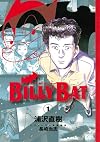
If there's such a thing as "auto-obscuring" then that's definitely what I'd call this manga. Its world is an elusive one—difficult to parse because its innerworkings actively seek to remain hidden. I like worlds that aren't overexplained by the author, but Urasawa takes things to their limit here by almost always keeping readers in the dark. Taking a leaf from post-modernists such as Nabokov, Borges and Pynchon, Billy Bat is almost too opaque to be enjoyed by comparison. That said, this show more manga is certainly Urasawa's most ambitious one to date. Despite it's hectic and complex structure, it's riveting and kept me reading until the end.
If you've read a lot of Urasawa's manga, then there will be plenty of familiar ground here. In a way that almost seems intentional, Billy Bat (BB) is like a fusion of Monster, 20th Century Boys and Pluto, mixed with meta commentary on the impact that animation and film titans like Disney, Warner Bros., Tezuka Productions and others have had (and still have) on our world. It does this through an evolutionary showcase of art itself and also by pondering where certain artistic ideas come from.
But BB is so much more than that. It's a dizzying and gargantuan odyssey that toys and subverts our accepted views of history, art, race and religion. It also questions the perception and perpetuation of tradition and symbology. It's an incredibly intertextual slow burn, referencing plenty of historical events while twisting some of the more ludicrous, darker theories that exist in our world into its tapestry. There's weird fiction, occult exploration, magical realism, theoretical sci-fi, and much more. And it suggests through horror that we are tiny, and that influence in general runs a lot deeper than we will ever know (or ever want to know).
BB begins pretty simply as a spoof on old detective comics. We get to see the work-in-progress of character Kevin Yamagata's latest issue of—you guessed it—"Billy Bat"; the manga within a manga. It stars a P.I. bat with a bawdy expression who gets himself mixed up in the affairs of dames and thugs. It's a fun read because it riffs off so many tropes and stereotypes, and the bat himself is like some sort of combination between Mickey Mouse and Astro Boy. But it doesn't take long for things to go awry in Kevin's world. Thus begins the serpentine Urasawaesque journey.
As I mentioned earlier, this manga will be familiar if you've read Urasawa's main works, or even his lesser known ones. He doesn't really branch out from what he excels at, but here in BB I found most of his usual writing tricks half stolid. Whether that's due to the post-modernist, ironical framing or simply from me having read so much of the man's work, I don't know. China Miéville, whose work I've recently become interested in, made some humorous, sensible remarks about self-parody in this interview. In particular, this answer that he gives explains some of my frustration with Urasawa's techniques: "I’m fanatically interested in rubbish, and I’m fanatically interested in cephalopods and houses and things like that, so I have to police myself. ‘No more cephalopods for three books, no more garbage until 2016,’ that sort of thing, because otherwise you risk self-parody."
Well, Urasawa's characters have definitely begun to feel like some sort of self-parody, at least in this series. Especially since BB is also very noirish like his other most known manga. But he's great at writing complex individuals, and the characters in BB are no less complex than in some of his other manga, so I'm torn here. I wonder just how much is meant to come across a certain way and how much is a byproduct of Urasawa's own played-out character types.
If there's one area that unequivocally drags this manga down, it's that of historical events turned on their head. Certain story threads are interesting while others are starkly ridiculous, and altogether they're rather convoluted. For the more outlandish occurrences, you have to really stretch your disbelief, and no amount of surreality makes them more palatable. They are intriguing ideas for sure, but some just fizzle out while others fail to make an impact. Others seem almost emotionally exploitative. All of these events do tie together in an overarching way, but the manga ends abruptly without ever tending to some of the previous story branches—which is a shame since I liked a lot of the ones that Urasawa spent less time on. BB is so vast and complicated that it seems Urasawa lost a handle on things as the series went on (it ended back in 2016 but began in 2008).
But what Urasawa is still able to effortlessly nail is a strong sense of dread. He is truly a master when it comes to tension-building and the delivery of horrific surprises. Ever since the Grimm-esque fairy tales and other major occurrences in Monster, Urasawa has shown that he has no issue coming up with dark, bizarre happenings—and BB is rife with them. I wish that Urasawa leaned even more heavily into surreal territory here, but that's a nitpick from my inner fantasist. This manga contains some experiments that Urasawa has never tried before, so I appreciate his willingness to take a big risk and do something bonkers that won't appeal to many people.
Frankly, BB makes my brain feel like its running a marathon. There are so many symbols, allusions and references that it's impossible to keep up and dissect it all. And I don't think that's the point. Like Moby Dick or Ulysses, BB can appear cryptic, crammed and difficult to approach, but is much more enjoyable if you don't try to excavate (or fabricate) its hidden meanings and methods behind the madness. I still find this manga to be too intricate for its own good, but otherwise its captivating and thrilling in its own rare way.
As for the ending itself, I was expecting more answers than what was given. It's appropriate in that it fits the message that Urasawa builds toward throughout the series, and it also fits his usual habit of creating ambiguous endings. I begrudgingly understand Urasawa's desire not to overstate or provide too much information about certain things, and it's neat how the ending has spawned tons of theories and discussion about the nature of certain symbols and art as a whole as they relate to our societies.
I went into this review with a very mixed opinion, but I've ended it finding more positives than negatives. It's certainly one of the strangest, most topsy-turvy mangas I've ever read. If you're in the mood for a genre-defying psychological thriller that will leave your mind completely stunned, then Billy Bat is your poison. show less
If you've read a lot of Urasawa's manga, then there will be plenty of familiar ground here. In a way that almost seems intentional, Billy Bat (BB) is like a fusion of Monster, 20th Century Boys and Pluto, mixed with meta commentary on the impact that animation and film titans like Disney, Warner Bros., Tezuka Productions and others have had (and still have) on our world. It does this through an evolutionary showcase of art itself and also by pondering where certain artistic ideas come from.
But BB is so much more than that. It's a dizzying and gargantuan odyssey that toys and subverts our accepted views of history, art, race and religion. It also questions the perception and perpetuation of tradition and symbology. It's an incredibly intertextual slow burn, referencing plenty of historical events while twisting some of the more ludicrous, darker theories that exist in our world into its tapestry. There's weird fiction, occult exploration, magical realism, theoretical sci-fi, and much more. And it suggests through horror that we are tiny, and that influence in general runs a lot deeper than we will ever know (or ever want to know).
BB begins pretty simply as a spoof on old detective comics. We get to see the work-in-progress of character Kevin Yamagata's latest issue of—you guessed it—"Billy Bat"; the manga within a manga. It stars a P.I. bat with a bawdy expression who gets himself mixed up in the affairs of dames and thugs. It's a fun read because it riffs off so many tropes and stereotypes, and the bat himself is like some sort of combination between Mickey Mouse and Astro Boy. But it doesn't take long for things to go awry in Kevin's world. Thus begins the serpentine Urasawaesque journey.
As I mentioned earlier, this manga will be familiar if you've read Urasawa's main works, or even his lesser known ones. He doesn't really branch out from what he excels at, but here in BB I found most of his usual writing tricks half stolid. Whether that's due to the post-modernist, ironical framing or simply from me having read so much of the man's work, I don't know. China Miéville, whose work I've recently become interested in, made some humorous, sensible remarks about self-parody in this interview. In particular, this answer that he gives explains some of my frustration with Urasawa's techniques: "I’m fanatically interested in rubbish, and I’m fanatically interested in cephalopods and houses and things like that, so I have to police myself. ‘No more cephalopods for three books, no more garbage until 2016,’ that sort of thing, because otherwise you risk self-parody."
Well, Urasawa's characters have definitely begun to feel like some sort of self-parody, at least in this series. Especially since BB is also very noirish like his other most known manga. But he's great at writing complex individuals, and the characters in BB are no less complex than in some of his other manga, so I'm torn here. I wonder just how much is meant to come across a certain way and how much is a byproduct of Urasawa's own played-out character types.
If there's one area that unequivocally drags this manga down, it's that of historical events turned on their head. Certain story threads are interesting while others are starkly ridiculous, and altogether they're rather convoluted. For the more outlandish occurrences, you have to really stretch your disbelief, and no amount of surreality makes them more palatable. They are intriguing ideas for sure, but some just fizzle out while others fail to make an impact. Others seem almost emotionally exploitative. All of these events do tie together in an overarching way, but the manga ends abruptly without ever tending to some of the previous story branches—which is a shame since I liked a lot of the ones that Urasawa spent less time on. BB is so vast and complicated that it seems Urasawa lost a handle on things as the series went on (it ended back in 2016 but began in 2008).
But what Urasawa is still able to effortlessly nail is a strong sense of dread. He is truly a master when it comes to tension-building and the delivery of horrific surprises. Ever since the Grimm-esque fairy tales and other major occurrences in Monster, Urasawa has shown that he has no issue coming up with dark, bizarre happenings—and BB is rife with them. I wish that Urasawa leaned even more heavily into surreal territory here, but that's a nitpick from my inner fantasist. This manga contains some experiments that Urasawa has never tried before, so I appreciate his willingness to take a big risk and do something bonkers that won't appeal to many people.
Frankly, BB makes my brain feel like its running a marathon. There are so many symbols, allusions and references that it's impossible to keep up and dissect it all. And I don't think that's the point. Like Moby Dick or Ulysses, BB can appear cryptic, crammed and difficult to approach, but is much more enjoyable if you don't try to excavate (or fabricate) its hidden meanings and methods behind the madness. I still find this manga to be too intricate for its own good, but otherwise its captivating and thrilling in its own rare way.
As for the ending itself, I was expecting more answers than what was given. It's appropriate in that it fits the message that Urasawa builds toward throughout the series, and it also fits his usual habit of creating ambiguous endings. I begrudgingly understand Urasawa's desire not to overstate or provide too much information about certain things, and it's neat how the ending has spawned tons of theories and discussion about the nature of certain symbols and art as a whole as they relate to our societies.
I went into this review with a very mixed opinion, but I've ended it finding more positives than negatives. It's certainly one of the strangest, most topsy-turvy mangas I've ever read. If you're in the mood for a genre-defying psychological thriller that will leave your mind completely stunned, then Billy Bat is your poison. show less
Naoki Urasawa Präsentiert: Monster, Band 17: Bin wieder da (Naoki Urasawa's Monster, #17) by Naoki Urasawa
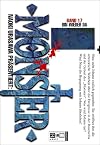
The final stage is set, and now every surviving MC converges onto the scene. Shall we all have a lottery? Let's see who in this little sleepy town survives. Kinda small for an armageddon, but the stakes are very personal and very intense.
What do I really think about PK's return to a normal human being instead of a children's book author? Melodramatic, but not entirely unbelievable. Considering how much time people have obsessed over one thing or another in this whole story, I don't find it show more too off the mark to grant him a little humanity in the end.
What really fascinates me is Mr. Monster, himself. He still continues to be deep and his motives are strange and opaque, even if we're given an actual reason. The reason is almost literary and a high idealism, if demons were subject to high idealisms. Hell, maybe all demons are personified idealisms, anyway. How would I really know? show less
What do I really think about PK's return to a normal human being instead of a children's book author? Melodramatic, but not entirely unbelievable. Considering how much time people have obsessed over one thing or another in this whole story, I don't find it show more too off the mark to grant him a little humanity in the end.
What really fascinates me is Mr. Monster, himself. He still continues to be deep and his motives are strange and opaque, even if we're given an actual reason. The reason is almost literary and a high idealism, if demons were subject to high idealisms. Hell, maybe all demons are personified idealisms, anyway. How would I really know? show less
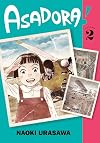
Moxie. Gumption. Grit. Determination. Asa Asada is loaded with them, and she is going to save her family from disaster or avenge them if she cannot. And the second her hand touches an airplane control stick she knows nothing is going to get between her and the sky.
Events move from the aftermath of Typhoon Vera in 1959 to the threshold of the 1964 Tokyo Olympics. The bigger story starts to come into focus even as Naoki Urasawa keeps his cards close to his chest and indulges in all the little show more character moments that keep his epics grounded in humanity. show less
Events move from the aftermath of Typhoon Vera in 1959 to the threshold of the 1964 Tokyo Olympics. The bigger story starts to come into focus even as Naoki Urasawa keeps his cards close to his chest and indulges in all the little show more character moments that keep his epics grounded in humanity. show less
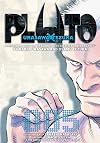
WHAT IS IT ABOUT?
“Pluto: Urasawa x Tezuka, Volume 005” by Naoki Urasawa and Takashi Nagasaki is the fifth book in an eight-book science fiction manga series Pluto. The whole series is based on “The Greatest Robot on Earth,” the most popular story arc in Astro Boy series by a legendary manga master Osamu Tezuka.
In “Pluto: Urasawa x Tezuka, Volume 005,” a new assignment helps detective Gesicht to unlock a harrowing memory, the source of his unsettling nightmares, and to discover show more what he is truly capable of. Meanwhile, Hercules, one of the seven great robots of the world, challenges the powerful, mysterious villain that so far has been unstoppable.
THUMBS UP:
1) My favorite volume so far.
Pluto series just keeps getting better and better. The fifth volume has it all: it is action packed, thrilling and suspenseful with plot twists and revelations, but at the same time it is thought-provoking and emotionally powerful with complex and realistic characters. The story kept me on my toes throughout the whole book and I understood and truly cared about the main characters (well, maybe except for Epsilon). Oh, and the artwork is very realistic and simply gorgeous.
2) Things make sense!
As the authors continue to tie loose ends together, the events and characters’ motives make more and more sense. This volume also offers a very sound explanation behind the “perfect robot” idea and why such a robot might be disastrous, making the story more logically explainable and thus much more realistic.
3) Postscripts.
Although each volume has a postscript written by a different person, I especially liked the commentary at the end of the fifth book, in which Tomohiko Murakami, a manga critic and lecturer, describes Pluto series as “Naoki Urasawa’s dissertation on Osamu Tezuka.” This and the previous postscripts are interesting and informative, helping the reader to understand and appreciate Pluto series as well as Urasawa’s work in general.
COULD BE BETTER:
1) Lack of color.
I mentioned this in all my previous Pluto reviews, but I really prefer the colored first few pages over the rest of the book, which is in black and white. I think I would be fine with the colorless illustrations as well, but the colored pages always remind me that the book can be even better.
VERDICT: 4 out of 5
“Pluto: Urasawa x Tezuka, Volume 005” by Naoki Urasawa and Takashi Nagasaki is my favorite volume so far. Here you can find everything: action, suspense, depth, multidimensional characters… Plus, the story keeps getting more logical and realistic. Finally, a very interesting and informative postscript at the end of the book helps to understand and appreciate the series even more.
POST SCRIPTUM:
Check out my reviews of the previous four volumes:
1) “Pluto: Urasawa x Tezuka, Volume 001;”
2) “Pluto: Urasawa x Tezuka, Volume 002;”
3) “Pluto: Urasawa x Tezuka, Volume 003;”
4) “Pluto: Urasawa x Tezuka, Volume 004.” show less
“Pluto: Urasawa x Tezuka, Volume 005” by Naoki Urasawa and Takashi Nagasaki is the fifth book in an eight-book science fiction manga series Pluto. The whole series is based on “The Greatest Robot on Earth,” the most popular story arc in Astro Boy series by a legendary manga master Osamu Tezuka.
In “Pluto: Urasawa x Tezuka, Volume 005,” a new assignment helps detective Gesicht to unlock a harrowing memory, the source of his unsettling nightmares, and to discover show more what he is truly capable of. Meanwhile, Hercules, one of the seven great robots of the world, challenges the powerful, mysterious villain that so far has been unstoppable.
THUMBS UP:
1) My favorite volume so far.
Pluto series just keeps getting better and better. The fifth volume has it all: it is action packed, thrilling and suspenseful with plot twists and revelations, but at the same time it is thought-provoking and emotionally powerful with complex and realistic characters. The story kept me on my toes throughout the whole book and I understood and truly cared about the main characters (well, maybe except for Epsilon). Oh, and the artwork is very realistic and simply gorgeous.
2) Things make sense!
As the authors continue to tie loose ends together, the events and characters’ motives make more and more sense. This volume also offers a very sound explanation behind the “perfect robot” idea and why such a robot might be disastrous, making the story more logically explainable and thus much more realistic.
3) Postscripts.
Although each volume has a postscript written by a different person, I especially liked the commentary at the end of the fifth book, in which Tomohiko Murakami, a manga critic and lecturer, describes Pluto series as “Naoki Urasawa’s dissertation on Osamu Tezuka.” This and the previous postscripts are interesting and informative, helping the reader to understand and appreciate Pluto series as well as Urasawa’s work in general.
COULD BE BETTER:
1) Lack of color.
I mentioned this in all my previous Pluto reviews, but I really prefer the colored first few pages over the rest of the book, which is in black and white. I think I would be fine with the colorless illustrations as well, but the colored pages always remind me that the book can be even better.
VERDICT: 4 out of 5
“Pluto: Urasawa x Tezuka, Volume 005” by Naoki Urasawa and Takashi Nagasaki is my favorite volume so far. Here you can find everything: action, suspense, depth, multidimensional characters… Plus, the story keeps getting more logical and realistic. Finally, a very interesting and informative postscript at the end of the book helps to understand and appreciate the series even more.
POST SCRIPTUM:
Check out my reviews of the previous four volumes:
1) “Pluto: Urasawa x Tezuka, Volume 001;”
2) “Pluto: Urasawa x Tezuka, Volume 002;”
3) “Pluto: Urasawa x Tezuka, Volume 003;”
4) “Pluto: Urasawa x Tezuka, Volume 004.” show less
Lists
Awards


You May Also Like


Associated Authors
Statistics
- Works
- 250
- Also by
- 3
- Members
- 19,907
- Popularity
- #1,088
- Rating
- 4.2
- Reviews
- 336
- ISBNs
- 928
- Languages
- 12
- Favorited
- 32